Page 25 of 38

Savouring your favourite brew on International Coffee Day

Today is International Coffee Day. So after yesterday’s post on Arthur Guinness’ stout, this is my second post in a row discussing a dark brew loved the world over. And in a way the similarities between a pint of Guinness and a cup of coffee doesn’t end there – both contain antioxidants that are good for you. Yet like the alcohol in beer, the caffeine in coffee is addictive, and taken in excess is decidedly not good for you.

This, however, is not going to be a sober analysis of the medical risks and benefits of coffee and caffeine. I’ll admit it – I’m a bit of a coffee-holic. There are few things I like more than a well-made Americano in a quaint coffee shop rich with the smell of of freshly ground coffee, on a bustling city street corner. And if that coffee comes with a slice of lemon meringue (the perfect compliment to a good cuppa, if you ask me), even better.

So I am a tad biased. (And honestly, in moderation coffee can be good for you!)

Black or white, selecting your preferred style of coffee is a very personal choice.
(© All Rights Reserved)

International Coffee Day is the day coffee lovers can celebrate their shared love of their favourite brew. Americano, cafe au lait, espresso, caffe latte, capuccino, affogato, cafe mocha… the list of formats you can choose to enjoy a cup of coffee is long, decadent and rather daunting. And if that’s not enough, there’s regional names, like our New Zealand ‘long blacks’ and ‘flat whites’. Enough to make your head spin, even before your caffeine fix! But most coffee lovers will quickly settle on their personal favourite, depending on their preference of strength of the brew, inclusion (or not) of milk/foam/cream, etc. And don’t try to come between the coffee lover and his brew of choice!

Beyond celebrating coffee, today is also an opportunity to promote ‘Fair Trade certified’ coffee, purchased from growers who ensure decent conditions for their workers. It is a chance to raise awareness for the plight of those who work in poorer countries and environments where there may be few, if any, restrictions on labour conditions, and where the opportunities for exploitation is rife. When choosing your brew, make sure it’s Fair Trade certified.

In a positive worldwide trend, the popularity of Fair Trade coffee has increased consistently over the last decade, with the percentage of coffee sourced from Fair Trade producers increasing annually.

Kick-start your day with a Fair Trade certified cuppa at breakfast.
(© All Rights Reserved)

While choosing Fair Trade coffee rightly makes you feel better about your cuppa, there has been criticism about the ethics of it all, with cynics claiming Fair Trade certification to be little more than a marketing ploy to increase the price of the product, with only a small margin of this filtering through to the growers.

While this may sadly be true, my personal opinion is that opting to buy Fair Trade remains pretty much the only option to consumers wanting to buy from a non-exploitative source – surely that must be better than not supporting fair trade principles at all?

Black or white, sweet or bitter, whatever you prefer, join me in celebrating Coffee Day – here’s hoping you find a memorable brew today. And that a decent portion of the money you spend on it reaches the source!
Arthur Guinness’ brew is good for you!

Yep, it’s a big day down the pub today – we celebrate the birthday of Irishman Arthur Guinness, entrepreneur, philanthropist, and most importantly, founder of the Guinness brewery.

Arthur Guinness’ exact date and place of birth is not known, with some indications being that he was born in late 1724 or early 1725, while others point to a date later in 1725.  In the early 1990’s the Guinness company decided to put an end to the speculations, and proclaimed its founder’s ‘official’ date of birth to be 28 September 1725. This date, affectionately known as ‘Arthur’s Day’, has been enthusiastically celebrated by fans of his dark brew ever since.

Arthur Guinness’ legacy lives on in Guinness, one of the world’s most successful and well known beer brands, brewed in almost 60 countries and available in more than 100. Guinness and Co merged with Grand Metropolitan plc in 1997, and has since become part of the multinational alcohol conglomerate Diageo.

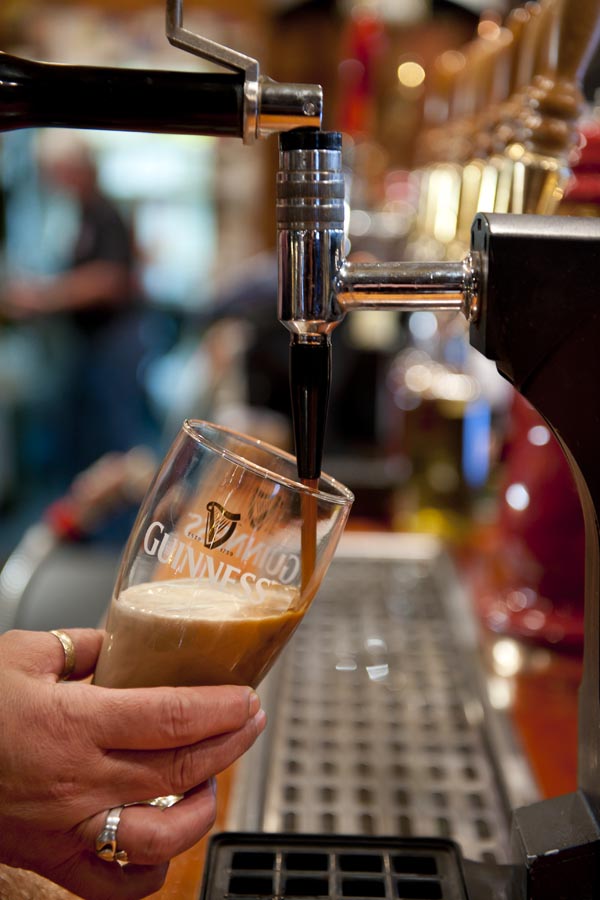
According to Diageo, the perfect pint of Draught Guinness is poured by means of a ‘double pour’ method, which should take exactly 119.53 seconds. When poured, the draught passes through a 5-hole restrictor plate which increases the pressure and creates small bubbles in the beer, resulting in the classic creamy head. This first pour is allowed to settle, whereafter the glass is filled with a second ‘slow pour’ until the head creates a slight dome at the top of the glass.
(© All Rights Reserved)

Guinness’ marketing has always been one of its strong suits, and this is a significant contributing factor to the continued popularity of the brand. The classic Guinness advertising series was created in the 1930s and 1940s, mostly illustrated by the artist John Gilroy. The advertising posters included classic phrases still seen in Irish pubs all over the world, such as “My Goodness, my Guinness”, “Lovely Day for a Guinness”, and most famously “Guinness is Good for You”.

The “Guinness is Good for You” slogan actually dates back to the 1920s, and stemmed from a market research campaign where people told the company that they felt good after a pint of Guinness. Beyond the feel-good factor, the stout was also considered to have some medicinal benefits – it was given to post-operative patients and blood donors, based on the belief that it was high in iron. It was also popular with pregnant women and nursing mothers.

The question “Why do Guinness’ bubbles travel downwards?” has been the subject of many a conversation down the pub. It is actually only the bubbles along the outer edge that moves down, as a result of drag – bubbles in the centre of the glass can travel upwards unhindered, while those along the edge are slowed down by the glass. As the beer in the centre rises, the liquid near the edge has to fall, and the resulting downward flow pushes some tiny bubbles downwards. Try explaining that after a few pints!
(© All Rights Reserved)

What’s interesting is that research more than half a decade later indicates that perhaps the ‘good for you’ claim wasn’t so far off the mark, albeit for different reasons. As reported by BBC News in 2003, “A pint of the dark stuff a day may work as well as a low dose of aspirin to prevent heart clots that raise the risk of heart disease.”

Researchers from the University of Wisconsin tested the stout by administering it to dogs who had narrowed arteries similar to those in people with heart disease. They found that the dogs fed different daily doses of Guinness had reduced clotting activities in their blood, while a control group of dogs given a lager beer did not show similar improvements. The research team furthermore claim that the greatest benefit was achieved when test subjects received about a pint each day at mealtime. Their conclusion was “that ‘antioxidant compounds’ in the Guinness, similar to those found in certain fruits and vegetables, are responsible for the health benefits because they slow down the deposit of harmful cholesterol on the artery walls.”

In response to these claims, Guinness’ owners Diageo simply said “We never make any medical claims for our drinks.” Despite this, I am sure millions of Guinness fans the world over will be more than happy to call on the ‘irrefutable scientific research’ above to justify their daily mealtime pint.

So here’s to Arthur and his famous brew – cheers, everybody!

Sign language and the International Week of the Deaf

This week (24-30 September) we celebrate the International Week of the Deaf (IWD). As explained on the website of the American National Association of the Deaf, the aim is “to attract the attention of decision makers, general public, and media to the problems and concerns deaf persons face and make them understand that deaf people have human rights too! So the International Week of the Deaf is all about getting together, feeling united and powerful and showing that unity to the rest of the world.”

In 2012, the theme of IWD is “Sign Bilingualism is a Human Right!” This focuses on the rights of the deaf to have access to information in a form that they can use, and to not be discriminated against because of their disability.

Technology used to teach sign language. This is part of a South African research initiative called the National Accessibility Portal (http://www.napsa.org.za/), which is focused on research activities supporting accessibility for people with various disabilities including the deaf and the blind. In the case of this project, the technologies supporting the deaf are applied to South African sign language, which is closely related to the British, Australian and New Zealand Sign language.
(© All Rights Reserved)

Did you know that, despite sign language being a non-verbal means of communication, there isn’t a single sign language shared and understood by all users around the world?  (There is an ‘International Sign Language’, but this is typically only used at international Deaf events such as the Deaflympics and meetings of the World Federation of the Deaf.) Even though sign language is not directly related to, or based on, oral languages, there are various dialects around the world, in some cases very different to one another. British Sign Language and American Sign Language, for example, are very different despite these countries sharing English as a common oral language.  Sign language in the USA and Canada are based on the French sign language family, while the UK, Australia and New Zealand share a language known as British, Australian and New Zealand Sign language (BANZSL).  In addition to these, there are numerous more sign language families, for example Danish Sign Language (including Norwegian, Icelandic and Swedish dialects), Japanese Sign Language (including Japanese, Taiwanese and Korean), German sign language, and more.

Reading up on the intricacies and complexities of the different dialects and sign language families only reiterated to me how little I know about the subject. And I suppose it is exactly this ignorance that initiatives like the International Week of the Deaf tries to address.

Can you ‘speak’ sign language? Know anyone who can?

Math Storytelling Day, Einstein and a glass of milk

Today, my sources tell me, is Math Storytelling Day. One of several mathematically oriented holidays, the idea of this specific day is to focus on the anecdotal side of mathematics, to address mathematics in a manner that may be more acceptable to the ‘wordy types’ among us – the ones who prefer a good sentence to a good equation.

I was hoping to come up with an original story for this day, but sadly my muse failed to come to the party, so I will have to resort to sharing an existing mathematical anecdote, from our old friend Albert Einstein. OK, it’s only borderline maths, but what the heck…

A glass of milk – just the thing to explain the theory of relativity.
(© All Rights Reserved)

Apparently, shortly after his appointment at Princeton, Einstein was invited to a tea in his honour. At the event, the excited hostess introduced the great man and asked if he could perhaps, in a few words, explain to the guests the theory of relativity.

Not missing a beat, he rose to his feet and shared the story of a walk he had with a blind friend. It was a warm day, so at one point Einstein said to his friend, “I could really do with a glass of milk!”

His blind friend asked, “I know what a glass is, but what is milk?”, to which Einstein replied, “Why, milk is a white fluid.”

“Now I know what fluid is,” the blind man responded, “but what is white?”

“Oh, white is the colour of a swan’s feathers.”

“Feathers, I know what they are, but what is a swan?”

“A swan is a bird with a crooked neck.”

“I know what a neck is, but what do you mean by crooked?”

Einstein realised the discussion could go on for a while, so instead he seized his blind friend’s arm, straightened it, and said “There, now your arm is straight.” He then bent his friend’s arm at the elbow, and said, “And now, your arm is crooked.”

To which his blind friend happily exclaimed, “Ah! Now I understand what milk is!”

At this point, Einstein politely smiled at his audience, and sat down.

Having your name up in lights, thanks to Georges Claude.

If it wasn’t for today’s birthday boy, French chemist, engineer and inventor Georges Claude (24 Sep 1870 – 23 May 1960), the streetscapes of New York, Las Vegas, and many other cities, might have looked unimaginably different – among other achiements, Claude gained fame as the inventor of neon tube lighting.

Claude, who is sometimes called ‘the Edison of France’ was a prolific inventor and innovator, and his early focus fell on the industrial liquefaction of air. This process, which enabled the production of industrial quantities of liquid nitrogen, oxygen and argon, also produced neon as a by-product. In order to exploit this by-product, he came up with the neon tube light, a tube filled with neon that generates light when an electrified current is passed through the gas.

Neon lights quickly gained popularity for advertising and promotion purposes, both indoors and outdoors. What made it particularly effective was its strikingly visibility even in daylight, and the fact that the sealed tubes could be shaped and combined to form impressive glowing signage.

The traditional red neon sign – a classic example of vintage advertising.
(© All Rights Reserved)

While original neon light referred specifically to a sealed neon-filled tube light, the term has become generic for any electric light involving sealed glass tubes containing gas, be it mercury vapor, argon or a range of other gases. Original neon tubes glow red, while other gases are used to produce a range of other colours, e.g. yellow (helium), white (carbon dioxide), or blue (mercury).

Early neon signs, such as the signs sold by Georges Claude’s French company Claude Neon to the Packard car dealership in the United States in 1923, proved huge tourist attractions, with people reportedly staring for hours at the amazing ‘liquid fire’ signs. Neon signage caught on like wildfire in the 1930’s and 40’s, particularly in the ‘States, with neon signs popping up all over the place, often to rather gaudy effect. After the heyday or neon lighting in the early to mid 20th century, it’s popularity declined somewhat. In recent years, however, neon signage has seen something of a revival in art and architecture, becoming popular for its retro effect.

Finding your inner spark

Today is the birthday of Robert Bosch (23 September 1861 – 12 March 1942), German industrialist and inventer, and founder of Robert Bosch GmbH.

As the eleventh of twelve children, I am sure Bosch knew from early on in life that you had to stand out to get noticed. And he didn’t disappoint. In 1887, Bosch made meaningful improvements to an unpatented magnetic electric ignition device originally developed by engine manufacturer Deutz, thus creating his first successful business venture.  In 1902, Bosch, together with one of his engineers, Gottlob Honold, invented the first commercially viable high-voltage spark plug to go with his previously developed ignition system – an innovation that had a huge impact on the development of the internal combustion engine.

The innovations of Robert Bosch had a major impact on the development of the modern spark plug and the internal combustion engine.
(© All Rights Reserved)

Now while we’re on the topic of spark plugs and internal combustion, today also happens to be Innergize Day, the day we’re supposed to turn our focus inward, and spend some quality me-time to rejuvenate ourselves – to give ourselves a bit of internal combustion, if you like.

Ignite yourself on Innergize Day.
(© All Rights Reserved)

So, on this day, take some time to locate your inner spark plug and rekindle your spark. In this age where we face non-stop pressure to perform and deliver, we owe it to ourselves to take some time to refocus and to remember what ‘revs our motors’.  Find your spark and nurture it – it is what makes you special.

Go, sparky! 🙂

World Rhino Day and the atrocity of rhino poaching

Today, 22 September 2012, marks the third annual World Rhino Day. Individuals and organisations across the globe, including the WWF, will join with citizens in rhinoceros range countries in standing up against the atrocity of rhino poaching.

An extensive range of activities are planned to celebrate the event, including skydives, cycling competitions, fun walks and runs, music concerts and even sandcastle building contests, all to raise funds and awareness for the plight of these majestic animals.

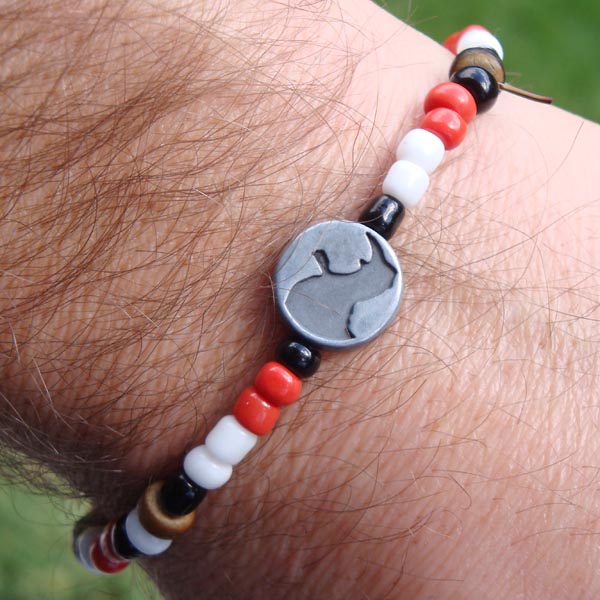
An awareness bracelet, sold in South Africa to collect funds to support the fight against rhino poaching.
(© All Rights Reserved)

Rhino poaching has reached shocking levels. In South Africa, one of the worst hit countries in the world, almost 1400 rhinos have been lost since 2008, and despite attempts at curbing the problem, the numbers are increasing daily. According to the latest statistics 388 rhinos have already been killed in 2012 alone. Policing the crime is extremely difficult, as it involves patrolling vast areas of land, and dealing with criminals that are ruthless, mobile and flexible, and that can strike at any time. To stand any chance of addressing the problem, focus needs to fall on infiltrating and cracking poaching syndicates, and building up reliable informant networks. Unfortunately the challenge doesn’t stop there – there have been numerous reports of game wardens and law enforcers being part of the poaching syndicates, thus counter-acting and nullifying the efforts spent on intelligence building.

Are we the last generation who will have the privilege of seeing scenes like this in the African wild?
(© All Rights Reserved)

Continued poaching is a symptom of larger societal problems such as unemployment and poverty, and a long as these remain, and there remains a lucrative market for rhino horns, stopping the poaching is nigh impossible. Sadly there is a growing demand for rhino horn in Asia, where it is used as traditional medicine.  As Dr Morne du Plessis, CEO of WWF South Africa, has pointed out, “Asian and African governments must work together to disrupt trade chains and to bring wildlife criminals to justice. Demand for rhino horn and elephant ivory is threatening to destroy a large part of Africa’s natural heritage. We want to see illegal markets for these products in Asia shut down for good.”

According to Dr. Joseph Okori, WWF’s African Rhino Programme Manager, “Rangers are putting their lives on the line to protect these animals from poachers and traders who are motivated only by greed. We salute all those working tirelessly to secure a future for rhinos, and we call on government leaders in Vietnam and China to do their part.”

Rhino poaching is one of the truly horrific crimes against nature committed by man, and it is shocking that it is continuing at such levels in this day and age. One can only hope that somehow, somewhere authorities will be able to find a solution if there is to be any hope of these proud animals being saved for future generations.

Give Mother Earth a break on Zero Emissions Day

Care for the health and wellbeing of Mother Earth? Then today is a good day to show her how you feel – it’s Zero Emissions Day, time to take a 24 hr holiday from fossil fuel energy.

Zero Emissions Day (ZeDay) celebrates it’s 5th birthday in 2012, and this year the theme is ‘Reboot!’. As the ZeDay website says, “Shut down everything non-essential powered by fossil fuels for a day – press reset – and then start up fresh. ZeDay 2012 marks our new beginning and you can help make it happen…”

This is what we’re doing to the environment with our energy-hungry lifestyles.
(© All Rights Reserved)

The idea is simple – don’t burn oil, gas or coal and minimize your electricity use – do this for just one day. The amount of energy consumed by modern society is staggering, with more and more power-hungry devices becoming part of our daily lives – ebook readers replacing books, tablets replacing notepads, GPS devices replacing maps, smartphones replacing personal contact… The list goes on. And all these devices need to be charged and powered… And all this power needs to be generated… And the bulk of the electricity generated globally is still fossil-fuel based, with only a small percentage generated through renewable sources such as water and wind.

The purpose of ZeDay is to give the earth a ‘rest day’ – from biblical times, the idea of a day of rest at regular intervals was promoted as a good thing, and with the pace of life increasing to the point where we simply don’t slow down anymore, re-instituting the rest day concept is a very necessary. We all need a chance to shut down and reboot every now and then, and the same applies to the environment. The date of 21 September was selected to coincide with the United Nations International Day of Peace.

Take a break, and give Mother Nature a breather as well.
(© All Rights Reserved)

Realistically, completely avoiding the consumption of any fossil-fuel generated energy for 24 hours is almost unthinkable – no driving, no cooking, no hot water, no computers, no TV, radio or Internet – and people who have done it have reported the experience to be ‘profoundly transformative’. Definitely something to strive towards – even if it’s too late to do it today, seeing that the day is already halfway through, nothing stops us from celebrating our own private ZeDay on any other date. In fact, if you can achieve more than one a year, even better. Admittedly many people will never quite go this far, but even if the day just acts as a reminder that we can all do our bit to limit our energy consumption in daily life, it would already be a victory for Mother Earth.

Go one, try it – imagine how good it’ll make you feel about yourself!

(OK, I should switch off now…)

James Dewar, Thermos and the vacuum flask

Today we celebrate the birthday of Sir James Dewar, Scottish chemist and physicist, born on 20 September 1842.

Dewar was a dynamic, innovative scientist who was responsible for many scientific advances in both chemistry and physics at the turn of the century, but is perhaps best remembered for an innovation that he never received any financial recognition for. In 1892 he developed an insulating flask known as the Dewar flask, which became the inspiration for the legendary Thermos insulating flasks. The design of Dewar’s vacuum flask, commercially introduced by Thermos in 1904, is so simple and elegant that it has remained virtually unchanged to this day, and it remains as useful as it was more than a century ago.

A thermos flask and a steaming cuppa – gotta love a simple, effective design.
(© All Rights Reserved)

Dewar’s initial motivation for developing an insulating container came from his work in the liquefaction of gases, where he needed to keep the liquified gases at a very low temperature. In the early 1890’s he designed a vacuum-jacketed container (a double-walled flask with a vacuum between the two silvered layers of steel or glass) to store the gas. The vacuum layer in the flask proved so efficient at preventing the transfer of heat to the gas that he was able to preserve it in liquid form for much longer than was previously possible, thus enabling him to study the properties of the liquified gas in much more detail.

Sadly, Dewar never patented his invention, which allowed the newly formed German company Thermos GmbH to take over the concept and develop a commercial version of the vacuum flask.

The Thermos flask was an international success, used extensively in both domestic and industrial applications ever since it’s release. The name “Thermos” became colloquially synonymous with vacuum flasks in general, to such an extent that it was declared a ‘genericized trademark’ in the US in 1963.

Personally, while I find it sad that Dewar never got any financial recognition for this amazing invention, I have to admit my undying commitment to my good old Thermos flask. It goes everywhere with me – I am seldom on assignment out of town without a trusty flask of hot, home-brewed coffee by my side.

Come to think of it, I should definitely pour myself a steaming cuppa from my trusty Thermos in celebration of Dewar and his great invention!

Machine translation, social media and talking like a pirate

Today, as you most likely know, is Talk Like a Pirate Day. Of all the holidays on the silly side of the spectrum, this is surely one of the most famous – the amount of websites and blogs dedicated to the day is mind-boggling, and it even features regularly in the news.

Thanks to smartphones, social media and machine translation, pirate-speak rules the cyber seas for a day.
(© All Rights Reserved)

My personal theory on the popularity of the day is that it is all thanks to technology, and more specifically machine translation and social media. Thanks to advances in machine translation there are numerous translators available on the web and downloadable as smartphone apps, allowing you to enter a sentence or phrase in English, and instantly get some pirate-speak version of the phrase spat back at you.

And thanks to social media, every poster and tweeter becomes a foul-mouthed pirate for a day, filling up cyberspace with their pirate-speak wisdom.

While many of these pirate-speak translators only perform the most basic word substitutions, with perhaps a small set of additional linguistic rules, the fact remains that machine translation – not long ago still only the subject of science fiction and academic research – has well and truly become part of our daily lives.

Machine translation can be done using a range of different techniques, including rule-based, statistical and example-based translation – different approaches work best in different applications. While no systems have yet achieved the ultimate goal of fully automated, high-quality machine translation of general text, massive progress are still being made, and excellent results have been achieved when applying machine translation within limited, well defined domains, for example weather reports or legal documents. The technology also deals effective with short phrases, making it very useful in search engines, social media sites and the like.

Getting back to Talk like a Pirate Day, here’s the results from a few web-based pirate-speak translators, using as our input the classic opening line from Ernest Hemingway’s The Old Man and the Sea (1952), “He was an old man who fished alone in a skiff in the Gulf Stream and he had gone eighty-four days now without taking a fish.”

“Blimey! He was an barnacle-covered scurvy dog who fished alone in a skiff in thee Gulf Stream and he had gone eighty-four days now without taking a fish.” (http://speakpirate.com/)

“He be an old man who fished alone in a skiff in th’ Gulf Stream an’ he had gone eighty-four days now without takin’ a fish.”
(http://www.syddware.com/cgi-bin/pirate.pl)

“The orrrnerrry cuss werrre bein’ an barrrnacle-coverrr’d swashbucklerrr who fish’d like an isle in a skiff in th’ Gulf Strrream and he had gone eighty-fourrr days now without takin’ a fish, and a bottle of rum!.”
(http://www.capstrat.com/go/pirate/)

“He was an old man who fished alone in a skiff in t’ Gulf Stream and he had gone eighty-four days now without takin’ a fish.”
(http://www.fissio.com/pirate.pl)

Well there you have it – conclusive prove that not all translators are created equal!  Whichever dialect you opt for, have fun and enjoy all the seafaring silliness. 🙂