The 29th of March is Smoke and Mirrors Day, also known as the Festival of Smoke and Mirrors.
The phrase ‘smoke and mirrors’, which generally refers to fooling or deceiving someone into believing what is not, originated from the old magic shows in the 19th century, when magicians used strategically positioned mirrors to produce illusions for the audience. At times it was necessary to move the mirrors, or to secretly change something else on stage, and this was hidden from onlookers using well-timed bursts of smoke.
Smoke and mirrors day is there to remind us (the naive and gullible among us, in particular), that things are not always as they seem. Politicians, salespeople, entertainers – these are all people skilled at fooling their audience through cleverly applied verbal and non-verbal smoke and mirrors.
So while being distrustful of anyone and everyone is not a healthy way to go through life, we can definitely all do with a healthy dose of scepticism – watch out for those smoke and mirrors, people! 🙂
Today, 28 March, is Weed Appreciation Day. Not ‘weed’ as in cannabis, but rather in the Merriam-Webster sense of the word, “a plant that is not valued where it is growing and is usually of vigorous growth.”
Today is the day to show some appreciation to these often irritating plants that tend to overgrow everything else in our gardens. While they may be pushy, over-enthusiastic and sometimes just plain rude in the extent to which they take over with little or no regard for other plants, many weeds actually have some useful redeeming qualities.
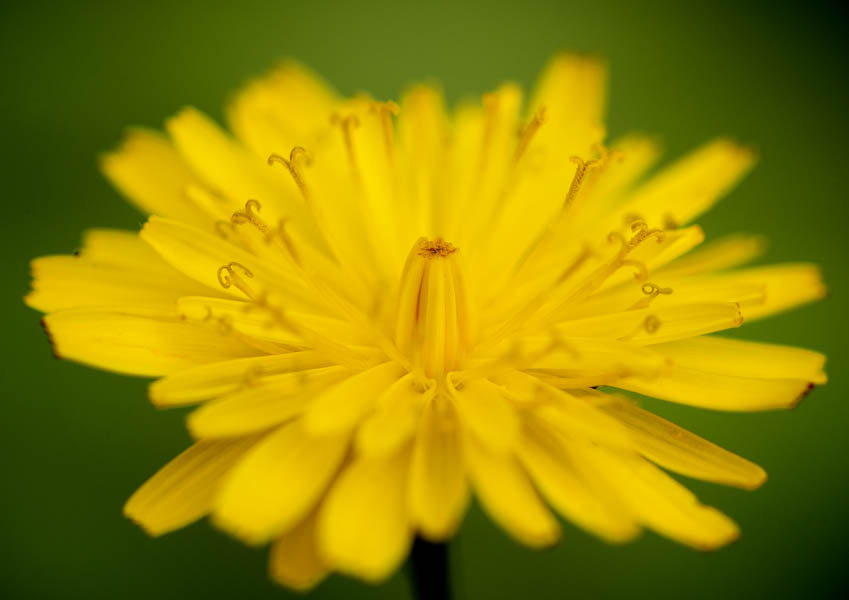
I’ve already waxed lyrical about jam made from wild blackberries, and other great edible wild foods, but there are many more, perhaps less striking, examples of useful weeds around. Take the teeny little dandelion (Taraxacum officinale), for example. While frustrating many gardeners by popping up all over the lawn with their cheery yellow flowers, they are actually amazing plants.
Edible in their entirety, dandelions are an abundant source of Vitamins A, C and D, and chock-full of thiamine, riboflavin, calcium, sodium, potassium and lithium. Its taproot system helps bring nutrients to the surface for shallower-rooting plants, and it’s good for nitrogen enrichment. It is also a good food source for various birds, and attracts pollinating insects. Dandelion flowers can be used to make wine; the roasted roots can be ground to make a caffeine free coffee substitute, and they’re traditionally an ingredient in root beer. The leaves and flowers can also be eaten in salads and sandwiches. Medicinally, dandelion extract have been used to treat infections and liver problems, and as a diuretic.
All that from the lowly little dandelion. Now just imagine all the other equally useful weeds in your garden, and you quickly realise weeds can really be a cause for celebration.
Of course, when harvesting weeds for culinary or medicinal purposes, it’s important that you correctly identify the plant – you don’t want to end up like the American adventurer Christopher McCandless, whose amazing life and sad death is chronicled in Jon Krakauer’s book “Into the Wild”. There’s no lack of information on the topic, from websites (just make sure it’s a credible source!) to many good books, like Andrew Crowe’s “A Field Guide to the Native Edible Plants of New Zealand”, Bradford Angier’s “Field Guide to Edible Wild Plants” and James Wong’s “Grow Your Own Drugs: Easy Recipes for Natural Remedies and Beauty Treats”, to name just a few.
There’s a world of wonder out there – happy foraging!
It was on this day, almost 160 years ago (27 March 1855, to be exact), that Abraham Gesner received his first US patent for the production of kerosene, a combustable, hydrocarbon oil produced from bituminous shale and cannel coal. The word ‘kerosene’, registered as a trademark by Gesner, was derived from the Greek ‘keros’, meaning ‘wax’.
The term eventually became a genericised trademark, and is generally used in Australia, New Zealand, Canada and the United States. In other regions, including the UK, South Africa and South-East Asia, it is more generally known as ‘paraffin’.
Kerosene is one of the most widely used fuels, used in diverse applications ranging from rocket engines to camping stoves. The fuel was originally developed by Gesner ‘for the purpose of illumination’, and this remains its most common use in rural Africa and Asia where electricity is not available or too costly. It is estimated that an incredible 77 billion litres of kerosene are burnt internationally per year for lighting purposes.
Thanks to its rather low flame temperature when burnt in open air, kerosene has also become popular as the fuel of choice for entertainers such as fire breathers, jugglers and dancers, as it has less risk of causing severe burns should it come in contact with the performer.
Another interesting use of kerosene is as a pesticide – it has been proven to be effective at killing insects such as bed bugs and head lice, and can be applied to pools of still-standing water to kill mosquito larvae. It is, however, toxic and potentially fatal when ingested hence care should be taken to avoid human contact.
From powering rockets to illumination to fire dancing to insect control – a versatile fuel indeed.
Today we celebrate the birthday of one of the most colourful and eccentric characters in the world of mathematics (a domain not short on eccentrics at the best of times)- the Hungarian Paul Erdős (26 March 1913 – 20 September 1996).
Erdős, a serial collaborator, was one of the most prolific publishers of mathematical papers in history. The volume of his output has been compared with the great Leonhard Euler, but while Euler published more pages (mostly as solo author), Erdős published more articles (more than 1500 in his lifetime), many in collaboration with other mathematicians.
The British mathematician and author Timothy Gowers once wrote an essay entitled “The Two Cultures of Mathematics”, in which he classed mathematicians into two groups – the ‘problem solvers’ and the ‘theory developers’, with the latter often held in higher regard in the history of mathematics. Erdős, however, definitely fell into the former category – he was particularly fond of those problems that appeared simple to understand, yet notoriously difficult to solve. Most of his work focused on number theory, combinatorics, approximation theory, set theory and probability theory. However, thanks in part to his fondness for collaborating with other mathematicians, he also made contributions in completely unrelated fields such as topology.
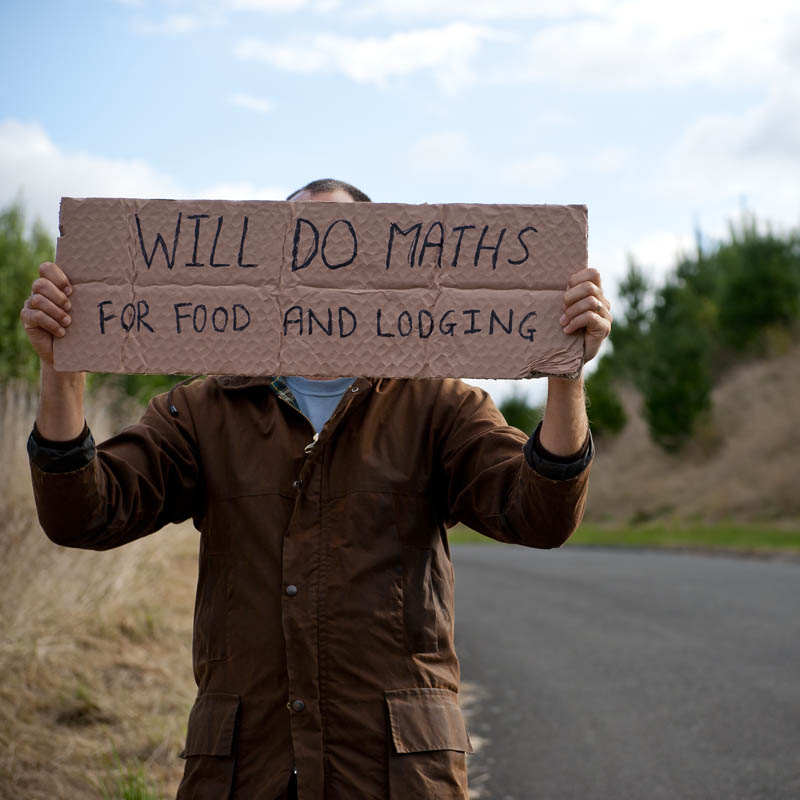
As mentioned before, Erdős was known to be a bit of an eccentric. He had little interest in earthly possessions, giving most of what he had away to causes he considered worthy. Most of his life fit into a single suitcase, and since he first emigrated from Hungary (moving first to England, and later to America after accepting his first position at Princeton University), he lived a nomadic lifestyle, travelling between different mathematical colleagues and collaborators. It is said that he often arrived without warning, pitching up on a prospective collaborator’s doorstep with the words “My mind is open!”, to indicate his readiness to collaborate. After staying for a few weeks, he would move on to the next destination.
In recognition of his prolific collaborations, Erdős’ friends devised the ‘Erdős number’ – an indicator of a person’s degree of separation from Erdős himself (in terms of mathematical collaboration). Thus Erdős had a number of 0, while his immediate collaborators had an Erdős number of 1, his collaborators’ collaborators had an Erdős number of 2, and so on. Due to the extent of his mathematical collaborations, and the collaborations of these individuals with scientists from other fields, many physicists, engineers, biologists etc also have low Erdős numbers.
Despite the extent of his publications and collaborations, Erdős never received mathematics’ highest prize, the Fields Medal, nor did he co-author a paper with a recipient of this award. He similarly missed out on many other of the more illustrious mathematics awards, with the most significant award bestowed on him probably being the Israeli Wolf Prize.
Despite this lack of formal recognition, Erdős’ contribution to a wide range of mathematical topics have been acknowledged by his peers, and he is fondly remembered as someone with an unwavering passion for numbers, and one of the most colourful characters in mathematics.
The day is dedicated to the waffle, a delicious dough-based dessert delicacy with a long history – the waffle, as we know it, developed from the ‘oublie’, a grain-flour communion wafer prepared from the 10th century. The modern-day waffle exists in many versions, from thin, stiff, syrup-filled Dutch waffle-cakes (‘stroopwafels’) to large, light and fluffy Belgian waffles, with numerous other varieties (American waffles, Hong Kong style waffles, Scandinavian style waffles, etc) in between.
Waffles are often served with cream or ice-cream and syrup, and often sprinkled with icing sugar. In addition, fruit such as bananas and berries can add an extra dimension, while chocolate is another option to add to the waffle’s decadence.
International Waffle Day is the perfect time to ‘go international’ and explore some new waffle varieties, or to at the very least try your favourite style with a new topping.
Today, Sunday, 24 March is World Tuberculosis Day. This is the second year of a 2-year “Stop TB in my lifetime” World TB Day campaign.
Despite all the work already put into eradicating the world of TB, it remains a killer or massive proportions – each day, 4000 people lose their lives to the airborne disease. What makes this number even more tragic is that TB is curable at a reasonably low cost, yet in many regions the fight against the disease remains grossly underfunded.
The international health target with regards to TB and HIV-associated TB is to halve the number of TB-related deaths by 2015, compared to 1990 levels. While some parts of the world are on track, the developing world lags behind, with TB-deaths in the African region still being particularly high. According to the World Health Organisation, about 600 000 people died from TB in Africa in 2011 – that is 40% of the global TB death toll. What makes this number significant is that the number of TB deaths in Africa is higher than that of Asia, despite Asia having much higher population numbers, and more TB cases. The difference is that TB in Asia can be more effectively treated thanks to better funding. One of the other problems in Africa is the high levels of TB/HIV co-infection, complicating the treatment regime.
In a potentially positive move, health leaders form the southern African regions (the epicentre of the TB/HIV epidemic in Africa) have come together to address the problem, and they have just released plans for a “1000 day push” to upscale the offensive against TB in Africa, including TB among people living with HIV.
“Armed with a package of new investments and initiatives worth more than US $120 million, the leaders signed the Swaziland Statement, committing them to accelerate progress against the two diseases in the next 1000 days and work with Southern African Development Community (SADC) countries to achieve the international targets of cutting deaths from TB and HIV-associated TB by half by 2015, compared to 1990 levels.”
This is positive news for World TB Day, and we can only hope that, despite the African region’s dismal health record, some real good will come of this initiative, thus keeping alive the dream of eradicating TB in the lifetime of this generation.
On 23 March each year, the worldwide meteorological community joins the World Meteorological Organisation (WMO) in celebrating World Meteorological Day. This commemorates the day in 1950 that the WMO was created, and also serves to create awareness around meteorology and the important role it plays in our daily lives. Every year has a special theme, this year being “Watching the weather to protect life and property”.
Given the loss of human life and destruction of property we’re witnessing internationally with increasing regularity, resulting from natural disasters such as droughts, floods and tornados, it is obvious that early awareness of potential extreme weather conditions is critical for the protection of life and property. And it is here that meteorology plays such a key role – it is the science that deals with the study of past weather patterns and trends, in order to predict what the weather holds in the future.
To find out more about the meteorology and its role in protecting life and property, have a look at the WMO’s cry informative World Meteorology Day brochure. As the document points out, “weather and climate knows no national borders”, and so this is another of those domains where international cooperation and sharing of knowledge and resources is absolutely critical to benefit all of humankind. To this end, it is also pertinent that 2013 marks the 50th anniversary of the establishment of the World Weather Watch – a landmark in international cooperation. The World Weather Watch “combines observing systems, telecommunication facilities, and data-processing and forecasting centres in order to disseminate essential meteorological and related environmental information and services in all countries.”
As extreme weather conditions become more commonplace (due to global climate change), investment in new technologies to more accurately predict extreme events and natural disasters are becoming increasingly important. Investing in early warning technologies allowing us to be ready sooner – to prepare for, and even prevent, disasters – makes perfect sense. As an example of this, an international project known as THORPEX (THe Observing system Research and Predictability EXperiment) is working on new techniques and technologies to extend forecasts of high-impact weather events to two weeks (current state of the art systems can provide reliable predictions of between 5 and 10 days). THORPEX is an international collaborative project between ten leading forecasting centres.
To quote M Jarraud, Secretary-General of the WMO: “More than ever the world needs global cooperation to promote and coordinate the provision of better and longer-term weather and climate forecasts and early warnings to protect life and property. The 2013 World Meteorological Day offers an occasion to reinforce this message and to contribute to address- ing the challenges of the 21st century.”
Definitely a message worth supporting and sharing.
World Water Day is celebrated on 22 March each year, to focus attention of challenges facing freshwater, and to advocate for the sustainable management of freshwater resources. The day was first celebrated in 1993, making this year the 21st anniversary of World Water Day.
In 2013 the day is dedicated to the theme of cooperation around water.
The importance of sustainable freshwater management, and cooperation around water supply and availability quickly becomes apparent when we look at some of the current facts and medium term future predictions. Currently, worldwide, 783 million people do not have access to clean water and almost 2.5 billion do not have access to adequate sanitation. Given the anticipated growth in the world population, food demand is expected to grow by 50% by 2030, while the demand for renewable energy from sources such as hydropower may rise by up to 60%. All these growths, together with an anticipated decrease in water availability in many regions, will lead to ever-increasing competition for water between the different water-consuming sectors such as the energy sector and the agricultural sector. Changes in diet (for example a shift from a starch-based diet to more meat and dairy) places further pressures on water availability, as producing these foodstuffs typically require more water.
The only way to possibly address the above situation is through multinational water cooperation. Many of the largest freshwater basins around the world are shared by more than one country, making sound cooperation critical. Food production and consumption (which can be equated to ‘virtual water’) is also shared across borders, again requiring responsible management and cooperation practices.
Water cooperation includes the sharing and exchange of scientific knowledge, management strategies and best practices, which are all fundamental to achieve sustainable development and protect the environment.
This is not just an issue that needs to be addressed at national, governmental level. Sound water management and cooperation is required at all levels, and as stated on the World Water Day website, “A general engagement, both individual and collective, is required for disseminating knowledge and the awareness of the value of water cooperation at local, national and international scales.”
21 March has been proclaimed by the United Nations General Assembly as International Day of Forests. On this day, attention falls on the importance of forests of various types, and in various locations around the world. Countries are encouraged to engage in local, national and international efforts to organise activities promoting forests and drawing attention to the role forests play in the environment.
As explained on the International Day of Forests website, the importance of forests can hardly be overstated:
Rain forests are the world’s biggest producer of oxygen, generating more than 40% of all the oxygen in the world.
Beyond oxygen production, forests also regulate the balance of oxygen, carbon dioxide and humidity in the air.
A tree releases almost 10 times more moisture into the atmosphere than the equivalent area of ocean.
Forests protect and direct fresh water supply to rivers.
Forests house more than 80% of the world’s terrestrial biodiversity.
Thousands of forest plant species are used for medicinal and cultural purposes.
Forests provide resilience to natural disasters, helping with soil and water conservation, avalanche control, desertification control and coastal protection.
Mangrove forests provide a barrier against tsunamis, cyclones and hurricanes.
The loss of forests through deforestation can have a massive ecological impact:
Deforestation tends to result in soil erosion, which in turn leads to rivers becoming silted, reducing the availability of clean water.
It is estimated that deforestation could account for the loss of as many as 100 species of fauna and flora a day.
Perhaps most importantly, forests represent a critical component in addressing global climate change. Currently, the world’s forests are estimated to store almost 300 gigatonnes of carbon in their biomass. Deforestation and forest degradation not only erodes the carbon stores, but has already resulted in more than 17% of global greenhouse gas emissions. If deforestation can be halted, it can have a huge impact, not only ecological but also financial. According to the Stern Review on the Economics of Climate Change (2006), halving greenhouse gas emissions can save the world more than $3.5 trillion between 2010 and 2050.
While deforestation feels like one of those ‘big issues’ that are almost too big to do something about as an individual, this needn’t be the case. We can all do our bit, even if it’s something as small as talking about the issue, planting a tree, or joining/supporting a local forest rejuvenation group or initiative. Just as a massive forest grows from tiny, individual trees, huge impacts can flow from humble, individual actions.
In 2012, the United Nations (UN) declared March 20 to be observed as the International Day of Happiness. This means that today we are lucky enough to be witness to the First United Nations International Day of Happiness.
The day aims “to promote happiness as a universal goal and aspiration in the lives of human beings around the world.” It recognises happiness as a fundamental human goal, and calls upon countries to adopt public policies that promote the wellbeing of all its peoples. Focussing on the happiness of all citizens is really a simple way of promoting inclusive, equitable and balanced communities, where no groups are disadvantaged at the expense of others, and where each person has an equal right to a happy and prosperous life.
International Day of Happiness originated in Bhutan, the Himalayan Kingdom said to have some of the happiest and most content citizens in the world. Bhutan has led the way in focusing on societal prosperity, by developing a national performance measure called the Gross National Happiness (GNH) Index. This measure rejects the more common approach of using economic and material wealth alone as an indicator of development. Instead, the GNH Index promotes a more holistic outlook which takes into account both material and spiritual well-being.
To promote happiness as an international goal, we can each do our part in a very real way. Unlike with many other UN commemorations, which often appear so big and daunting that it feels like we as individuals cannot really do much about it, International Day of Happiness is dead simple – if you can do something, however small, to make one other person happy, you’ve already made a huge contribution. Be kind, show appreciation, and importantly, cheer the happy heroes – those people who bring happiness to others in their communities. If you know someone out there doing good and making people happy, share it with the world – you may be amazed how empowering simple acknowledgement and recognition can be.
And remember that making the world a happier place begins with focusing on your own happiness. To quote the immortal words of Mahatma Gandhi, “Happiness is when what you think, what you say, and what you do are in harmony.”
That’s a pretty big statement, and definitely something we can adopt as a fundamental goal in life.





 Sciencelens