Page 2 of 3

Creating awareness about chronic immunological and neurological diseases

It’s 12 May, and today is International Awareness Day for Chronic Immunological and Neurological Diseases (CIND). Diseases included under the CIND moniker include Myalgic Encephalomyelitis/Chronic Fatigue Syndrome (ME/CFS), Fibromyalgia (FM), Gulf War Syndrome (GWS) and Multiple Chemical Sensitivities (MCS).

Originally known as ME/CFS Awareness Day before it was expanded to include the wider range of diseases above, the date of 12 May was chosen as it is the birthday of Florence Nightingale, who was believed to have suffered from ME/CFS.

A challenge often faced by ME/CFS sufferers is a lack of understanding among those around them. (© All Rights Reserved)
A challenge often faced by ME/CFS sufferers is a lack of understanding among those around them.
(© All Rights Reserved)

While the illnesses included under the CIND banner are all different and unique, they are all chronic diseases with many symptoms in common, including fatigue, headaches, joint & muscle pain, indigestion, insomnia, dizziness, respiratory disorders, sensitivity to light and sound, and memory problems.

The idea behind CIND Awareness Day is to raise the awareness profile related to the diseases mentioned above; to stress the very real and highly debilitating effect that these diseases can have on those suffering from them. The vague nature of the symptoms, the overlap between the diseases, the fact that symptoms can vary greatly from one sufferer to the next, and the fact that no clear biological, genetic, infectious or psychological mechanism exist to define the diseases, combine to make them very difficult to correctly diagnose. Symptoms also overlap with several other illnesses, including Lyme disease, diabetes, depression, lupus, hypothyroidism, chronic hepatitis and multiple sclerosis (MS). As such, diagnosis of these diseases are often done through a process of elimination of any other possible ailments.

One of the greatest challenges posed by diseases like ME/CFS and Fibromyalgia is that, due to the symptoms being so vague and difficult to pinpoint, sufferers are sometimes seen as being hypochondriac or faking it. Non-sufferers find it difficult to relate to the extent of the debilitation, expecting sufferers to just ‘snap out of it’. If the CIND Awareness Day can succeed in helping to dispel this misunderstanding, it will already have achieved a huge amount.

To find out more about the day, and to get involved, have a look at Clark Ellis’ article on the ProHealth website – it gives excellent background to this Awareness Day, and lists specific activities happening in different parts of the world.

Awareness and understanding is a key part of the struggle for people suffering from ME/CFS, FM and other related diseases, so the least we can do is to help spread the word.

The science of the waltz

According to the website HistoryOrb.com, the 11th of May 1812 was the day that the waltz was first introduced into English ballrooms. Of course this date does not represent the first performance of the popular dance form known as the waltz – it originated much much earlier, around the 16th century, to be exact.

The waltz must be one of the most stylish and graceful of the classic ballroom dance styles. (© All Rights Reserved)
The waltz must be one of the most stylish and graceful of the classic ballroom dance styles.
(© All Rights Reserved)

Initially a vigorous peasant dance with wild, wide steps, the waltz became more ‘proper’ and elegant as it was introduced to higher society. The hopping action in the country waltzes became a sliding step, and the dance involved an elegant gliding rotation. Early waltzes were defined more by the gliding rotation than the 3/4 beat. Over time, however, the waltz became the dance we know and love today, based essentially on the Viennese waltzes of the late 18th century. In contemporary ballroom dancing, the fast version of the waltz is referred to as the ‘Viennese waltz’.

Being a dance based on a ‘closed’ dance position, the waltz was considered quite shocking and even immoral when it was first introduced. Hard to imagine when you consider how proper and subdued a waltz seems these days, compared to some modern dance forms – it isn’t exactly ‘dirty dancing’!

Now in case you’re wondering what the scientific significance of the waltz is, I’d have to concede I haven’t been able to find ‘the science of the waltz’. But, I did find information about a computer scientist called David Waltz, who posed some interesting theories about the increasing role that computers are playing in scientific experiments.

Waltz suggested that computers are not only useful in data collection, but may also start playing increasingly important roles in scientific evaluation and decision making. According to an article published in Science by Waltz and his colleague Bruce Buchanan, “the prospect of using automated systems as assistants holds vast promise as these assistants are becoming not only faster but much broader in their capabilities — more knowledgeable, more creative, and more self-reflective. Human-machine partnering systems that match the tasks to what each partner does best can potentially increase the rate of scientific progress dramatically, in the process revolutionizing the practice of science and changing what scientists need to know.”

Fascinating stuff, but admittedly a tenuous link to the Viennese waltz of a couple of hundred years ago. So for now, let’s just get back to the grace and style of the classic waltz – surely enough reason for celebration in itself.

Marcel Mauss and the psychology of gift-giving

Today we celebrate the birthday of Marcel Mauss (10 May 1872 – 10 Feb 1950), the French sociologist and anthropologist best known for his work on social exchange and gift-giving. His most famous book is ‘The Gift’ (1925).

Mauss had very interesting views about gifts and gift-giving that really makes you re-evaluate the whole custom of giving gifts. His main argument is that gifts are never free. History shows that gifts almost without exception give rise to reciprocal exchange, or at least the expectation thereof. So his basic research question became “What power resides in the object given that causes its recipient to pay it back?”.

This is a complex question with an equally complex answer, and according to Mauss it has to do with the fact that a gift engages the honour of both the giver and receiver. It becomes an almost spiritual artefact. The gift is irreversibly tied to the giver – in Mauss’ words, “the objects are never completely separated from the men who exchange them.”

The gift - a simple gesture resulting in complex interpersonal social bonds. (© All Rights Reserved)
The gift – a simple gesture resulting in complex interpersonal social bonds.
(© All Rights Reserved)

Because the gift is so tightly linked with the giver and receiver, the act of giving implies an important social bond, obligating the receiver to reciprocate with a return gift. Not acting on this obligation results in loss of honour and status, and in some cultures may even have detrimental spiritual implications – in Polynesian culture, for example, failure to reciprocate the gift-giving is said to result in a loss of one’s spiritual authority.

What is particularly fascinating in Mauss’ theories is the idea that, unlike something that changes ownership by getting bought and sold, a gift is forever bound to the giver. It never fully changes ownership – it is almost as though it is only given on loan, hence the difficulty of selling, or even giving away, something that was gifted. This also affects the need to reciprocate – by gifting something in return effectively repays the ‘gift-debt’. Now of course the returned gift is again irrevocably tied to the giver, and so a surprisingly strong social tie is created between two people who have exchanged gifts – they effectively own a piece of each other.

All this ‘baggage’ related to a gift really complicates the apparently simple act of giving a gift to someone, doesn’t it? In a way I feel Mauss’ theories over-complicate the whole gift-psychology, but when you think about it, it does really make sense. And while the responsibility to reciprocate feels like a negative concept, the idea of a strong social tie being created between gift-exchangers is quite nice, especially when you exchange gifts with loved ones. Perhaps the whole reason for exchanging gifts is to strengthen the bond between people.

So, next time you consider giving someone a gift, remember that you are entering into a significant social bond. But it’s not a bad thing – it’s exactly these social bonds that form the basis of our larger social cohesion. Gifts link you to others, weaves you into the social fabric of your community, and ties you to loved ones.

So don’t stop giving!

Creating awareness about the challenges of global accessibility

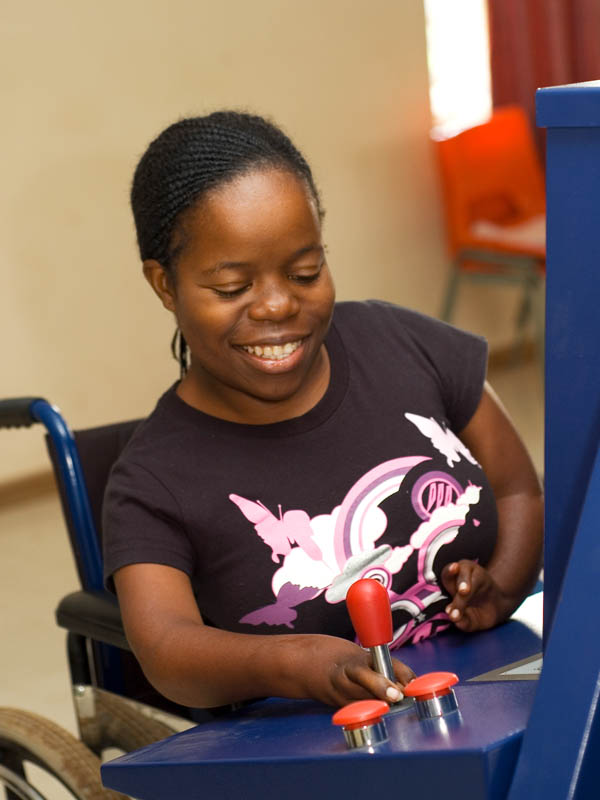
Today we’re getting into the technology space again as this day, 9 May 2013, is Global Accessibility Awareness Day, or GAAD.

gaad-logo-miniMore specifically, it is about ‘digital accessibility’ and creating awareness about the tireless quest of many designers and developers to make digital technology accessible, usable and inclusive to users with different disabilities. As stated on the GAAD website, “professionals who work in the field of digital accessibility often find themselves preaching to the converted”, and through this day they are hoping to remedy the situation. To get involved, you can like the GAAD Facebook page, follow @gbla11yday on twitter, or tweet on the subject using the hashtag #gaad.

Global Accessibility Awareness Day is all about equal access to technology for people living with a wide range of disabilities. (© All Rights Reserved)
Global Accessibility Awareness Day is all about equal access to digital technology for people living with a wide range of disabilities.
(© All Rights Reserved)

To make the idea of digital access for the disabled more tangible to able-bodied people, the GAAD website suggests a number of activities one can engage in:

  • Going without a mouse or touchpad for an hour, and try to work using your keyboard only (tab/shift tab, arrow keys, enter and spacebar).
  • Surf the web for an hour using only a screen reader, such as the free/open source NonVisual Desktop Access (NVDA) application for PC, or the built-in screenreader called VoiceOver on Mac.
  • Learn about and try out some of the accessibility features already included in Windows 7, Mac OS X, iPhone, Android and Blackberry.

Spending some time with the above tools really hammers home the incredible challenge faced by people with disabilities to keep up with the digital revolution. It is so easy for us to just accept and embrace the digital-everything world we are living in, without spending a minute to think about the extent of exclusivity and discrimination that is an inherent part of this world. Not only are there millions of disabled people in digitally accessible areas who cannot fully take part in this world – there are billions more, able-bodied and disabled, who don’t even have the luxury of basic digital access (but that’s a whole different story).

At the same time, spending time with these accessibility tools also reminds us of the incredible work that designers and developers have already done (often as unpaid volunteers) to make global accessibility a reality. Given where the world has gotten to, this is a massive challenge that needs support, both financially and in terms of awareness creation. So use this day to experience it, talk about it, and if at all possible, getting involved – either as a technical contributor or as a lobbyist and campaigner for the cause.

Celebrating good first impressions on Receptionists Day

According to my sources, today, 8 May (the second Wednesday in May), is Receptionists Day. Everyone knows Bosses Day and Secretaries Day, but I have to say the lesser known Receptionists Day is perhaps the most important of the office worker days. The receptionist is, after all, the person who very often represents the first line of human interaction between a company and its clients. Whether by telephone or in person, it is the attitude, presentation and tone of voice of the receptionist that is the first thing a client experiences.

And as we all know, there’s only one chance to make a first impression, making the role of the customer-facing receptionist even more pivotal.

It is not only new clients who deal with the receptionist first. Existing customers, staff, VIPs – all these people are likely to pass the receptionist as they interact with a company.

Whether in person or by phone, the receptionist represents the first line of interaction with clients. (© All Rights Reserved)
Whether in person or by phone, the receptionist represents the first line of interaction with clients.
(© All Rights Reserved)

So, what are the secrets to a good first impression? The science of perception, if you will. According to Business Insider Australia, there are a number of key techniques that have stood the test of time. These aren’t rocket science, but are probably worth mentioning again quickly, so here goes:

  1. Dress for success. Unless you’re operating in a particularly creative space, opt for something not too loud – rather err towards neat, classic and conservative. You want to be remembered for you, not your outfit.
  2. Choose your words with care. Words are loaded; think about how you want to come across (confident? humble? innovative?), and favour words that enforce that.
  3. Strike the right tone. Keep it calm but enthusiastic.
  4. Be aware of your body language – how you sit, stand, etc. A confident smile and positive eye contact can do wonders.
  5. Use the name of the person you’re dealing with. Everyone like’s to be made to feel special and be singled out, and they will respond positively.
  6. Be on time. ‘Nuff said.
  7. Focus on the other person. Avoid talking too much about yourself (but don’t overdo it – you don’t want to appear pathetic or secretive).
  8. Be a good listener. Getting the other person to talk is not enough – you actually need to listen, comprehend, react and remember.
  9. Be careful with humour. While being too serious may not be good, jokes are risky, as different people’s sense of humour can be very different. Humour is also culturally specific and can easily be taken the wrong way.
  10. Do your research. Don’t go into an interaction unprepared; with all the social media tools available these days, there’s no excuse for not knowing a little about the person you are about to meet. (Obviously this does not apply to a cold call or unanticipated meeting.)
  11. Relax and be yourself. While it’s important to choose your words with care, be aware of your body language etc, don’t over think the situation. Sometimes coming across as too tense and calculated can be worse than accidentally saying/doing the wrong thing.

While I got to the above list in the context of Receptionists Day, it obviously applies much wider – whether you’re interviewing for a job, meeting a client, or going on a date, making a good first impression is key.

So, enjoy the day, appreciate the receptionists you meet, and remember those first impressions!

Individuality versus the ‘group mind’

Moving our focus to the social sciences, today we commemorate the birthday of social psychologist Gustave Le Bon (7 May 1841 – 13 Dec 1931). Le Bon is best known for his book, ‘The Crowd: A Study of the Popular Mind’ (1895, English translation 1896), a study of the psychological characteristics of crowds.

Le Bon’s explanation of crowd behaviour was based on two main propositions: (1) that people in a group adopt a ‘group mind’, and (2) that this group mind is irrational and emotional. He also held the opinion that the emotions and will of an individual can spread through a group like a virus, taking over the collective emotional state of the group.

In groups, according to Le Bon, the normal control mechanisms that regulate an individual (social norms, values, ethics), are broken down, allowing the group to act in ways that would have been unacceptable to any of the individuals within the group.

Groups and crowds often act in ways that are markedly different to how the members of the group would have acted individually. (© All Rights Reserved)
Groups and crowds often act in ways that are markedly different to how the members of the group would have acted individually.
(© All Rights Reserved)

Le Bon’s theories on crowd behaviour gained popularity in the early part of the 20th century, with people like Wilfred Trotter (‘Instincts of the Herd in Peace and War’) and Sigmund Freud (‘Group Psychology and the Analysis of the Ego’) popularising and expanding various aspects of his work. As such, Gustave Le Bon is rightly considered one of the key figures in the theory of group psychology and group dynamics. Group dynamics has since found application in anthropology, political science, psychology, sociology, epidemiology, education, business, social work and communication studies.

Political theorists found Le Bon’s theories particularly fascinating. It is said that Hitler’s ‘Mein Kampf’ exploited the group propaganda techniques first proposed by Le Bon. Benito Mussolini was also a keen student of his work, as was Theodore Rooseveld. Edward Bernays, in his book ‘Propaganda’, considered the manipulation of the ‘group mind’ through media and advertising, to be a major feature of democracy.

I find the idea of the ‘group mind’, and how it can override the individuals within a group, fascinating, and frankly more than a little scary. While intergroup dynamics can have constructive application in things like team sports and certain work settings, I am just too much of an outsider to feel comfortable being absorbed into a group mind. At the same time I know I am being manipulated daily into group thinking through advertising etc – quite a scary thought.

Perhaps today is a good time to remind ourselves about the dynamics of the group, to re-evaluate the pros and cons of being a team player, and to critically assess how individual will can be superseded by the group mind. And perhaps it’s time to take a step back and look critically at our surroundings, to try and avoid becoming so caught up in the crowd that we lose our unique individuality.

Promoting healthy eating on International No Diet Day

Today, 6 May, is International No Diet Day (INDD). Originally created in 1992 by Mary Evans Young, director of the British group ‘Diet Breakers’, the idea of the day is to fight the trend that people, and women in particular, are constantly made to feel embarrassed about their bodies, and always feel they should diet to lose weight and become more ‘socially acceptable’.

In her book, ‘Diet Breaking: Having it all Without Having to Diet’, she speaks about how irritating it became to her that women were forever experiencing little crises about having a biscuit or snack at teatime – “I shouldn’t really”, “I’ll have just one”, etc. She goes on to ask the question “What do you think would happen if you spent as much time and energy on your careers as you do on diets?”

It's not a good idea to starve yourself with fad diets, but it is a very good idea to stick to healthy foods. (© All Rights Reserved)
It’s not a good idea to starve yourself with fad diets, but it is a very good idea to stick to healthy foods.
(© All Rights Reserved)

Since its inception in 1992, INDD has grown to a wider awareness creation movement, addressing the potential dangers of dieting and other extreme steps people take to lose weight such as vertical banded gastroplasty surgery, also known as ‘stomach stapling’.

Many restaurants and food shops have also jumped on the bandwagon, using the ‘no diet’ message to promote the sale of indulgent foods and snacks. This, however, misses the point – the idea is not to promote over-indulgence. The point, I believe, is not that it’s fine to be obese and that you shouldn’t try to stay in shape. Obesity is a major problem in both men and women, and a contributor to an alarming percentage of deaths worldwide. As such it definitely needs to be addressed. The way to address it, however, is not through fad diets an starving yourself, but rather through healthy eating and regular exercise.

In it’s book ‘Weighing the Options: Criteria For Evaluating Weight Management Programs’, the American Institute of Medicine‘s Committee To Develop Criteria for Evaluating the Outcomes of Approaches To Prevent and Treat Obesity states:
“We agree, of course, that there should be more appreciation and acceptance of diversity in the physical attributes of people, more discouragement of dieting in vain attempts to attain unrealistic physical ideals, and no obsession with weight loss by individuals who are at or near desirable or healthy weights. However, it is inappropriate to argue that obese individuals should simply accept their body weight and not attempt to reduce, particularly if the obesity is increasing their risk for developing other medical problems or diseases.”

So, use International No Diet Day as a reminder to stop spending your life embarrassed about how you look, and to stop chasing one fad diet after another. But equally importantly, use the day as a reminder to change your long term eating habits towards eating more healthy food, and to start exercising.

Extreme diets and obesity are not the only two options – there is a healthy, sustainable middle ground that everyone can, and should, work towards.

Appreciating the bouncy bluegrass banjo beat

From celebrating of the paranormal and the celestial these past couple of days, we’re getting back to more a tangible topic today – 5 May is International Banjo Appreciation Day. And while I may lean towards the sceptic side when it comes to the paranormal, and I’m definitely a believer when it comes to the banjo.

Despite being a string instrument, the banjo is often used in a percussive, rhythmic capacity. With the body consisting of a thin membrane stretched over a circular frame as a resonator, the sound of the banjo is typically quite loud, strong and vibrant. It started off as a part of African-American traditional music, but was soon adopted into traditional western music, particularly American old-time music, including country and bluegrass.

The banjo - if you like the way it sounds, you're bound to like it's looks too. (© All Rights Reserved)
The banjo – if you like the way it sounds, you’re bound to like it’s looks too.
(© All Rights Reserved)

Someone once said it’s impossible to be depressed when a banjo is playing. Inherently bouncy and upbeat, it is often used to provide a driving, energetic accompaniment to songs. It is, however, more versatile than that – using different playing styles, the banjo has proved a valid instrument for a wide range of musical genres, from blistering bluegrass to sad country ballads to dixieland jazz to serious classical works.

Despite being such a multifunctional and widely used instrument, the word ‘banjo’ still makes many people think only of the duelling banjos scene in the movie Deliverance, and end up associating the instrument with a somewhat backward mentality.

Luckily the banjo is gaining ground, even in popular music, with bands like the Dixie Chicks a decade or so ago, and Mumford and Sons these days, introducing a younger pop-oriented audience to the driving banjo sound. And for those looking to explore further, the options are endless – from the neo-traditional brilliance of the Punch Brothers (who’s music have been quite succinctly described as ‘the sound of synapses firing’) to the prog-jazz stylings of the amazing Bela Fleck.

Go on, seek out some banjo music – and join me in celebrating this wonderful instrument.

May the Fourth be with you!

The story goes that in 2005, when Star Wars creator George Lucas appeared in a German news interview, he was asked to recite the famous line from the movie, “May the Force be with you.” The German interpreter, however, misinterpreted the line as “We shall be with you on May 4th”.

The above has given further prominence to the already popular pun “May the Fourth be with you”, and as a result May 4th has come to be celebrated as Star Wars Day.

It is well known that fans of the Star Wars movies are some of the most dedicated and committed among movie fans (as parodied regularly in the popular TV series Big Bang Theory, for example), so it doesn’t take much to convince them to dedicate a day to celebrating and honouring the films. Around the world, fans get together for special screenings, or simply to enjoy an opportunity to dress in their favourite Star Wars outfits and spend some time with fellow devotees. You can even get recipes for themed party snacks (Death Star popcorn balls or Wookie Cookies, anyone?) on StarWars.com, and don’t forget the blue milk!

It doesn't take a lot of convincing to get Star Wars fans dressed up in their favourite outfits from the movies. Some are, however, a touch more committed than others - not content to wear his Star Trooper outfit to Star Wars parties only, this fan opted to run 42km on a warm, sunny day in the Auckland Marathon in New Zealand.  (© All Rights Reserved)
It doesn’t take a lot of convincing to get Star Wars fans dressed up in their favourite outfits from the movies. Some are, however, a touch more committed than others – not content to wear his Star Trooper outfit to Star Wars parties only, this fan opted to run 42km on a warm, sunny day in the Auckland Marathon in New Zealand.
(© All Rights Reserved)

Besides the May 4th pun, May is a special month for Star Wars fans. The 6 movies of the series debuted in May, starting with the original Star Wars being released on 25 May 1977. ‘Return of the Jedi’ was released on 25 May 1983, making this year the 30th anniversary of its release. May is also the birthday month for George Lucas (born 14 May 1944), and it’s the traditional starting month for the Star Wars Weekends at the Walt Disney World Resort.

And of course 2013 is an exciting year for all die-hard Star Wars fans, as there is a new trilogy of movies due for release, starting with ‘Star Wars: Episode VII’, coming soon to a theatre near you.

If you want to join in on the action in cyberspace, your key is the hashtag #MayThe4thBeWithYou. Or you can get connected with events, blogs, fan groups and more on StarWars.com Connect.

Check it out – there may just be an intergalactic bash happening near you!

Going esoteric on Paranormal Day

Ever felt the hair at the back of your neck stand on end for no reason? Ever visited a location for the first time and getting a distinct feeling that you’d been there before?

Well, it’s the 3rd of May, and today we celebrate Paranormal Day, the day dedicated to all things lying ‘beyond the range of normal experience or scientific explanation’, to quote the Free Online Dictionary. This is the day for all fans of the paranormal to get together to share their stories and experiences.

Ghosts, one of many paranormal phenomena that have fascinated humankind for centuries. (© All Rights Reserved)
Ghosts, one of many paranormal phenomena that have fascinated humankind for centuries.
(© All Rights Reserved)

Paranormal phenomena include human ‘abilities’ such as telepathy, clairvoyance, and extrasensory perception, as well as subjects like ghosts, extraterrestrial life and UFOs. These are all subjects that have, through the ages, divided opinions, causing rather heated disagreements and debates among the believers and the sceptics. So, irrespective of which camp you belong to, Paranormal Day is sure to be a day of exciting and heated debate.

If you don’t feel like swopping paranormal stories, or getting involved in the arguments around the subject, you can always celebrate the day by popping a huge bowl of popcorn and enjoying your favourite paranormal movie. The paranormal has long been a Hollywood favourite, so whether you prefer a heartwarming romantic comedy, edge-of-your-seat action, chilling suspense or blood-curdling horror, you are sure to find something to suit your taste. If you prefer a more factual take on the subject, perhaps try a good documentary on the paranormal, such as the National Geographic’s ‘Is it Real?’ series. On the other hand, if you’re keen on some real out there stuff, there’s always the Internet…

Enjoy Paranormal Day, and remember – all may not be as it seems…