Page 10 of 18

Arthur Guinness’ brew is good for you!

Yep, it’s a big day down the pub today – we celebrate the birthday of Irishman Arthur Guinness, entrepreneur, philanthropist, and most importantly, founder of the Guinness brewery.

Arthur Guinness’ exact date and place of birth is not known, with some indications being that he was born in late 1724 or early 1725, while others point to a date later in 1725.  In the early 1990’s the Guinness company decided to put an end to the speculations, and proclaimed its founder’s ‘official’ date of birth to be 28 September 1725. This date, affectionately known as ‘Arthur’s Day’, has been enthusiastically celebrated by fans of his dark brew ever since.

Arthur Guinness’ legacy lives on in Guinness, one of the world’s most successful and well known beer brands, brewed in almost 60 countries and available in more than 100. Guinness and Co merged with Grand Metropolitan plc in 1997, and has since become part of the multinational alcohol conglomerate Diageo.
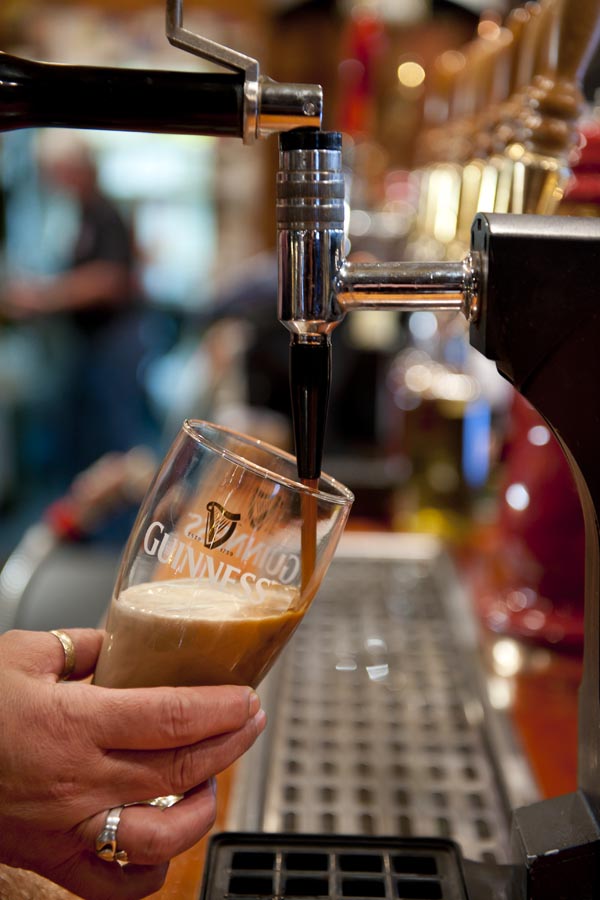
According to Diageo, the perfect pint of Draught Guinness is poured by means of a ‘double pour’ method, which should take exactly 119.53 seconds. When poured, the draught passes through a 5-hole restrictor plate which increases the pressure and creates small bubbles in the beer, resulting in the classic creamy head. This first pour is allowed to settle, whereafter the glass is filled with a second ‘slow pour’ until the head creates a slight dome at the top of the glass.
(© All Rights Reserved)

Guinness’ marketing has always been one of its strong suits, and this is a significant contributing factor to the continued popularity of the brand. The classic Guinness advertising series was created in the 1930s and 1940s, mostly illustrated by the artist John Gilroy. The advertising posters included classic phrases still seen in Irish pubs all over the world, such as “My Goodness, my Guinness”, “Lovely Day for a Guinness”, and most famously “Guinness is Good for You”.

The “Guinness is Good for You” slogan actually dates back to the 1920s, and stemmed from a market research campaign where people told the company that they felt good after a pint of Guinness. Beyond the feel-good factor, the stout was also considered to have some medicinal benefits – it was given to post-operative patients and blood donors, based on the belief that it was high in iron. It was also popular with pregnant women and nursing mothers.

The question “Why do Guinness’ bubbles travel downwards?” has been the subject of many a conversation down the pub. It is actually only the bubbles along the outer edge that moves down, as a result of drag – bubbles in the centre of the glass can travel upwards unhindered, while those along the edge are slowed down by the glass. As the beer in the centre rises, the liquid near the edge has to fall, and the resulting downward flow pushes some tiny bubbles downwards. Try explaining that after a few pints!
(© All Rights Reserved)

What’s interesting is that research more than half a decade later indicates that perhaps the ‘good for you’ claim wasn’t so far off the mark, albeit for different reasons. As reported by BBC News in 2003, “A pint of the dark stuff a day may work as well as a low dose of aspirin to prevent heart clots that raise the risk of heart disease.”

Researchers from the University of Wisconsin tested the stout by administering it to dogs who had narrowed arteries similar to those in people with heart disease. They found that the dogs fed different daily doses of Guinness had reduced clotting activities in their blood, while a control group of dogs given a lager beer did not show similar improvements. The research team furthermore claim that the greatest benefit was achieved when test subjects received about a pint each day at mealtime. Their conclusion was “that ‘antioxidant compounds’ in the Guinness, similar to those found in certain fruits and vegetables, are responsible for the health benefits because they slow down the deposit of harmful cholesterol on the artery walls.”

In response to these claims, Guinness’ owners Diageo simply said “We never make any medical claims for our drinks.” Despite this, I am sure millions of Guinness fans the world over will be more than happy to call on the ‘irrefutable scientific research’ above to justify their daily mealtime pint.

So here’s to Arthur and his famous brew – cheers, everybody!

Having your name up in lights, thanks to Georges Claude.

If it wasn’t for today’s birthday boy, French chemist, engineer and inventor Georges Claude (24 Sep 1870 – 23 May 1960), the streetscapes of New York, Las Vegas, and many other cities, might have looked unimaginably different – among other achiements, Claude gained fame as the inventor of neon tube lighting.

Claude, who is sometimes called ‘the Edison of France’ was a prolific inventor and innovator, and his early focus fell on the industrial liquefaction of air. This process, which enabled the production of industrial quantities of liquid nitrogen, oxygen and argon, also produced neon as a by-product. In order to exploit this by-product, he came up with the neon tube light, a tube filled with neon that generates light when an electrified current is passed through the gas.

Neon lights quickly gained popularity for advertising and promotion purposes, both indoors and outdoors. What made it particularly effective was its strikingly visibility even in daylight, and the fact that the sealed tubes could be shaped and combined to form impressive glowing signage.

The traditional red neon sign – a classic example of vintage advertising.
(© All Rights Reserved)

While original neon light referred specifically to a sealed neon-filled tube light, the term has become generic for any electric light involving sealed glass tubes containing gas, be it mercury vapor, argon or a range of other gases. Original neon tubes glow red, while other gases are used to produce a range of other colours, e.g. yellow (helium), white (carbon dioxide), or blue (mercury).

Early neon signs, such as the signs sold by Georges Claude’s French company Claude Neon to the Packard car dealership in the United States in 1923, proved huge tourist attractions, with people reportedly staring for hours at the amazing ‘liquid fire’ signs. Neon signage caught on like wildfire in the 1930’s and 40’s, particularly in the ‘States, with neon signs popping up all over the place, often to rather gaudy effect. After the heyday or neon lighting in the early to mid 20th century, it’s popularity declined somewhat. In recent years, however, neon signage has seen something of a revival in art and architecture, becoming popular for its retro effect.

Finding your inner spark

Today is the birthday of Robert Bosch (23 September 1861 – 12 March 1942), German industrialist and inventer, and founder of Robert Bosch GmbH.

As the eleventh of twelve children, I am sure Bosch knew from early on in life that you had to stand out to get noticed. And he didn’t disappoint. In 1887, Bosch made meaningful improvements to an unpatented magnetic electric ignition device originally developed by engine manufacturer Deutz, thus creating his first successful business venture.  In 1902, Bosch, together with one of his engineers, Gottlob Honold, invented the first commercially viable high-voltage spark plug to go with his previously developed ignition system – an innovation that had a huge impact on the development of the internal combustion engine.

The innovations of Robert Bosch had a major impact on the development of the modern spark plug and the internal combustion engine.
(© All Rights Reserved)

Now while we’re on the topic of spark plugs and internal combustion, today also happens to be Innergize Day, the day we’re supposed to turn our focus inward, and spend some quality me-time to rejuvenate ourselves – to give ourselves a bit of internal combustion, if you like.

Ignite yourself on Innergize Day.
(© All Rights Reserved)

So, on this day, take some time to locate your inner spark plug and rekindle your spark. In this age where we face non-stop pressure to perform and deliver, we owe it to ourselves to take some time to refocus and to remember what ‘revs our motors’.  Find your spark and nurture it – it is what makes you special.

Go, sparky! 🙂

Give Mother Earth a break on Zero Emissions Day

Care for the health and wellbeing of Mother Earth? Then today is a good day to show her how you feel – it’s Zero Emissions Day, time to take a 24 hr holiday from fossil fuel energy.

Zero Emissions Day (ZeDay) celebrates it’s 5th birthday in 2012, and this year the theme is ‘Reboot!’. As the ZeDay website says, “Shut down everything non-essential powered by fossil fuels for a day – press reset – and then start up fresh. ZeDay 2012 marks our new beginning and you can help make it happen…”

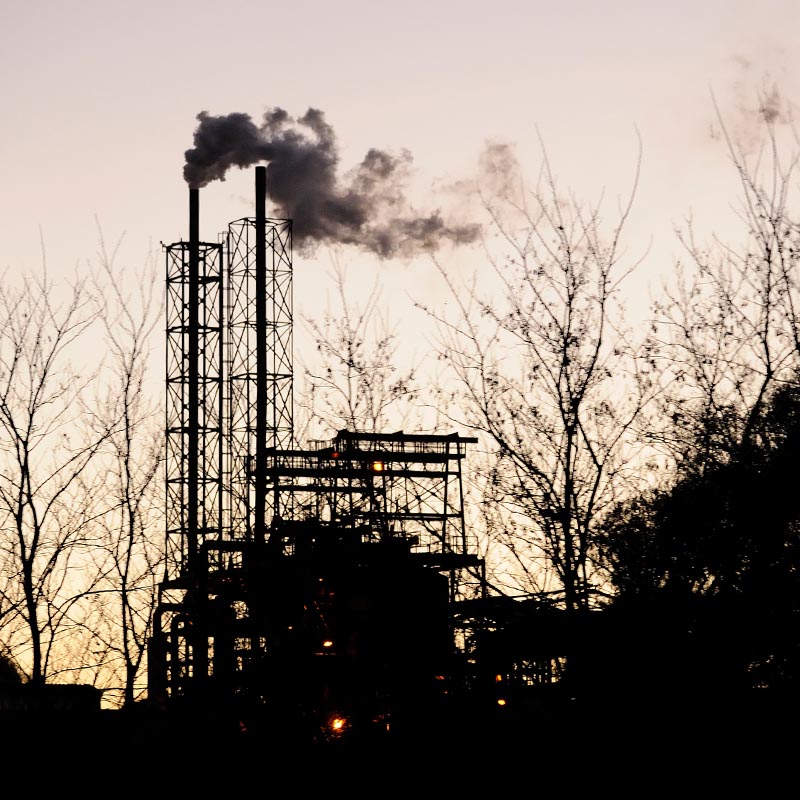
This is what we’re doing to the environment with our energy-hungry lifestyles.
(© All Rights Reserved)

The idea is simple – don’t burn oil, gas or coal and minimize your electricity use – do this for just one day. The amount of energy consumed by modern society is staggering, with more and more power-hungry devices becoming part of our daily lives – ebook readers replacing books, tablets replacing notepads, GPS devices replacing maps, smartphones replacing personal contact… The list goes on. And all these devices need to be charged and powered… And all this power needs to be generated… And the bulk of the electricity generated globally is still fossil-fuel based, with only a small percentage generated through renewable sources such as water and wind.

The purpose of ZeDay is to give the earth a ‘rest day’ – from biblical times, the idea of a day of rest at regular intervals was promoted as a good thing, and with the pace of life increasing to the point where we simply don’t slow down anymore, re-instituting the rest day concept is a very necessary. We all need a chance to shut down and reboot every now and then, and the same applies to the environment. The date of 21 September was selected to coincide with the United Nations International Day of Peace.

Take a break, and give Mother Nature a breather as well.
(© All Rights Reserved)

Realistically, completely avoiding the consumption of any fossil-fuel generated energy for 24 hours is almost unthinkable – no driving, no cooking, no hot water, no computers, no TV, radio or Internet – and people who have done it have reported the experience to be ‘profoundly transformative’. Definitely something to strive towards – even if it’s too late to do it today, seeing that the day is already halfway through, nothing stops us from celebrating our own private ZeDay on any other date. In fact, if you can achieve more than one a year, even better. Admittedly many people will never quite go this far, but even if the day just acts as a reminder that we can all do our bit to limit our energy consumption in daily life, it would already be a victory for Mother Earth.

Go one, try it – imagine how good it’ll make you feel about yourself!

(OK, I should switch off now…)

James Dewar, Thermos and the vacuum flask

Today we celebrate the birthday of Sir James Dewar, Scottish chemist and physicist, born on 20 September 1842.

Dewar was a dynamic, innovative scientist who was responsible for many scientific advances in both chemistry and physics at the turn of the century, but is perhaps best remembered for an innovation that he never received any financial recognition for. In 1892 he developed an insulating flask known as the Dewar flask, which became the inspiration for the legendary Thermos insulating flasks. The design of Dewar’s vacuum flask, commercially introduced by Thermos in 1904, is so simple and elegant that it has remained virtually unchanged to this day, and it remains as useful as it was more than a century ago.

A thermos flask and a steaming cuppa – gotta love a simple, effective design.
(© All Rights Reserved)

Dewar’s initial motivation for developing an insulating container came from his work in the liquefaction of gases, where he needed to keep the liquified gases at a very low temperature. In the early 1890’s he designed a vacuum-jacketed container (a double-walled flask with a vacuum between the two silvered layers of steel or glass) to store the gas. The vacuum layer in the flask proved so efficient at preventing the transfer of heat to the gas that he was able to preserve it in liquid form for much longer than was previously possible, thus enabling him to study the properties of the liquified gas in much more detail.

Sadly, Dewar never patented his invention, which allowed the newly formed German company Thermos GmbH to take over the concept and develop a commercial version of the vacuum flask.

The Thermos flask was an international success, used extensively in both domestic and industrial applications ever since it’s release. The name “Thermos” became colloquially synonymous with vacuum flasks in general, to such an extent that it was declared a ‘genericized trademark’ in the US in 1963.

Personally, while I find it sad that Dewar never got any financial recognition for this amazing invention, I have to admit my undying commitment to my good old Thermos flask. It goes everywhere with me – I am seldom on assignment out of town without a trusty flask of hot, home-brewed coffee by my side.

Come to think of it, I should definitely pour myself a steaming cuppa from my trusty Thermos in celebration of Dewar and his great invention!

Get in on the action on World Water Monitoring Day

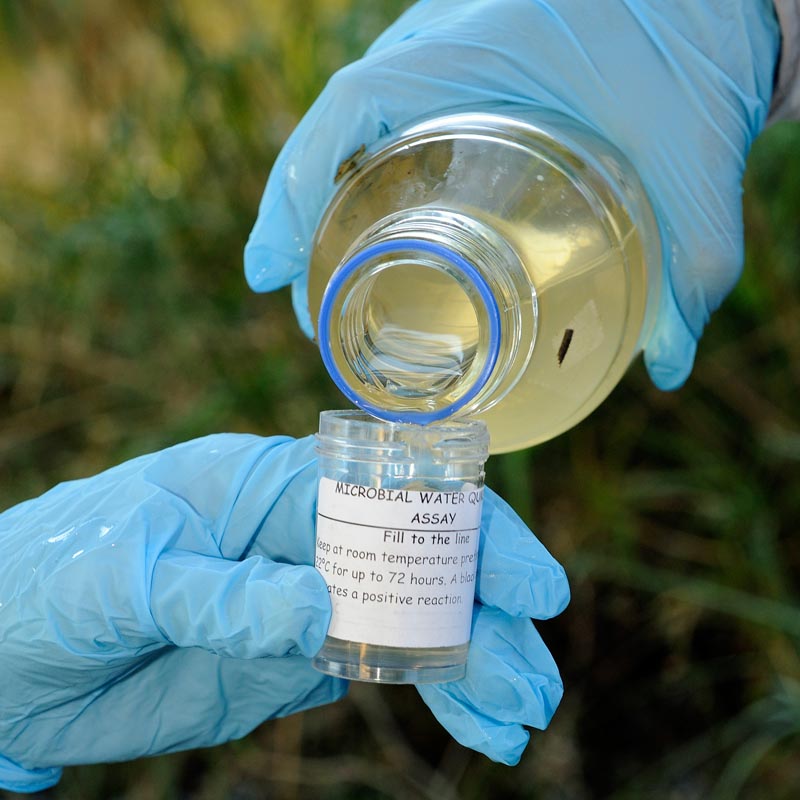
September 18th is World Water Monitoring Day. This day has been observed since 2003, with the aim being to increase public awareness of water quality and water quality monitoring.

Even though World Water Monitoring Day is still observed on 18 September each year, the initiative has in recent years (since 2009) been expanded to become the World Water Monitoring Challenge, a programme promoting citizen participation in monitoring local water resources around the globe. Basic, low cost water test kits can be ordered through the World Water Monitoring Challenge website, and facilities are provided for volunteers to upload their test results to a global water quality database. The parameters being tested include temperature, acidity (pH), clarity (turbidity) and dissolved oxygen (DO).

Getting schools and community groups involved in water monitoring is a practical and useful way to spread the water quality message.
(© All Rights Reserved)

One of the goals of the Challenge is to expand participation to a million people in 100 countries by 2012. This is quite a stretching target, given that 2011 saw the involvement of just over 330 000 people from 77 countries. Even if the one million target is not reached this year yet, it remains a most impressive initiative, and considering the importance of keeping our global water resources useful and healthy, something that is definitely worth supporting and promoting. Conducting water tests as a schools programme or community initiative not only helps gather valuable data, but also raises awareness among participants about water quality and how their actions can directly and indirectly impact on their local water resources.

To ensure maximum particilation, the extended World Water Monitoring Challenge now runs from March 22 (United Nations World Water Day) to December 31 each year. So there’s no excuse not to get in on the action.

Celebrating the International Day for the Preservation of the Ozone Layer

Today, 16 September, is a critically important day for this little planet of ours – it’s World Ozone Day, or to be more precise, the International Day for the Preservation of the Ozone Layer.

The day was officially proclaimed as one of the United Nations’ International Observances in 1994, falling under the United Nations Environment Programme, UNEP. The date was specifically selected to commemorate the signing of the Montreal Protocol on Substances that Deplete the Ozone Layer on 16 September 1987, marking this year as the 25th anniversary of the Montreal Protocol.

So why is the preservation of the ozone so important? I’m sure it’s a lot more complicated than my basic understanding of the subject, but in essence the ozone in the stratosphere plays a critical role in absorbing much of the sun’s harmful ultraviolet radiation. Furthermore ozone in the lower atmosphere also plays a role in removing pollutants from the air.

Not a pretty picture.
(© All Rights Reserved)

Now as we humans are prone to do, many of our actions are not all that considerate of the health of the earth, and can be very detrimental to the ozone layer. The Montreal Protocol aimed to identify and address substances and actions that contribute to the depletion of the ozone in the atmosphere, and is one of the great examples of international cooperation towards a global good. As an outcome of the Protocol, the phasing out of the use of ozone depleting substances is helping protect the ozone layer for generations to come. The international awareness created through the Montreal Protocol has also contributed to a greater appreciation and awareness of the effects of climate change on the earth.

To help create continued awareness, UNEP’s OzonAction Programme has developed a Public Service Announcement (PSA) video, in 6 UN languages, for global broadcasting and viral distribution.  The English announcement is embedded below, while links to the Arabic, Chinese, French, Russian and Spanish announcements can be found here.


For more information, the UN website provides some very interesting general background on ozone preservation, as well as information of some ozone depleting substances in different industry sectors.

Protecting our atmosphere (and environment) for generations to come.
(© All Rights Reserved)

In celebration of World Ozone Day, take a minute today to appreciate the ozone layer and how it contributes to the world and the environment as we know it. Not only does it protect us humans from life threatening cancer-causing UVB radiation, but it is also critical for plant health, marine ecosystems and terrestrial and aquatic biogeochemical cycles.

The theme of this year’s event is “Protecting our atmosphere for generations to come” – surely a cause well worth supporting and celebrating.

Greenpeace and the international environmental debate

Today we commemorate the founding of the well-known international non-governmental, environmental organisation, Greenpeace.

Greenpeace grew out of the anti-nuclear protests in Vancouver, Canada in the early Seventies. On this day, 41 years ago in 1971, protesters boarded a chartered ship, which they christened ‘Greenpeace’, to protest the nuclear tests conducted by the US in Alaska. The name of the ship became associated with the protesters, and the Greenpeace organisation developed out of this protest. While its founding was not very formal, and many individuals were involved in the early days, a number of people have been singled out by Greenpeace itself as being influential in its establishment. These include long-haired, beardy journalist Bob Hunter, former entrepreneur David McTaggart and long-time activist couple Dorothy and Irving Stowe.

Over time the organisation spread to several countries, and their activities have expanded from anti-nuclear protests to campaigning on a wide range of environmental issues including climate change, deforestation, toxic pollution and agriculture.

Whether or not you agree with the sentiments expressed by environmental activists, you have to appreciate the important role they play in the environmental debate.
(© All Rights Reserved)

Greenpeace has been described as the most visible environmental organisation in the world. As such, they play an extremely important role in keeping sensitive environmental issues in the public eye, and influencing both the public and private sectors to limit negative impact on the earth and its people. They certainly don’t shy away from controversy, adopting a decidedly in-your-face stance against companies, organisations and activities they consider dangerous or detrimental to the environment. It is no surprise then, that Greenpeace has been on the receiving end of more than their share of lawsuits for reputational damage and lost profits.  At a more shady level, some of Greenpeace’s enemies have also been reported to adopting rather unsavoury tactics, including spying, phone tapping, death threats, violence and even terrorism against the organisation.

Greenpeace has been validly criticised for their sometimes fundamentalist and anti-science stance, with critics citing unfortunate cases where invaluable scientific research have been destroyed through their activities.

That said, Greenpeace, and other organisations of their ilk, continue to play a critical role in the international environmental debate, and considering the multinational industrial giants they are up against, they probably need all the support they can get.

Happy birthday, Greenpeace – keep ’em honest…

Conquering mountains with a little help from Viagra

Today we celebrate the birthday of Ferid Murad, born on this day in 1936.

So why is the birth of this American-Albanian physician noteworthy? Well, he is the co-winner of the 1998 Nobel Prize in Physiology or Medicine, together with Robert Furchgott and Louis Ignarro. Their award-winning research involved studying the effect of nitroglycerin and related nitric oxide-releasing drugs on the body. The release of nitric oxide in the body acts as a signalling molecule in the cardiovascular system, which causes blood vessels to dilate.

While the above fact may not necessarily cause Joe Average to sit up and take note, what is interesting is that the research of Murad et al was instrumental in the development of the drug Sildenafil citrate, used to treat, among other things, erectile disfunction and pulmonary arterial hypertension.

Yep, Dr Ferid Murad’s research was critical in the development of Viagra.

Now even though the mention of Viagra almost involuntarily calls to mind the sexual application of the drug, this is a family friendly blog, and so I thought it might be prudent to discuss a different, and rather interesting, application of Sildenafil citrate. it has been reported, fairly recently, that Sildenafil can be successfully used in the treatment and prevention of high-altitude pulmonary edema (HAPE), a condition associated with altitude sickness typically suffered by mountaineers.

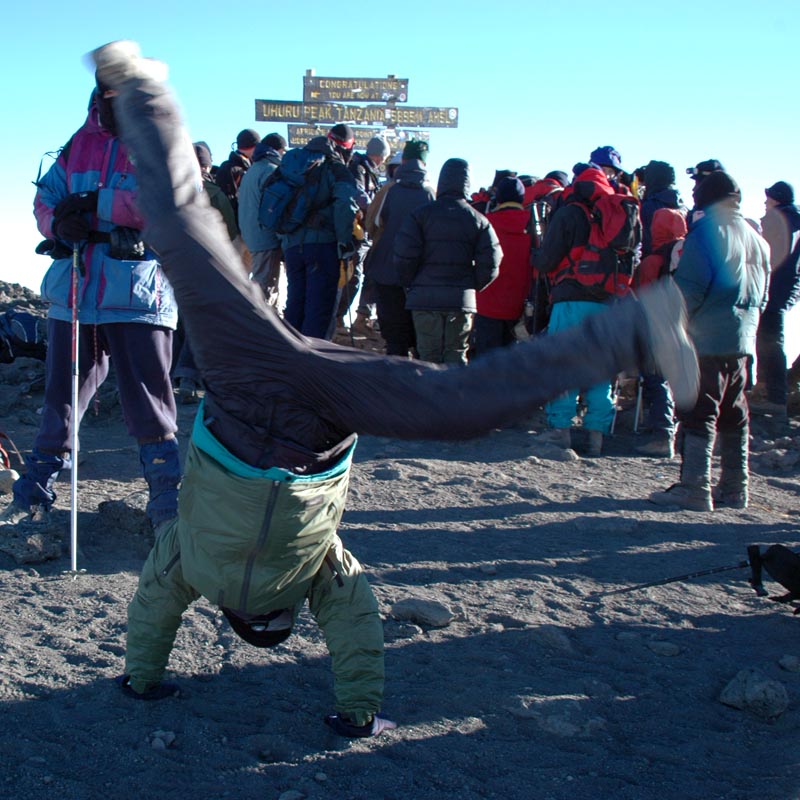
Uhuru Peak, Mount Kilimanjaro, Tanzania. 5895 metres above sea level. Guess who took Viagra!?
(© All Rights Reserved)

Anyone who has ever climbed a mountain of significant height, will be well aware of the dangers of HAPE and altitude sickness. HAPE involves the accumulation of fluid in the lungs, a condition that can occur in otherwise healthy mountaineers, typically at altitudes above 2500 metres. The scary thing is that there is almost no preventative actions that can be taken to avoid altitude sickness striking – it can strike the healthiest, fittest member of a mountaineering team, and mountaineers can scale the same heights countless times without problems, only to become victim to altitude sickness the next time they climb.

As such, having a treatment such as Sildenafil handy as part of your mountaineering first aid kit can be extremely valuable, and even life-saving, if for some reason the normal treatment of HAPE (rapid descent) is not possible.

Scaling high mountains can be a potentially safer experience with Sildenafil citrate on hand to fight altitude sickness.
(© All Rights Reserved)

So, Viagra can help you scale mountains.  Which I guess makes the fact that tall mountain peaks also happen to have something of a crude Freudian symbolism to them, very apt.

My, who’d have thought?

On logical paradoxes and talking sheep

It’s time for a bit of serious concentration again – here’s another fun paradox to get your head around…

Today is the birthday of Haskell Brooks Curry (12 Sep 1900 – 1 Sep 1982), an American mathematician and a pioneer of mathematical logic. He specialised in combinatorial logic, and some of his work found application in the development of modern computer programming languages.

While working on a strand of logic called ‘naïve logic’, he came up with a logical construct that became known as Curry’s paradox.

Curry’s paradox – confirming that sheep are smarter than we think!
(© All Rights Reserved)

The paradox is based on the idea of a ‘conditional claim’, or (If A, then B). Consider the following conditional claim:

“If this sentence is true, then sheep can speak English.”

Even though the second part of the sentence is false (last time I checked), there’s nothing stopping us from analysing the truth of the sentence.

The quoted sentence is of the form (If A then B) where (A) refers to the sentence itself and (B) refers to the claim “sheep can speak English”. Within the context of Curry’s naïve logic, the way to prove a conditional sentence is to assume that the hypothesis (A) is true, and then to prove, based on that assumption, that the conclusion (B) is true.

So, lets start with the assumption (A) is true. Because (A) refers to the overall sentence, therefore assuming (A) is true implies that the statement (If A then B) is also true. So, because (A) is true, (B) must be true. Assuming the truth of (A) is therefore sufficient to guarantee that (B) is true, regardless of the actual truth of statement (B). Which of course results in a paradox if (B) is, in fact, false.

Phew….

We can even show Curry’s paradox occurring in formal symbolic logic. Assuming there is a formal sentence (X → Y), where X itself is equivalent to (X → Y), then a formal proof can be given for Y:

1. X → X
(rule of assumption, also called restatement of premise or of hypothesis)
2. X → (X → Y)
(substitute right side of 1, since X is equivalent to X → Y by assumption)
3. X → Y
(from 2 by contraction)
4. X
(substitute 3, since X = X → Y)
5. Y
(from 4 and 3 by rule of inference)

There you have it – convincing mathematical proof that sheep CAN speak English! 🙂