Page 30 of 34

Celebrating International Beer Day!

With yesterday’s Champagne celebrations scarcely behind us, it’s time to start celebrating another tipple – today is International Beer Day!

This day is a global celebration of beer, and an opportunity to get together with friends to toast your local brewers and bartenders, in pubs and breweries around the world.
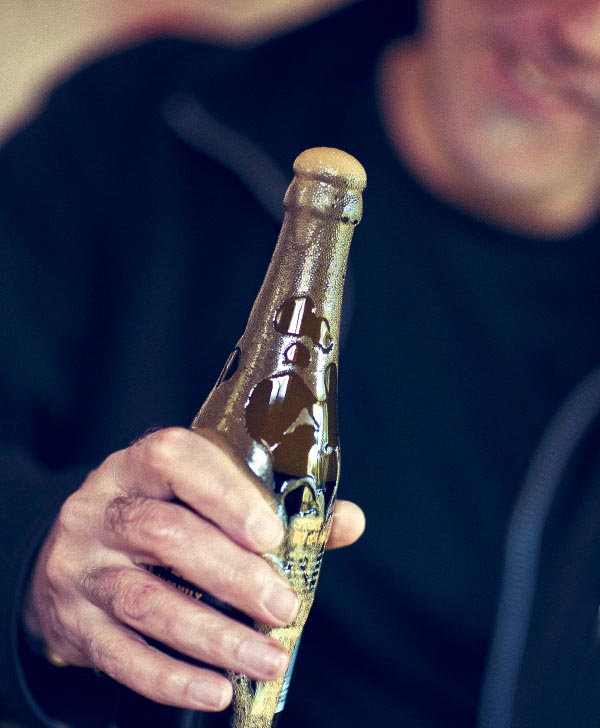
Buy people beer – it makes you more attractive!
(© All Rights Reserved)

Ever wondered why you find people more attractive after you’ve had a few beers? Sure, it is partially due to the fact that alcohol lowers your inhibitions, making you more open and friendly to others in general. There is, however, also an interesting scientific explanation.

Apparently, facial symmetry is said to have evolved as a measure of attractiveness as it signifies good genes. And apparently we subconsciously feel attracted to outward signs of genetic quality, to ensure better offspring. So, people are unconsciously drawn to people with more symmetrical faces.

Now in a study led by Dr Lewis Halsey of Roehampton University, a group of female volunteers were subjected to a range of tests before and after consuming alcoholic drinks. Among these was a test where participants were shown 20 sets of faces that had been manipulated so that one was symmetrical and the other not. After a tipple or two, people were found to be much less able to distinguish between the symmetrical and non-symmetrical faces. This effect proved directly related to the amount of alcohol consumed – the more tipsy, the less discriminatory participants became.

So, if you’re one of us normal guys or gals who lack the perfect facial symmetry to prove your genetic superiority, this day is especially for you. Have a beer, and while you’re at it, buy a round for those around you. Your popularity will increase plenty – trust me.
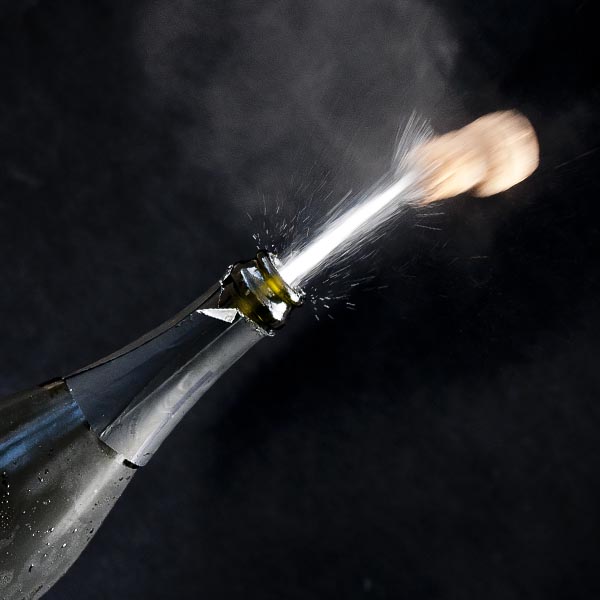

Popping corks and tasting stars – celebrating the invention of Champagne

Legend has it that on this day in 1693, the French Monk Dom Pierre Perignon, invented Champagne when a wine he was making started a secondary fermentation in the bottle, so when he opened the bottle it produced a fine, bubbly mousse. Upon tasting this sparkly beverage, it tasted so special that he was inspired to exclaim “Come quickly, I am tasting stars!”.

Popping a cork in celebration of the father of champagne, Dom Perignon.
(© All Rights Reserved)

As is often the case, however, the truth of this legend is questionable at best. Sparkling wine almost certainly existed before Dom Perignon’s time, with the oldest references to it dating back to the Benedictine Monks in the Abbey of Saint Hilaire, in 1531.

That said, these early bubblies probably tasted very different to the refined sparkling product that became known as Champagne (after the French region where it was perfected), so even if the discovery of sparkling wine cannot be attributed to Dom Perignon, he can take credit for establishing the principles of modern champagne making that are still in use today.

And that’s more than enough justification to pop a cork to celebrate the great man.

Now here’s an interesting story:

In a medical study from 2007, scientists from the Universities of Reading and Cagliari showed that moderate Champagne consumption can potentially help the brain cope with the trauma of stroke, Alzheimer’s and Parkinson’s disease.  According to the research the high levels of the antioxidant polyphenol in Champagne can help prevent the deterioration of brain cells from stress and trauma.  The study was done on mice – one group of mice was fed a Blanc de Blanc Champagne, a second a Blanc de Noir, and a control group got no bubbly at all.  When the three groups were subsequently exposed to high levels of neurotoxins (simulating the effect of brain trauma), it was found that the groups who had previously been fed champagne, had higher levels of brain-cell restoration compared to the control group.

Now isn’t that just the best news you’ve heard all day? Cheers!

Tires, rubber, burnouts and environmental disasters

Fancy a burnout? A donut, perhaps?

No, I’m no street racer, not even much of a petrol-head. I’ve just got rubber and tires on my mind, since today back in 1900 is the day that the Firestone Tire and Rubber Company was founded. Even through Firestone cannot lay claim to inventing rubber tires (that honour goes to John Boyd Dunlop for the first pneumatic tire, and to Charles Goodyear for the vulcanisation of natural rubber), they were one of the early pioneers in tire production. Along with Goodyear, they were the largest automotive tire suppliers in the US for the best part of the 20th century.

The company was sold to the Japanese Bridgestone Corporation in 1988.

Tire burnouts can be spectacular, but certainly doesn’t help in terms of scrap tire pollution.
(© All Rights Reserved)

Given the number of tires produced and sold internationally, the environmental challenges of dealing with scrap tires are quite significant. In the US alone, about 285 million scrap tires are generated every year. Tires dumped in a landfill is a fire hazard – tire fires can burn for months, creating serious air and soil pollution. They can also liquify under high temperatures, releasing hydrocarbons and other harmful contaminants into the ground. Shredded tire pieces are likely to leach even more, due to the increased surface area on the shredded pieces.

The durability of scrap tires do make it suitable for certain recycling applications. Shredded tires, or tire derived aggregate (TDA), can be used as backfill for retaining walls and as vibration damping for railway lines. Ground and crumbed rubber, also known as size-reduced rubber, can be used in paving as well as in moldable products such as flooring, decking, tiles and rubber bricks. These applications, however, only consume a small percentage of the total tire waste produced annually.

The use of tires has also been suggested in the construction of artificial reefs, but the sensibility of this is questionable, with the Osborne Reef, for example, turning into a multi-million dollar environmental nightmare.

Despite all the attempts at solving the problem of scrap tire waste, it remains an environmental nightmare, and the best ‘solution’ probably involves addressing the problem at it’s source – reducing the number of scrap tires produced annually.  Small things such as driving sensibly to preserve tire life, carpooling, use of public transport, walking and cycling instead of driving – these may appear arbitrary, but are things we can all do, and while it won’t make the problem go away, it can make a difference in the long run.

Blue skies, blue eyes – its the Tyndall effect

Tell me why the stars do shine 
Tell me why the ivy twines 
Tell me why the sky’s so blue 
And then I’ll tell you just why I love you…

Well, if you could have sung this little tune to the Irish physicist John Tyndall, born on this day back in 1820, he would have had some strong opinions, at least on the blue sky question.

In addition to many other achievements, Tyndall published studies on acoustic properties of the atmosphere and the blue colour of the sky – he suggested the colour was the result of the scattering of light by small water particles. He discovered that, when light passes through a substance containing small suspended particles, the shorter wavelengths (blue side of the spectrum) are scattered more than the longer, red wavelengths. Since the blue light is scattered in all directions, the substance appears blue.

This phenomenon became known as the Tyndall effect.

What we see as a lovely blue sky, John Tyndall saw as a scientific challenge.
(© All Rights Reserved)

Thus, a clear day-time sky is blue because molecules in the air scatter blue light from the sun more than they scatter red light. Towards sunset, when we look towards the sun, we see reddish colours, because the blue light has been scattered away from the line of sight.

The Tyndall effect also causes other interesting blue colourings in nature, including blue eyes, opalescent gemstones and the wings of some birds and butterflies. When colour is caused by scattering of light it is known as a structural colour, as opposed to a pigment colour.

Now about those stars and ivy…

(Source: Why is the sky blue?)

Celebrating creepy-crawlies on Spider-Man Day

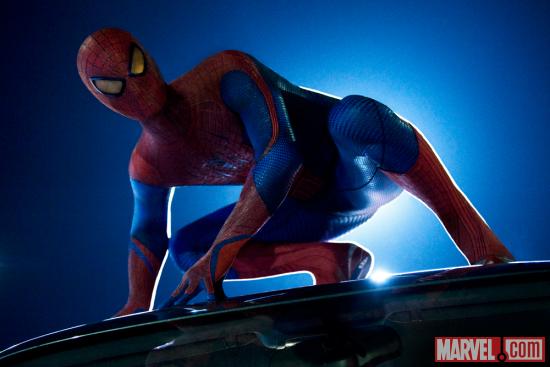
I’m not sure how official it is, but according to various sources on the web, today is Spider-Man Day. So, while I haven’t been able to find anything else of much interest, let’s just go with that, shall we?

(Source: Marvel Comics)

Spider-Man is undoubtably one of the best loved superheroes ever dreamt up by Marvel Comics. This has a lot to do with the fact that the person behind the suit, Peter Parker, was pitched as a bit of a nerd, an outsider with whom many young readers could easily relate.


But beyond this human touch, Spider-Man’s lasting fascination must have a lot to do with our fascination of the creepy crawly that gave the superhero his powers. Spiders (order Araneae), the eight legged, predatory anthropods that evokes equal measures of fascination and fear in the human race. More than 40 000 species of spiders have been identified, and they are one of the most widely distributed groups of organisms, having established themselves in an extremely diverse range of habitats.

Spiders – fascinating and just a little bit scary.
(© All Rights Reserved)

Indeed there is much to find fascinating, and scary, in spiders, from miniscule, deadly poisonous species to huge monsters that can take on birds and lizards. Spiders use various techniques to hunt and capture their prey – trapping them in sticky webs, camouflaging themselves to avoid detection, running down their prey, and more. Some hunting spiders even show signs of intelligence in their ability to develop new hunting tactics.

Spider venom, fatal to their prey and in many cases also deadly to humans, have been researched for use in medicine and natural insecticides.

And then there’s the incredible spider silk – the sticky stuff excreted by spiders that exceed almost all synthetic materials in terms of lightness, strength and elasticity, and without doubt the most fascinating ‘superpower’ in Spider-Man’s arsenal. Spider silk is composed mainly of protein. It is initially a liquid, and it hardens as a result of being drawn out, changing it’s internal protein structure. It’s tensile strength is similar to nylon and cellulose, but it’s way more elastic. Spiders use their silk for numerous applications, from webs to capture prey, to parachutes to carry them on the slightest breeze.

Fascinating creatures indeed, and definitely worthy of your admiration, whether you’re a Spider-Man fan or not!

Celebrating musical eccentricities on Uncommon Instrument Awareness Day

Today is the day to celebrate musical instruments (and sounds) that you don’t come across every day – it’s Uncommon Instrument Awareness Day.

As long as there has been music, there have been people not content with the range of instruments and sounds already available; people who felt the need to create something new and unique, and sometimes just plain odd.

And lo and behold, there are some seriously strange instruments out there!

I don’t have anything quite as odd as a gravikord, pikasso, or ringflute, but I was lucky enough, some time back, to discover a wonderfully eccentric and jovial-looking little string instrument in a local secondhand shop, and I’m now the proud owner of my own mandolin-banjo.

The mandolin-banjo – it may look like a toy, but it can kick up a serious racket!
(© All Rights Reserved)

Looking like a mini banjo, yet stringed, tuned and played like a mandolin, with four sets of twin-strings, the mandolin-banjo (sometimes also known as a banjoline in France, or a manjo in Ireland) is not the same as the four-string banjolin (which is more of a mini-banjo).

The mandolin-banjo was originally developed by mandolin players who wanted a banjo-style sound without having to learn the fingerings of the banjo. Thanks to it’s banjo-like stretched skin head, it is a lot louder than a normal mandolin, which made it a popular choice for outdoor performances. It became popular in the early twentieth century, and despite its obvious Irish and American heritage, there is strong support for the fact that it was actually invented in Australia, by the Manj Corporation. How’s that for innovation from Down Under?

So that’s my contribution for the day – do you have any weird and wonderful musical instruments in your closet?

Celebrating Paperback Book Day – accessible, affordable magic

Today we celebrate one of my favourite things in the world – it’s Paperback Book Day.

I’m sure all readers of this blog will agree there’s something very special about opening and smelling a new paperback for the first time. At the same time, there’s real magic in finding a well-read, well-travelled paperback copy of a great book at a secondhand dealer – it’s nigh impossible not to buy it and take it home with you.

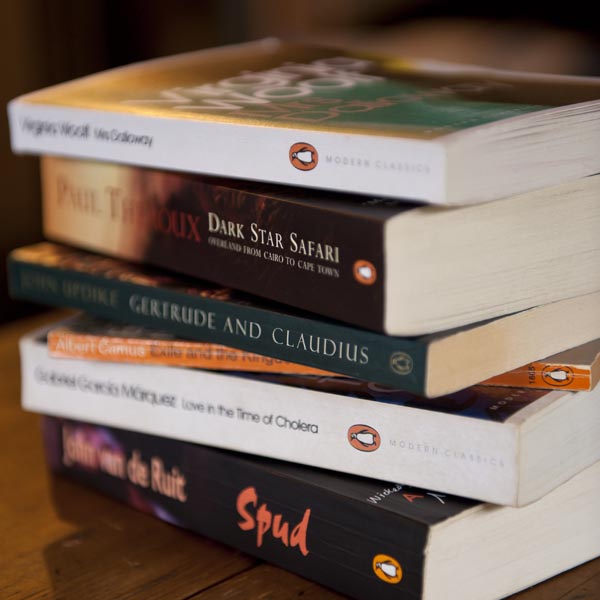
A stack of paperbacks to warm a chilly winter’s evening – pure bliss!
(© All Rights Reserved)

On this day in 1935 the first Penguin paperback was published in Great Britain. Before Penguin paperbacks appeared, you essentially had only three reading options – expensive hardcover books, library books, or inferior quality (both in production and content) paperbacks.

Penquin paperbacks were the brainchild of Sir Allen Lane who, after visiting Agatha Christie, found himself at the train station facing a bookstall containing only magazines and low quality Victorian paperbacks. Deciding this was not acceptable, and that good, contemporary books should be more readily available and affordable, he started a new publishing company, which became Penguin books.

Early Penguin titles included works by Agatha Christie and Ernest Hemingway. The books were colour coded – orange for fiction, blue for biography and green for crime. They sold for the price of a pack of cigarettes (sixpence), and started a publishing revolution – a staggering 3 million paperbacks were sold in the first 12 months.

Despite the massive growth in digital publishing, e-books and e-readers, and a corresponding decline in hardcover sales, the paperback market still appears fairly healthy, with many active participating publishers, including Picador, Faber & Faber, Vintage, Dover, HarperCollins, and many more.  Only recently, EL James’ ‘Fifty Shades of Grey’ broke all previous paperback sales records, amazingly passing the one million sales mark in only 11 weeks (the previous record, Dan Brown’s ‘Da Vinci Code’ took 35 weeks to reach the same sales).

Of course the appearance of quality paperbacks not only implied increased access to good fiction – academic titles also became more accessible, covering a wide range of fields from art to zoology, mathematics to medicine. The importance of paperback books in the worldwide distribution of knowledge and information can hardly be overstated.

Go on, grab a book and get lost in a world of imagination and knowledge – on paperback. As Bernard Shaw once said, ‘If a book is any good, the cheaper the better’.

Disposable products; iconic designs

It’s time to celebrate the disposable, to honor the expendable. On this day, 29 July 1914, Baron Marcel Bich was born – the man who built his business empire on his brilliantly designed and cleverly marketed throwaway Bic pens, lighters and razors.

Whether you’re absentmindedly doodling, or jotting down a shopping list, chances are there will be a Bic pen at hand.
(© All Rights Reserved)

Bich, together with his friend Edouard Buffard, acquired an old factory where they proceeded to produce a low-cost, reliable ballpoint pen that took the world by storm. Bich based his design on a ballpoint pen manufactured in Argentina by László Bíró, but introduced many design innovations into his pen. His manufacturing innovations also allowed him keep the production costs of the pen down.

Bich invested heavily in advertising, and based on a recommendation from his advertising company, shortened the name of the pen to Bic. The Bic pen was an unprecedented success both in Europe and later in the USA and the rest of the world, and with its slogan of “Writes first time, every time”, it became the main driving force in changing the worldwide market from costly fountain pens to disposable ballpoints.

The industrial design excellence of the the Bic Cristal pen (with its transparent polystyrene barrel and classic pencil shape) has been acknowledged by the New York Museum of Modern Art, where it has been included in its permanent collection. Some of the innovative features of the design is its transparent barrel that shows the ink level of the pen, and a small hole in the barrel to ensure equal air pressure inside and outside the pen.

The Bic pen is said to be the world’s most efficient pen, able to write a line over 2km in length. After more than half a century, the Bic pen remains a top seller, with more than one hundred billion having been sold internationally.

Over time, Bich’s company, Société Bic, diversified its business to include the Bic lighter (1973), followed by the Bic shaver (1976). As in the case of the Bic pen, the Bic lighter has become an icon of modern industrial design, and has also been included in the New York Museum of Modern Art’s permanent collection. The design of the lighter has remained virtually unchanged since its inception.

Getting back to the Bic pen, one of the most impressive artists I’ve come across lately is Juan Francisco Rosas, who creates huge, incredibly detailed, photo-realistic artworks using nothing but Bic pens – mindblowing, and further testament to the iconic, throwaway Bic pen.

Celebrating our fingerprints – hands off, criminals!

Today is a celebration only for those of us without criminal intentions – we commemorate the day in 1858 that fingerprints were used for the first time for identification purposes.

The little ridges on our skin that constitute our fingerprints. Not only are their patterns unique to each individual, but they also help with our sense of touch, and enable us to grip smooth and slippery surfaces.
(© All Rights Reserved)

The story goes that Sir Wiliam James Herschel, British Chief Magistrate of the Hooghly district in Jungipoor, India, began using fingerprints in contracts with the native people. On this day in 1858 he decided, on a whim, to get a local business man to make a hand-print on a contract, to “frighten [him] out of all thought of repudiating his signature.” This made a big impression on the signee, and Herschel ended up using the hand-print technique on all his contracts. In later contracts he scaled down the process, taking only the prints of the index and middle fingers. People who had their hand-prints captured on contracts, believed that it somehow bound them tighter to the contract than simply placing their signatures on the paper. So, interestingly, the first use of fingerprints were motivated more by superstition than by science.

Since these early, superstitious beginnings, things have of course changed a lot, with fingerprint-recognition developing into a precise science, and with personal identification technologies becoming the stuff science fiction fantasies are made of, including DNA profiling, also known as genetic fingerprinting..

A fingerprint, in the most basic sense, is an impression left by the friction ridges (raised portions of the epidermis) on the finger. These ridges exist on the skin to assist in our sense of touch – they help, for example, to amplify the sensation of a finger brushing against some surface, transmitting the sensory signals to the nerves. The friction ridges also assist us in gripping smooth and slippery surfaces.

The discovery that the little patterns on our fingers are unique, and that the prints we leave at a scene can identify us after the fact, was not good news to criminals, who were suddenly faced with the extra hassle of wiping off weapons, wearing gloves and more, to avoid identification. I guess some career criminals would give anything to contract the medical condition known as adermatoglyphia. People suffering from this condition have completely smooth fingertips, palms, toes and soles, without suffering any other known problems. While this must be a terrible affliction if you want to go through certain legal procedures that require fingerprint identification, it does equip you well for a life of crime. I am sure that law enforcers the world over would be happy to know that only four families suffering from  this condition have so far been identified.

For the rest of us, I guess staying on the right side of the law remains the best option. And at least our fingerprints make us better equipped to pick up smooth, slippery objects like an ice cold beer!

Fifty Shades of Red

Do you know why your blood is red? It’s thanks to the red blood pigment, haemin, which is one of the components of haemoglobin.

And why do I know this? Well, because I’ve been reading up on Hans Fischer, the German biochemist who was born on this day in 1881, and who was awarded the Nobel Prize for Chemistry in 1930, primarily for his work on the structure and synthesis of the blood pigment haemin. In 1929, Fischer succeeded in synthesising haemin, the deep red, oxygen-carrying, non-protein, ferrous component of haemoglobin, that gives blood its red colour.

It’s elementary, my dear Watson – this is definitely not alien blood.
(© All Rights Reserved)

Oxygen-rich blood (such as arterial blood and capillary blood) is bright red, as the oxygen intensifies the colour in the haemin. When oxygen is extracted from the blood it turns a darker shade of red – this can be seen in the veins, and in the blood collected during blood donation. The colour of blood can also be an indicator for certain medical conditions. Both carbon monoxide poisoning and cyanide poisoning result in bright red blood, as it inhibits the body’s ability to extract and utilise the oxygen in the blood. On the other hand, severe deoxygenation (which can be caused by respiratory diseases, cardiac disorders, hypothermia, drug overdose or exposure to high altitude) results in a condition called cyanosis, where the blood darkens to such an extent that it gets an almost purple-blueish hue, resulting in the skin turning a blue colour.

While the blood of humans and all vertebrates is always a shade of red (containing haemin), it’s interesting to note that it is, in a strange way, surprisingly close to being green! In addition to his work on blood pigmentation, Thomas Fischer also studied the components of the pigments in leaves. He found that, like the haemin in blood, the chlorophyll in leaves is a porphyrin, and that haemin and chlorophyll share a very similar structure, with only subtle differences.

All of this talk of blood, and red and green pigmentation, conjure scenes of science fiction in my mind – if haemin (that makes blood red), is so similar to chlorophyll (that makes leaves green), perhaps the idea of green-blooded aliens is not such a stretch. It makes scientific sense, right?

Anyway, let me rather stop before I get too carried away. Enjoy the day, and keep an eye out for those little green men! 🙂