Page 6 of 38

About aerosols, spray dispensers and atomisers

It’s 8 April, and today we commemorate the day way, way back in 1862, the American John D Lynde received a US patent for the first aerosol dispenser, described in the patent as an “improved bottle for aerated liquids”. While the concept dates back as far as 1790, it appears this was the first time it was patented.

The content of an aerosol dispenser, released as a fine mist.(© All Rights Reserved)
The content of an aerosol dispenser, released as a fine mist.
(© All Rights Reserved)

According to the The Columbia Electronic Encyclopedia, an aerosol dispenser, also known as a spray dispenser when dispensing larger particles, is basically a “device designed to produce a fine spray of liquid or solid particles that can be suspended in a gas such as the atmosphere.” The dispenser is often a pressurised container that holds the substance to be dispersed together with a propellant. It has a valve release mechanism – when the valve is opened, the propellant forces the substance through a small hole, and it is distributed as a fine mist spray. Various propellants have been used over the years, with chlorofluorocarbons (CFCs) being a common choice until it was banned in 1989 through the Montreal Protocol because of its detrimental effect on the earth’s ozone layer. Newer, less destructive propellants include propane, butane and other volatile hydrocarbons. The downside of these is that they are flammable. Spray dispensers containing foodstuffs (cooking spray, whipped cream etc) often use nitrous oxide or carbon dioxide as propellant, while medical aerosols such as asthma inhalers use hydrofluoroalkanes.

An even less harmful form of aerosol dispenser, known as an ‘atomiser’, uses a hand/finger operated pump, rather than a stored gas, to produce pressure in the container in order to propel the contents as a spray.
Raising awareness about hypertension on World Health Day

It’s 7 April, which means it’s one of the big days on the World Health Organisation (WHO) calendar – it’s World Health Day.

The day marks the anniversary of the founding of the WHO in 1948. Each year a theme is selected to highlight an area of public concern in world health, and in 2013 the theme is high blood pressure or hypertension.

Internationally, high blood pressure is a major cause of death – it is a causative factor in heart attacks, strokes and kidney failure. Left uncontrolled it can result in blindness. According to the WHO, one in three adults worldwide suffers from high blood pressure (ranging from about 10% in their 20’s to 50% and higher in their 50’s). While high blood pressure is definitely not a condition only affecting those in the developing world, its prevalence is highest in low-income countries in Africa, due mainly to inadequate diets.

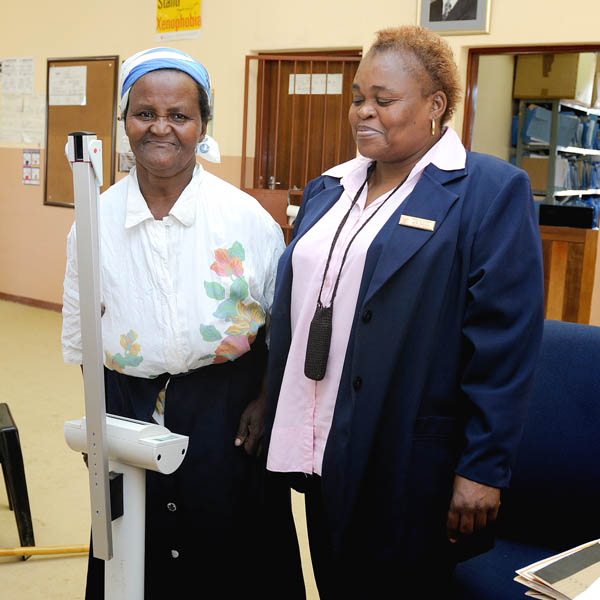
While high blood pressure is a global problem, its prevalence is greatest in poor countries in Africa and other parts of the developing world.(© All Rights Reserved)
While high blood pressure is a global problem, its prevalence is greatest in poor countries in Africa and other parts of the developing world.
(© All Rights Reserved)

In developed, higher income communities, other factors influence high blood pressure – these include high salt intake, excessive alcohol use, obesity, lack of physical activity, smoking and stress.

The goal of World Health Day 2013 is a global reduction in heart attacks and strokes caused by high blood pressure. Specific objectives include:

  • Making available information and raising awareness of the causes and consequences of high blood pressure;
  • Encouraging adults to have their blood pressure checked regularly (part of this involves making blood pressure measurement more affordable to all); and
  • Inciting local and national authorities to create enabling, healthy environments, and to promote healthy behaviour among it’s people.

High blood pressure is a health danger that can affect us all, and it is something we can each address through healthy lifestyle choices. For more info, have a look at this Q&A on hypertension from the WHO. Let’s use World Health Day 2013 as the necessary kick in the backside to get each of us to opt for a healthier, more active lifestyle.

Teflon, the accidentally discovered super polymer

It was on this day in 1938 that Roy J Plunkett and his technician Jack Rebok, employees at Kinetic Chemicals, accidentally discovered Teflon (polytetrafluoroethylene, aka PTFE).

Plunkett was working on new chlorofluorocarbon refrigerants when the gas in one bottle appeared to be finished, even though the bottle still weighed the same as full bottles. Curious about this, the container was sawn open, and instead of gas, Plunkett & Rebok discovered a slippery, waxy white powder. This was found to be polymerised perfluoroethylene, and further analysis showed the material had some rather unique properties – it was highly hydrophobic, had one of the lowest friction coefficients of any known solid, and was chemically inert with a very high melting point.

Realising they had something special on their hands, the material was patented by DuPont, founding owners of Kinetic Chemicals, and the trademark Teflon was registered in 1945.

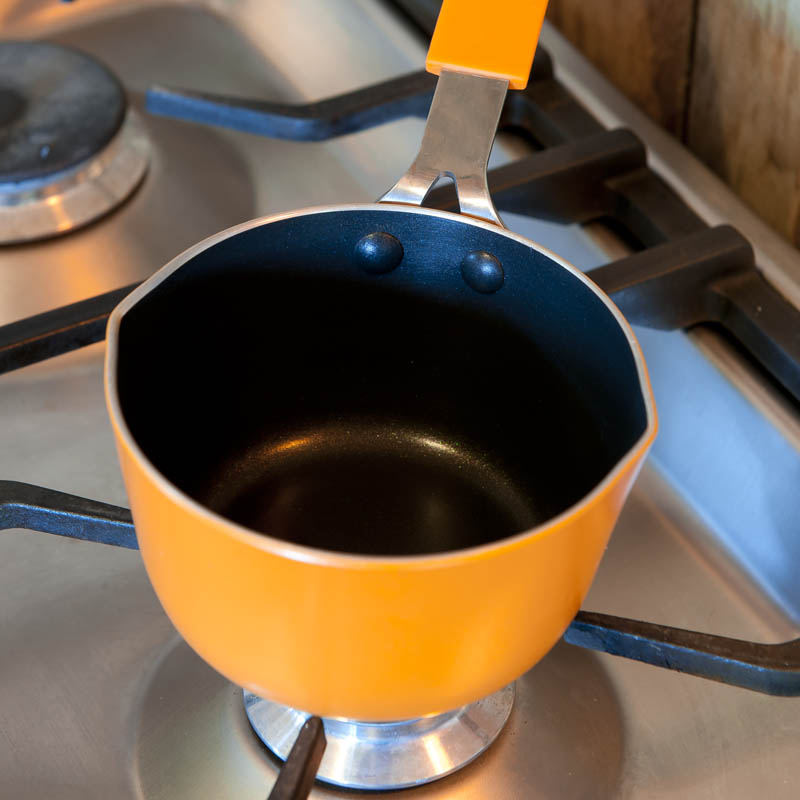
Teflon - the super-polymer known by most as a non-stick coating in pots and pans.(© All Rights Reserved)
Teflon – the super-polymer known by most as a non-stick coating in pots and pans.
(© All Rights Reserved)

Its unique properties has resulted in Teflon finding application in a range of highly disparate domains. Its unusually low friction coefficient means that it is an excellent lubricant in applications requiring dry lubrication, reducing friction, wear and energy consumption in the machinery where it is used. Its chemical inertness makes it an excellent coating material in valves, seals and pipes carrying highly reactive and corrosive chemicals. Its hydrophobic qualities has resulted in it being incorporated as a membrane in Gore-Tex, a popular, breathable waterproofing material. It has been used in thread seal tape, applied to the feet of computer mice, as a coating for bullets and as a highly effective air filtration membrane, among many other applications.

And we all know how pervasive it has become as a non-stick coating for cooking pots and pans, thanks to its hydrophobic properties. Interestingly, the first pans using non-stick Teflon coating, the Tefal range, were developed in 1954 by a French engineer Marc Gregoire, who developed the cookware coating at the recommendation of his wife Collete, who saw him use it on his fishing tackle. (In some countries Tefal is marketed as T-Fal as a result of DuPont’s insistence that ‘Tefal’ sounded too similar to ‘Teflon’.)

It’s probably safe to say that Teflon is one of the most diversely applied modern materials – not bad for a polymer discovered by accident!

Celebrating yummy, syrupy, sticky caramel.

It’s April 5th, which means it’s Caramel Day – the perfect opportunity to go all gooey about sweet, syrupy caramel.

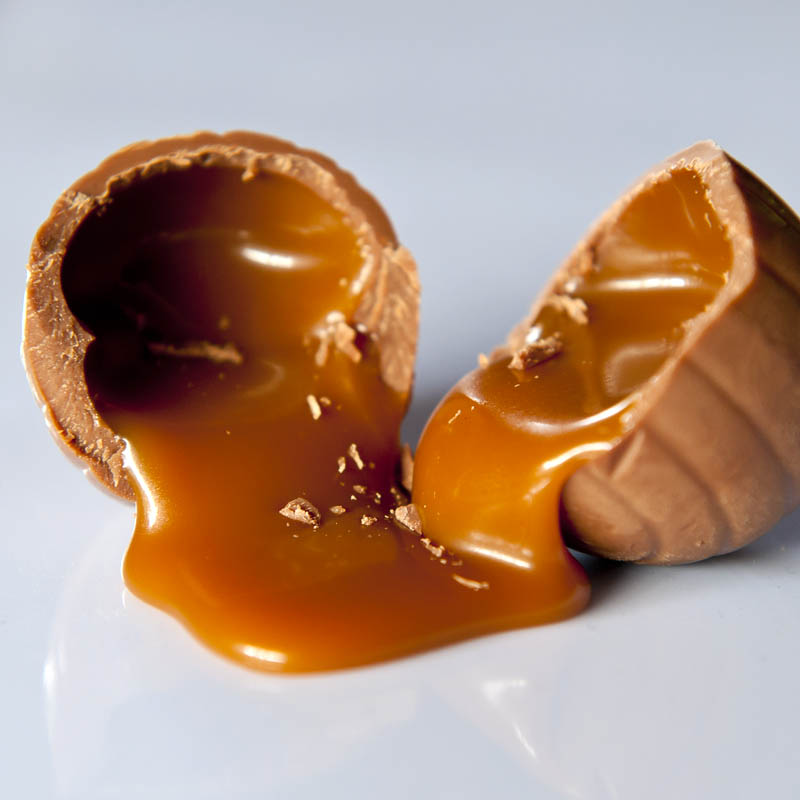
Caramel in a chocolate shell - now that's what an easter egg should look like!(© All Rights Reserved)
Caramel in a chocolate shell – now that’s what an easter egg should look like!
(© All Rights Reserved)

There are basically two ‘categories’ (for lack of a better word) of caramel. First, there’s caramelised sugar – when sugar is heated to around 170 °C, the molecules in the sugar breaks down and re-arranges itself as a smooth, shiny tan/brown syrup. When caramelised sugar cools down, it sets and becomes hard and shiny – most kids know and love this type of candy as used in caramel toffee apples, for instance, where an apple on a stick is dipped in caramelised sugar syrup and allowed to cool and set.

Then there’s the runny, creamy caramel that we find in toffees, inside caramel chocolates etc. This is something very different, and is made by cooking a mixture of butter, sugar, milk/cream and vanilla. As the mixture heats up, the sugar reacts with the amino acids in the milk, resulting in the caramel’s brown colour. This reaction between sugar and amino acids in the presence of heat is known as the ‘Maillard reaction’ – a form of non enzymatic browning. The same reaction is responsible for the browning of roasted meat and fried onions, roasted coffee and the browned crust of baked bread, among others.

The level of ‘runny-ness’ of this second category of caramel depends on the relative amounts of the ingredients, ranging from fairly solid, sticky caramel toffees through to smooth, soft and creamy caramel sauce.

From rock-hard caramelised sugar to smooth, creamy caramel sauce – the world of sweets and desserts would surely be a much poorer place without caramel!

Celebrating carrots (even if they don’t give you night vision)

Today, 4 April 2013, is the 10th celebration of International Carrot Day, the day to dress in orange and celebrate the wholesome goodness of these versatile and delicious orange vegetables. I wonder whether Carrot Day being celebrated so close to Easter has anything to do with the Easter Bunny’s love of carrots?

Whether you like carrots in a meaty stew, as part of a vegetable curry, on its own in a salad, steamed and served sweet with a touch of sugar, or juiced for an invigorated drink, there’s no shortage of ways to enjoy these delicious veges on Carrot Day. For a slightly more decadent celebration, you can even bake a deliciously moist carrot cake or a traditional English carrot pudding!

Nothing like a crop of fresh, healthy carrots straight from the vege patch.(© All Rights Reserved)
Nothing like a crop of fresh, healthy carrots straight from the vege patch.
(© All Rights Reserved)

Did you know that the carrot is a member of the parsley family? And apparently it was originally grown for medicinal purposes (mainly for its aromatic leaves and seeds) before its edible taproot became popular as a food source. Of course carrots are a great source of beta carotene (the reason for their orange colour), that gets absorbed by the liver and converted to Vitamin A. Interestingly, eaten raw, we only absorb between 3 and 4% of the beta carotene in carrots during digestion. When the carrots are steamed, cooked or juiced, however, the absorption rate can be increased up to 10-fold.

A shortage of Vitamin A in the body can cause poor vision (night vision in particular) – a situation that can be treated and restored through Vitamin A supplementation. For this reason, it has become a popular urban legend that eating large amounts of carrots will enable you to see in the dark. Sorry to burst that bubble, but over-consumption of carrots is more likely to lead to ‘carotenosis’, a benign condition where the skin (especially the insides of the hand and feet) and the whites of the eyes, turn a shade of orange.

Because of their beta-carotene content, carrots are sometimes included in poultry-feed to deepen the colour of egg-yolks.

Carrots are also a good source of fibre and are rich in antioxidants and trace minerals. And if that’s not enough reason to grow a crop of carrots in your vege garden, it has also been suggested that carrots are good companion crops – grown intercropped with tomatoes increases tomato-production, and if left to flower, carrots attract wasps that are beneficial in killing many garden pests.

All in all, a great vegetable, and definitely worth a day of celebration.

It’s a World Party, and we’re all invited

Feeling bored, and not quite ready for work after the long Easter weekend? Well fear not, for I have just the day for you – today, 3 April, is World Party Day!

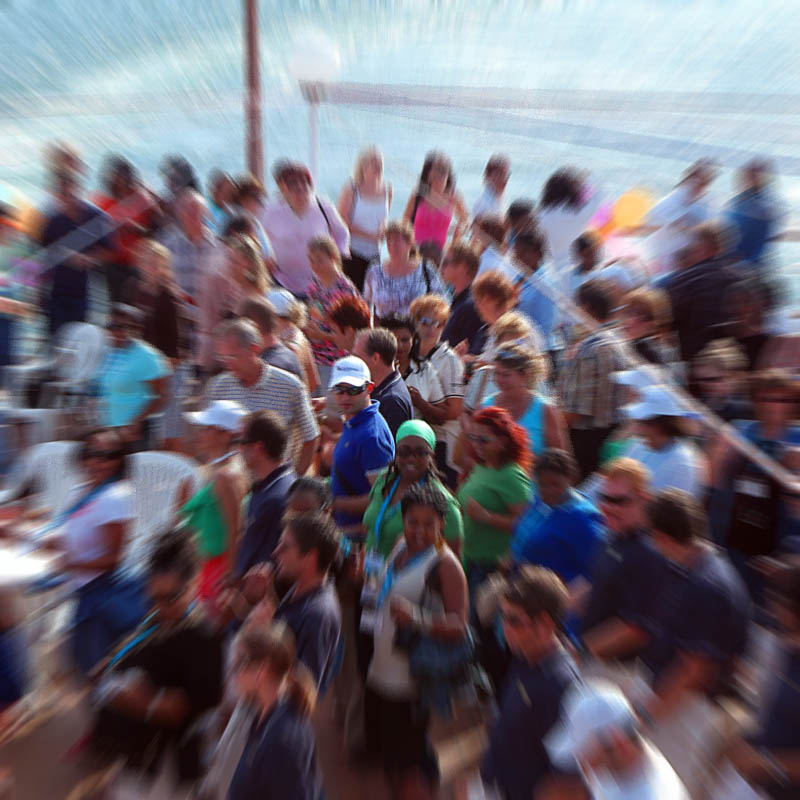
Irrespective of gender, race, religion or political persuasion, April 3rd is your call for participation in a worldwide celebration of peace and happiness.(© All Rights Reserved)
Irrespective of gender, race, religion or political persuasion, April 3rd is your call for participation in a worldwide celebration of peace and happiness.
(© All Rights Reserved)

This day, also known as “P-Day”, is described by Wikipedia as a “synchronised global mass celebration of a better world and the active creation of a desirable reality”. It was started in 1996, and the idea apparently first appeared in a novel by the American writer Vanna Bonta, called “Flight, a Quantum Fiction Novel”. In the book, there was a countdown to a synchronised worldwide celebration aimed at elevated social awareness, that was to take place on 3 April. This inspired readers to organise a real event in 1996. Thanks to the explosion of mass interpersonal communication through social media etc, this has gained in popularity, with millions of people now taking part in organising party events around the world. Apparently one of the bigger of these internationally coordinated events is a so-called “hum-in” to be held at 15h00 Eastern Standard Time.

World Party Day has no religious or political alliances, celebrating the shared universal human right to having fun and living in peace. While the idea of creating a desired reality through shared awareness and synchronised celebration sounds a little airy-flairy and new-agey to me, I cannot fault the underlying desire for world peace and happiness, so I am all for it.

Enjoy the World Party, and may we all live to see better days, particularly those sadly still living in regions ravaged by violence and war.

Celebrating Velcro, ingeniously fastening stuff for more than half a century

It’s April the 2nd, the day in 1948 when one of the most amazing inventions ever, the hook-and-loop fastener Velcro, was first introduced to the world.

Velcro was invented by George de Mestral, a Swiss engineer, who came up the idea after investigating the way thistle burrs stick to clothing. Studying the burrs through a microscope, de Mestral noticed they had tiny hooks that gripped on to the yarn loops in clothing. This led him to develop a new type of fastener consisting of two sides, one covered with tiny, flexible hooks, and the other filled with small, hairy loops. When pressed together, the hooks catch on to the loops, holding the pieces together. Pulling the pieces apart, the hooks give way, releasing the loops with a ripping sound. This process of using nature as inspiration for a man-made invention, is called biomimicry or ‘biomimetics’.

Velcro, an ingenious, bio-mimicking fastener made of tiny hooks and loops. (© All Rights Reserved)
Velcro, an ingenious, bio-mimicking fastener made of tiny hooks and loops.
(© All Rights Reserved)

Over the years, Velcro has been manufactured with progressively more durable materials – the first examples were made of cotton, later to be replaced with nylon and polyester. For critical applications, highly durable teflon velcro has even been developed.

The range of applications of velcro is almost without limit. Besides its extensive use as a clothing fastener (often replacing zippers), it can be used wherever things need to be temporarily, and repeatedly, attached and taken apart. A surprising, and very important, use of Velcro has been in the space industry, where Velcro fastening is used extensively to hold items in place in the near zero gravity conditions in space.

Closer to home, and in a more everyday application, Velcro is also an unmissable teaching aid, especially in early childhood education when it is a great way for kids to tag objects to a board etc. A friend of mine who teaches visually impaired students swears by it, saying that she cannot imagine her teaching environment without the ingenious fastener.

From education to outer space, a truly great invention indeed.

Celebrating complex knots and loops on International Tatting Day

It’s the 1st of April, and we all know what that means. It’s the day that every story you hear has to be taken with a bit of scepticism – you don’t want to be the fool falling for the crazy, almost-believable story on April Fool’s Day!

However, rather than spinning a yarn, or weaving a tall tale , I’ll focus on yarns and weaving of a different kind – today is International Tatting Day, the day we celebrate the age-old art of handcrafting lace-like edges using an intricate series of knots and loops. Tatting is usually done for decoration, for example to create fancy edges for doilies, collars, etc.

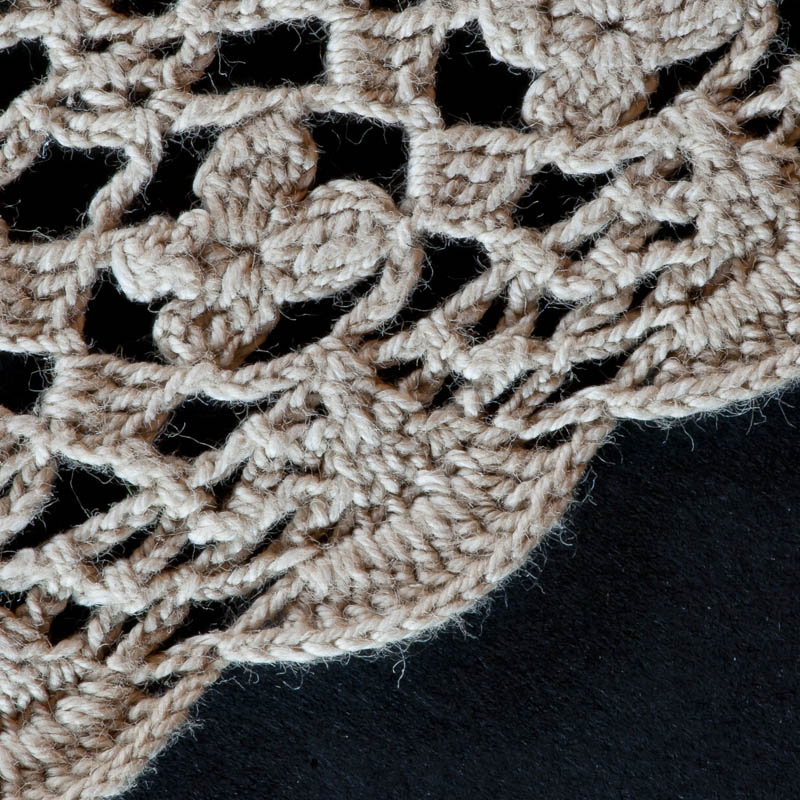
There's a thin line between tatting and crocheting, which also creates patterns with knotted yarn. Both these crafts are used to create patterns that are almost mathematical in their complexity. With apology to tatters everywhere, my illustration above is a piece of crochet work rather than tatting, but unfortunately I wasn't able to find a nice example of tatting to photograph.(© All Rights Reserved)
There’s a thin line between tatting and crocheting, which also creates patterns with knotted yarn. Both these crafts are used to create patterns that are almost mathematical in their complexity. With apology to tatters everywhere, I believe my illustration above is a piece of crochet work rather than tatting, but unfortunately I wasn’t able to find a nice example of tatting to photograph.
(© All Rights Reserved)

A range of different knots and loops can be used to create amazingly delicate and intricate patterns that have an almost mathematical complexity about them. In fact, with a little imagination the tatted patterns can almost resemble the beautiful fractal patterns created in mathematical topology.

Those engaged in the art of tatting are called ‘tatters’, and according to a number of sources, tatters celebrate International Tatting Day by “making tatted lace and eating chocolates”.

So, Happy Tatting Day, everyone! I don’t have the skill to join in on the tatting, but where did I leave that slab of chocolate?

Celebrating the Bunsen burner, a staple in every chemistry lab

So it’s the last day of March, and we celebrate Bunsen Burner Day. Anyone who did chemistry in high school will remember the trusty Bunsen burner, a staple tool in avery chemistry lab, and more often than not a key part in some seriously derailed chemistry experiments.

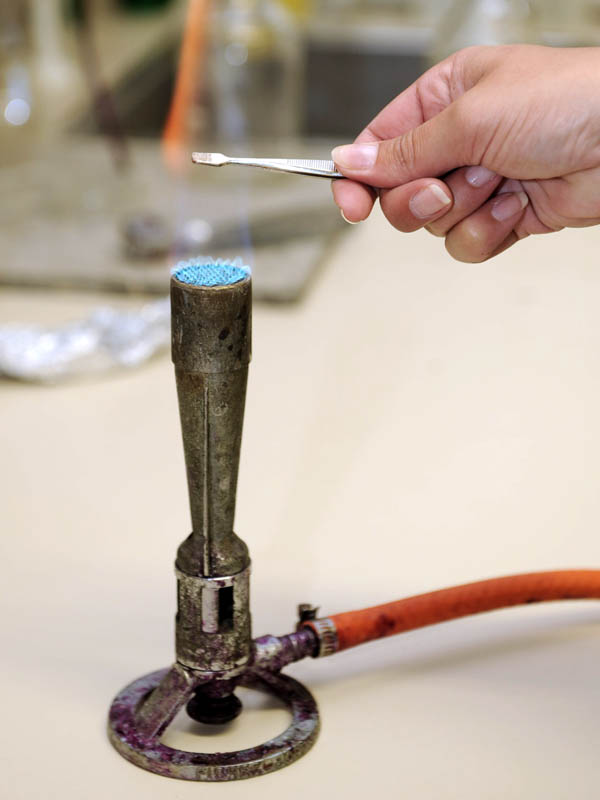
In addition to heating chemicals, the intense flame of a Bunsen burner can also be used to sterilise laboratory tools.(© All Rights Reserved)
In addition to heating chemicals, the intense flame of a Bunsen burner can also be used to sterilise laboratory tools.
(© All Rights Reserved)

Bunsen Burner Day is celebrated on 31 March in honour of Robert Wilhelm Eberhard von Bunsen (31 March 1811 – 16 August 1899), German chemistry professor and inventor of various pieces of laboratory equipment, including the Bunsen burner. The science behind the way a Bunsen burner works is similar to that used in gas stoves and gas furnaces. The burner is connected via a tube to a container with flammable gas, and as the burner is opened, the gas flows through a small hole in the bottom of the burner’s barrel. Openings in the side of the tube allow air into the gas stream, and the mixture is ignited by a spark or flame at the top of the tube. The amount of air mixed in with the gas can be controlled by opening or closing the gaps at the base of the barrel – as the amount of air is increased up to an optimal point, the combustion becomes more complete, resulting in a hotter flame – as it heats up, the flame becomes blue and transparent, becoming almost invisible at its optimal level.

To this day, Bunsen burners remain a laboratory staple, and it is used on a daily basis in literally thousands of laboratories around the world.

Developing social and cognitive skills on International Tabletop Day

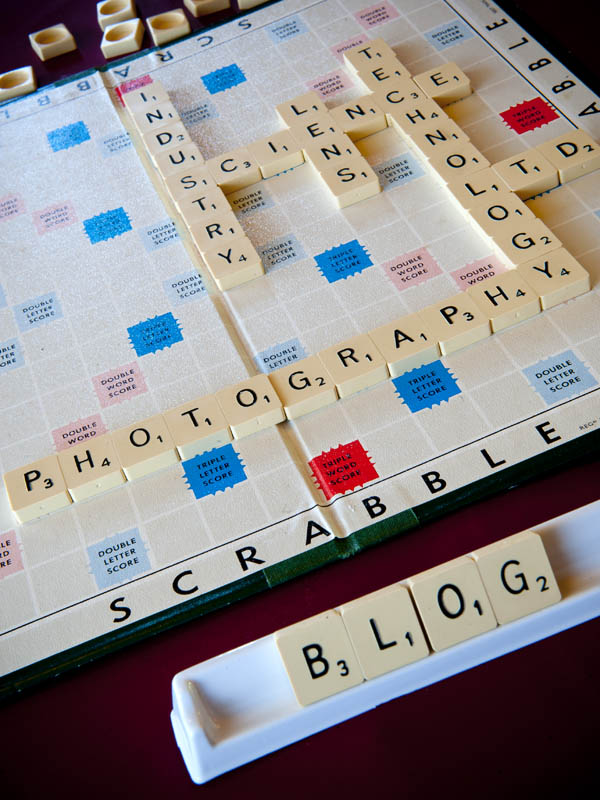
Today, 30 March, is International Tabletop Day, the day we celebrate all tabletop games. It is a reminder that these games – from chess to playing cards to snakes and ladders – can be a great way to spend some fun time with friends and family.

Since these games tend to be non-physical, they can be enjoyed by people of widely varying physical abilities – you don’t have to be a strong, fit 18 year old to take someone on in a game of Scrabble! As long as these games don’t keep us from physical activity, they can have great social and cognitive benefits, teaching us about communication, team work, strategy and innovative thinking. Just what the doctor ordered for a rainy day! (Just remember to get out of the house for a bit of a cardio-vascular workout when the weather clears…)

Still a classic - anyone a game of Scrabble?(© All Rights Reserved)
Still a classic – anyone a game of Scrabble?
(© All Rights Reserved)

And don’t think there’s nothing in the tabletop gaming genre for you just because you’re tired of the classic games like Scrabble and Monopoly – new tabletop games appear on an almost daily basis, and there are websites going to great lengths discussing and reviewing these – why not pop over to Tabletop Gaming News or have a look at the Top 10 new tabletop games for 2012 according to game informer.

Whatever rocks your boat – be it board games, dice games, war-games or card games – pull up a few chairs and have some fun on International Tabletop Day.