Page 9 of 41

Bus drivers, real people and key players in an effective commuter system

International Bus Driver Appreciation Day is celebrated on Monday, 18 March.

This is the day to celebrate and show your appreciation for the bus driver you see each morning, on time, doing his/her rounds and helping, in a very real way, to keep the economy going.

Bus drivers not only have to manoeuvre their precious load through heavy traffic, but are often also faced with adverse road and weather conditions.(© All Rights Reserved)
Bus drivers not only have to manoeuvre their precious load through heavy traffic, but are often also faced with adverse road and weather conditions.
(© All Rights Reserved)

Bus drivers are more than just a part of the traffic system – deftly manoeuvring their extra large vehicles through sometimes heavy traffic, and adverse weather conditions to get loads of commuters to their respective destinations on time. They are a part of the community fabric, giving directions and route suggestions, sometimes making small talk with regular commuters, remembering stop requests.

Dealing with peak traffic on a daily basis, while also having to contend with often people grumpily on their way to work cannot be easy, so why not do your bit to brighten their day with a warm smile and by showing some interest in your bus driver as a real person. And rather than just complaining about inadequate service, how about submitting an official commendation for a job well done, allowing your bus driver to receive formal recognition for his/her hard work.

Go ahead, make their day!
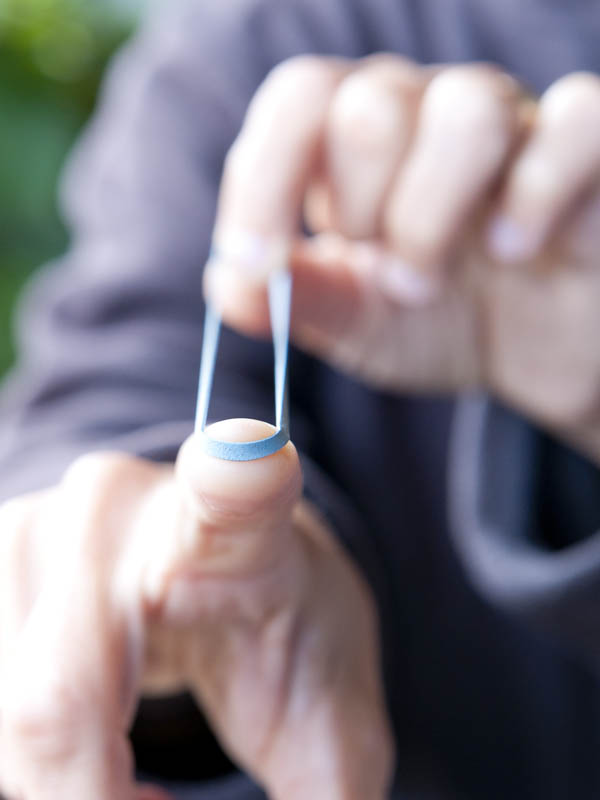
The birth of the humble rubber band

It was on this day, 17 March 1845, that the elastic rubber band, made from vulcanised rubber, was patented by it’s English inventor Stephen Perry. Around the same time, Jaroslav Kurash also independently came up with his version of the rubber band.

While this counts as the ‘invention of the modern rubber band’, it is by no means the first occurrence in history of these super-useful little binding tools. Many years before the Mayans had already used the sap from rubber trees to create elastic strands to bind things together.

The rubber band - another of those simple yet super-useful inventions that I find endlessly impressive.(© All Rights Reserved)
The rubber band – another of those simple yet super-useful inventions that I find endlessly impressive.
(© All Rights Reserved)

From their modern-day invention in 1845 it took almost 80 years before William Spencer first started mass producing rubber bands in Ohio, USA. And the rest, as they say, is history – it is nigh impossible to imagine a world without rubber bands.

Throughout history two types of rubber have been used to manufacture rubber bands – natural rubber or latex from rubber trees, and synthetic rubber, a by-product of crude oil refinement. Modern day rubber bands are basically created by extruding rubber into long tubes of varying colour, thickness and diameter. These elastic tubes are sliced into thin circles, creating rubber bands as we know them.

Very simply stated, rubber consists of chains of molecules bonded in such a way that the molecules can move, thus allowing the rubber to be stretched. The bonds between the molecules pull them back together again, causing rubber’s elasticity. Of course it is possible to stretch a rubber band too far, severing the bonds between the molecules, and causing the rubber band to snap. Over time, light and heat also weakens the chains of molecules, resulting in the bands to get brittle and more readily breakable.

Can you believe that the biggest rubber band ball (a ball created by wrapping rubber bands around each other ) was created by Joel Waul in 2008 in Florida, USA? It weighed a whopping 9400 pounds, exceeded 8 feet in height, and consisted of more than 700 000 rubber bands!?

Fascinated by lips on Lips Appreciation Day

Today, 16 March, is Lips Appreciation Day.

It is said that the mouth is one one of the first facial features we notice when looking at someone, so it is understandable that our lips have been the subject of various fashions and fads over the years. Over the centuries, lip colouring have been applied by both males ad females. Trends in lip gloss colour and sheen come and go, and it is becoming more and more common for people to artificially enhance their lips through botox and plastic surgery.

Appreciating lips - multi-functional and fascinating.(© All Rights Reserved)
Appreciating lips – multi-functional and fascinating.
(© All Rights Reserved)

The importance of the lips in human interaction and communication can hardly be overstated. Not only are they critical in facilitating human speech, but they also serve as carriers of many subtle non-verbal messages.

From an anatomical viewpoint, lips are equally fascinating:

  • The lips form the border between the exterior facial skin and the mucous membrane inside the mouth.
  • The skin of the lips contains only 3-5 cellular layers, and is very thin compared to the rest of the facial skin, which has up to 16 layers. This allows the blood vessels in the lips to be more visible, (especially in people with lighter skin) resulting in the pink/red colour of the lips.
  • The skin of the lips contains no sweat glands, and as such they do not have the same protective layer of sweat and body oils that protect the rest of our skin. This is why lips dry out faster, and become more easily chapped.
  • There are at least 12 groups of muscles controlling the movements of the lips and mouth.
  • The lips have many nerve endings making them very sensitive to touch and heat (they are said to be 100 times more sensitive than the fingertips). For this reason, lips are critically important to babies and toddlers when exploring foreign objects.

The lips are without doubt one of the most fascinating parts of the human body, playing a key role in communication, exploration, feeding and sexual interaction. And Lips Appreciation Day is the perfect opportunity to celebrate your lips in all their multi-dimensional splendour.

Celebrating a good night’s sleep

Today, 15 March, is World Sleep Day, an annual event to celebrate healthy sleep, and to call attention to important issues related to sleep, including sleep problems and disorders. The day is organised by the World Association of Sleep Medicine (WASM).

A good night of sleep - just what the doctor ordered.(© All Rights Reserved)
A good night of sleep – just what the doctor ordered.
(© All Rights Reserved)

A good night’s sleep is critical for a healthy body and mind. Yet, sleep deprivation is becoming more and more common – a trend that robs millions of people of the necessary rest and rejuvenation offered by adequate, quality sleep. Sleep deprivation is harmful to the body’s metabolism and endocrine functions, and may increase the severity of age-related chronic disorders.

Conversely, researchers agree that adequate sleep has numerous benefits – it improves energy levels, boosts productivity and sociability, and increases overall wellbeing. Quality sleep can also strengthen your immune system and improve your memory. It helps you metabolise sugar, thus helping to fight diabetes, and it can help prevent hypertension, heart disease and stroke.

Your environment has a major impact on sleep quality. Factors like temperature, noise, light, bed comfort and electronic distractions (TV, computers) all affect one’s ability to get a proper night’s rest. As far as noise is concerned, intermittent sounds (cars honking or revving, alarms going off, etc) are said to be more disturbing than even rather high levels of continuous noise. As such, many city-dwellers suffer from chronic sleep deprivation – a condition that affects their moods and can have numerous detrimental health effects.

To improve your sleep, consider the following suggestions:

  • Make your bed inviting – invest in comfortable pillows, good quality sheets etc.
  • Turn out the lights – darken the room and eliminate possible light with curtains or shades.
  • Turn off the TV – ideally keep TVs, computers, cell phones and other electronic devices out of the bedroom.
  • Turn down the volume – turn off all electronics, close the door, block out external noises using heavy curtains.
  • Adjust the thermostat – try to maintain a temperature that you are comfortable at; not too warm or too cold.
  • Protect your bed – keep your bed a sanctuary for sleep and sex only; it is not an office or recreational space for the family.

With that, all that’s left for me is to wish you all a happy sleep!

Celebrating Einstein’s birthday on Pi Day

Besides today being World Kidney Day, which I incorrectly listed on the blog for yesterday, the 14th of March is also the celebration of Pi Day, commemorating the mathematical constant π (pi), which, to two decimal points, equals 3.14.

Enjoying 3.14 pies on Pi Day.(© All Rights Reserved)
Enjoying 3.14 pies on Pi Day.
(© All Rights Reserved)

OK, we’ve already celebrated Pi Approximation Day on the 22nd of July (22/7 is also used to approximate π), but surely this amazing number deserves another mention.

So bake yourself 3.14 pies and share in the celebrations!

Making today extra special, we also celebrate the birthday of Albert Einstein (14 March 1879 – 18 April 1955), the greatest scientist of the 20th century. What makes Einstein such an endearing figure is that, besides his numerous groundbreaking contributions to science (thermodynamics, relativity, quantum theory, wave-particle duality, statistics, cosmology, nuclear physics and much more), he has also made deeply profound contributions to secular subjects as diverse as war and peace, religion, human rights, economics and government.

The ideas and opinions of the great Albert Einstein - a continuous source of insight and inspiration. (© All Rights Reserved)
The ideas and opinions of the great Albert Einstein – a continuous source of insight and inspiration.
(© All Rights Reserved)

Many volumes have been written about the great man, so rather than trying (and no doubt failing) to adequately capture his contributions in a single blog post, I will rather leave you with one of his many, many wonderful quotes:

“Learn from yesterday, live for today, hope for tomorrow.
The important thing is not to stop questioning.”

Raising kidney awareness on World Kidney Day

Today, 13 March 2013, is World Kidney Day, a day which “aims to raise awareness of the importance of our kidneys to our overall health and to reduce the frequency and impact of kidney disease and its associated health problems worldwide.” Every year the day has a unique theme, and this year it’s “Kidneys for Life – Stop Kidney Attack.”

The main role of the kidneys is to remove toxins from the blood. It also helps control blood pressure, produces red blood cells and helps control blood acidity. Unfortunately, the incidence of chronic kidney disease, and other kidney-related diseases, is increasing significantly around the world, placing huge added pressure on already stretched health systems. It is estimated that between 8 and 10% of all adults have a notable level of kidney damage, with the impact of this ranging from loss of productivity to premature death.

Kidney beans, like most legumes, are super foods when it comes to controlling blood sugar and preventing diabetes. People with diabetes are more likely to develop kidney damage. So, interestingly, kidney beans are actually good for kidney health!(© All Rights Reserved)
Kidney beans, like most legumes, are super foods when it comes to controlling blood sugar and preventing diabetes. People with diabetes are more likely to develop kidney damage. So, interestingly, kidney beans are actually good for kidney health!
(© All Rights Reserved)

The important message on World Kidney Day is that there are things we can do to reduce the risk of kidney disease. Focus is placed on 8 golden rules of kidney care:

  1. Keep fit and active.
  2. Control your blood sugar levels.
  3. Monitor your blood pressure.
  4. Eat healthy and avoid obesity.
  5. Maintain a healthy fluid intake.
  6. Do not smoke.
  7. Avoid excessive over-the-counter medication such as anti-inflammatory drugs.
  8. Finally, if your habits related to points (1) to (7) above place you at risk, get your kidney-functions checked on a regular basis.

Be aware of kidney-health, and take action before it’s too late – it might just save your life!

Clement Studebaker, over-delivering in the emerging vehicle market

Today we celebrate the birth of Clement Studebaker (12 Mar 1831 – 27 Nov 1901), the businessman and entrepreneur who, with his brothers Henry and John, founded the Studebaker Brothers Manufacturing Company, a family firm that grew to become a world leader producer of horse-drawn vehicles, before moving into motorised automobile manufacturing.

The Studebaker Champion, one of the company's best selling automobiles, thanks to its affordable price and distinctive 'pontoon styling'. (© All Rights Reserved)
The Studebaker Champion, one of the company’s best selling automobiles, thanks to its affordable price and distinctive ‘pontoon styling’.
(© All Rights Reserved)

The Studebaker company’s motto was “Always give more than you promise”, and this attitude of over-delivery proved the key to their success. Clement, John and Henry, three of 10 Studebaker siblings (5 boys and 5 girls) started out making parts for horse-wagons, and later expanded to making complete wagons. They had their big break during the California Gold Rush, when their fancy yet rugged horse-buggy proved very popular and their sales skyrocketed. When they also received a large order to build carriages for the army, the sky was the limit.

Over time, involvement of the different Studebker brothers changed, with Henry leaving to farm, and younger brothers Peter and Jacob joining. Clement remained President, overseeing the expansion of the company to “the largest vehicle house in the world”, delivering carriages for everyone up to US President Harrison.

The Studebaker company only moved into the automobile market after Clement Studebaker’s death. Starting with electric vehicles in 1907, the company continued to produce vehicles into the 1960s.

Safe drinking water and working sanitation systems on World Plumbing Day

Today, 11 March, is World Plumbing Day. The day, initiated by the World Plumbing Council, is aimed at promoting and celebrating the “the important role plumbing plays in the health and safety of modern society”.

Plumbing plays a key role in the provision of safe, clean water for sanitation.(© All Rights Reserved)
Plumbing plays a key role in the provision of safe, clean water for sanitation.
(© All Rights Reserved)

Numerous natural disasters – earthquakes, tsunamis, hurricanes – striking around the world over the last decade have again shown how quickly things we take for granted – safe drinking water, working sanitation systems – can disappear.

Drinking water is critical for any population, and efficient plumbing systems play an important role in ensuring a continued clean, safe water supply. During and after disasters, trained and qualified plumbers are key to re-establishing the required plumbing infrastructure in a region.

In support of World Plumbing Day, the World Plumbing council have released a set of fact sheets that make for some interesting reading regarding the role of plumbing in society.

Whipped cream and awesome inventions #idoa

Today in 1955, Aaron S Lapin received a US patent for his invention of a “Dispensing Valve for Gas Pressure Containers”. What makes this patent stand out from other patents awarded on this day, is the application of the valve – Lapin designed it in 1948 as the dispensing mechanism for his ‘Reddi-Wip’ whipped cream dessert topping, an instantly ready and foamy whipped cream in a spray can.

Chocolate pannacotta from my recipe book, cape gooseberries from my garden and whipped cream from Aaron Lapin's awesome tilt-opening dispensing valve.(© All Rights Reserved)
Chocolate pannacotta from my recipe book, cape gooseberries from my garden and whipped cream from Aaron Lapin’s awesome tilt-opening dispensing valve.
(© All Rights Reserved)

In essence, a soluble gas (typically carbon dioxide), is mixed into whipped cream in a can equipped with Lapin’s special valve. When the tilt-opening valve is tilted, the gas expands in reaction to the lesser atmospheric pressure outside the can, and pushes the cream through the valve. When the tilt-valve is let go, the elasticity of the valve seal causes it to return to the closed position, thus retaining the rest of the pressurised content inside the can.

So, a clever mechanical invention allowing us to enjoy fluffy, whipped cream without any effort – now there’s an awesome invention!

Oh, and speaking of awesome, today also happens to be ‘International Day of Awesomeness’ (hashtag #idoa). As the website states, “People are awesome every day, frequently don’t realize it, and their feats of awesomeness are rarely recognized. We aim to fix that, with a special day to both perform and celebrate feats of awesomeness!”

Here’s to awesomeness, here’s to whipped cream, and here’s great inventions. Have a great day, all!