Page 28 of 41

Positive Thinking Day – Accentuate the positive (but acknowledge the negative…)

Today is Positive Thinking Day. The day reminding you that if you can think it, you can do it. That if you smile and focus on positive thoughts, you will feel better. That you need to visualise success in order to achieve it.

Yeah right…

The ‘power of positive thinking’ has been one of the most jumped-upon bandwagons ever in motivational pop-psychology – so simple, such a positive message. Try a Google or Amazon search for ‘positive thinking’ and you will be inundated with self-help books, courses, motivational posters, famous quotes, you name it.

“Happiness is evolution’s way of saying, go out and discover new things. Go play, go explore” – Adam Anderson Canada Research Chair in Affective Neuroscience at the University of Toronto.
(© All Rights Reserved)

It all started as a legitimate new field of psychology in the 90’s, known as Positive Psychology, led by the likes of psychologist Martin Seligman. Where much of the the focus in psychology had historically been rather negative (mental illness, addiction, etc), the idea behind positive psychology was to explore and better understand positive aspects such as happiness, virtue, resilience and optimism. The idea was never, however, to advocate indiscriminate, mindless optimism  – even Seligman long ago expressed the warning that optimism “may sometimes keep us from seeing reality with the necessary clarity”.

Many aspects of positive psychology struck an obvious chord with motivational speakers, self-help authors and the like, and soon positive thinking went from one weapon in the psychologist’s arsenal to the silver bullet to solve all the world’s problems.

As such it’s not surprising that there has been a bit of a backlash from the scientific community to the magical magnificence of positive thinking. For example, some of the literature showing the correlation between a positive attitude and good health, may have stretched things a bit by using this relationship to support the claim that a positive attitude will result in improved health. Yes, there seems to be a clear correlation between attitude and health, but little prove of causality. Does positive thinking cause good health, or does good health result in a positive attitude? Or can it be that there is no causative relation between health and attitude at all, and that it is just that a specific subset of people in society (perhaps those with, for example, naturally high energy levels) happen to exhibit both good health and a generally positive attitude.

A healthy dose of pessimism or negativity may also help us identify potential challenges we face in pursuing our goals, which may help us better prepare for these eventualities, thereby actually increasing our chances of success.

Researchers at Wellesley College have found that forcing people out of their natural attitudinal state may have a detrimental effect on their performance – a group of defensive pessimists who were forced to try and change their attitude and ‘cheer up’ actually performed worse at subsequent tasks. A 2001 study by Seligman and Isaacowitz, involving participants from an elderly community, also found that the pessimists in the group were less likely than the optimists to fall into depression after experiencing negative life events such as the death of a partner or good friend.

Recent years have seen a resurgence in the field of positive psychology, with psychologists like Canadian Jamie Gruman, co-founder of the new Canadian Positive Psychology Association, again promoting the study of human well-being and happiness and emphasizing strengths rather than ailments. The new proponents of the field are careful, however, not to be seen as just another ‘lollipops-and-rainbows’ approach, but rather to promote a balanced approach to living a positive life.

So, I guess the message on Positive Thinking day should be to think as positively as you feel comfortable doing. Even if positive thinking may not necessarily be the magical prescription for good health and a long happy life, I am at least not aware of any studies showing that being positive may actually be bad for your health.

Except of course if you go happily venturing down dodgy, dark and dangerous alleyways because of your unshakably optimistic belief in the goodness of your fellow man…  Or if your unflinching positivity starts driving your less flowery fellow workers to physical violence…

Whichever way you roll, here’s a little song (a wonderful new version of an old classic) to brighten your day. Happy Positive Thinking Day everyone…

Sources:
Can Positive Thinking Be Negative? Scientific American.
Canadian social psychologist proposes science of positive thinking. The Vancouver Sun.

 

On logical paradoxes and talking sheep

It’s time for a bit of serious concentration again – here’s another fun paradox to get your head around…

Today is the birthday of Haskell Brooks Curry (12 Sep 1900 – 1 Sep 1982), an American mathematician and a pioneer of mathematical logic. He specialised in combinatorial logic, and some of his work found application in the development of modern computer programming languages.

While working on a strand of logic called ‘naïve logic’, he came up with a logical construct that became known as Curry’s paradox.

Curry’s paradox – confirming that sheep are smarter than we think!
(© All Rights Reserved)

The paradox is based on the idea of a ‘conditional claim’, or (If A, then B). Consider the following conditional claim:

“If this sentence is true, then sheep can speak English.”

Even though the second part of the sentence is false (last time I checked), there’s nothing stopping us from analysing the truth of the sentence.

The quoted sentence is of the form (If A then B) where (A) refers to the sentence itself and (B) refers to the claim “sheep can speak English”. Within the context of Curry’s naïve logic, the way to prove a conditional sentence is to assume that the hypothesis (A) is true, and then to prove, based on that assumption, that the conclusion (B) is true.

So, lets start with the assumption (A) is true. Because (A) refers to the overall sentence, therefore assuming (A) is true implies that the statement (If A then B) is also true. So, because (A) is true, (B) must be true. Assuming the truth of (A) is therefore sufficient to guarantee that (B) is true, regardless of the actual truth of statement (B). Which of course results in a paradox if (B) is, in fact, false.

Phew….

We can even show Curry’s paradox occurring in formal symbolic logic. Assuming there is a formal sentence (X → Y), where X itself is equivalent to (X → Y), then a formal proof can be given for Y:

1. X → X
(rule of assumption, also called restatement of premise or of hypothesis)
2. X → (X → Y)
(substitute right side of 1, since X is equivalent to X → Y by assumption)
3. X → Y
(from 2 by contraction)
4. X
(substitute 3, since X = X → Y)
5. Y
(from 4 and 3 by rule of inference)

There you have it – convincing mathematical proof that sheep CAN speak English! 🙂

Celebrating the legacy of Carl Zeiss

Today we celebrate one of the great names in optics – it’s the birthday of Carl Zeiss, born on 11 September 1816.

Zeiss studied mathematics, physics and optics, among other subjects, at the University of Jena, before he started experimenting with making lenses. By 1847 he founded Carl Zeiss AG and started manufacturing microscopes full time.

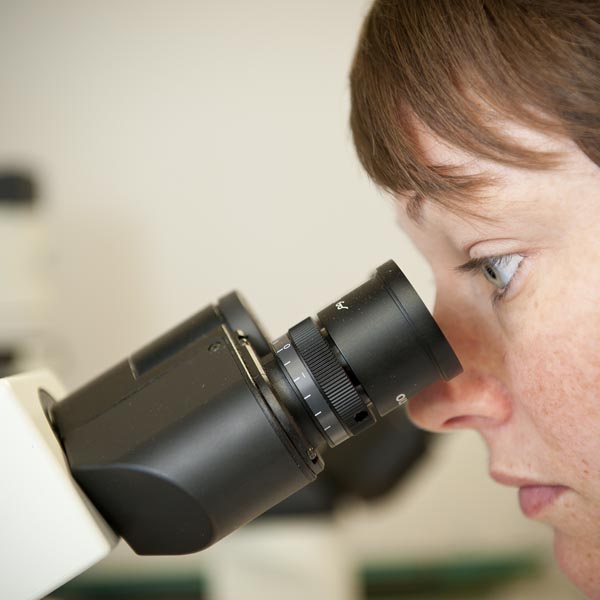
Carl Zeiss built the Zeiss empire through the manufacture of innovative, high quality optics for use in microscopy.
(© All Rights Reserved)

Zeiss real contribution came from his realisation that, to differentiate himself from other manufacturers in the optics industry, he had to significantly up the ante in terms of quality and innovation. He first teamed up with the physicist Dr Ernst Abbe, who calculated that the optical quality of lenses at the time left much room for improvement, but also found that the optical glass available was not up to his manufacturing requirements. Zeiss then brought on board glass chemist Dr Otto Schott, who established a glassworks at Jena where he produced new, better quality glass that was able to meet and exceed Abbe’s requirements.

While the lenses produced by Zeiss were initially primarily used in the manufacture of microscopes, the glass produced at Jena also opened up possibilities for the creation of much improved photographic lenses, for use in still and video cameras. Zeiss’ early innovations in photographic lenses happened mostly through the contributions of Dr Paul Rudolph, who was responsible for many classic Zeiss lenses around the end of the 19th century including the famous Planar® in 1896. Later famous Zeiss lenses included the Tessar® (1902) and the Sonnar® (1931). In 1935, Alexander Smakula developed an innovative anti-reflective coating for camera lenses, known as the Carl Zeiss T-coating, which opened up totally new possibilities in lens design, and is a key component in modern photographic lens design.

Even though much of the photographic contributions made by the Carl Zeiss AG company only happened after the death of its founder (Carl Zeiss died on 3 December 1888), his name will always be inextricably linked to top quality photographic optics. Zeiss lenses were used extensively in the cameras manufactured by Zeiss Ikon, one of the companies in the Zeiss group, who started producing the classic Contax cameras in the mid-20th century. The Contax rangefinder was the first 35mm camera to pose a serious challenge to the iconic Leica M-series of the time.

Zeiss lenses have been used by many of the great camera brands, including Voigtlander, Hasselblad, Rollei and Sony.

Even in the 21st century, the name Carl Zeiss remains synonymous with quality optics, and brands sporting Zeiss lenses proudly flaunt the fact.
(© All Rights Reserved)

Aside from microscopy and photography, the optical innovations created by Carl Zeiss and his company have found a use in a wide range of applications, from medical solutions to sports optics to industrial metrology.

Commemorating the discovery of DNA fingerprinting

Some time ago, I did a post about fingerprinting and personal identification. Now while fingerprinting has been around for more than 150 years, a new breakthrough in personal identification happened much more recently – on this day in 1984, DNA fingerprinting was discovered in Leicester, England.

The man who discovered this revolutionary new technique, was Sir Alex Jeffreys of the University of Leicester. He was the first to realised that each person’s DNA has a unique pattern, almost like a bar code, and that this could be used as a biological identification method. The technique has, over the past 25+ years, proved an invaluable tool in forensics, crime investigations and identification of genetic relationships.

Geneticist studying a DNA profile.
(© All Rights Reserved)

Of course no technique is perfect, and in the case of DNA fingerprinting there are also rare occasions where the technique cannot be used. Identical twins, for example, have matching DNA, and so their DNA fingerprints are the same.  A much rarer, and much stranger, occurrence is when a single person has more than one DNA fingerprint.

Strange as this may seem, having a single person with two distinct genetic identities is possible. This condition is known as chimerism, named after the chimera, a mythological creature with features from more than one distinct animal, for example a lion’s head and a serpent’s tail.

A human chimera is formed during pregnancy. Normally the male gamete (sperm) fuses with the female gamete (ova) to form a zygote, the cell that becomes the embryo. This embryo has a new genetic identity, formed from a unique combination of the DNA of the mother and the father. On rare occasions, two male gametes will fuse with two female gametes, to form two zygotes which develop into two (non-identical) twin embryos. These embryos will each have a different, unique new DNA fingerprint, inherited from the father and mother.

In extremely rare cases, these two embryos can fuse, growing into a single child, but formed from four gametes, and thus having two distinct sets of DNA. The chimera child can grow up without anyone ever knowing about his double identity, but may in fact have different organs or body parts that have completely different genetic fingerprints. Even when a DNA identity test is done on a chimera, DNA will usually only be taken from a single source, such as a blood sample or cheek swab, and the second identity may never be known.

Chimerism may, in rare occasions, visibly manifest itself, for example with people having both male and female reproductive organs, or two different colour eyes. (However, different eye colours, or heterochromia, can have different causes, and is, as far as I know, not necessarily an indication of chimerism.)

(© All Rights Reserved)

The most famous example of a chimera confounding DNA profiling came from a case in 2003, when a mother of three were told, after DNA tests were done on her and her three children, that two of her three sons were not hers, even though she maintained that she had conceived them with her husband, and delivered them naturally.

After more extensive testing, it was discovered that she was a chimera, and that the two sons thought not to be hers did in fact match her ‘second identity’.

Definitely a case where truth is, in fact, stranger than fiction.

Weekly Photo Challenge: Near and Far

I took these a few years ago while on a photography trip in the Richtersveld, a breathtakingly beautiful and barren landscape in the Northern Cape province of South Africa, right on the border between SA and Namibia. The focus of the shots was very much on texture and shape, and playing with near and distant elements.

(© All Rights Reserved)

Both these shots were taken on a trusty old Nikon F100 (I still love that camera so) and a 28mm prime lens, using Fuji Velvia slide film.  The film was cross-processed using the C41 colour negative development process, which basically ends up giving you very contrasty results, with quite aggressive grain and unexpected colour casts.

(© All Rights Reserved)

Ever since I first discovered cross-processing during my photographic studies, it has always been one of my favourite processing techniques. I love the fact that you’re never quite sure what you’re going to end up with – different types of slide film give widely varying results, and even the age of the film can lead to a different outcome.

While it is possible to simulate cross-processing quite successfully in digital photography during post-processing, it simply does not come close to the magic of getting your roll of cross-processed film back from the lab, and discovering the results for the first time.

Hmmm….. I need to get out and shoot some film again – digital is great, but you get withdrawal symptoms if you’ve been away from film too long!

The day the first computer bug was discovered

OK, so the legend goes like this:

Back in the late 1940s, the US Navy financed the building of an electromechanical computer at Harvard University, called the Harvard Mark II. It was basically a super-fast (for the time) calculating machine, made unique because several calculations such as the reciprocal, square root, logarithm and exponential, were built into the hardware, making execution much faster than on other similar machines of the time. Unlike modern computers, the Mark II was not a stored-program computer. Instead, program instructions were read sequentially from a tape, and then executed.

Anyway, back to the legend…  On this day, back in 1947, while the Harvard Mark II was doing its thing, humming away (as I presume they did), a technician noted an unusual object trapped in one of the computer’s relays. On closer inspection, he found it was a moth. The moth was removed and taped into the computer’s log book. Grace Hopper, computer scientist and US Navy Rear Admiral, saw the moth entry in the logbook, and added the caption, “First actual case of bug being found”. This reference to a computer problem or glitch as a ‘bug’, caught on with other computer scientists, and has been used ever since, together with terms like debugging, etc.

I’ve discovered that I have a computer screen bug – hope it won’t cause serious problems!
(© All Rights Reserved)

Much of the above story is true – there was a moth found in the Harvard Mark II, on 9 September 1947 at 15:45. And it was indeed taped into the log book, with the above-noted caption. However, this was far from the first use of the word ‘bug’ to refer to a technical error – small machine glitches have been called ‘bugs’ for many years, with the first known reference coming from a letter written by Thomas Edison in 1878:
“Bugs – as such little faults and difficulties are called – show themselves and months of intense watching, study and labour are requisite before commercial success or failure is certainly reached.”

So, while it would have been cool if this was the real origin of the term computer bug, it sadly wasn’t. What is probably true about the story of Grace Hopper and the Harvard Mark II, is that this may indeed be the first known case of an actual computer bug, or computer moth, to be more exact. Which is still kind of amusing. 🙂

Happy Sunday, everyone – hope you’re not being bugged by bugs of any kind todayyy.y..yy…yyyyy.yy. Bugger…

Luv or h8 it, txting is gr8 4 literacy

Today, 8 September, is International Literacy Day – the day the world’s attention is focused on literacy as one of the fundamental human rights, and the foundation of all learning. In the words of UNESCO Director General Irina Bokova, “Education brings sustainability to all the development goals, and literacy is the foundation of all learning. It provides individuals with the skills to understand the world and shape it, to participate in democratic processes and have a voice, and also to strengthen their cultural identity.”

In the information age, literacy is a more critical basic requirement than ever. The literacy landscape is also rapidly changing – children’s reading and writing experience is changing from a paper-based to a digital context. Many kids’ primary exposure to the written word is through texting – SMS, instant messaging and Twitter – thanks to the global proliferation of mobile phones and internet connectivity.

Texting teens may have a literacy edge over their non-texting peers.
(© All Rights Reserved)

Texting has long been blamed for being one of the main causes of decreasing linguistic savvy among children and teenagers, with parents and teachers fearing that texting shorthand (incorporating linguistic shortcuts, weak grammar and little or no punctuation) was destroying their ability to write ‘properly’.

While it’s true that these teenage ‘textisms’ drive most people over thirty up the proverbial wall, it may in fact not be quite the scourge it was thought to be at the turn of the century. New research is showing that, while it may not promote perfect grammar, text messaging may in fact have a positive impact on basic literacy. For one thing, there is no arguing that it is increasing young people’s level of interaction with the written word. Instead of speaking, kids are very likely to communicate via text messages, even when they are in the same physical location.

As reported in an article in the Telegraph, researchers are suggesting that using a mobile phone can boost children’s spelling abilities. In a research project at Coventry University in the UK, 114 children aged 9-10, who were not already mobile phone users, were split into two groups. Half were given handsets and encouraged to text often, while the control group remained without mobile phones. After 10 weeks, both groups were subjected to a series of reading, spelling and phonological awareness tests, and the researchers claimed they found that texting made a significant positive contribution to to children’s spelling development during the study. According to Professor Clare Wood of the university’s Psychology Department, they also found “no evidence that children’s language play when using mobile phones is damaging literacy development.”

Similar sentiments have been expressed by Professor David Crystal, honorary professor of linguistics at Bangor University, who says it’s an urban myth that text speech are taking over childrens’ regular writing. He considers it “merely another way to use language”, and suggests that the use of textisms and shortcuts is exaggerated: “If you collected a huge pile of messages and counted all the whole words and the abbreviations, the fact of the matter is that less than 10% would be shortened.”

So, while language may be changing in the age of texting, the undeniably positive part is that it is exposing children to the written word, in both the traditional and the abbreviated sense.

And that, as they say in the classics, is gr8 4 literacy.

Salami – good when it’s meat, less so when it’s science

Today is a celebration of that greatest of cured meats – it’s Salami Day.

Salami is a cured, fermented and air-dried sausage-style meat, usually made from pork and/or beef, but also sometimes from a range of other meats including venison and turkey (and even, apparently, shark and swordfish in Japan). The meat is minced together with a range of spices, garlic, minced fat, herbs and wine or vinegar, and left to ferment for a day or so before being stuffed into a (usually edible) casing and hung out to cure. The casing is sometimes treated with an edible mold culture which adds flavour and helps protect the salami from spoilage.

It first became popular with South European peasants, thanks to the fact that it doesn’t require refrigeration, and can last at room temperature for a month or longer. (It is this feature that also makes it one of my personal favourite foods to take on multi-day hikes – few things beat a couple of slices of salami on some cracker-bread over lunch, somewhere out in the middle of nowhere.)

A traditional aged, peppered Hungarian salami – finger-licking good.
(© All Rights Reserved)

Of course, in science, salami has a very different connotation. The phrase ‘salami science’ refers to a scientific publishing tactic where the same body of research is published in more than one journal, or, more commonly, the results from a single research project is sliced up into multiple smaller research results (spread over time, for example) and published separately. This second option is also referred to as ‘salami slicing’ because you are effectively slicing your single research salami into a whole bunch of smaller slices, spread across different publications.

This is an unfortunate practice because it can skew research data, and it makes it more difficult to get the ‘big picture’ with regards to a specific body of research. It is, however, the result of the way the value or worth of a scientist is measured in the scientific community – the more you publish, the better you are rated, and the more funding you can attract. This ‘publish or perish’ phenomenon is well-known in science, where the size of an individual or group’s scientific output is overemphasized, rewarding quantity over quality.

Nature magazine has gone so far as to say that salami science “threatens the sustainability of scientific publishing as we know it”. Fighting this practice means more time and effort have to be spent by journals and publications to ensure that the same results have not been published elsewhere, thus increasing the workload on already stretched staff and peer reviewers.

Of course quantity is not the only criterion used to judge or measure a scientist’s research output – references and citations also play an important role. However, formulae for quantifying research output is often oversimplified and skewed towards quantity. To again quote Nature magazine, “The challenge then is not only to establish more sophisticated means to assess the worth of a researcher’s scientific contribution, but for bodies making such assessments to make it plain that it is scientific rigour and not merely numerical output that will lead to success”.

It definitely seems slicing your salami thin is better when you’re talking meat than when you’re talking science. In fact, referring to the meaty version, it’s probably a very good idea to slice it thin – when it comes to processed meat (including salami), moderation is definitely a good thing. In a report in the Guardian, the World Cancer Research Fund (WCRF) has warned that excessive intake of processed meat can increase your risk of developing cancer.

According to the WCRF, “If everyone ate no more than 70g of processed meat – the equivalent of three rashers of bacon – a week, about 3,700 fewer people a year in Britain would be diagnosed with bowel cancer”.

So, in celebration of Salami Day, get yourself a good quality salami (paying a bit more really is worth it when it comes to enjoying a good salami) and enjoy a taste of meat-heaven.

Just don’t overdo it.

And don’t cheat with your research. 🙂

Fight Procrastination Day

Note to self…… September 6th – Fight Procrastination Day….. also Read a Book Day….hmmmm, what to do…… Read up on procrastination – causes, statistics, interesting facts, etc…. or other topic. Think of photo ideas to illustrate concept….. Get going on this sooner rather than later…………

Doh…!

I knew I shouldn’t have put it off ’til the last minute…….

Weekly Photo Challenge: Free Spirit


OK, so my ‘free spirit’ photo doesn’t really break any photography rules, feature lens glare or anything like that, but when I photographed this gypsy, he just had this most incredible sense of peace and freedom about him.
This, to me, is the embodiment of a ‘free spirit’.
(© All Rights Reserved)