Page 19 of 41

Circling the world with a worldwide candle lighting

Since 1997, the second Sunday in December has been the day of the Worldwide Candle Lighting – an event to commemorate the memory of all the children who have died in the past year. The event was initiated by The Compassionate Friends (TCF), a US-based organisation providing support to families and individuals who have lost a child. The candle lighting event was started as a small internet observance, but has since grown to an international initiative, said to be the largest mass candle lighting in the world.

This year marks the 15th candle lighting, and people around the world are encouraged to take part by lighting candles at 7pm, local time.
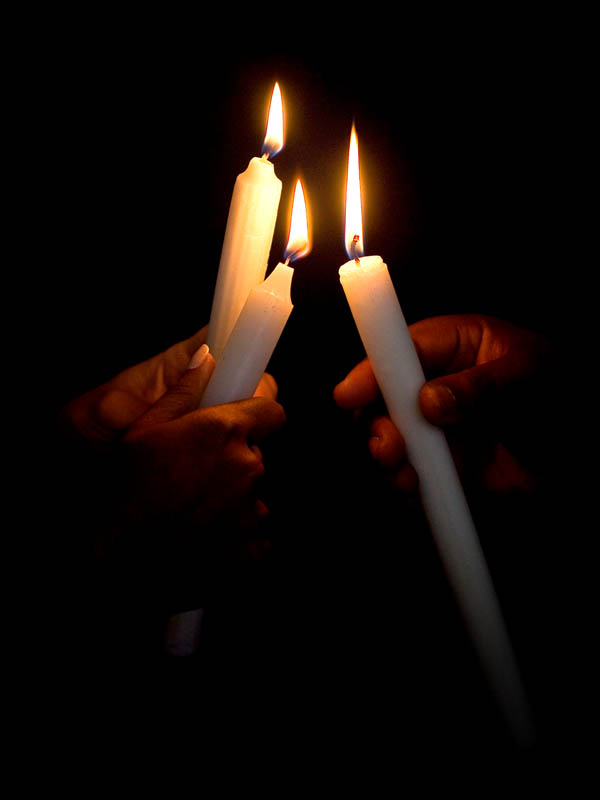
Lighting a candle to the memory of children who have passed away.(© All Rights Reserved)
Lighting a candle to the memory of children who have passed away.
(© All Rights Reserved)

Imagine all the lights in the world being turned off, and then each person across the globe lighting a candle at the moment the clock strikes 7pm in their location, keeping the candle lit for an hour until 8pm. If you were to see this from space, it should be like a giant flame moving across the world from east to west, as time marches on.

OK, it probably won’t quite look that way – for one thing, the progression of  lights won’t be smooth, but rather happen in discrete steps because time zones are defined in discrete steps (as folks in one time zone light their candles, those in the previous timezone would be extinguishing theirs). Clouds may also obscure parts of the view, but what the heck, it’s just a theoretical image anyway, so we may as well assume clear skies across the globe for this one night. Still, just imagine the world being lit up by a spreading wave of candlelight – it does sound grand, doesn’t it? And quite fitting as an act of remembrance for the millions of children who have lost their lives through the year – through war, famine, disease, accidents or whatever specific reason their lives were cut short.

So go ahead, light a candle, and be part of a virtual 24 hour memorial of light, circling the globe in memory of the children.

Celebrating International Shareware Day

Today is a day to celebrate thousands of computer programmers frantically coding away at their latest killer app, who end up essentially giving it away in the hope that someone will show enough appreciation to pay them for it – today, the second Saturday of December, is International Shareware Day.

Celebrating all the programmers coding away at the next useful app.(© All Rights Reserved)
Celebrating all the programmers coding away at the next useful app.
(© All Rights Reserved)

Unlike open source software, ‘shareware’ is a proprietary software model – the author retains ownership of the programme and the code, and often scaled down versions of commercial software applications are released as shareware. While you can use the software without paying, the idea is that if you find it useful, you should pay, or upgrade to the full, non-free version of the software. Some shareware are also only made available for a limited trial period, after which users are expected to pay to continue using it.

Another concept closely related to shareware is ‘freeware’, where the software is made available for free without an expectation of payment, except perhaps for donations to the author.

The first piece of software called ‘freeware’ was PC-Talk, a telecommunications programme created by Andrew Fleugelman in 1982, while the term ‘shareware’ was first used with the programme PC-Write (a word processing tool), released by Bob Wallace in early 1983. So in a way this year effectively represents the 30th anniversary of freeware/shareware.

Very few shareware and freeware downloads are ever paid for, meaning that the chances of sustaining yourself on shareware income remains fairly slim. This is sad, because this mode of software production has resulted in some wonderful software tools being made available to users around the globe – virus protection software, all kinds of computer utilities, and much more. Lack of financial returns also means that many shareware and freeware projects are abandoned, not updated or not supported.

International Shareware Day was created to remind shareware users about the value they have gained through their use of these programmes. And to perhaps inspire them, in the spirit of the upcoming festive season, to send off a few payments to the authors of their favourite shareware apps.

It may not happen, but it’s worth a try…

Sporting your jandals in support of Surf Life Saving

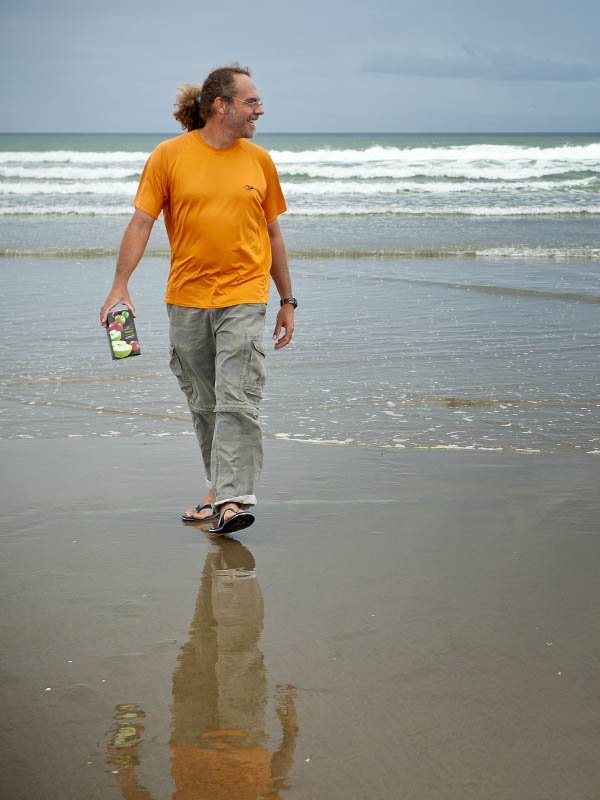
Today, the first Friday of December, is National Jandal Day down under in New Zealand. If you’re not a Kiwi or an Aussie, you may not be familiar with the term ‘jandal’. Well, depending where you’re from, jandals may be called flip-flops, thongs, slip-slops, zori… Basically it’s your classic, open-toe, flat-sole sandal with the Y-shaped strap between the toes, often worn at the beach or other informal situations.

Jandal Day raises funds for Surf Life Saving.

Jandals have a long history, worn by the Egyptians as early as 4000 BC, as well as by the ancient Greeks and Romans. The modern-day jandal is styled on the Japanese zori that was popular with American soldiers returning home after World War II.

The term ‘jandal’ is, in fact, short for ‘Japanese sandal’, and in New Zealand it really is an integral part of the culture – Kiwis love their jandals, in summer at the beach, but often even in winter, when it feels like every uncovered part of your body is about to freeze off, you’ll see some staunch Kiwi bloke sporting his jandals, seemingly oblivious to the cold despite a somewhat bluish hue around the toe area.

No matter what the rest of your attire, jandals are compulsory beach wear!(© All Rights Reserved)
No matter what the rest of your attire, jandals are compulsory beach wear!
(© All Rights Reserved)

National Jandal Day is a fundraising event for Surf Life Saving – a pretty good cause in a water-locked country made up of two islands, where almost all cities and towns are by the seaside. Funds raised through Jandal Day are used to train life guards, sponsor beach patrols and fund beach safety education programmes delivered to over 40 000 NZ school children each year.

Wherever you are in the world, why not slip on a pair of jandals / flip-flops in support of Jandal Day. Those in some northern hemisphere locations may be well-advised to remain inside with your jandals, to avoid losing a toe or ten through frostbite, but for those of us in the southern half of the world, rocking out in your favourite jandals at this time of year, with work winding down and the summer holidays approaching, is almost compulsory.

Locally, donations can be made by texting “SURF” to 4483 to donate $3 (and you get a song by young artist Jamie McDell for your efforts) or by donating online.

Libbie Hyman and the Invertebrates

Today we celebrate the birthday of Libbie Henrietta Hyman (6 Dec 1888 – 3 Aug 1969), the US zoologist who was responsible for one of the most important zoological reference works, ‘The Invertebrates’ – an amazingly comprehensive, 6 volume labour of love covering most phyla, and still used today. The sixth and final volume was completed at the age of seventy eight, by which time Hyman was suffering from Parkinson’s disease.

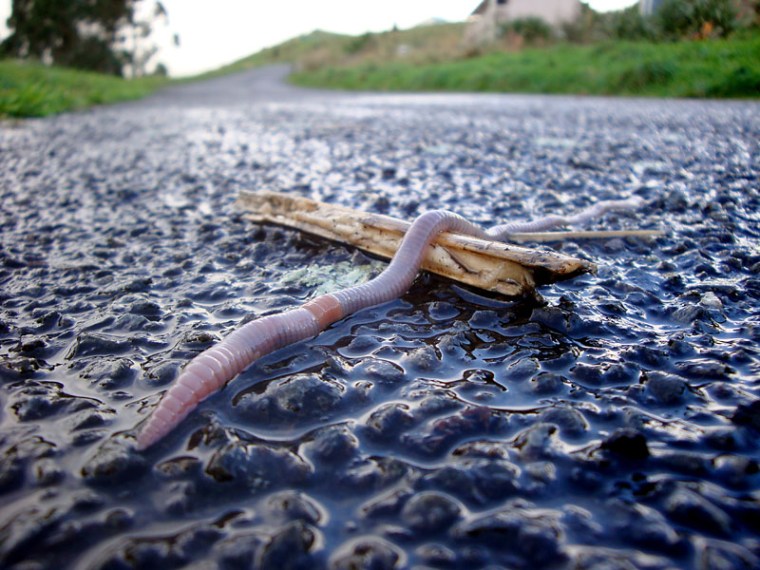
An earth worm, just one of many, many, many, many invertebrate animals.(© All Rights Reserved)
An earth worm, just one of many, many, many, many invertebrate animals.
(© All Rights Reserved)

What makes a reference work addressing the subject of invertebrates so daunting, is that something like 97% of all animal species fall in this category. Basically, invertebrates are all animal species that do not develop a vertebral column. Which means, it’s all animals except the vertebrates (reptiles, fish, amphibians, mammals and birds). Invertebrates include insects, worms, spiders, mollusks, sponges and more.

The classification of ‘Invertebrates’ is so wide that no single characteristic describes them all. While they all lack a vertebral column, they are otherwise very dissimilar, with widely varying body plans from fluid-filled hydrostatic skeletons (jellyfish, worms) to shell-like exoskeletons (insects, crustaceans).

Given this diversity, Libbie Hyman’s achievement of incorporating so many invertebrates into her six reference volumes seems even more impressive. She was certainly no spineless academic!

World Soil Day and the promotion of soil security

In 2002 the International Union of Soil Sciences (IUSS) declared 5 December as World Soil Day. Soil may not be glamorous, but it is a key component of our natural system, and a critical contributor to food, water and energy security through its role in mitigating biodiversity loss and climate change.

Soil - a very undervalued resource.(© All Rights Reserved)
Soil – a very undervalued resource.
(© All Rights Reserved)

Soil is vital to grow our food, to keep our livestock alive, and to keep our forests growing, which in turn keeps our environment healthy. On a human time scale, soils is a non-renewable resource, so sound soil management is extremely important. Sadly, despite this, soil is not high on most environmental decision making agendas – it is not a topic that makes for striking news headlines or wins elections.

Another factor pushing soil further down the agenda is increased urbanisation – with an ever growing percentage of the world population living in cities, soil is becoming less and less of a reality to most people.

World Soil Day aims to address this situation, by trying to raise the profile of soil and make people aware of the role it plays in a range of ecosystems.

Secure soil is the basis of a secure environment. In the words of American novelist and conservationist Wendell Berry, “The soil is the great connector of lives, the source and destination of all. It is the healer and restorer and resurrector, by which disease passes into health, age into youth, death into life. Without proper care for it we can have no community, because without proper care for it we can have no life.”

Dice, gambling and statistics

Today is Dice Day. Actually it is National Dice Day, a US-only event, but what the heck, I wasn’t able to find a more interesting international celebration for today, so we’ll just drop the ‘national’ and internationalise it for now, if you don’t mind.

A die (or dice, in the plural) is essentially a small object with multiple sides/resting positions, and with different numbers or symbols inscribed on its various sides. It is designed such that, when it comes to rest after being thrown, each resting position has a main, opposite upper side. The number/symbol on this side represents the number of the throw. Dice are often used in gambling games and in many popular board games.

The more dice you throw, the more complex the maths can become.(© All Rights Reserved)
The more dice you throw, the more complex the maths can become.
(© All Rights Reserved)

The most common die is a standard, 6-sided cube, usually with slightly rounded corners, with a number of dots (ranging from 1 to 6) inscribed on each side. When thrown, each side of the die is equally likely to end up on top, the result thus being a random integer between 1 and 6. For specific games, multiple dice may be thrown at the same time, with the outcome given by the sum or combination of numbers on the dice.

Of course there’s no reason that a die has to be a cube. Various other equally valid shapes exist – tetrahedrons, octohedrons, dodecahedrons, and more. When you think about it, even a coin used in a coin-flip is essentially just a two-sided die.

Dice are not only useful for gambling and board games – they are also a very effective tool to teach and explain some rather complicated statistics, like conditional probability, that is, the probability that an event will occur given that another event has occurred.

Take the example where we throw two standard, 6-sided dice. The probability that the second die will land on a 1 is 1/6 (it can land on one of six values, all equally probable – simple enough). Now, what would be the probability that the second die lands on a 1, if we know that the first die landed on a 1? The answer is still 1/6, because the two events are independent.

Things change, however, if the events are no longer independent. For example, what is the chance that the total of the two dice will be less than 4, given that the first dice landed on a 1? Firstly, there are six possible values (1,2,3,4,5,6) for the second die given that the first die landed on a 1. Of these, however, only two options, 1+1 and 1+2, result in totals smaller than 4. So, the chance of the total of the two dice being less than 4, given that the first die landed on a 1, is 2//6, or 1/3.

Formally expressed, p(total < 4 | die1 = 1) = 1/3.

There you have it – just when you thought you were safe in the knowledge that we were going to stick to chatting about harmless things like gambling and board games, you got flashed by a lesson in statistics…

Sneaky little buggers, these dice! 🙂

John Backus and the development of high-level computer programming languages

Today we’re celebrating the birthday of John Backus (3 Dec 1924 – 28 Oct 1988), American computer scientist and the leader of the team who invented the Fortran programming language (at the time called FORTRAN) while working at IBM in the mid 1950s.

Fortran was the first so-called ‘high-level computer language’, which means it was capable of converting standard mathematical formulas and English-based expressions into binary code used by computers. The language is particularly suited to scientific computing and numeric computation. Over the years, many improvements were made to the original Fortran language, with versions known by a sometimes strange series of numeric identifiers – FORTRAN, FORTRAN II, FORTRAN III, FORTRAN IV, FORTRAN 66, FORTRAN 77, Fortran 90, Fortran 2003 and Fortran 2008.

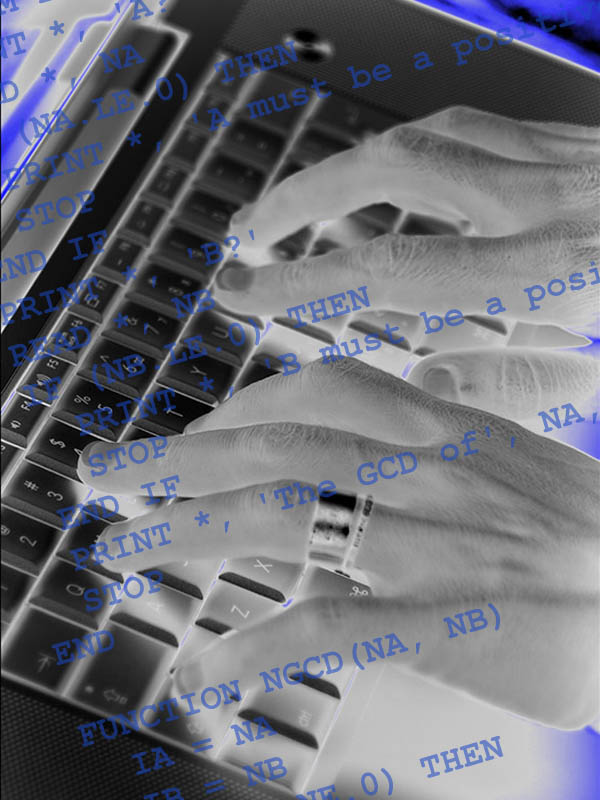
FORTRAN was the first widely used high-level computer language, providing an interface between equations and expressions understandable to humans,  and binary code used by computers.(© All Rights Reserved)
FORTRAN was the first widely used high-level computer language, providing an interface between equations and expressions understandable to humans, and binary code used by computers.
(© All Rights Reserved)

Despite being one of the oldest computer languages, it has been one of the most enduring, and after more than half a century it is still a preferred language for computationally intensive applications such as weather prediction, computational fluid dynamics and finite element analysis. One of the reasons for Fortran’s longevity is that some of the later Fortran compilers in particular are capable of generating very fast and efficient code, which can make a big difference when solving large, complex mathematical computations. It is still the primary language for used on many supercomputers, and many of the floating-point benchmarks to test the performance of new processors are still written in Fortran.

As a high-level language, Fortran has also provided an impetus for the development of numerous subsequent computer languages such as ALGOL, COBOL and BASIC.

The IEEE awarded John Backus the W.W. McDowell Award in 1967 for the development of FORTRAN. He also received the National Medal of Science in 1975 and the ACM Turing Award in 1977 for his contributions to the design of high-level computer programming systems.

It’s World Computer Literacy Day

A couple of days ago I commented on Computer Security Day. Today we’re back to computers, but this time the issue is way more fundamental – today is World Computer Literacy Day.

Celebrated for the first time in 2001 in India, the day has since expanded to an international initiative. Computer literacy relates to the ability to comfortably use computers and related information and communications technologies (ICTs). Some of the key issues impacting computer literacy include basic access to ICT, and the ability to use these technologies in your own language.

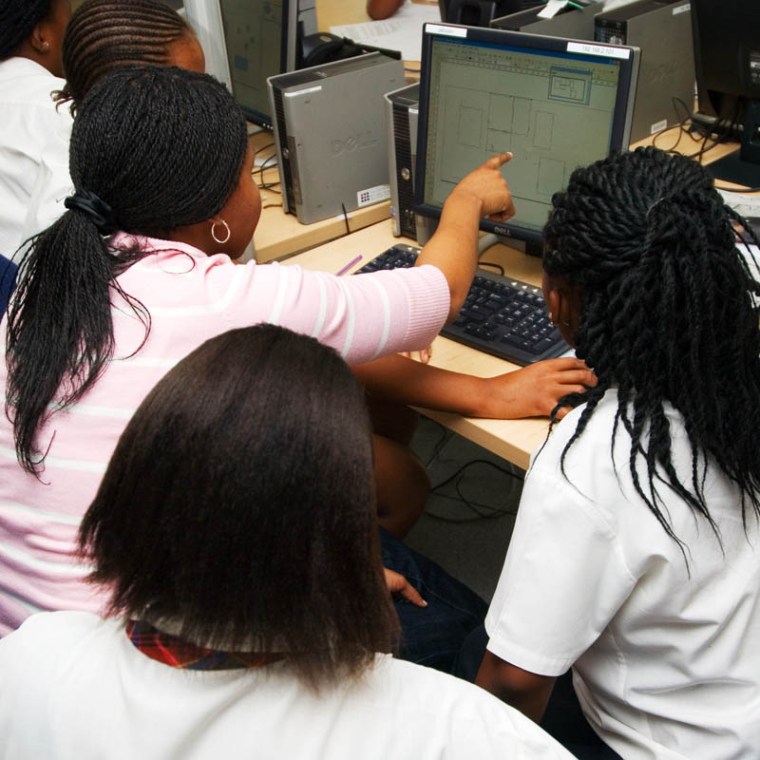
Promoting computer literacy and connectivity in the developing world is critical in creating economic opportunities for all.(© All Rights Reserved)
Promoting computer literacy and connectivity in the developing world is critical in creating economic opportunities for all.
(© All Rights Reserved)

In an attempt to raise awareness about the plight of those who are not privileged enough to have access to computers, Irish charity organisation Camara Education has launched a challenge to those of us for whom ICT is a part of everyday life, to go without technology for 24 hours. Through this initiative, known as ‘Techfast’, they hope to highlight the digital divide that still exists in the world today.

Being connected always and everywhere, it is easy to forget that the global digital village we are part of really isn’t that global at all, with ICT and computer literacy very much concentrated in developed countries. While we get treated to high speed, low cost Internet, the developing world continues to lag further and further behind.

There are positive examples in the developing world where the digital divide is actively being addressed. While countries like Ethiopia and Zambia still have less than 2% of the population connected to the Internet, the situation in Kenya, for example, looks very different – from 2009 to 2010 the percentage of Internet users have increased from 10% to 26%. A massive digital boom indeed, and one which is reported to also be providing an economic boost to the country.

While I often wonder whether 24/7 connectivity is a blessing or a curse, the fact of the matter is that, to participate in the global economy, connectivity and computer literacy is of paramount importance.

While you’re comfortably browsing through your blog roll on your high-speed internet connection, spare a thought on World Computer Literacy Day for those who are not as technologically privileged.

Be HIV aware, for your sake and for those around you

Today we celebrate World AIDS Day. This is an opportunity for people the world over to join hands and unite in the fight against HIV and AIDS, to pledge support to those who live with HIV, and to commemorate those who have died from AIDS. Held for the first time in 1988, World AIDS Day was the first global health day.

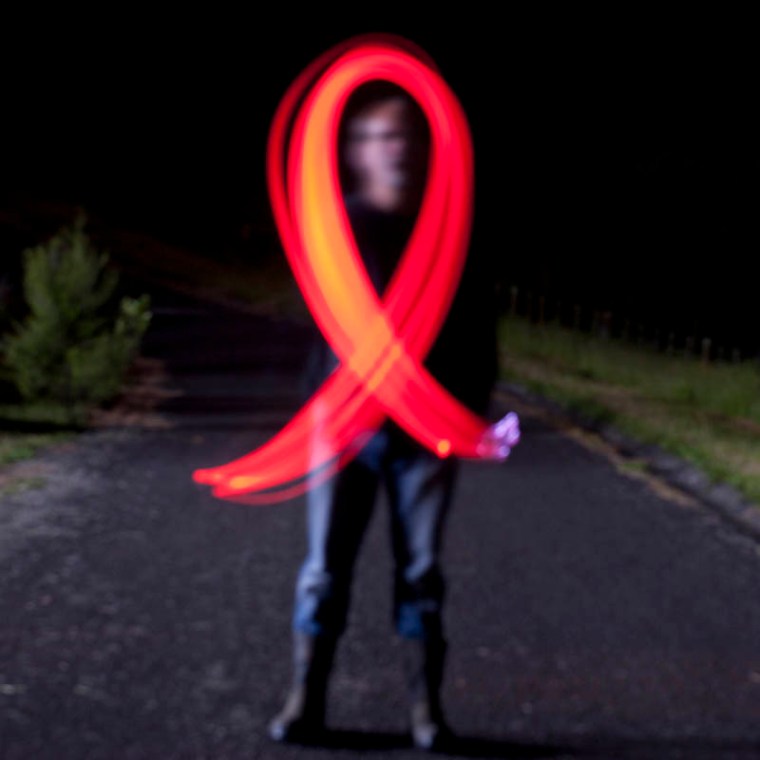
The red ribbon is the international symbol of HIV awareness.(© All Rights Reserved)
The red ribbon is the international symbol of HIV awareness.
(© All Rights Reserved)

While the focus on HIV and AIDS has become less public over the past couple of years, the fact is that it is still very much part of life in the 21st century. Many advances have been made in HIV treatment, laws have been put in place to protect those living with HIV, and much more is known about the condition. Yet millions of people still do not adequately protect themselves, and discrimination against those living with HIV remain rife. World AIDS Day is there to remind us that HIV and AIDS have not gone away, and that there is still a need for funding of research, for awareness creation and for improved education.

To test how aware and clued up you are about HIV, the World AIDS Day initiative has created an online quiz. Try it – you may be surprised at the results! If you find you scored lower than expected, you can always learn more here.

Show your support, wear a red ribbon, and make sure that you know the facts. The more you know and understand about HIV, the better equipped you will be to take care of your own health and the health of those around you.

Movember sign-off

Well can you believe it – November, or Movember as we prefer to call it, is over and done with. So many ideas, so many plans, and before you know it December is knocking on the door.

The Sciencelens mo - grey and proud!
The Sciencelens mo – grey and proud!

I planned much more regular updates, and at one stage even contemplated creating a time-lapse video condensing my month’s mo-growing into a few amusing seconds. Well, suffice to say none of that happened, but at least I did manage keep the mo up and running despite some corporate gigs and the like. Guess it helps that high-profile celebs like the All Blacks also supported the cause – it really does help to raise the profile of this very worthy cause.

Thanks for the support.  Hopefully next year we’ll pull out all the stops (or is that stubbles?)!