Page 32 of 41

Keeping yourself in shape on Book Lover’s Day

A few days ago I wrote a bit of an ode to the paperback book. Today, however, we turn our focus from the book itself to those who lovingly cherish all things book-ish – it’s Book Lover’s Day.

The day is, confusingly, also celebrated in early November, but perhaps it’s not that strange – as any true book-lover will tell you, we’ll happily celebrate our love of books every day of the year!

A good book and some quiet time – what more can one ask for?
(© All Rights Reserved)

Whether you love reading, collecting, or simply handling books, this day is for you. Maybe you’ve grudgingly given in to the pressure of the e-book wave, but you’ll know that nothing matches the pure joy of smelling a new, freshly opened book, discovering a well-worn copy of a special book in a second-hand book-dealer, or simply leaning back and enjoying a lazy day with a relaxing read in hand.

And how great is it to discover a wonderful new author you never knew before?

Considering some of the incredible books that have appeared so far this year, there’s certainly no reasons for complaint from the book-lovers among us. Except perhaps a lack of time, or budget, to get around to all the great reads out there.

If you thought reading is only good for the mind, here’s another titbit to further convince you of the advantages of ‘book loverism’: it turns out that readers may be less obese than non-readers! In an article by Fred C. Pampel in the Sociology of Health and Illness journal, entitled “Does reading keep you thin? Leisure activities, cultural tastes, and body weight in comparative perspective”, it is stated that “While sedentary leisure-time activities such as reading, going to movies, attending cultural events, going to sporting events, watching TV, listening to music, and socialising with friends would seem to contribute to excess weight, a perspective focusing on socioeconomic status (SES) differences in cultural tastes suggests the opposite, that some sedentary activities are associated with lower rather than higher body weight.” One of the findings in the article is that people who spend more time reading and generally participating in intellectual activities, and less time shopping and watching TV, have a lower body weight than their peers.

OK, maybe suggesting reading books will help keep you in shape is a bit of a stretch, but if it can help turn one more soul out there on to the joys of reading, why not?

So what books are you enjoying at the moment?

Some paradoxical fun on Infinity Day

Today is 8 August, the eighth of the eighth, 8-8.  Or, if you turn it on it’s side, a couple of infinity signs stacked on top of each other… Yep, it’s Infinity Day!

The concept of infinity refers to something that is without limits. It has application in various fields such as mathematics, physics, logic and computing. Infinite sets can be either countably infinite (for example the set of integers – you can count the individual numbers, even though they go on forever) or uncountably infinite (e.g. real numbers – there are also infinitely many of them, but you cannot count the individual numbers because they are not discreet entities).

The wonderful ‘Numbers’ sculpture (artist: Anton Parsons), situated in mid-town, Palmerston North, NZ. While this sculpture does not explicitly deal with the concept, it always reminds me of infinity – from it’s resemblance to an infinity symbol, to the continuous cycle of random numbers. A definite favourite of mine.
(© All Rights Reserved)

Since infinity is really, really big – incomprehensibly so – it can lead to some amusing paradoxical scenarios; things that don’t make sense, by making complete sense.

An example of this is the Galileo Paradox, which states that “Though most numbers are not squares, there are no more numbers than squares.” In the set of positive integers, for example, the squares (1, 4, 9, 16, 25…) occur with much less frequency than the non-squares (2, 3, 5, 6, 7, 8, 10, 11, 12, 13, 14, 15, 17, 18, 19, 20, 21, 22, 23, 24…). So there must be less of them, right? At the same time, however, every number is the square root of some square number, so there’s a one-to-one relationship between numbers and squares. Thus there cannot be more numbers than squares…

And therein lies the paradox… In a finite set, the square numbers would indeed be a minority, but in an infinite set, this is no longer the case.

Cool, right?

OK, here’s another fun one – Hilbert’s paradox of the Grand Hotel, presented by the German mathematician David Hilbert. This one states that “If a hotel with infinitely many rooms is full, it can still take in infinitely more guests.” In other words, let’s assume we have a hotel with a countably infinite number of rooms, all of which are occupied – in other words, each room has a guest in it. Then, since all the rooms are occupied, there can be no more room for new guests, right? Not so – simply move the guest in room 1 to room 2, move the guest in room 2 to room 3, and so on, to infinity. Then room 1 becomes available, so we can accommodate the new guest. And we can repeat this process indefinitely, so a hotel with an infinite number of fully occupied rooms can still accommodate an infinite number of new guests.

And on that note I will leave you to contemplate the concept of infinity. Don’t worry if it’s complicated – you have an infinite amount of time before the end of the day. Before you reach the end of the day, you have to reach the midway time between the current time and that time. And before you reach that midway time, you have to reach the midway between the current time and that time. And so on, to infinity…

It’s going to be a long day!

Take time out to visit a lighthouse on Lighthouse Day

Today is Lighthouse Day, created to commemorate the day in 1789 when US Congress approved an Act for the establishment and support of lighthouses, beacons, buoys and public piers.

While this is a US commemoration, it’s surely reason enough to celebrate the important role fulfilled by lighthouses the world over, marking treacherous coastlines, hazardous shoals, reefs and safe entries to harbors.

(© All Rights Reserved)
The Cape Reinga Lighthouse, situated in the Northland region of New Zealand, was built in 1941, replacing an older lighthouse dating back to 1879, that used to be situated on the nearby Motuopao Island. Initially a manned lighthouse, it was fully automated by 1987, and the lighthouse keeper staff were withdrawn. It has since been remotely monitored from Wellington.
An interesting feature of the section of ocean that this lighthouse watches over, is that it marks the point where the Tasman Sea from the west meets the Pacific Ocean coming from the east. From the lighthouse, the line where the mighty waters clash is clearly visible, making it quite a special place. According to Māori legend this is the meeting place of the male Te Moana-a-Rehua, ‘the sea of Rehua’ with the female Te Tai-o-Whitirea, ‘the sea of Whitirea’, and also the place where the spirits of the dead descend to the underworld to return to their traditional homeland of Hawaiki.

Many lighthouses have fallen into disuse due to high maintenance costs and the emergence of new electronic navigation systems. The aim of Lighthouse Day is to focus attention on these imposing landmarks from our past, and to create awareness about local, national and international societies and organisations making an effort to preserve lighthouses for future generations.

Lighthouses traditionally symbolise safety, stability and truth, and as such their preservation holds symbolic importance for mankind. Go on, pay a visit to your nearest lighthouse and take time to appreciate its grandeur. And don’t forget to take some photos – lighthouses are famously photogenic entities!

Give your feet some breathing space on Wiggle Your Toes Day

Are you wearing shoes all day? Forced to tuck your feet into constricting footgear for the sake of societal acceptance?

Well then today is the day to take a stand – kick off those shoes, kick back, and spend some quality time pampering your poor, abused feet – it’s Wiggle Your Toes Day. You can do yourself a huge favour by making a habit of going shoe-less on a more regular basis. It can make a world of difference to your health and general well-being.

Kick back, spread your toes and flex your feet – it’s good for you.
(© All Rights Reserved)

In a study by Phil Hoffman published in the Journal of Bone and Joint Surgery, the feet of barefooted and shoe-wearing cultures are compared, highlighting the severe injustices our feet are subjected to.

Genetically, the feet of shoe-wearing people are no different from those of barefooted cultures – we have not yet evolved to having shoe-shaped feet, and up to shoe-wearing age we’re all, pardon the pun, on pretty much equal footing. At this point, however, things take a serious turn for the worse for the shoe-wearers, as we start forcing our feet into shoes that are shaped to conform to some weird societal concept of beauty, rather than footgear that fit the natural form of the foot.

From years of constrictive shoe-wearing, the shape of the feet of shoe-wearing adults diverge completely from adults barefooted cultures. In barefooted people, feet tend to widen towards the toes, and the toes themselves are comfortably spread, with the big toe in particular being separated from it’s neighbour by a considerable interval. This helps with balance and flexibility. Shoe-wearing, however, constricts the spread of the front-foot, and in particular crowds the toes. This results in a narrower, more pointed foot-shape, with the toes close together and often even overlapping their neighbours.

Not only are our shoes the wrong shape, but they are also often too small, even for our already squashed feet. And if that’s not enough, there’s high-heeled shoes – fashion accessories that force the foot into an even more unnatural position, forcing the wearer to stand largely on the front-foot, which as a result has to bear more that it’s proportionate share of the body-weight. This leads to a shortening of the calf muscles to such an extent that many middle aged women cannot dorso-flex the foot to a right angle without bending their knees to relax the calf muscles.

So compared to the healthy, stable, wide, flexible and strong feet of barefooted people, the shoe-wearing cultures have given themselves deformed, pointy, inflexible, weakened, calloused, smelly feet and deformed muscles. Not too clever for a so-called advanced culture, are we?

And given that our feet play such a critical role in our overall health and well-being, is it any wonder that we suffer from so many ailments?  Crazy stuff indeed.

So, why don’t you do yourself a favour – kick off your shoes and wiggle your toes. And do this as often as you can. Even if your physical environment makes it difficult to go barefoot, at least opt for some non-constrictive sandals (or jandals, as we call them here in New Zealand), or even some loose-fitting sneakers.

Do this regularly, and your body will love you for it!

Celebrating International Beer Day!

With yesterday’s Champagne celebrations scarcely behind us, it’s time to start celebrating another tipple – today is International Beer Day!

This day is a global celebration of beer, and an opportunity to get together with friends to toast your local brewers and bartenders, in pubs and breweries around the world.

Buy people beer – it makes you more attractive!
(© All Rights Reserved)

Ever wondered why you find people more attractive after you’ve had a few beers? Sure, it is partially due to the fact that alcohol lowers your inhibitions, making you more open and friendly to others in general. There is, however, also an interesting scientific explanation.

Apparently, facial symmetry is said to have evolved as a measure of attractiveness as it signifies good genes. And apparently we subconsciously feel attracted to outward signs of genetic quality, to ensure better offspring. So, people are unconsciously drawn to people with more symmetrical faces.

Now in a study led by Dr Lewis Halsey of Roehampton University, a group of female volunteers were subjected to a range of tests before and after consuming alcoholic drinks. Among these was a test where participants were shown 20 sets of faces that had been manipulated so that one was symmetrical and the other not. After a tipple or two, people were found to be much less able to distinguish between the symmetrical and non-symmetrical faces. This effect proved directly related to the amount of alcohol consumed – the more tipsy, the less discriminatory participants became.

So, if you’re one of us normal guys or gals who lack the perfect facial symmetry to prove your genetic superiority, this day is especially for you. Have a beer, and while you’re at it, buy a round for those around you. Your popularity will increase plenty – trust me.

Popping corks and tasting stars – celebrating the invention of Champagne

Legend has it that on this day in 1693, the French Monk Dom Pierre Perignon, invented Champagne when a wine he was making started a secondary fermentation in the bottle, so when he opened the bottle it produced a fine, bubbly mousse. Upon tasting this sparkly beverage, it tasted so special that he was inspired to exclaim “Come quickly, I am tasting stars!”.

Popping a cork in celebration of the father of champagne, Dom Perignon.
(© All Rights Reserved)

As is often the case, however, the truth of this legend is questionable at best. Sparkling wine almost certainly existed before Dom Perignon’s time, with the oldest references to it dating back to the Benedictine Monks in the Abbey of Saint Hilaire, in 1531.

That said, these early bubblies probably tasted very different to the refined sparkling product that became known as Champagne (after the French region where it was perfected), so even if the discovery of sparkling wine cannot be attributed to Dom Perignon, he can take credit for establishing the principles of modern champagne making that are still in use today.

And that’s more than enough justification to pop a cork to celebrate the great man.

Now here’s an interesting story:

In a medical study from 2007, scientists from the Universities of Reading and Cagliari showed that moderate Champagne consumption can potentially help the brain cope with the trauma of stroke, Alzheimer’s and Parkinson’s disease.  According to the research the high levels of the antioxidant polyphenol in Champagne can help prevent the deterioration of brain cells from stress and trauma.  The study was done on mice – one group of mice was fed a Blanc de Blanc Champagne, a second a Blanc de Noir, and a control group got no bubbly at all.  When the three groups were subsequently exposed to high levels of neurotoxins (simulating the effect of brain trauma), it was found that the groups who had previously been fed champagne, had higher levels of brain-cell restoration compared to the control group.

Now isn’t that just the best news you’ve heard all day? Cheers!

Tires, rubber, burnouts and environmental disasters

Fancy a burnout? A donut, perhaps?

No, I’m no street racer, not even much of a petrol-head. I’ve just got rubber and tires on my mind, since today back in 1900 is the day that the Firestone Tire and Rubber Company was founded. Even through Firestone cannot lay claim to inventing rubber tires (that honour goes to John Boyd Dunlop for the first pneumatic tire, and to Charles Goodyear for the vulcanisation of natural rubber), they were one of the early pioneers in tire production. Along with Goodyear, they were the largest automotive tire suppliers in the US for the best part of the 20th century.

The company was sold to the Japanese Bridgestone Corporation in 1988.

Tire burnouts can be spectacular, but certainly doesn’t help in terms of scrap tire pollution.
(© All Rights Reserved)

Given the number of tires produced and sold internationally, the environmental challenges of dealing with scrap tires are quite significant. In the US alone, about 285 million scrap tires are generated every year. Tires dumped in a landfill is a fire hazard – tire fires can burn for months, creating serious air and soil pollution. They can also liquify under high temperatures, releasing hydrocarbons and other harmful contaminants into the ground. Shredded tire pieces are likely to leach even more, due to the increased surface area on the shredded pieces.

The durability of scrap tires do make it suitable for certain recycling applications. Shredded tires, or tire derived aggregate (TDA), can be used as backfill for retaining walls and as vibration damping for railway lines. Ground and crumbed rubber, also known as size-reduced rubber, can be used in paving as well as in moldable products such as flooring, decking, tiles and rubber bricks. These applications, however, only consume a small percentage of the total tire waste produced annually.

The use of tires has also been suggested in the construction of artificial reefs, but the sensibility of this is questionable, with the Osborne Reef, for example, turning into a multi-million dollar environmental nightmare.

Despite all the attempts at solving the problem of scrap tire waste, it remains an environmental nightmare, and the best ‘solution’ probably involves addressing the problem at it’s source – reducing the number of scrap tires produced annually.  Small things such as driving sensibly to preserve tire life, carpooling, use of public transport, walking and cycling instead of driving – these may appear arbitrary, but are things we can all do, and while it won’t make the problem go away, it can make a difference in the long run.

Blue skies, blue eyes – its the Tyndall effect

Tell me why the stars do shine 
Tell me why the ivy twines 
Tell me why the sky’s so blue 
And then I’ll tell you just why I love you…

Well, if you could have sung this little tune to the Irish physicist John Tyndall, born on this day back in 1820, he would have had some strong opinions, at least on the blue sky question.

In addition to many other achievements, Tyndall published studies on acoustic properties of the atmosphere and the blue colour of the sky – he suggested the colour was the result of the scattering of light by small water particles. He discovered that, when light passes through a substance containing small suspended particles, the shorter wavelengths (blue side of the spectrum) are scattered more than the longer, red wavelengths. Since the blue light is scattered in all directions, the substance appears blue.

This phenomenon became known as the Tyndall effect.

What we see as a lovely blue sky, John Tyndall saw as a scientific challenge.
(© All Rights Reserved)

Thus, a clear day-time sky is blue because molecules in the air scatter blue light from the sun more than they scatter red light. Towards sunset, when we look towards the sun, we see reddish colours, because the blue light has been scattered away from the line of sight.

The Tyndall effect also causes other interesting blue colourings in nature, including blue eyes, opalescent gemstones and the wings of some birds and butterflies. When colour is caused by scattering of light it is known as a structural colour, as opposed to a pigment colour.

Now about those stars and ivy…

(Source: Why is the sky blue?)

Celebrating creepy-crawlies on Spider-Man Day

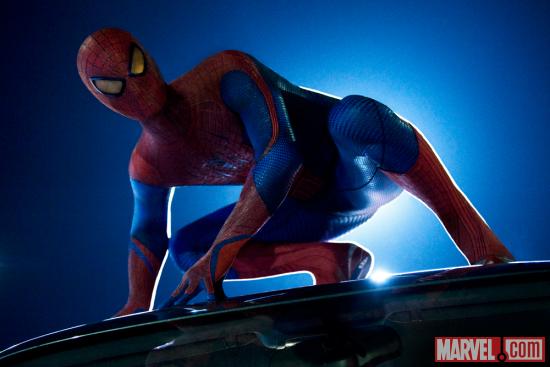
I’m not sure how official it is, but according to various sources on the web, today is Spider-Man Day. So, while I haven’t been able to find anything else of much interest, let’s just go with that, shall we?

(Source: Marvel Comics)

Spider-Man is undoubtably one of the best loved superheroes ever dreamt up by Marvel Comics. This has a lot to do with the fact that the person behind the suit, Peter Parker, was pitched as a bit of a nerd, an outsider with whom many young readers could easily relate.


But beyond this human touch, Spider-Man’s lasting fascination must have a lot to do with our fascination of the creepy crawly that gave the superhero his powers. Spiders (order Araneae), the eight legged, predatory anthropods that evokes equal measures of fascination and fear in the human race. More than 40 000 species of spiders have been identified, and they are one of the most widely distributed groups of organisms, having established themselves in an extremely diverse range of habitats.

Spiders – fascinating and just a little bit scary.
(© All Rights Reserved)

Indeed there is much to find fascinating, and scary, in spiders, from miniscule, deadly poisonous species to huge monsters that can take on birds and lizards. Spiders use various techniques to hunt and capture their prey – trapping them in sticky webs, camouflaging themselves to avoid detection, running down their prey, and more. Some hunting spiders even show signs of intelligence in their ability to develop new hunting tactics.

Spider venom, fatal to their prey and in many cases also deadly to humans, have been researched for use in medicine and natural insecticides.

And then there’s the incredible spider silk – the sticky stuff excreted by spiders that exceed almost all synthetic materials in terms of lightness, strength and elasticity, and without doubt the most fascinating ‘superpower’ in Spider-Man’s arsenal. Spider silk is composed mainly of protein. It is initially a liquid, and it hardens as a result of being drawn out, changing it’s internal protein structure. It’s tensile strength is similar to nylon and cellulose, but it’s way more elastic. Spiders use their silk for numerous applications, from webs to capture prey, to parachutes to carry them on the slightest breeze.

Fascinating creatures indeed, and definitely worthy of your admiration, whether you’re a Spider-Man fan or not!

Celebrating musical eccentricities on Uncommon Instrument Awareness Day

Today is the day to celebrate musical instruments (and sounds) that you don’t come across every day – it’s Uncommon Instrument Awareness Day.

As long as there has been music, there have been people not content with the range of instruments and sounds already available; people who felt the need to create something new and unique, and sometimes just plain odd.

And lo and behold, there are some seriously strange instruments out there!

I don’t have anything quite as odd as a gravikord, pikasso, or ringflute, but I was lucky enough, some time back, to discover a wonderfully eccentric and jovial-looking little string instrument in a local secondhand shop, and I’m now the proud owner of my own mandolin-banjo.

The mandolin-banjo – it may look like a toy, but it can kick up a serious racket!
(© All Rights Reserved)

Looking like a mini banjo, yet stringed, tuned and played like a mandolin, with four sets of twin-strings, the mandolin-banjo (sometimes also known as a banjoline in France, or a manjo in Ireland) is not the same as the four-string banjolin (which is more of a mini-banjo).

The mandolin-banjo was originally developed by mandolin players who wanted a banjo-style sound without having to learn the fingerings of the banjo. Thanks to it’s banjo-like stretched skin head, it is a lot louder than a normal mandolin, which made it a popular choice for outdoor performances. It became popular in the early twentieth century, and despite its obvious Irish and American heritage, there is strong support for the fact that it was actually invented in Australia, by the Manj Corporation. How’s that for innovation from Down Under?

So that’s my contribution for the day – do you have any weird and wonderful musical instruments in your closet?