Page 4 of 4

Repeat Day

Today is Repeat Day. Today is Repeat Day. Yes, indeed, the 3rd of June is Repeat Day.

The joy of this day is that it gives you an opportunity to do things over and over without feeling guilty about it. You don’t have to stop after enjoying one piece of chocolate – you can do it all over again and have another!  And those kisses for your loved ones?  Repeat them – you know you want to!
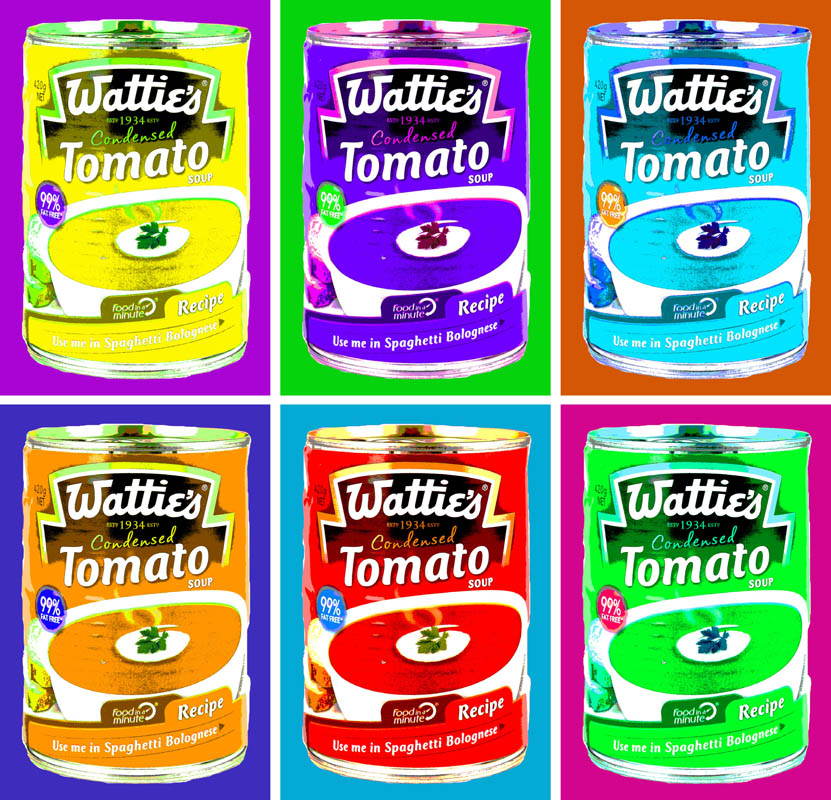
What? Watties? Warhol? Finding inspiration in Andy Warhol’s classic repetitive pop art from the early 60’s.
(© All Rights Reserved)

Truth by repetition

Now the question is – is today really Repeat Day?  One of the frustrating things about the Internet is that unproven, unsubstantiated statements are quickly accepted and repeated as “fact”. And as soon as enough sources have picked up on the statement, they start referencing each other, and this process of circular repetition makes it extremely difficult to determine the validity of a statement of fact.

To make matters worse, countless examples exist of sloppy journalism where journalists report on “facts” without proper research, through fear of missing a scoop. This allows Internet rumors to cross over to the traditional media, further aggravating the situation.

Truth through repetition is one of the big problems facing branches of science like Medicine, where literally millions of sites exist containing symptoms and cures for various ailments, and it is almost impossible to know which ones are based on scientific fact, and which are merely repeating unsubstantiated facts found on other sites.

As far as Repeat Day is concerned – try Googling it, and you’ll find dozens of sites referring to June 3 as Repeat Day, but I haven’t been able to find a single official source supporting the fact, so for all I know it’s just another “Internet Truth” started by a blogger somewhere in cyberspace.  But luckily it can’t hurt to celebrate a day where you get to do fun things over and over again!

So here’s hoping you have a happy Repeat Day! Repeat Day! Repeat Day!
It’s Drawing Day – time to get creative

Happy Drawing Day, everyone! (Or perhaps I should say Happy Pencil Day – there seems to be some disagreement on the correct title of this day.)

To participate is easy – simply grab a pencil and start drawing, and most importantly, share your artwork with as many as possible. And don’t fret if you think you’re not artistic – this day is not so much about great art as it is about nurturing your creative side, and about sharing.

You can share your doodles with friends, or you can even go global and upload your drawings on the Drawing Day website.

Come on, drop that daily chore, and get drawing – it’s good for your soul.

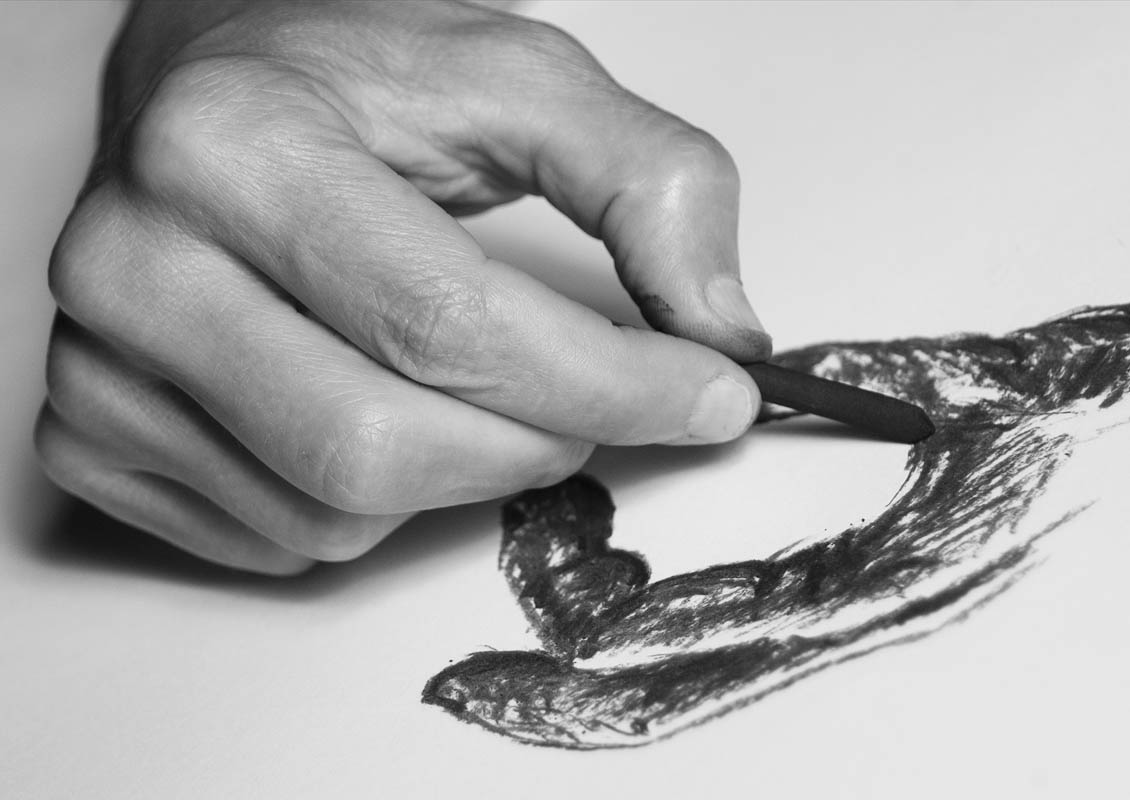
Despite the apparent ease of drawing with a pencil, artists often prefer to work with graphite sticks as it allows a greater range of creative expression.
(© All Rights Reserved)

By the way (this is Sciencelens, after all), did you know that the “lead” inside a pencil that makes it write is not lead at all, but a mix of graphite (a type of carbon), clay, wax, and chemicals?  Coloured pencils work the same, except that they have colour pigment added to the mix instead of graphite.

Pencils are manufactured by mixing ground graphite (or colour pigment), clay and water, and squeezing out this mixture into long spaghetti-like strings.  These are cut into pencil lengths, baked, and then covered with a wax coating to make them write smoothly.

So how do they get them inside the wood? The wood around a pencil may look solid, making it appear as though a hole was drilled through the wood to insert the graphite, but that sounds like some extreme manufacturing.  In fact, most wooden pencils are made from blocks of wood cut into slats.  Grooves, half as deep as the graphite string, are cut into the slats, and the graphite strings are placed in these grooves. Another grooved slat is glued on top of the first, encasing the graphite in the wood.  The slats are then cut into individual pencils, sanded and painted to give it the appearance of a solid structure.

Pencils are sharpened to reveal the graphite inside, and when you write, fiction causes a small amount of the graphite from the core of the pencil to be deposited on the paper, creating your images or words.

Flip a Coin day

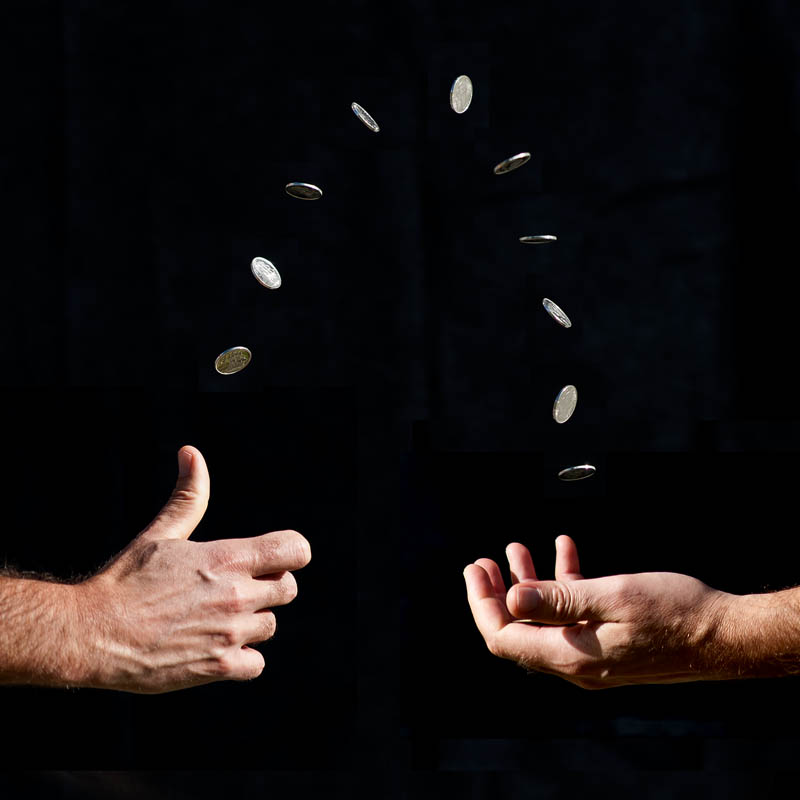
Today we celebrate the randomness of coin flipping.  Do you have some tough decisions to make? Why not use this day as an excuse to leave it to chance, by simply flipping a coin?

The practice of coin flipping is said to date back to Julius Caesar, who used the technique for decisions where the right choice was unclear.  Roman coins had the head of Caesar on one side, so a “heads” result was considered a positive, or “yes” outcome.

Leave it to fate – today is the one day when making all those tough decisions can be as easy as flipping a coin.
(© All Rights Reserved)

The statistics of coin flipping is described through the Bernoulli process, and a single flip of a coin is called a Bernoulli trial.  The use of coin flipping examples is also a popular way of introducing some of the complexities of statistics.

Conditional probability is a specific field of statistics that is often quite difficult to understand intuitively, and is illustrated very well through a coin flipping game called “Penney’s Game”.

In this game, two opposing players each choose a sequence of (usually 3) coin flipping outcomes of heads (H) or tails (T), e.g. H-H-T, T-H-T, etc.  A coin is then flipped, and the player whose sequence appears first is the winner. If the second player knows the “trick” he is always more likely to be the victor.  The correct choice for player 2 will be to take the first two outcomes of player 1, and to precede this with the opposite of the second outcome, for example:

Player 1: H-H-T   Player 2: T-H-H
Player 1: T-H-H   Player 2: T-T-H
Player 1: H-T-H   Player 2: H-H-T
Player 1: T-H-T   Player 2: T-T-H
etc.

In all the above cases, player 2 is always at least twice as likely to win as player 1 – definitely not something that makes immediate intuitive sense!
(See the mathematical explanation here.)

Getting back to that difficult decision we mentioned earlier – if you secretly want to do one thing, but think you should do the other, use Penney’s Game and your new-found knowledge of conditional probability to stack the odds in your favour.

Come on, go flip a coin!