Today the United Nations celebrate two special observances – World Development Information Day and UN Day. Both of these focus in some sense on the work done by the UN since it’s establishment in 1945, with World Development Information Day focusing specifically on the sharing of development information among UN member states.
Given the dire conditions millions of people are living in, and the massive challenges facing the world in terms of getting even close to realising the Millennium Development Goals of 2015, the UN has a critical role to play around coordination of activities and initiatives across the globe and among its members.
The UN is active on many fronts – peace, development, human rights, the environment and the empowerment of women and children. In the words of UN Secretary-General Ban Ki-moon, “The United Nations is not just a meeting place for diplomats. The United Nations is a peacekeeper disarming fighters, a health worker distributing medicine, a relief team aiding refugees, a human rights expert helping deliver justice.”
In pursuing these initiatives, the UN depends on countless groups and organisations – NGOs, researchers, philanthropists, champions from the business world, religious leaders and academics. Beyond these there’s the contribution everyday citizens can make – individually, we may not be able to achieve the stretching targets set forth to better the world, but if actions are coordinated and everyone pulls in the same direction, miracles are possible.
If you’re involved in any way with the field of chemistry, 10 to the power 23 should ring a bell – Avogadro’s constant, 6.02 x 10^23, the number of particles in a ‘mole’ of a substance, is a basic quantity in chemistry. To quote wikipedia: “The mole is a unit of measurement used in chemistry to express amounts of a chemical substance, defined as an amount of a substance that contains as many elementary entities (e.g., atoms, molecules, ions, electrons) as there are atoms in 12 grams of pure carbon-12, the isotope of carbon with atomic weight 12. This corresponds to a value of 6.02214179×10^23 elementary entities of the substance. It is one of the base units in the International System of Units, and has the unit symbol mol.”
In celebration of the above, Mole Day is celebrated on October 23rd, from 6:02 am to 6:02 pm. Generally the day involves activities that represent puns on ‘mole’ or ‘avogadro’. For 2012, the official theme for Mole Day is ‘Molar Eclipse’.
So how do you celebrate this day? Well, you can go on a molercoaster ride, or make a meal with avogadro dip or guaca-mole sauce. Have a Rock ‘n’ Mole party. Whatever you do, involve as many of your friends as possible – the mole the merrier! 🙂
I’m sure readers of this blog will be able to come up with many funnier, punnier activities to engage in on Mole Day – any suggestions?
Today we celebrate the birthday of Martin Gardner. Gardner, born in 1914, was a science writer specialising in the field of recreational mathematics, but also covering topics like magic, literature, scientific scepticism, philosophy and religion.
His most famous contribution to the popularisation of science and mathematics was the ‘Mathematical Games’ column he wrote for Scientific American for 25 year, between 1956 and 1981. Many of these columns have been collected and published as a series of books starting with ‘Mathematical Puzzles and Diversions’, first published in 1956.
So popular was Gardner (who passed away recently in 2010) that, in honour of his life and work, his birth date of October 21 has come to be known as the ‘Celebration of the Mind’. The Gathering for Gardner Foundation aims to use this day to “celebrate Martin’s life and work, and continue his pursuit of a playful and fun approach to Mathematics, Science, Art, Magic, Puzzles and all of his other interests and writings.” They encourage people to get together on the day to share mathematical or logic puzzles, paradoxes, illusions and magic tricks, or just in general engage in activities that gets the logical side of your brain buzzing.
As a teaser, here’s a few from the Gathering for Gardner website:
A woman either always answers truthfully, always answers falsely, or alternates true and false answers. How, in two questions, each answered by yes or no, can you determine whether she is a truther, a liar, or an alternater?
You are in a room with no metal objects except for two iron rods. Only one of them is a magnet. How can you identify which one is a magnet?
Mr. Smith has two children. At least one of them is a boy. What is the probability that both children are boys? Mr. Jones has two children. The older child is a girl. What is the probability that both children are girls?
Besides his interest in recreational mathematics, Gardner was an outspoken scientific sceptic with an uncompromising attitude towards pseudoscience. In his books he commented critically on a range of ‘fringe sciences’, from creationism to scientology to UFOs and the paranormal. This earned him many fans, but also many antagonists, particularly individuals operating in these fringe domains. While critical of conservative Christianity, Gardner considered himself a ‘fideistic deist’, believing in a god as creator, but critical of organized religion.
Gardner was also a leading authority on Lewis Carroll. He published ‘The Annotated Alice’, an annotated version of ‘Alice’s Adventures in Wonderland’ and ‘Through the Looking Glass’, where he discussed and explained the riddles, wordplay and literary references found in Carroll’s works. He also produced similar annotations of GK Chesterton’s works, ‘The Innocence Of Father Brown’ and ‘The Man Who Was Thursday’
Yet his most enduring contribution remains in the field of recreational mathematics and puzzles. It has famously been said that, through his writings on puzzles, tricks and paradoxes, he “turned thousands of children into mathematicians, and thousands of mathematicians into children”.
Today, in the USA, is National Mammography Day. While it is primarily a US-based observance, I thought it apt to dedicate this day’s post to the subject, seeing that October is Breast Cancer Awareness month or Breast Cancer Action month in many parts of the world.
Breast cancer is one of the leading causes of death among women, with current estimates in the US being that about 12 percent of American women will develop breast cancer at some point during their lives. To address this, steps for early detection is recommended, with one of the most important being an annual mammogram and clinical breast exam for women aged 40 and above.
Mammograms are very low dose breast tissue x-rays, used to pick up breast changes, and breast cancers in particular. Mammograms are critical because they can detect breast changes (lumps/thickenings) which are so small they cannot be felt. As a result, they increase chances of survival through early detection of possible cancer.
Additional tools and techniques that can be used as complimentary to mammography include ultrasound and MRI scanning.
Being a male, I can obviously not comment on the discomfort involved in receiving a mammogram, but my wife assures me that its not nearly as painful or uncomfortable as people make it out to be. The statistics agree – in general less than 5% of women experience a mammogram as painful. However, as with most things in life, bad experiences tend to receive most ‘air time’, hence creating the impression that many more women have bad experiences with mammography than is actually the case.
Despite any discomfort, there is no argument that it is a procedure worth doing – mammograms have a success rate of between 80 and 90%, and this rate gets higher in older women with less dense breast tissue. Thus detection accuracy increase with age, which is great, as the chance of getting breast cancer shows a similar age-related increase.
In closing, a word of advice from the New Zealand Breast Cancer Foundation: “The best way to ensure early detection of breast cancer is to supplement screening mammograms with general breast awareness – know your breasts/know the changes to look and feel for – and see your family doctor without delay, if you notice any changes that are not normal for you.”
Today we have no big, UN-sanctioned observances. While there have been a few notable births on this day, none of it really caught my fancy. So instead, let’s commemorate the work of Alfred Binet, who died on this day in 1911.
Alfred who? Well, Alfred Binet was the guy who, together with psychologists Victor Henri and Théodore Simon, developed the Binet-Simon Test – a test for verbal abilities in children. The test was later adapted by Lewis Terman at Stanford University, resulting in the Stanford-Binet Intelligence Scales, published in 1916, which was the most popular intelligence test for decades in the US, and formed the basis of IQ testing over the past century.
Mention the concept IQ testing, and you are very likely to get some really strong opinions. Some people (especially those treated favourably by the IQ scale, I guess) probably consider it a pretty accurate measure of their mental superiority. Many, however, seriously question its validity as an absolute measure of intelligence. Even Binet himself felt strongly that his tests had significant limitations, stressing that he saw extreme diversity in intelligence, and felt the result of the tests only had qualitative value, and should not be used as a quantitative measure.
It is exactly this diversity of intelligence that forms the basis of much of the criticism against IQ testing, with detractors insisting that it fails to accurately measure intelligence in its broader sense, pointing to the fact that it is not an adequate measure of creativity and emotional intelligence. It does not even come close to testing physical intelligence (hand-eye coordination, ‘ball sense’, etc).
Some critics go further, not only critisizing the scope of IQ testing, but disputing its validity entirely. Paleantologist Stephen Jay Gould, for example, in his book The Mismeasure of Man (1996), equated the tests to scientific racism, saying “…the abstraction of intelligence as a single entity, its location within the brain, its quantification as one number for each individual, and the use of these numbers to rank people in a single series of worthiness, invariably to find that oppressed and disadvantaged groups—races, classes, or sexes—are innately inferior and deserve their status.”
The above criticism rings quite true when you read about the early days of intelligence testing at the start of the 20th century. To quote wikipedia, “The eugenics movement in the USA seized on it as a means to give them credibility in diagnosing mental retardation, and thousands of American women, most of them poor African Americans, were forcibly sterilized based on their scores on IQ tests, often without their consent or knowledge.”
Given that, despite the criticisms of IQ testing, these tests have been performed extensively around the world for the past century, there’s obviously a lot of IQ data out there, which has been the source of some very interesting analyses and practices. Here’s some of my favourites:
Musical training in childhood has been found to correlate with higher than average IQ. As has listening to classical music (but you have to do your listening directly before the test – apparently it only serves as a 10-15 minute mental boost!). So I guess my years of listening to rock, folk and blues wouldn’t have helped much.
IQ has been used quite extensively in human resource evaluations, when hiring new employees etc. What’s interesting is that it’s not only a too low IQ that can count against you. Apparently some US police departments have set a maximum score for new recruits (example: New London, CT has set an upper limit of 125), the argument being that those with higher IQs will become bored to soon, resulting in a too high job turnover.
In terms of income, it seems that there is a general correlation between IQ and income up to a certain level of IQ, but there’s no correlation between very high IQ and very high income. Top incomes are dependent on so many factors that IQ doesn’t really feature at all.
As far as criminal tendencies are concerned, being very clever or very stupid (in IQ terms) generally speaking seem to keep you from pursuing a life of crime. Most criminals fall in the 70-90 IQ range (i.e slightly below average), with the peak being between 80 and 90. There is, of course, the argument that only the dumb ones get caught, so maybe criminals are much smarter than the statistics suggest.
Politically, studies in the UK and USA have found that young adults who classify themselves as very liberal have a higher than average IQ, while those who consider themselves very conservative tends to have slightly below average IQ scores.
There are many more interesting correlations, but let’s leave it there for now. What do you think – do you believe in IQ tests, or do you think its a load of hogwash?
I personally think that the best comment on intelligence comes from Albert Einstein (he really did leave us with the greatest quotes, didn’t he?), when he said, “Everybody is a genius. But if you judge a fish by its ability to climb a tree, it will live its whole life believing that it is stupid.”
Each year on 15 October, people worldwide celebrate Global Handwashing Day. It sounds almost too simple to be true, but properly washing your hands with soap and water is the most affordable and effective way of preventing a range of health problems including diarrhea and respiratory infections – problems which currently are the cause of death of millions of children, particularly in the developing countries of the world.
This is one of those astonishingly simple and obvious things to promote – if we can foster a generation of youngsters for whom handwashing is an integral part of their lives, it could “save more lives than any single existing vaccine of medical intervention, cutting deaths from diarrhea by almost half and deaths from acute respiratory infections by one-quarter.”
2012 is the fifth anniversary of Global Handwashing Day. In celebrating this fact, the theme for this year is “Help More Children Reach Their 5th Birthday”.
The reason why Global Handwashing Day is focussed on children is simply the fact that they represent the segment of society that is most enthusiastic and most susceptible to new ideas. If the current generation of children can be convinced of the value of washing your hands before eating and after going to the toilet, the habit can be entrenched in future generations, which could result in literally millions of lives being saved.
So if you have kids, do your bit and teach them the value of regularly washing their hands. Even if you don’t have kids, you can help by sharing the idea with friends, promoting it at local schools, etc. It may not feel like it, but it could really be the simplest and most significant intervention you can contribute to in your lifetime.
The idea of this day is to remind people of the importance of standards, and to honour the efforts of all those involved in the development and maintenance of various standards within the different standards organisations such as the International Organisation for Standardisation (ISO), the International Electrotechnical Commission (IEC) and the International Telecommunications Union (ITU). Development of standards is a detailed, precise and often thankless job, that is usually done on a voluntary basis. And unless you run into a situation where your life is complicated as a result of a lack of standardisation, you may very likely not even be aware of the important roles standards and interoperability play in our daily lives.
The theme of this year’s World Standards Day is “Less waste, better results – Standards increase efficiency.” As explained by the World Standards Cooperation (WSC), international standards help to harmonize manufacturing and other processes across the globe, which allow components etc from different manufacturers to ‘fit together like pieces in a puzzle’. Standards support interoperability and compatibility and facilitate market access to new products. And all this do indeed contribute to a more efficient and less wasteful world.
I guess as someone who has travelled to a few countries, and who has lived in more than one country, I personally find one of the most frustrating examples of non-standardisation being the absurd range of different electrical plug and socket standards in different countries. Having to replace plugs, buy various country-specific adapters, or replace power cables, is an excellent example where a lack of standards leads to less efficiency and more waste. How this disparity came about I have no idea. And why, in this day and age, have things not progressed to a single standard (at least among countries working on a similar voltage and current rating) makes even less sense. Surely it cannot be that difficult – just go for the most pervasive standard, or better still, choose the one that actually works best, and go with that?
So, like Martin Luther King of old, I also have a dream. It is not a very big dream, but it is a dream that can, in its own small way, change the world. On this World Standards Day my dream is to travel the world with a single, universal power plug that fits the sockets of all countries across the globe. Is that too much to ask? 🙂
Today we celebrate World Sight Day, an annual day drawing attention to blindness, visual impairment and rehabilitation of the visually impaired. Globally, it is estimated that almost 300 million people suffer from severe visual impairment (blindness and low vision). About 90% of these live in developing countries.
There are many factors that cause chronic blindness. These include cataract, glaucoma, age-related macular degeneration, corneal opacities, diabetic retinopathy, trachoma, and eye conditions in children (e.g. caused by vitamin A deficiency). Uncontrolled diabetes is the main factor contributing to age-related blindness in both developed and developing countries.
The age groups most affected by visual impairment are people over the age of 50 (who suffer mainly from age-related impairments) and children below the age of 15 (mostly due to refractive errors – myopia, hyperopia or astigmatism).
A very important fact worth noting is that more than three quarters of all blindness is preventable or curable. Children in low and middle-income countries in particular are often victims of preventable eye diseases – diseases that, if left untreated, can lead to irreversible blindness. The WHO, in partnership with LIONS Club International, six years ago launched a worldwide, multi-year project to address curable diseases in children – an effort that has so far helped more than 100 million children through increased access to eye care in 30 countries. Many interventions are very basic, such as screening babies and children for eye problems as early as possible. Yet these can have a huge impact, because the earlier any problems are identified, the easier they typically are to address.
Looking at the past 20 years, things are definitely looking positive. Worldwide, visual impairment is decreasing, despite an aging population. This is largely due to the increased effectiveness in treatment of infectious diseases. Many countries have also made progress in terms of the establishment of nationally coordinated programmes to address visual impairment, greater focus on eye care in primary and secondary health care, awareness campaigns including school-based education, and stronger involvement of the private sector and civil society. There are also global initiatives like “Vision 2020: The Right to Sight”, created by the World Health Organization (WHO) and the International Agency for the Prevention of Blindness, that are doing amazing work to address the issues that still remain.
So while the problem remains huge, it’s nice to at least be able to say “It’s getting better.” Definitely a good reason for celebration on World Sight Day!
Today we celebrate the birthday of one Harry Gilbert Day.
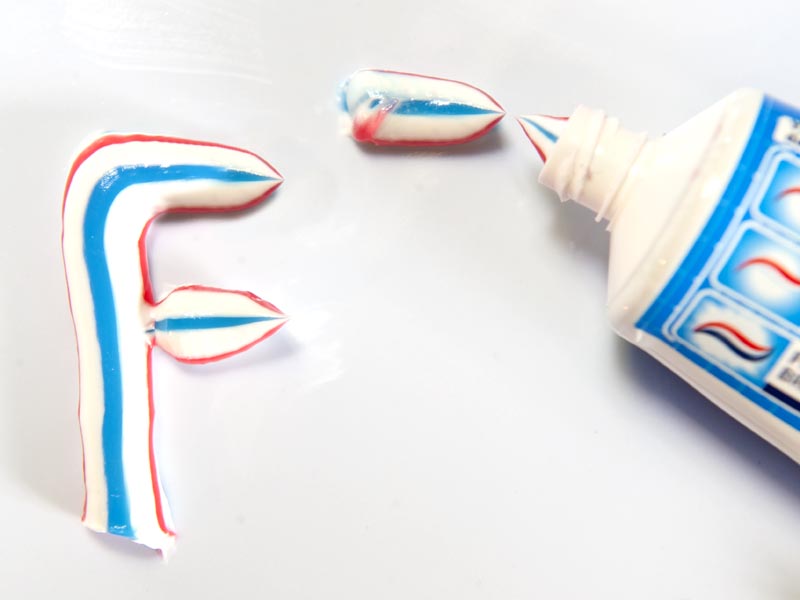
Harry Day, a nutritional biochemist, helped develop the fluoride additive used in toothpaste to combat tooth decay. The research by Day and his colleagues at Indiana University in the US was funded by Proctor and Gamble (P&G). Stannous fluoride was approved as a tooth paste additive by the US Food and Drug Administration in 1955, and introduced to the public for the first time in a commercial toothpaste by P&G in 1956.
Since its first introduction, fluoride in toothpaste has been the subject of heated debate. The pro-fluoride lobby holds that fluoride is important to prevent tooth decay and, while it can be acutely toxic if swallowed in large amounts, even ‘full strength/adult’ brands of toothpaste contain low enough levels of fluoride to not pose any health risks. Anti-fluoride campaigners, on the other hand, point to a range of scary issues related to the additive. Dementia in humans, due to exposure to fluoride, is said to double in the next two decades, and triple in three. Excess fluoride is also claimed to cause teeth to discolour and crumble, to have detrimental effects on the musculoskeletal and nervous systems, and according to some studies, even lead to bone cancer.
One of the main arguments against fluoride as a toothpaste additive is that it is already included as an additive in much of the world’s drinking water and in mineral and vitamin supplements, and that the combined levels we are exposed to exceed what is safe.
As a result of the debate, more and more non-fluoride toothpastes are being introduced to the market, allowing both sides of the argument access to their preferred option.
As Shakespeare might have said if he was around today: “To fluoridate or not to fluoridate, that is the question.” What is your view on the subject?
Since 2005, the last Sunday of September has been celebrated annually as World Rivers Day. This global celebration of the rivers around the world is aimed at highlighting the value of rivers and the importance of sustaining river health. Global activities include riverside cleanups, school projects, art exhibitions, music festivals and more.
World Rivers Day originated in Canada, where a very successful BC Rivers Day, held in British Columbia since 1980, led to the creation of Canadian Rivers Day. This eventually gave rise to World Rivers Day, launched in 2005 as part of the United Nations’ Water for Life Decade initiative.
According to the World Rivers Day website, the two key global issues requiring attention are the decline of river fish populations and the construction of dams.
Environmentally, one of the biggest issues relate to the impact of dams on fish populations – dam walls block fish migrations and in some cases completely separate the fish’s spawning habitats from their rearing habitats, which can have disasterous effects on river fish populations. The dam walls also trap sediments, affecting physical processes and habitats downstream. The establishment of a dam also changes the upstream part of the river from a free-flowing ecosystem to a stationary reservoir habitat, affecting it chemically and physically, threatening existing fauna and flora and introducing new, invasive species. To quote the International Rivers Organisation, “Large dams have led to the extinction of many fish and other aquatic species, the disappearance of birds in floodplains, huge losses of forest, wetland and farmland, erosion of coastal deltas, and many other unmitigable impacts.”
Large dams are an important source of hydropower and drinking water, but they can have negative economic impacts as well. Aside from the huge cost of building and maintaining these dams, excessive dependence on hydropower can be a risky strategy in a world where climate change can severely affect rainfall patterns, potentially leading to drought induced power blackouts. While hydropower is an important sustainable power source, and an important part of an energy-secure future, it should be included as one component in a diversified power supply regime (including wind, solar etc) to mitigate economic risk.
Finally, there is the human impact, with the World Commission on Dams estimating that the development of large dams have forced between 40 and 80 million people from their land in the past half century. This has particularly impacted the poorer countries of the world, where most of the world’s large dams are being constructed. Beyond those directly displaced by the dam reservoir, large dams affect millions of people living downstream and upstream from the dam, as availability of clean water, food sources and other natural resources have been affected. Changed ecosystems, particularly in the tropics, have also resulted in the introduction of diseases like urinary and intestinal schistosomiasis (bilharzia).
Considering the importance of dams in energy creation, provision of drinking water etc, a balance obviously has to be struck between the advantages and disadvantages of building dams. Perhaps the key message lies in the following recommendation from the World Commission on Dams:
“Rivers, watersheds and aquatic ecosystems are the biological engines of the planet. They are the basis for life and the livelihoods of local communities. Dams transform landscapes and create risks of irreversible impacts. Understanding, protecting and restoring ecosystems at river basin level is essential to foster equitable human development and the welfare of all species.
Options assessment and decision-making around river development prioritises the avoidance of impacts, followed by the minimisation and mitigation of harm to the health and integrity of the river system. Avoiding impacts through good site selection and project design is a priority. Releasing tailor-made environmental flows can help maintain downstream ecosystems and the communities that depend on them.”










 Sciencelens