Page 8 of 18

Albert Hofmann and the psychedelic bicycle

It was on this day back in 1938 that Swiss chemist Albert Hofmann first synthesized the psychedelic drug LSD, or lysergic acid diethylamide.

The story goes that Hofmann, working in the pharmaceutical-chemical department of Sandoz laboratories in Basel, was investigating the purification and synthesis of active constituents from the squill plant and ergot fungus, for use in new pharmaceuticals. While studying derivatives of lysergic acid for use in a respiratory and circulatory stimulant, he synthesized LSD, a semi-synthetic derivative of ergot alkaloids. The newly discovered drug apparently didn’t show much promise, as the project was set aside for 5 years until 1943, when Hofmann decided to return to it for some further investigations. After re-synthesizing LSD, a small amount of the drug was absorbed in his body when it accidentally came in contact with his fingertips.

It was this accidental contact that illustrated the potency of his discovery in a most vivid way. His notes on the experience included the following description:

“At home I lay down and sank into a not unpleasant intoxicated-like condition, characterized by an extremely stimulated imagination. In a dreamlike state, with eyes closed (I found the daylight to be unpleasantly glaring), I perceived an uninterrupted stream of fantastic pictures, extraordinary shapes with intense, kaleidoscopic play of colors. After some two hours this condition faded away.”
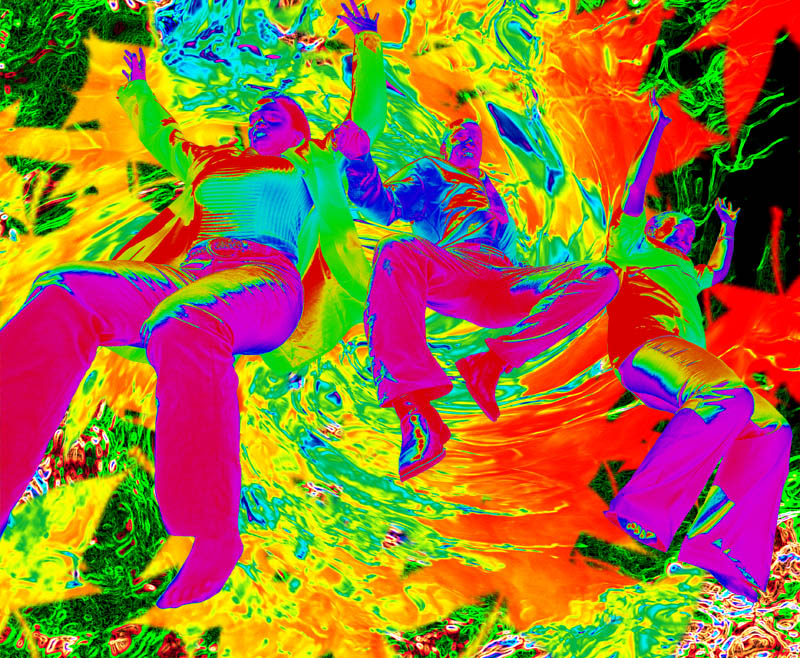
LSD played a significant role in influencing music and art through the psychedelic movement of the 1960s.
(© All Rights Reserved)

Impressed by its power, he decided to study it in more detail, and on 19 April 1943 he performed a self-experiment, ingesting 0.25mg of LSD. Within an hour he started experiencing an extreme reaction and requested his lab assistant to escort him home. As wartime restrictions prohibited the use of motor vehicles, they had to make the journey by bicycle. During the journey home Hofmann experienced severe hallucinations and heightened anxiety, fearing that he poisoned himself. His house doctor was called in, but he could find no physical abnormalities, except for very dilated pupils. This gave Hofmann some reassurance, and after a while his anxious state subsided, giving way to a state of hallucinatory euphoria where he again experienced vividly coloured and constantly changing dream-images.

Hofmann, realising the potency of the drug, felt it had huge potential as a psychiatric tool. Given the intensity of his experience, he had no inkling that anyone would consider using it recreationally.

(He was clearly wrong on this point – his experience, dubbed ‘Bicycle Day’, became famous in drug history, and continued to be celebrated enthusiastically in psychedelic communities many years later.)

After Hofmann’s initial experience, interest in LSD soared, and over the next 15 years it was the subject of extensive studies, becoming the topic of hundreds of academic papers and even entire scientific conferences. It became used in psychotherapy, treatment of depression, and as a supposed cure for alcoholism. At the same time, the CIA also became interested in the potential of the drug for their applications, funding a project known as MK-ULTRA where subjects (many unwittingly) were exposed to the drug to test its effects. This highly controversial project, that continued for almost two decades, included investigations on the potential for various drugs in combination with stress or specific environmental conditions, to break down prisoners or induce confessions, and had a lasting psychological impact on many of its subjects.

It wasn’t long before the popularity of the drug went beyond its medicinal application. Initially psychiatrists started using it recreationally and sharing it with their friends., and by the early 60s its recreational use had gained much wider popularity. It has had a huge influence on music and art, particularly the psychedelic movement of the 60s. LSD had a number of highly visible and vocal supporters, including one-time academic turned LSD guru Dr Timothy Leary, and author Ken Kesey (whose experiences as part of the CIA’s MK-ULTRA programme became the inspiration for his “One Flew Over the Cuckoo’s Nest”)

By April 1966 LSD had become so popular that Time magazine, who had published a number of positive reports on the drug in the 1950s, published a warning about its dangers. At the same time, the US government stepped in and declared the drug illegal, giving it a Schedule 1 (“high potential for abuse”) status. California banned the drug in October 1966, with other states, and the rest of the world, following soon after.
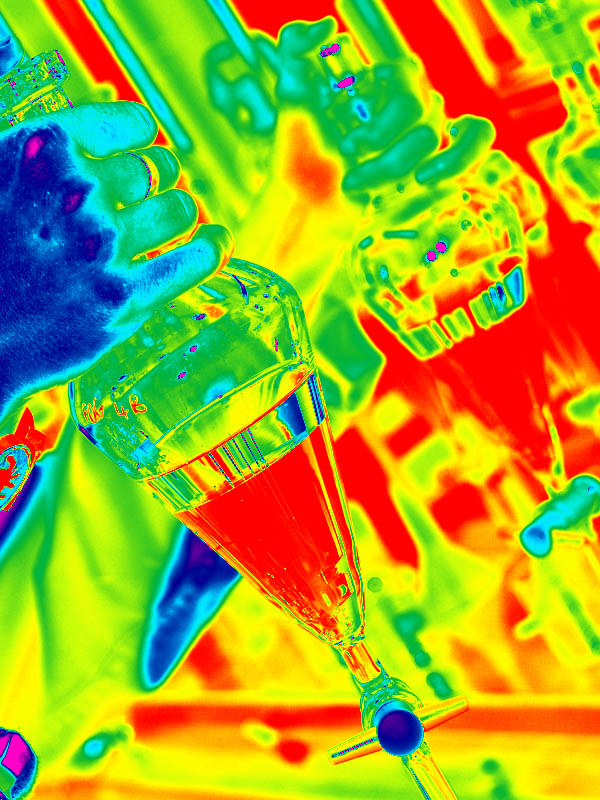
Albert Hofmann’s pharmaceutical research sparked a generation of psychedelia.
(© All Rights Reserved)

I can only wonder what Albert Hofmann, working in his lab in the late 1930s, would have thought if he could have had a glimpse into the future to see the range of effects and applications of the drug he was working on. In chaos theory, the example is often given of a butterfly flapping its wings in one part of the world potentially being the impetus for a massive storm thousands of miles away, but I think the image of Albert Hofmann’s laboratory research in the 1930s resulting in a psychedelic festival of music and culture in the 1960s, would be an equally vivid illustration!
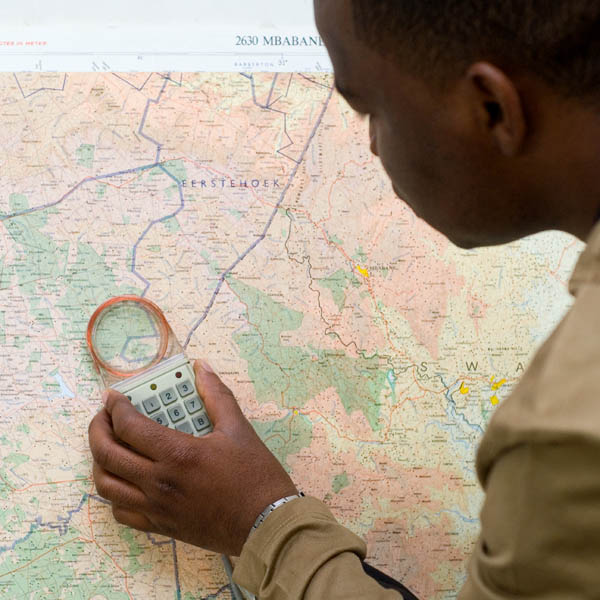
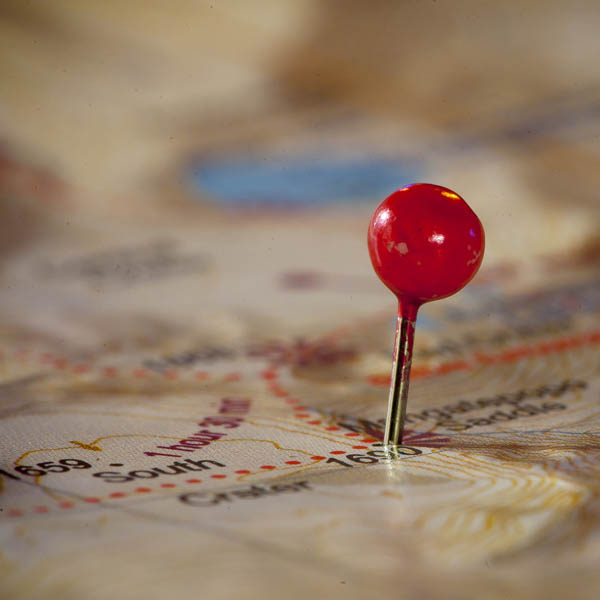
Location, location, location (and time) – it’s GIS Day

November 14th is GIS Day, an annual event focusing attention on the field of Geographic Information Systems, its use and potential to impact on our lives.

GIS Day started in 1999 to create an opportunity for people to learn about geography and to discover and explore the benefits of GIS.

Spatially mapping your data enables you to identify trends and relationships that might not otherwise be apparent.
(© All Rights Reserved)

So what exactly is GIS? According to Esri, one of the leading international developers and vendors in the field of GIS, “A geographic information system (GIS) integrates hardware, software, and data for capturing, managing, analyzing, and displaying all forms of geographically referenced information. GIS allows us to view, understand, question, interpret, and visualize data in many ways that reveal relationships, patterns, and trends in the form of maps, globes, reports, and charts.”

Or, as Wikipedia puts it: “In the simplest terms, GIS is the merging of cartography, statistical analysis, and database technology.”

Spatially visualising information has many benefits. GIS enables us to map where things are and in what quantities and densities they are distributed. Modern GIS tools also allow us to map and visualise changes in these quantities over time. By seeing how various fields of data are dispersed geographically, and how they are changing, it is often possible to identify trends and relationships that might not otherwise be apparent.

This in turn leads to better decision making and improved communication.

GIS is a pervasive supporting technology throughout all aspects of modern society, with applications in business (banking, retail, etc), law enforcement, health, transportation, environmental systems, conservation, agriculture, forestry, mining, telecommunications, utilities management, research and education.

Capturing spatio-temporal location is key to GIS.
(© All Rights Reserved)

A GIS can typically employ and integrate data from a huge range of sources, as long as it has some key through which to relate it to the other data in the system. This key is spatio-temporal location – you need to know the location and time represented by the data. To map climate change, for example, you would include information on temperature and rainfall. But just having a list of temperatures and rainfall figures means nothing – to make it useful, you need some indicator of where and when each value was measured.

By promoting an understanding of this simple basic concept – that you massively increase the value and usefulness of any set of data by recording and including the spatio-temporal location of each data item – time and money spent on data collecting efforts can be leveraged so much more effectively.

Are you involved in data collection? Know someone who is? Even if space and time appear unimportant, record it anyway. Who knows – you may just discover something no-one’s thought of before…

Cloud seeding: Making your own rain and snow

Today, 13 November, marks the date back in 1946 when Vincent J Schaefer, American chemist and meteorologist, performed the first cloud seeding experiment, artificially inducing snow by sprinkling clouds with pellets of dry ice from an airplane.

While this first attempt was not completely successful – the artificially created snow evaporated as it fell through the dry air and disappeared before it hit the ground – it showed that the concept of cloud seeding is possible. This resulted in the GE Research Laboratory (where Schaefer was working at the time) receiving funding for further research into cloud seeding and weather modification.

New Zealand – getting enough rain and snow the natural way!
(© All Rights Reserved)

While initial experiments in cloud seeding was done using dry ice, later substances used include silver iodide, liquid propane and, more recently, salt. Cloud seeding has been done to different extents around the world, in Asia, North America, Europe, Australia and Africa, with China having the world’s largest commercial operation in this domain.

In some of the most recent experimental work in the field of cloud seeding, German scientists at the University of Geneva experimented with firing short infrared laser pulses into the air, the idea being that the pulses might encourage the formation of atmospheric particles which could act as seeding particles in the clouds. According to lead researcher Jerome Kasparian, “the laser pulses generate clouds by stripping electrons from atoms in air, which encourage the formation of hydroxyl radicals. Those convert sulphur and nitrogen dioxides in air into particles that act as seeds to grow water droplets.”

While this work is still at an experimental stage, it has shown promising results in laboratory conditions. A field experiment, where the pulses were aimed at the skies over Berlin, has also shown notable increases in the density and size of water droplets in the area, when measured using weather LIDAR and it is believed that, using the right frequencies and intensities, generation of rain by this means might become a real possibility.

This really feels like science fiction, doesn’t it? Quite incredible to imagine, really!

And of course it immediately reminded me of Kate Bush’s song ‘Cloudbusting’. So herewith, in commemoration of the pioneering work of Vincent Schaefer, father of cloud seeding, the wonderful short film produced for ‘Cloudbusting’ by Kate Bush and Terry Gilliam, starring Donald Sutherland as Wilhelm Reich and Bush as his young son Peter.

Enjoy!

World Pneumonia Day: we can make a difference

On this day, 12 November, we commemorate World Pneumonia Day. This day, established in 2009, is aimed at raising awareness about pneumonia, promoting interventions for protection, prevention and treatment, and generating action to combat pneumonia.

Globally, a child dies from pneumonia every 20 seconds.
(© All Rights Reserved)

It is a sobering fact that, to this day, pneumonia remains the number 1 killer of children under the age of 5, responsible for more than 18% of all deaths in this age category. With some basic interventions, pneumonia can be largely prevented, and yet a child still dies from the infection every 20 seconds. The vast majority of these deaths occur in the developing world, where access to basic health care is severely limited, and out of reach for most children.

To facilitate knowledge sharing, the following infographic has been made available by the Global Coalition Against Childhood Pneumonia. Sharing is encouraged, so feel free to share it on Facebook or Twitter here.

You can also access the high-quality PDF of the infographic here:
pneumonia-infographic-print-version

The World Pneumonia Day website suggests a number of things we can do to get involved. These include:

  • learning more about pneumonia here;
  • supporting the knowledge sharing drive by getting involved in the World Pneumonia Day social media campaign above; and
  • donating $10 to provide one child with a lifetime of protection, via the GAVI Campaign.

The fight against pneumonia can be won, and we can help make it happen.

Gordon Gould, laser shows and space battles

If you were young in the late 70s/early 80s, you may have a special appreciation for today’s subject. Remember those high-tech night club laser shows that were so popular at the time? Well, today we celebrate the invention of the laser.

On this day back in 1957, the American physicist Gordon Gould, noted down the principles of ‘Light Amplified by Stimulated Emission of Radiation’, or ‘LASER’ in a dated notebook entry. His notes also included various applications for laser light, and he was the first to coin the term ‘LASER’ at a conference in 1959.

(© All Rights Reserved)

Sadly Gould’s patenting savvy at the time didn’t match his physics skills, and his 1959 patent application was denied by the US Patent Office. The USPO subsequently went on to grant a patent in 1960 to Bell Laboratories, whose scientists, Charles Townes and Arthur Schawlow, were independently and in parallel to Gould, also working on the concept of lasers.

This effectively ‘robbed’ Gould of his share of the benefits – money, prestige, science acumen – derived from the invention. Not willing to accept this fate, Gould took the matter to court, an action that set in motion 28 years of lawsuits. He won a minor patent in 1977, but it was only in 1987 that he succeeded in achieving a major victory, claiming patents for a number of laser devices.

To this day, science historians are not in agreement about who to give primary credit for the invention of the laser, but there is no doubt that Gould deserves a large portion of the credit.

Since its discovery, many different types of lasers have been developed, producing emissions in ways too intricate to try and discuss in a blog post. However, the key feature of a laser beam is its high degree of spatial and temporal coherence. ‘Spatial coherence’ means there is very little diffraction in a laser beam, so it can be focused on a tiny spot over a significant distance. ‘Temporal coherence’ means the wave phase of the light beam is correlated over a large distance, producing a polarised wave at a single frequency.

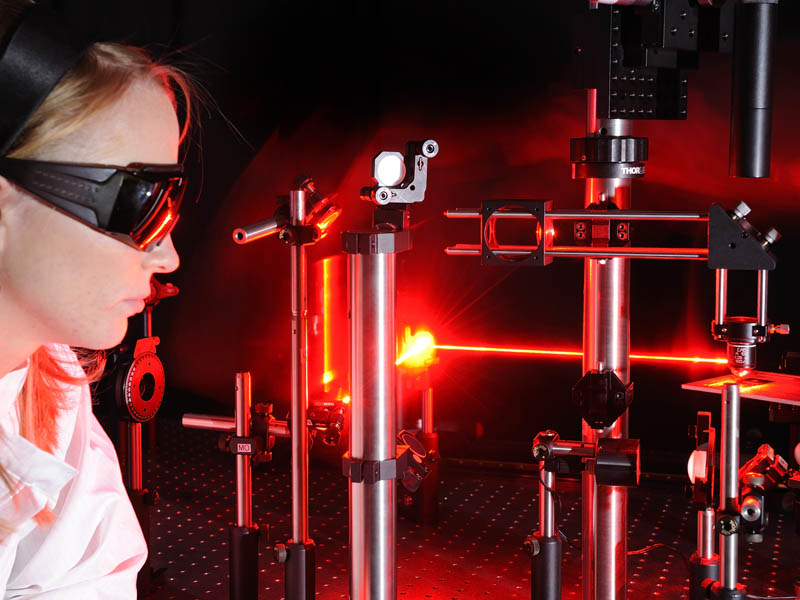
Lasers are not just important scientific tools – they’re also a great subject for science photography.
(© All Rights Reserved)

Of course lasers are far more useful than simply creating special effects light shows. They have become a ubiquitous part of modern society, being used in electronics, information technology, medicine, industry and military applications. In any single day you may encounter lasers in barcode scanners, CD players, computer hard disks, laser printers and more.

Thanks to their precise focusing ability, lasers are used in a range of medical applications, including surgery, treatment of kidney stones, eye treatments etc. They are also used in cosmetic skin treatments. Their accurate cutting ability makes them extremely useful in many modern industrial cutting and part-making applications. They are also an integral part of many military systems, including guidance and electro-optical defence systems.

And perhaps most importantly, judging by countless science fiction movies over the years, lasers will be absolutely indispensable as the weapon of choice to defend our planet and obliterate enemy space ships!

The sixth sick sheik’s sixth sheep’s sick

Yes indeed, today is International Tongue Twister Day, and in celebration I thought I should share the above twister deluxe – apparently rated the toughest of all tongue twisters.

Actually tongue twisters are very interesting phenomena. Why do certain combinations of words cause our tongues to tie up in knots? And more fundamentally – is it actually our tongues that get confused, or do we get stuck in the brain even before we get to verbalise the twister?

The very term ‘tongue twister’ blames the tongue for getting tied in a knot over certain word combinations, when it may in fact be the brain that stumbles first.
(© All Rights Reserved)

Reading a sentence out loud involves an amazingly complex set of actions. Firstly, the brain has to make sense of the letters on the page and comprehend the sounds that are to be produced. Then it has to fire off signals to various parts of the body in order to create the actual sounds – the diaphragm has to move to move air and create the correct pressure to articulate the sounds; the vocal chords have to relax and/or contract; the lips have to pull into different shapes; and then of course the tongue has to set off on a series of extremely complex and yet very precise movements. While the diaphragm, vocal chords and lips can shape the varying blocks of sound needed to speak, the lips are responsible for all the finer details, rolling, bending, clicking and sliding to turn the sounds from rough slabs into precise shapes.

So where do things go wrong when we hit a tongue twister?

A number of studies indicate it may be the brain that stumbles before the words even reach the tongue. In a 1982 study by Ralph and Lyn Haber from the University of Illinois, a group of adult test subjects were asked to silently read different sections of text, some containing tongue twisters, and some not. They found that it took people significantly longer to read through the tongue twisters, indicating that our difficulty articulating these specific sections of speech may be more complex than merely being a case of the tongue not being able to handle the gymnastics it has to perform. It all has to do with phonology. Even when we read silently, we still arrange letters into phonemes, or ‘sound packages’, and rapidly switching between specific phonemes may cause problems even at the conceptual level.

The above result is confirmed by a later study by Keller, Carpenter and Just of Carnegie Mellon University, who studied the brain activity of test subjects while they silently read texts containing tongue twisters. It was found that people not only took longer to read through the tongue twisters, but there were also increased levels of activity in a number of language-related cortical areas. This confirms that it is the brain that is already having a hard time sorting out specific phoneme combinations.

Having said that, there are certain phoneme combinations that, physically, causes the tongue some real difficulty. This includes rapidly reversing the order of sounds, like the ‘s’ and ‘sh’ in “She sells seashells by the seashore” – the tongue’s muscle memory wants to repeat the sounds in the same order. Switching between single and double sounds is another challenge – the ‘s’ and ‘sh’ above, or the ‘b’ and ‘bl’ in “A big black bug bit a big black bear, made the big black bear bleed blood.” Things also go pear-shaped when we are forced to quickly make major changes to the shape and position of the tongue and lips, like rapidly repeating “toy boat” – the ‘oy’ part lifts the middle of your tongue to the top of your palate and pulls the lips into a rounded shape, and then the ‘b’ makes the tongue drop back to the mouth floor and the lips has to quickly close and open to make the air ‘pop’ out of your mouth. Doing this repeatedly gets the muscles all tied up.

Perhaps the problem is that the brain, when reading a tongue twister, already starts thinking about the trouble it is going to face to get the tongue to do what it is supposed to, and this causes it to get stuck. Whatever the case – whether it’s a tongue twister or really a brain twister, or a brain-tongue combination twister, today is the day to have fun with these crazy little phonetic constructs – just don’t try and say “I slit the sheet, the sheet I slit; and on the slitted sheet I sit” too loudly in public!

James Clerk Maxwell – the man who changed everything

Today, we commemorate the life and work of James Clerk Maxwell, the Scottish mathematical physicist who died on this day in 1879.

James Clerk Maxwell, 13 June 1831 – 5 November 1879
(wikimedia commons)

While most people will have heard of arguably the two most prominent physicists of all time – Isaac Newton and Albert Einstein – far less are likely to recognise the name of the third person on the list: James Clerk Maxwell. Maxwell, who formulated classical electromagnetic theory, has been hailed as the 19th century scientist whose work had the greatest influence on 20th century physics, and Einstein described it as the “most profound and the most fruitful that physics has experienced since the time of Newton.”

What makes Maxwell’s electromagnetic theory so important is that it is one of the great unifying theories in physics, combining the fields of electricity, magnetism and optics into a single, consistent theory. He showed that electric fields and magnetic fields both travel as waves, and they travel at the speed of light. This led him to postulate that light, electricity and magnetism behave the same, and can be described through the same equations and theories. In his own words, “We can scarcely avoid the conclusion that light consists in the transverse undulations of the same medium which is the cause of electric and magnetic phenomena,” and “The agreement of the results seems to show that light and magnetism are affections of the same substance, and that light is an electromagnetic disturbance propagated through the field according to electromagnetic laws.”

Maxwell’s electromagnetic theory has been reduced down to four fundamental differential equations, known as ‘Maxwell’s Equations’, first presented in his book “A Treatise on Electricity and Magnetism” (1873).

Another contribution by the great man, possibly less grand than his electromagnetic theory, but fundamentally important in its own way, came in the field of colour and optics. His theory of colour vision made a key contribution to colour photography.

Thanks to Maxwell we now understand that a colour image can be split into red, green and blue channels, and that the full colour image can be recreated by combining these channels.
(© All Rights Reserved)

Maxwell was the first to show that a colour image can be created by photographing the same subject through red, green and blue filters, and then projecting the three resultant images through the same colour filters onto a screen. This showed that the additive primary colours are red, green and blue and not red, yellow and blue, as was previously assumed. It introduced the principle of additive colour synthesis used to this day in colour displays.

So here’s to Scotsman extraordinaire James Clerk Maxwell, one of the greatest minds of modern times and, to paraphrase his biography, ‘the man who changed everything’.

Frederick Bowen and the fascinating ferns

Today we celebrate the birthday of one Frederick Orpen Bower, born 4 November 1855. Bower, an English botanist, was famous for his studies of the origins and evolution of primitive land plants such as ferns and mosses. In his research, published in books like Origin of a Land Flora (1908), Ferns (1923-28), and Primitive Land Plants (1935), Bower concluded that these plants had evolved from algal ancestors.

Ferns, the subject of much of Bower’s research, is a fascinating plant in many ways. Unlike mosses, ferns are vascular plants with stems, leaves and roots. Unlike other vascular plants, however, they reproduce via spores rather than flowers and seeds.

The shape and structure of young fern fronds can provide endless visual fascination.
(© All Rights Reserved)

While we typically associate ferns with moist, shady areas, they can be found in a wide variety of habitats, from desert rocks to mountains to water bodies. They can prosper in marginal areas where many flowering plants fail to grow. This tenacity make certain fern species serious weeds, such as the Bracken Fern in Scotland, and the giant water fern, one of the world’s worst aquatic weeds.

From a biochemical point of view, ferns can be particularly useful in fixing nitrogen from the air into compounds usable by other plants, and for removing heavy metals from the soil.

Another beautiful young frond, appearing almost animal-like.
(© All Rights Reserved)

Patterns and motives based on fern shapes are popular in traditional art and culture. In New Zealand, for example, the silver fern is a very prominent cultural symbol, featured often in traditional art. The leaf of the silver fern is also the proud emblem of many of the country’s top sporting teams such as All Blacks (rugby) and Silver Ferns (netball).

On a more esoteric level, ferns are a wonderful embodiment of mathematics in nature, with young fern fronds unrolling in stunning Fibonacci spirals. The patterns and structure of fern leaves can also be simulated by means of iterative mathematical functions.

Definitely a plant that fascinates on many levels. No wonder Frederick Bowen committed his life to studying these wonderful plants!

Having some fun on ‘Look for Circles Day’

Today, they say, is Look for Circles Day. The idea of the day, aimed mostly at entertaining the young ‘uns, is to see how many circles you can spot. We come across hundreds of circles each day, so in addition to the obvious ones, try to look for circles in unexpected places, and even look for implied circles (where objects occur, or are placed, in such a way that they form a circle).

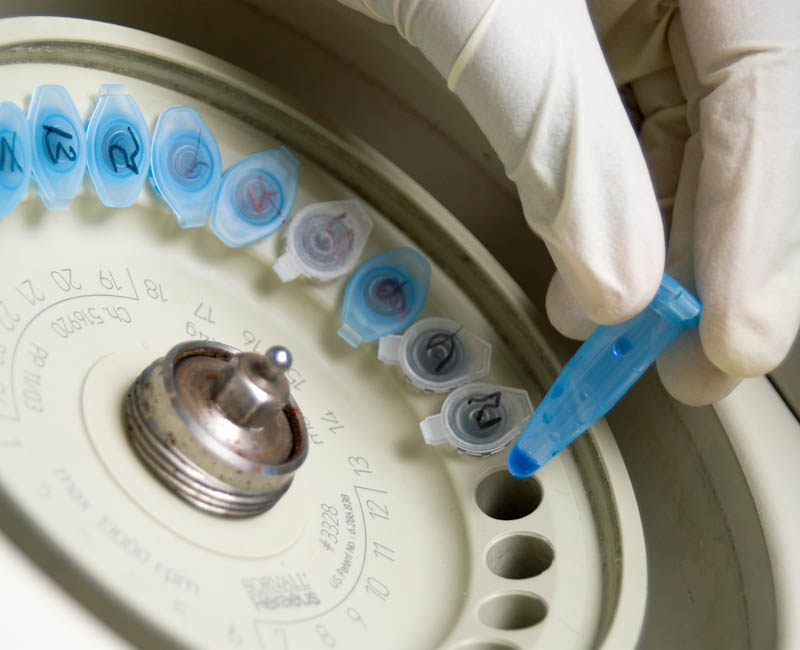
A science lab can be an abundant source of circles.
(© All Rights Reserved)
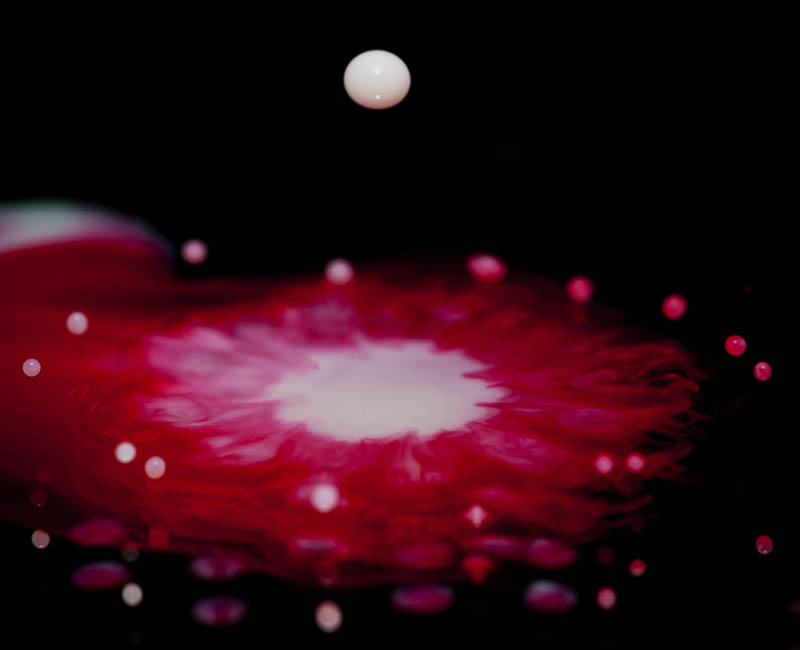
Liquid droplets splattering – a stunning symphony of circles and spheres.
(© All Rights Reserved)

Look for Circles Day is a great opportunity to entertain kids of all ages with one of the most interesting shapes in nature, and to teach them some maths and geometry in the process. Here are some interesting circle facts:

  • A circle is an infinite set of points on a plane that are all the same distance from a specific, predefined point.
  • Of all shapes with a given perimeter, the circle has the largest area. Or to put it another way, circles have the minimum possible perimeter for a given area.
  • They are the only single-sided shape with an area.
  • A circle with an infinitely large radius is a straight line (there’s a hint to give you the upper hand when searching for circles!)
  • A circle can be split in two identical halves in an infinite number of ways, or stated more formally, a circle has an infinite number of lines of symmetry.
  • The circumference and perimeter of a circle are related through the mathematical constant pi, or π – a very interesting number in itself, as we discussed previously.
  • A solid circle is a wheel, and we all know what useful invention the wheel was!
  • Apparently, according to research done by the Max Planck Institute for Biological Cybernetics in Tübingen, when we have no way to navigate – for example in a thick fog, or a moonless night – we tend to walk in circles (literally).
  • There is a form of divination called ‘gyromancy’ where people are made to walk in a circle until they fall down from dizziness, and the location where they fell is then used to predict future events.

Yep, as I said – circles are amazing things… Happy circle spotting!

A good excuse to howl at the moon

Today is the last Friday in October, the last Friday before Halloween, which means tonight is Howl at the Moon Night. If you’re a fan of Twilight, or any of the vampire franchises, this may be old news to you, and you’ll be all excited and prepared for this night already. On the other hand, if (like me), the whole vampire scene fails to move you, you can always take this opportunity to get rid of some pent-up frustration by indulging in a good holler once the moon appears over the horizon. I’m not suggesting the whole primal therapy trip that was so popular in the early 70s – all I’m saying is that a good yell, howl, holler or scream can do wonders for your stress levels, and if there’s a day (or night) giving you the perfect opportunity to let it rip, why not?

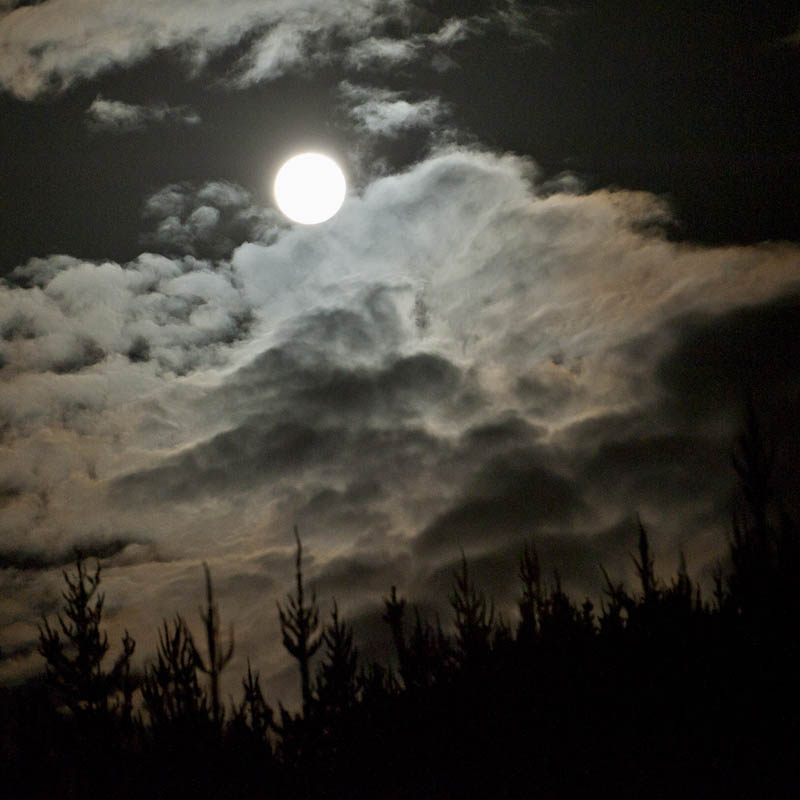
It may not quite be full moon yet, but the last Friday evening of October is just the excuse you need for a good holler at the moon.
(© All Rights Reserved)

Of course, unless you work the night shift, you’re unlikely to be at work when the yelling starts. Which is a pity, given that a study reported in The Independent indicates that freely expressing anger in the workplace is a good way of keeping your heart healthy. Apparently, people who suffer in silence after unfair treatment at work have twice the risk of dying from heart disease compared to those who vent their anger. Researchers from the University of Stockholm followed 2755 male workers for a period of 13 years, from 1990 to 2003, measuring their blood pressure, body mass index and cholesterol levels, and related this to their coping mechanisms at work. After correcting for biological factors, they found those who bottled up their anger had higher blood pressure and were twice as likely to suffer from heart disease. Studies on women showed similar trends, though not as pronounced as their male counterparts.

The value of a good yell is widely acknowledged.  American psychiatrist Dr Peter Calafiura says that yelling can have a positive mental influence.  It triggers endorphins, resulting in a natural high, and a generally good feeling. This is very similar to the well-known runner’s high, so perhaps today is a good day to skip your post-work run and rather have a howl at the moon – it should result in an equally good mood!

Happy howling, everyone!  A-hooooooooooooooooooooo!