Page 5 of 18

Celebrating imagination and creativity on Kid Inventors’ Day

Today we celebrate the youth. More particularly, clever youngsters through the ages who have come up with great inventions at an early age.

17 January is the birthday of Benjamin Franklin (17 Jan 1706 – 17 April 1790). We all know Franklin as one of the founding fathers of the United States, but what is perhaps less well known is that he is also the inventor of swim fins (what became flippers), at the tender age of 12. In recognition of this fact, 17 January is celebrated as Kid Inventors’ Day.

Childhood - when our minds are open, thinking is uninhibited and the world is a place of wonder.(© All Rights Reserved)
Childhood – when our minds are open, thinking is uninhibited and the world is a place of wonder.
(© All Rights Reserved)

The Kid Inventors’ Day website states some interesting facts. Apparently about half a million children and teens invent gadgets and games each year. Some of the brilliant inventions by youngsters include braille (1824, Louis Braille, age 15), earmuffs (1873, Chester Greenwood, age 15), popsicles (1905, Frank Epperson, age 11), water skis (1922, Ralph Samuelson, age 18), the trampoline (1930, George Nissen, age 16), and of course Benjamin Franklin’s swim fins. The site also claims the television as a child invention, but I’m not too sure about that, especially since there’s such disagreement as to who actually deserves the credit for this invention.

To be honest, I am not surprised that so many well known items were invented by children and teens. In fact, if it wasn’t for the admin around patenting etc, I am sure more inventions may have been credited to kids who probably thought about many concepts before the more famous inventors credited with the eventual inventions.

Given their limitless imagination, uninhibited creativity and sheer energy, young people appear almost destined to come up with great ideas. I believe the great inventors through the ages were probably those people who managed to retain some of this innovative spark into adulthood, somehow managing to avoid having their creativity and imagination curbed by the conventions, norms, biases and prejudices (and medication!) clouding most grown-ups’ minds.

So, on this day, let’s celebrate the great inventions created by kids, and let’s all try to foster and regain some of their ability to live, think and create without inhibitions.

Celebrating Wham-O’s ‘frisbee’ flying disk, a toy for all ages

Today, 13 January, is the date back in 1957 when the Wham-O toy company first began production of their plastic flying disk, or ‘Frisbee’, as they trademarked it.

The concept for the flying disk came about much earlier. While there are different tales regarding its invention, the most plausible story is that it came from the pie tins that the Frisbie Baking Company from Connecticut used to bake their pies in. The pies were popular with students at various New England colleges. Apart from enjoying the pies, they discovered that the empty pie tins could be tossed and caught, resulting in many hours of fun and games.

In 1948, Walter Morrison from Los Angeles created a plastic version of the flying disk that could be thrown more accurately than the pie tins. Morrison marketed his disk, which contained a specifically sloped design and thicker outer edge, as the ‘Pluto Platter’, and this became the blueprint for future flying disk designs. Rich Knerr and Spud Melin of the Wham-O company quickly saw the potential of Morrison’s invention and convinced him to sell them the rights to the design.

The flying disk of 'frisbee' is a truly age-defying toy, and can offer hours of fun to players of all ages.(© All Rights Reserved)
The flying disk of ‘frisbee’ is a truly age-defying toy, and can offer hours of fun to players of all ages.
(© All Rights Reserved)

Shortly after Wham-O started producing their version of the flying disk, the Frisbie Pie Company closed down, and Wham-O named their disk the ‘Frisbee’, acknowledging the role the Frisbie pie tins played in the invention of their toy. Thanks to Wham-O’s clever marketing of the Frisbee disk, sales soared, and the toy even caught on as a serious sport. By 1964, Wham-O released the first professional version of the Frisbee, with better accuracy and more stable flight. The key innovation in the professional version was the introduction of raised concentric ridges, called the ‘Rings of Headrick’ after its inventor, Wham-O’s Ed Headrick.

Physically, the flight of the frisbee works very similar to a standard asymmetrical air foil, accelerating airflow over the disk resulting in a pressure difference causing a lifting force. The ‘Rings of Headrick’ help by causing the airflow to become turbulent as soon as it passes over the ridge of the disk, thus reducing flow separation. In addition to the lift caused by its shape, the torque created by the heavier edge of the spinning disk also has a gyroscopic effect, stabilizing the disk in flight. Higher rates of spin results in greater stability.

Minor adjustments to the shape of the disk can cause significant changes to the flight dynamics – something that can be utilised effectively in specific applications like disk golf where the aim is to cover a course and throw the disk into a basket – similar to sinking a put in golf. Disk golf players use different design disks for ‘putting’, ‘driving’ etc.

The Frisbee even gained scientific legitimacy when, in 1968, the US Navy spent a whopping $400 000 studying the flight of the frisbee in wind tunnels, following its flight with high speed cameras and performing advanced computer flight simulations. The project even included the development of a special frisbee launching machine. (The mind just boggles at all the potential conspiracy theories regarding UFO flight that this must have caused…)

Today the Frisbee trademark is owned by Mattell Toys. More than 100 million frisbees were sold by Wham-O prior to selling the toy to Mattel. Beyond this, many millions more flying disks were sold by other manufacturers, so one can only speculate how many flying disks have been sold since its invention more than 50 years ago.

Celebrating Ruth Benerito and her quick-drying, flame-retardant, crease and stain resistant fabrics

Today we celebrate the birthday of Ruth Rogan Benerito (born 12 Jan 1916), the American chemist and inventor whose innovations in fabric technology have saved the world many many hours slogging away in front of the ironing board. Dr Benerito was the inventor of wash and wear cotton fabric.

As if this wasn’t enough of a gift to the world, Benerito also came up with numerous other innovations – in total she has been granted no less than 55 patents related to textile technology. Thanks to her we now have fabrics that are quicker drying,  crease and stain resistant, comfortable and better able to retard flames. She also developed a cotton textile cleaning technique (adopted widely in the Japanese textile industry) using radiofrequency cold plasmas. This method replaces the commonly used technique of pre-treating cotton with sodium hydroxide, as such greatly reducing the environmental impact.  Many of her innovations also found application in the wood and paper industries.

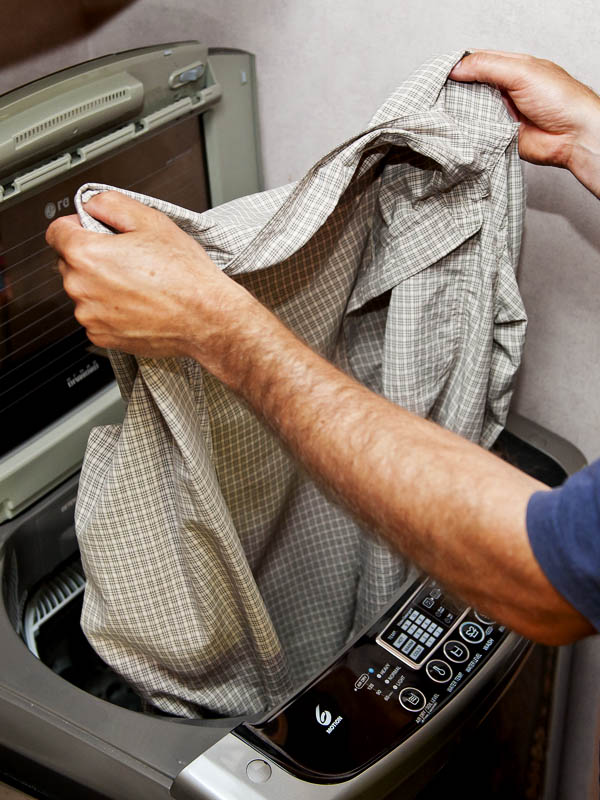
No more ironing for hours - just wash, dry and wear.(© All Rights Reserved)
No more ironing for hours – just wash, dry and wear.
(© All Rights Reserved)

The key to the wrinkle-resistant fabric was a process called molecular cross-linking. She discovered that the long chain-like cellulose molecules that make up cotton fibre can be chemically treated so they are bound (cross-linked) together – a process that strengthens the hydrogen bonds between the cellulose molecules, leading to the advantageous result that the cotton becomes less prone to wrinkling.

On an almost completely unrelated note, far removed from her important and ground-breaking work in textiles, Benerito also developed a novel technique to administer fat intravenously to patients too sick or wounded to eat. This innovation has helped save the lives of thousands of people  by maintaining their nutrition levels during severe illness.

From clothing to nutrition, these are some truly useful innovations indeed!

Showing some appreciation to your house plants

Knowing the readership of this blog, I am sure I don’t need to carry on about the general value and virtues of plants, and indeed, there’s no shortage of special days celebrating plants of all sorts – trees, wetlands, you name it. Today, however, we celebrate those special plants that have been taken out of their natural environments to provide company to man in his domesticated context – today, 10 January, is House Plant Appreciation Day.

“Babies Tears”, also known as “Peace in the Home” – a popular house plant for small, confined spaces.
(© All Rights Reserved)

Just about any plant can qualify as a house plant, as long as it can handle some level of shade, is reasonably neat and is small enough to fit into your house. Ferns are a good choice for peace and tranquility; flowering plants can add spectacular colour; small trees can create structure; certain carnivorous plants can even help rid the home of flies and other irritating bugs. At a more basic level, plants in the home help filter and clean the air, and they act as an important oxygen source.

So, on House Plant Appreciation Day, give some attention to the plants around your house. Do they look healthy and vigorous, or are they perhaps in a bit of a sorry state? If the latter, why not put in extra effort today – feed them, water them, and treat them to some personal attention. And if you happen to not have any plants in your house, perhaps today is just the time to go and buy a leafy friend from your local nursery. Of all possible pets, they are the least demanding, they react with surprising vigour to a bit of personal attention, and they can be highly therapeutic.

Go on, get a house plant, and add some life to your home.

Creating sparks on Static Electricity Day

Today we celebrate Static Electricity Day – a day for some serious electricity fun.

Work up some static electricity (a balloon rubbed against cloth is a great source) and use it to get your hair to stand on end. Rub your feet on a carpet and generate some sparks between you and the person next to you. Cut small pieces of paper, rub a plastic ruler on your hair, and see the paper pieces magically fly into the air as it gets attracted to the electrically charged ruler.

Making paper pieces fly - the magic of static electricity.(© All Rights Reserved)
Making paper pieces fly – the magic of static electricity.
(© All Rights Reserved)

So how does it work? As two surfaces rub against each other, electrons are exchanged, moving from one surface to the other. The resultant mismatch of electrons means that the one object will have a negative charge, while the other will be positively charged. Doing this repeatedly (e.g. rapidly rubbing feet on a carpet, or a balloon on a cloth) can result in the build-up of a fairly large charge. If you have a significant positive or negative charge in your body, and you touch a metal object, the static electricity is rapidly discharged, creating a tingle, or even a small spark.

Of course static electricity is not all about fun and games. In industry, positive and negative charges are useful in applications such as spray painting and dust removal. Printers also use static electrical charges to attract ink or toner to paper.

Some of the most impressive, and dangerous, examples of static electricity in everyday life occur during an electrical storm, when huge electrical charges lead to the development of lightning – instant discharges of many thousands of volts – definitely not something to play with.

Here’s hoping you’ll have a great, positively charged Static Electricity Day – go on, create some sparks!

Walter Diemer, the accountant who gave the world bubble gum.

Today we celebrate the birthday of Walter E Diemer, who was born on this day in 1905 and, incidentally, also died on this day 93 years later. In case the name doesn’t ring a bell, Diemer is the guy who gave the world (wait for it…) bubble gum!

He never set out to invent bubble gum, to be honest. Working as an accountant for the Freer Chewing Gum Company, he experimented in his spare time with different recipes for new chewing gum bases. During one of his attempts, in 1928, he accidentally managed to create a base that was less sticky and much more elastic than typical chewing gum.

Bubble gum - creating a whole new way to play with your food.(© All Rights Reserved)
Bubble gum – creating a whole new way to play with your food.
(© All Rights Reserved)

Realising he had something quite unique on his hands, he decided to try his invention in the market. He sold a batch to a local grocery store, where it was sold out in the first afternoon. Leveraging Freer’s distribution networks, he started marketing his bubble gum nationally, using salesmen who were specially taught how to blow bubbles with the gum, so they could serve as product demonstrators when they sold the new Freers bubble gum (named ‘Dubble Bubble’) to stores.

Diemer eventually became Senior Vice-President of Freer, thanks largely to his bubble gum invention. Many years later, he still found it amazing that his five pound batch of gum started a global craze, becoming one of the most popular confections in the world.

Diemer’s original batch of bubble gum was pink in colour, mainly because this was the only food colouring he had available at the time, and after almost a century, this still remains the standard colour for bubble gum.

It’s Bird Day, time to celebrate our feathered friends.

The 5th of January is Bird Day. Strictly speaking, it is National Bird Day, an America-based celebration, but why should the celebration of birds be limited to our US friends? So let’s just make it international, shall we?

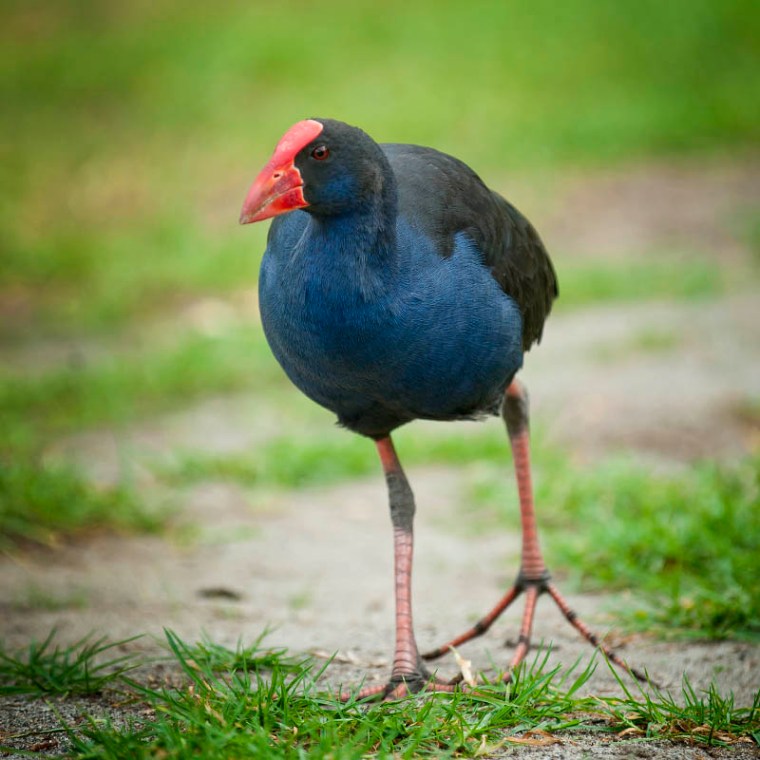
Here in New Zealand we have a fairly small diversity of bird species, many of which are water birds. Even within this limited range, we have some very interesting and uniquely amusing species, such as the kiwi, tui, kea and my personal favourite, the decidedly odd pukeko. Wider afield, a dazzling array of birds can be found (almost 10 000 species worldwide), so it’s little wonder that people can get completely engrossed in fields such as ornithology and bird watching.

The pupeko - when it's young, it's all feet. It is only as it gets older that it's body starts catching up with the feet (well, sort of...). (© All Rights Reserved)
The pupeko, or Purple Swamphen of New Zealand. When it’s young, it’s all feet; it is only as it gets older that it’s body starts catching up with the feet (well, sort of…).
(© All Rights Reserved)

Bird Day is a time to celebrate the beauty and uniqueness of birds everywhere. And, perhaps more importantly, to focus attention on the plight of the feathered ones – currently no less than 12% of the world’s bird species are facing the prospect of extinction within this century. That’s more than 1000 species of birds destined to disappear from the face of the earth unless something is done about it.

Being sentinel species, birds are considered to be an important barometer and indicator of the health of our ecosystems. So, given the number of bird species facing extinction, it should serve as quite a serious warning regarding the state of our environment in general.

From the most common to the most exotic, birds have always fascinated and inspired humankind. What are the chances that the Wright Brothers, and all other humans obsessed with flight, would have gotten anywhere at all without the example provided by birds?

So take some time to celebrate our feathered friends, and make the effort to find out what you can do to avoid the extinction of many birds species around us. Happy Bird Day!

The Earth is at its perihelion – a timeous reminder to protect yourself against the sun

Every year, around the start of the year, the earth reaches its perihelionits closest point to the sun for the year – and this year the perihelion falls on Wednesday, 2 January. at 05:00 Coordinated Universal Time (UTC).

The day when the earth passes closest to the sun is called the perihelion after the ancient Greek ‘περί’ or ‘peri’ (near / around) and ‘helios’ (the personification of the Sun in Greek mythology).

Whether it's clear or cloudy, the need to protect yourself against the sun's harmful UV radiation is more critical than ever.(© All Rights Reserved)
Whether it’s clear or cloudy, the need to protect yourself against the sun’s harmful UV radiation is more critical than ever.
(© All Rights Reserved)

I guess, with the sun passing at its closest, and with it being smack in the middle of summer here in the southern hemisphere, it makes even more sense than usual to be ‘sunsmart’.

With the sun beating down, and skin cancer being more prevalent than ever, the message is to ‘slip, slop, slap and wrap’. To quote the website of the Sunsmart campaign:

  • SLIP into a long-sleeved shirt and into the shade. Generally, fabrics with a tighter weave and darker colours will give you greater protection from the sun. There are also certain fabrics on the market that have a SPF rating.
  • SLOP on plenty of broad-spectrum SPF30+ sunscreen at least 15 minutes before going outdoors. Read more about using sunscreen.
  • SLAP on a hat with a wide-brim or a cap with flaps – more people get sunburned on their face and neck than any other part of the body.
  • WRAP on a pair of wrap-around sunglasses – UV radiation is just as dangerous to eyesight as it is for the skin.’

To my northern hemisphere friends – remember the sun is not only dangerous in summer; a day out in the winter sun requires all the same precautions needed in summer.

So let this day of the perihelion serve as a reminder to be sunsmart – be responsible, but don’t let that detract from the joys of an active day in the sun. Enjoy it, wherever you are!

Enjoy some mental gymnastics on Card Playing Day

Today, 28 December, is Card Playing Day – the day to celebrate all games involving your classic deck of cards.

When you think about it, a deck of cards is a pretty impressive creation – the diversity and complexity covered in all the games using a card deck is quite staggering. From games testing cunning and deception (poker), to games teaching teamwork and planning (bridge), to those based on statistical probability and counting skills (blackjack), to visual pattern-matching games (rummy), to the single-player solitaire/patience type games, and hundreds more in-between, the options are almost limitless. And all this based on a simple collection of 52 playing cards, involving four different ‘suits’ of 13 cards each.

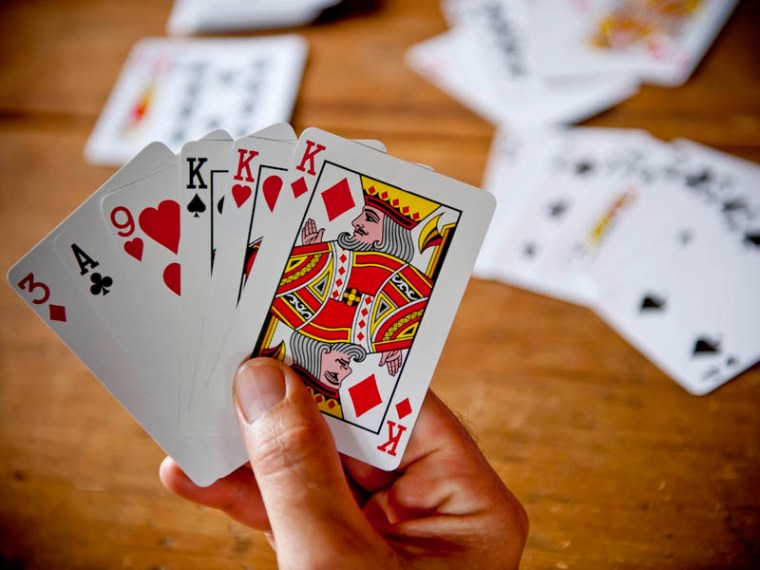
Playing cards - a world of complexity lurking in a deck of 52 cards.(© All Rights Reserved)
Playing cards – a world of complexity lurking in a deck of 52 cards.
(© All Rights Reserved)

Playing cards have a long history – they were first found in China as early as the 9th century, and appeared in Europe around the 14th century. The first card decks containing the now-standard 52 cards consisted of suits with themes like polo sticks, coins, swords and cups. The famous suits of spades, hearts, diamonds and clubs, as we still use today, was first introduced in France around 1480. The Kings, Queens and Knaves (Jacks) in the different suits were based on English and French history, and referred to different historical characters such as King David, Julius Caesar, Alexander the Great, and others.

Beyond the historical connotations, a range of symbolic meanings are attached to the deck of cards as we know it. The 13 cards in each suit is said to refer to the 13 months of the lunar year; the 52 cards corresponds to the 52 weeks in a year; the Ace, which is both the lowest and highest card in each suit, is symbolic of the beginning and end, alpha and omega.

From a scientific point of view, playing cards represent an invaluable demonstration and teaching aid in fields such as mathematical logic, probability and statistics.

Whether you enjoy playing cards for the thrill and uncertainty of games of chance, or because of the complex mathematics they represent, or simply because of the social interaction inherent in many card games, today is the day to celebrate all facets of card playing. So while you’re enjoying that pleasant lull between Christmas and New Year, why not pull out a deck of cards –  play an old game, learn a new one, and lose yourself in the mathematical complexities hidden in your standard card deck.

Louis Pasteur, founder of microbiology

Today we celebrate another of the big names in science – Louis Pasteur (27 Dec 1822 – 28 Sep 1895), one of the founders of the field of microbiology.

Thanks to Louis Pasteur, your milk stays fresher for longer.(© All Rights Reserved)
Thanks to Louis Pasteur, your milk stays fresher for longer.
(© All Rights Reserved)

The Frenchman Pasteur, a chemist by training, shifted his focus to microbiology when he started studying the role of bacteria in fermentation. His understanding of the process of fermentation led to fundamental insights into the role of germs in infection, and how the process can be manipulated. He figured out that bacteria can be killed by exposing them for a specific time at a given temperature – a process that became known as pasteurisation.

Pasteur made many contributions in the field of human health, creating and testing a range of vaccines for diphtheria, cholera, yellow fever, plague, rabies, anthrax, and tuberculosis.