Page 4 of 18

Going dotty about halftone printing

Today we celebrate the birthday of Frederic Eugene Ives (17 Feb 1856 – 27 May 1937), the American photographer who patented the first successful method for halftone photographic printing.

The halftone process was an innovative new way of reproducing photographs in the printed press that enabled printers to produce different shades of grey, as opposed to the basic black and white line-drawings that was the norm until Ives’ invention.

The Ives halftone process basically involved converting a photograph into a pattern of black dots. Darker areas in the photograph were represented by larger dots placed close together, while lighter areas were made up of tiny, spread-out dots. By varying the size and distribution of the black dots, an illusion of shades of grey can be created.

An image rendered as RGB colour halftone and greyscale halftone.(© All Rights Reserved)
An image rendered as RGB colour halftone and greyscale halftone. Even though the images are clearly made up of individual dots, an effect of visual continuity is created when viewed from a distance. (Click on the image for a larger view.)
(© All Rights Reserved)

Frederic Ives wasn’t the first to come up with the idea of halftone printing. William Fox Talbot, one of the great innovators in the history of photography, is credited with the original concept, but his method wasn’t practically viable.

Various screening techniques are used to break up an image into dots. The most common method, based on amplitude modulation, produces a regular grid of dots differing in size only. Other techniques can result in dots with different distributions, and even dots of different shapes.

Moving into colour imagery, Ives also became the first to make a three-colour print from halftone blocks.

The colour halftone process still forms the basis of colour printing; by repeating the halftone process for each colour in the CMYK colour space – cyan, magenta, yellow and black – the optical effect of full colour imagery is achieved thanks to the semi-opaque property of printing ink.

Promise your heart (and some other organs)

It’s 14 February – that special day where we celebrate the unique bond that certain people share. That’s right, today is Organ Donor Day! Surely there can be no more special bond between two people than sharing an organ?

Yes of course, it’s Valentine’s Day as well, the day when millions of people around the world passionately promise their hearts to each other. But how about a kidney? Or some bone marrow? Even just donating your blood can already change, and save, the lives of many around you.

While you promise your heart to your valentine, make some extra effort and sign up to offer your other organs too.(© All Rights Reserved)
While you promise your heart to your valentine, make some extra effort and sign up to offer your other organs too.
(© All Rights Reserved)

Globally there are hundreds of thousands of people waiting on potentially life-saving organs from organ donors. Yet the number of organ donors in many countries remain extremely low. This is partly affected by the organ donor policy adopted in a country. Countries can either adopt an opt-in or an opt-out policy – in an opt-in system you have to explicitly give consent to become a donor, while in an opt-out system consent is assumed unless you explicitly refuse. The opt-in system obviously results in much less organ donors, and the number becomes even lower in legislative systems where the family of the deceased also have to consent  – in 2011, for example, Australia had about 15 donors/million, Germany had 16 donors/million and New Zealand didn’t even make it into double figures, with less than 9 donors/million. Spain, who has an opt-out system, had 34 donors/million.

The above figures specifically relate to deceased donors – interestingly there tends to be many more donations from living donors. This is partially because the consent process is less complex when you’re alive, but also because people are more likely to be moved to perform the selfless act of donating an organ or some body tissue if they know it is going to be used to save a loved one, rather than going the more passive/generic route of offering their body parts to whoever might need it, once you’re dead.

Often, especially in an opt-in system, the low donor numbers are not because people are fundamentally opposed to organ donation, it is simply because they are not aware that they need to actually, while they’re alive, consent to becoming a donor. Or it’s one of those things you just don’t get around to. As such, there really is a huge need for more urgent communication and information sharing on this topic – people need to understand how the system in their country works, and importantly they need to be made aware of the massive positive impact they can make after their death by simply taking the time and making the effort to fill in a donor consent form. Or, if you’re in a system where your family has the final say, like in Australia and New Zealand, talking to your loved ones and making sure that they know you wish to be a donor.

So next time 14 February rolls around, and love is in the air, why not give the ultimate gift of love and opt-in to become an organ donor. Besides potentially becoming a life-saver to your own loved ones, you can touch the lives of many people you’ve never even met – it is estimated that a single person becoming an organ and tissue donor can affect, and potentially save, the lives of no less than 50 people.

Think about it – you can fundamentally touch the lives of 50 people in the time it takes to shop for a valentine’s card. That’s huge…

Radio: the power to inform

It’s 13 February, which means today is World Radio Day.  This day, proclaimed by UNESCO, is a celebration of radio as a truly non-discriminatory information and communication medium.

As explained in the World Radio Day 2013 press release, the day aims to “improve international cooperation between broadcasters; and to encourage major networks and community radio alike to promote access to information and freedom of expression over the airwaves.”

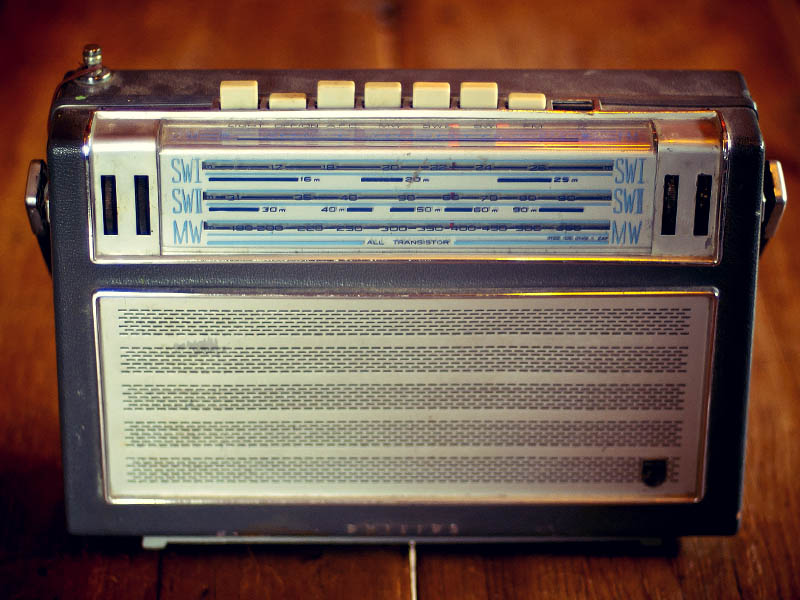
No matter how old the radio, you can still access the latest news, views and information.(© All Rights Reserved)
No matter how old the radio, you can still access the latest news, views and information.
(© All Rights Reserved)

As the world continues to evolve into multiple levels of digital connectedness, radio remains the medium that reaches the widest audience worldwide. From commercial FM stations to shortwave community radio, the medium continues to entertain and inform a diverse audience, across all ages, genders and cultures.

Despite changes and developments in broadcasting technology (from shortwave and medium wave to frequency modulation to digital broadcasting), the interface to its audience has remained largely unchanged, making it the simplest, most affordable and most widely accessible communication medium. The fact that radio can carry its message without the need for electrical connectivity at the receiving end makes it particularly suited to disseminate information in conflict situations and during natural disasters.

While traditional broadcasting remains at the core of radio, digital technology has opened up new opportunities – online radio stations are decreasing the cost of broadcasting, resulting in more citizen journalists and community groups using the medium to give voice to their unique messages.

It is this far-reaching power of radio that UNESCO wants to communicate on World Radio Day. To quote Irina Bokova, Director-General of UNESCO in her message on the occasion of World Radio Day: “UNESCO is determined to make full use of community radio to address poverty and social exclusion at the local level and to empower marginalized rural groups, young people and women. Radio is the key platform for education and for protecting local cultures and languages. It is also a powerful way to amplify the voices of young people around the world on issues that affect their lives. We must bolster their skills and give them opportunities to engage fully with radio.”

Calculating the perfect pancake on Pancake Day

Today, 12 February 2013, is Shrove Tuesday, the day immediately preceding Lent – an observance in many Christian denominations, running for approximately 6 weeks from Ash Wednesday to Maundy Thursday (or Easter Eve). Lent is a period of religious preparation for Easter weekend.

In many parts of the Commonwealth, including the UK, Ireland, New Zealand, Australia and Canada, Shrove Tuesday is commonly known as Pancake Day, based on the tradition of eating pancakes on the day.

Pancakes became associated with this day because it was traditionally considered a good way to consume a range of rich foods – eggs, milk, sugar, butter, fat, cream – before Lent’s period of self-denial. Of course, as with gift-giving during Christmas, the original religious association has moved somewhat into the background, with Pancake Day now being about pancakes and little more.

Sadly I am not doing much to reverse this tradition, as the rest of my post is pretty much only about pancakes…

A stack of American style pancakes with bananas and strawberries, topped with a generous helping of ice-cream and drizzled with liquidised strawberries - so fresh and fruity, it almost feels healthy! (© All Rights Reserved)
A stack of American style pancakes with bananas and strawberries, topped with a generous helping of ice-cream and drizzled with liquidised strawberries – so fresh and fruity, it almost feels healthy!
(© All Rights Reserved)

Just a quick point of clarification – pancakes in Europe (thin, flat pancakes, usually rolled up and eaten with sweet or savoury filling – also called crêpes) aren’t exactly the same as pancakes in the US and Canada (smaller, thicker ‘cakes’ that are often stacked on top of each other, dusted with icing sugar and eaten with syrup – also known as Scotch pancakes, pikelets or flapjacks).

Now you may be curious about the link between pancakes and science. While I don’t know how much science there is in a pancake, I can report that it has apparently been the subject of some rather rigorous scientific scrutiny. A mathematics professor from Wolverhampton University, Dr Ruth Fairclough, has developed what has been reported as “a complicated formula for the perfect pancake”.

Dr Fairclough’s full pancake ‘recipe’ is:

100 – [10L – 7F + C(k – C) + T(m – T)]/(S – E)

where
L = number of lumps in the batter
F = flipping score
C = consistency of the batter
k = ideal consistency
T = pan temperature
m = ideal pan temperature
S = standing time of batter before cooking
E = time the pancake stands before eating

The closer a pancake gets to the perfect score of 100, the better.

I’ve played around with the formula, and while most of it makes sense, it doesn’t always stand up to scrutiny. My main concern relates to the 1/(S-E) factor – if the standing time of the batter before cooking is equal to the time the pancake stands before being eaten, you end up dividing by zero. But perhaps I misunderstand the way these variables should be measured…

The bottom line, however, is that Dr Fairclough’s formula agrees that batter with perfect consistency and no lumps, stood to rest for a while, and then cooked at the perfect temperature and eaten piping hot off the pan, should give you a pretty perfect pancake.

But then you don’t need a PhD in maths to know that, do you? 😉

Everything is coming up roses

Today, 7 February, is Rose Day, apparently conceived to mark the start of Valentine week*.

Valentine week!? As if Valentine’s Day isn’t already more than enough! It seems some clever marketer has decided there’s yet more money to be squeezed out of the poor consumer, who is scarcely back on his feet after the Christmas marketing onslaught.

'First Love' hybrid tea rose. (© All Rights Reserved)
The ‘First Love’ hybrid tea rose from New Zealand – a rose of classic beauty.
(© All Rights Reserved)

While Rose Day may have seen the light as part of an extended Valentine’s sales pitch, that does not mean we shouldn’t use the occasion to celebrate roses for what they are – really interesting, and rather lovely, flowers.

Roses are nothing if not diverse. In total there’s more than 100 species of roses, including bush roses, climbers, erect schrubs and miniature roses. While most are used as ornamental plants or as a favourite among cut flowers, roses are also used in the making of perfume, as well as in cooking and medicine. Rose hip (the berry-like ‘fruit’ at the base of the flowers of certain rose species), which is a rich source of Vitamin C, can be made into jams and jellies, while rose syrup can be made from an extract of rose flowers. Rose water (obtained as a by-product from distilling rose petals) is used in cooking and natural medicines. The Rosa chinensis species is used in traditional Chinese medicine for stomach problems and, linking back to World Cancer Day, this species is also being investigated as a substance for the control of cancer growth.

Not bad for a flower often taken for little more than a rather cheesy ‘symbol of love’.

The 'Chinensis Mutabilis' Chinese heirloom rose (© All Rights Reserved)
The ‘Chinensis Mutabilis’ Chinese heirloom rose – a picture of elegance and simplicity.
(© All Rights Reserved)

On a rather unrelated note, I’ve discovered that ROSE also happens to be an acronym for the Relevance of Science Education project. According to the site, “ROSE, The Relevance of Science Education, is an international comparative project meant to shed light on affective factors of importance to the learning of science and technology. Key international research institutions and individuals work jointly on the development of theoretical perspectives, research instruments, data collection and analysis.”

Now surely science education is something worthy of celebration, so there’s another angle to ROSE Day allowing you to celebrate the day while steering clear of the Valentine’s Day connection.

So, whether you’re a lover, a cook, a poet, an artist or a scientist, surely there’s more than enough reason to join me in celebrating Rose Day.

* If you really need to know, Valentine Week’ consists of the following days:

  • 7th Rose Day
  • 8th Propose Day
  • 9th Chocolate Day
  • 10th Teddy Day
  • 11th Promise Day
  • 12th Kiss Day
  • 13th Hug Day
  • 14th Valentine’s Day

Striving for the holy grail of accurate weather forecasting

It’s Weatherman’s Day today. Or Weatherperson’s Day, to be more politically correct. Celebrated mainly in the US, today is the day to recognise people working in the field of meteorology and weather forecasting – those people partaking in the massive task of trying to forecast the weather patterns which, let’s face it, are getting more and more crazy and chaotic each year. The date of 5 February was chosen because it is the birthday of John Jeffries, one of the first weather observers in the US – he collected daily weather data from 1774 to 1816.

Weatherperson’s Day links up thematically with World Meteorological Day that we celebrate in May, but where that day focuses on the weather itself, today we focus on those working to forecast it.

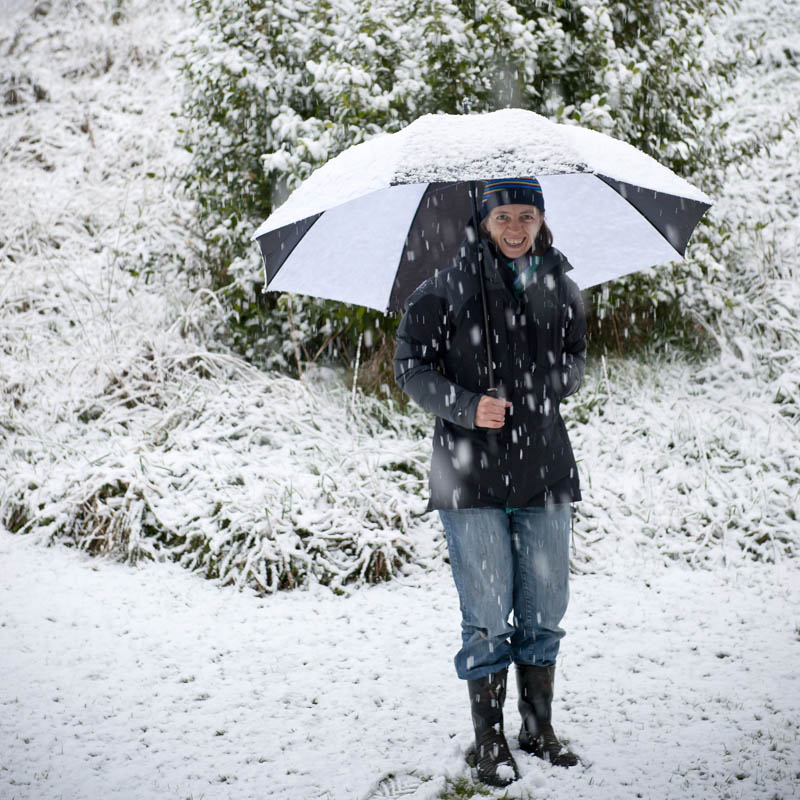
Rain! They said it was going to RAIN! (© All Rights Reserved)
Rain! They said it was going to RAIN!
OK, so the weather forecasters don’t always get it right…
(© All Rights Reserved)

From predicting whether it’s going to rain tomorrow, to developing seasonal weather forecasts, weather forecasting is a hugely complex and computationally intensive endeavour. As such, weather services are often some of the main users of supercomputers around the world. Weather forecasting activities include gathering raw weather data, analysing the data and developing intricate computer models to simulate natural weather systems. One of the (many) challenges of weather modelling is that natural weather and atmosphere systems are near-chaotic – small changes in boundary conditions can result in huge changes in outcome.

These difficulties, however, do not deter the good guys and gals at weather services around the globe who continually strive for more accurate and more timely weather forecasting. According to the US National Weather Service, for example, “lead time for flash flood warnings improved from 22 minutes in 1993 to 78 minutes in 2008. Accuracy over the same time period increased from 71 percent to 91 percent. Lead time for tornado warnings has increased from 6 minutes in 1993 to 13 minutes today. Tornado warning accuracy increased from 43 percent to 72 percent. Winter storm accuracy in 2008 was 89 percent with an average lead time of 17 hours. Since 1990, the Tropical Prediction Center’s 24 to 72 hour tropical storm forecast track errors have been reduced by more than 50%.”

These improvements are quite significant, and can potentially be the difference between life and death for communities in the path of an extreme weather event.

So spare a thought today for all the weather people through the ages who have dedicated their working lives to the holy grail of accurate weather forecasting. After the scorchingly hot, dry weather we’ve had for weeks now, they predicted rain for this week, and lo and behold, it has rained! 🙂

Showing some appreciation for the many wonders of Bubble Wrap

Today is Bubble Wrap Appreciation Day. And what a weird, wacky and fun invention it is!

With cushioning provided by hundreds of regularly spaced, air-filled plastic bubbles, it not only provides a really clever and practical solution for keeping packaged products safe and secure, but I’m sure if a survey had to be done on the most addictive toys ever, bubble wrap should no doubt rank quite high on the list. I’ve never met anyone who, when left alone with a piece of bubble wrap for a few minutes, did not start popping away at the hundreds of individual little plastic-encased air bubbles. Which is weird, when you think about it, because you’re effectively rendering the bubble wrap useless, destroying the very thing that makes it useful. But it’s such fun that you cannot stop!

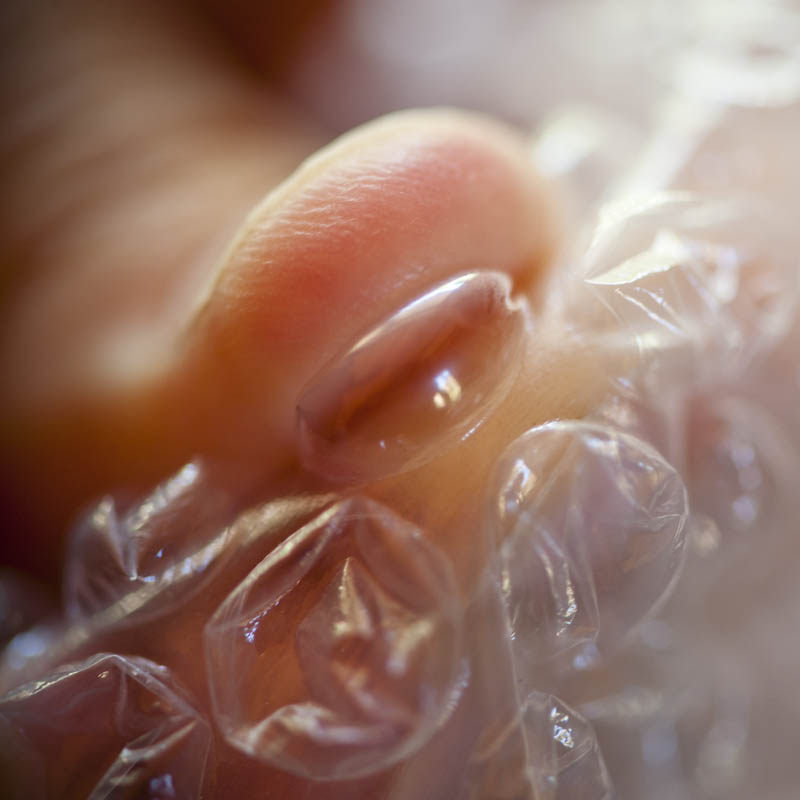
Bubble wrap addiction
It’s addictive! Doesn’t this just make you want to go and find a piece of bubble wrap and start popping?
(© All Rights Reserved)

Bubble wrap was invented in 1957 when two inventors, Alfred Fielding and Marc Chavannes, set out to develop 3-dimensional plastic wall-paper (by sealing two shower curtains together, capturing various different shaped air bubbles between the sheets). The concept failed, but their design proved to be a perfect packaging solution. Pursuing this business opportunity, Fielding founded the Sealed Air Corporation and started marketing the Bubble Wrap® brand.

Acknowledging the compulsion of bubble wrap popping, the Sealed Air Corporation’s corporate offices is said to have ‘stress relief boxes’ – containers filled with Bubble Wrap® for employees to pop. Another cute initiative from Sealed Air is their Annual Bubble Wrap® Competition for Young Inventors, where kids are encouraged to come up with new inventions using Bubble Wrap® in novel ways outside of packaging. Some amazing inventions from these competitions have included a floating garden (floating on water with the aid of bubble wrap), a disposable, low cost cell phone holder, a wrist cushion for people suffering from carpal tunnel syndrome, and “Petri Bubbles”, an inexpensive alternative to petri dishes in labs. (I told you kids make great inventors!)

An interesting fact (not verified) that I came across is that more than 250 Facebook pages are dedicated to Bubble Wrap® and its generic derivatives – more proof of the addictive appeal of this amazing product.

So go ahead, grab some bubble wrap and start popping – you know you want to!

Celebrating the art of handwriting

It’s Handwriting Day today. National Handwriting Day, to be exact, but as I’m prone to do, I’ll just ignore the ‘National’ bit, and claim this US day for the rest of us.

Handwriting – a unique expression of personality, with stylistic nuances making each person’s writing different. Sadly, writing is an art that seems to be fast dying away as we type our way through the day. Where people used to take pride in drafting artfully crafted hand-written letters, our modern-day fingers are much more adept at finding their way across a keyboard or touch-screen.

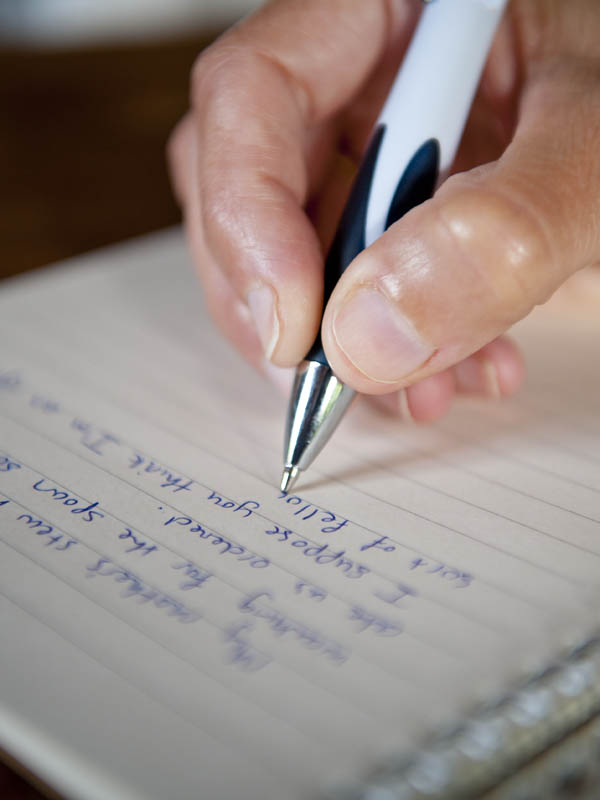
When last did you write an entire page of text by hand?(© All Rights Reserved)
When last did you write an entire page of text by hand?
(© All Rights Reserved)

Writing some Christmas cards a while ago, I was reminded again how bad and inconsistent my handwriting has become, and how quickly my hands started getting painfully tired. If I were to subject myself to a handwriting analysis right now, I’m sure there’d be serious questions asked about my character.

At least I don’t have to feel alone in the bad handwriting department – most doctors beat me by a country mile when it comes to illegible scribbling. I’ve never been able to understand why bad handwriting appears to be a prerequisite for entering the medical profession. Yet it seems to be the case – according to a 2007 article in Time Magazine, doctors’ sloppy handwriting directly resulted in the death of no less than 7000 people in the US per year (based on a July 2006 report from the National Academies of Science’s Institute of Medicine). According to the article, “…preventable medication mistakes also injure more than 1.5 million Americans annually. Many such errors result from unclear abbreviations and dosage indications and illegible writing on some of the 3.2 billion prescriptions written in the U.S. every year.”

If these are the figures for the US, imagine what it must be internationally!? If that is not a good argument to get doctors using tablets (tablet computers, I mean) and typing e-prescriptions, then I don’t know what is!

Whether you are a perfectly consistent scribe, or the proud owner of an illegible scribble, today is the day to celebrate your handwriting style – it’s one of the things that make you uniquely you. Perhaps Handwriting Day is just the time to make a commitment to writing more by hand – losing this special skill will surely be a terrible tragedy.

Felix Hoffmann and the invention of Aspirin

Our topic for today is Aspirin. It’s the birthday today of Felix Hoffmann (21 Jan 1868 – 8 Feb 1946), the German chemist and lead investigator at Bayer and Co who was responsible for the creation of aspirin.

Hoffmann’s interest in researching new pain medication was fueled by his father’s chronic rheumatism. At the time the best pain killer was salicylic acid (originally extracted from the bark and leaves of the willow tree) which caused some rather nasty stomach upsets and had had a really vile taste to boot.

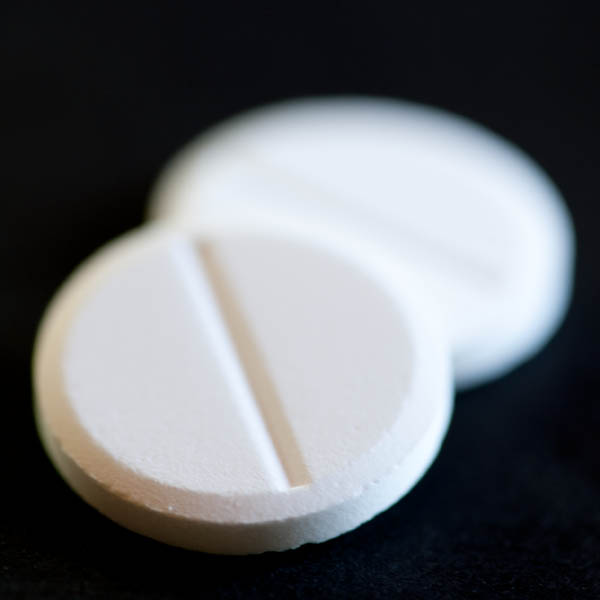
Aspirin - still one of the most popular medications in the world, more than a century after its invention.(© All Rights Reserved)
Aspirin – still one of the most popular medications in the world, more than a century after its invention.
(© All Rights Reserved)

In 1897, on 10 Aug, Hoffmann synthesised aspirin (acetylsalicylic acid), by acetylating salicylic acid with acetic acid. He was not the first to prepare acetylsalicylic acid, but what made the Bayer version superior was that the salicylic acid was in the form of salicin derived from Filipendula ulmaria (meadowsweet), which caused less digestive upset than pure salicylic acid. Clinical trials by Bayer showed the new drug provided effective pain relief, lowered fever and had anti-inflammatory properties.

In addition to the above benefits of aspirin, it has also been shown to have an antiplatelet  effect in blood. As such, long-term low doses of aspirin is an effective treatment to help prevent blood clot formation, heart attacks and strokes.

Of course, as with all medication, it’s not all positive. Some of the not-so-great side effects, particularly with aspirin taken orally, include potential gastrointestinal ulcers and stomach bleeding. Due to these side-effects, and more specifically the potential of Reye’s syndrome (a severe brain disease that can result from administering aspirin to children), it is no longer prescribed to treat flu, chickenpox etc in children and adolescents.

To this day aspirin remains one of the most widely used medications in the world, and it is estimated that annual consumption is around 40 000 tonnes. Even though Hoffmann’s name is on the aspirin patent, it was owned by Bayer and he received no financial share in its huge international success.

Postscript: To add a sinister twist to our story, even though official records show Felix Hoffmann as the lead investigator on the aspirin project, a Jewish chemist, Arthur Eichengrun, later claimed to have been the project lead, and that records of his contribution were expunged under the Nazi regime. Stranger things have happened at the time, and I guess that is a controversy that is unlikely to be clarified anytime soon.

Celebrating exploding food on Popcorn Day

Today, 19 January, is Popcorn Day, a day to celebrate one of nature’s fun foods – those crazy little corn kernels that, when exposed to heat, explode violently and morph into cushiony white snacks many times their original size.

We’ve all enjoyed popcorn, but have you ever wondered what makes ’em pop?

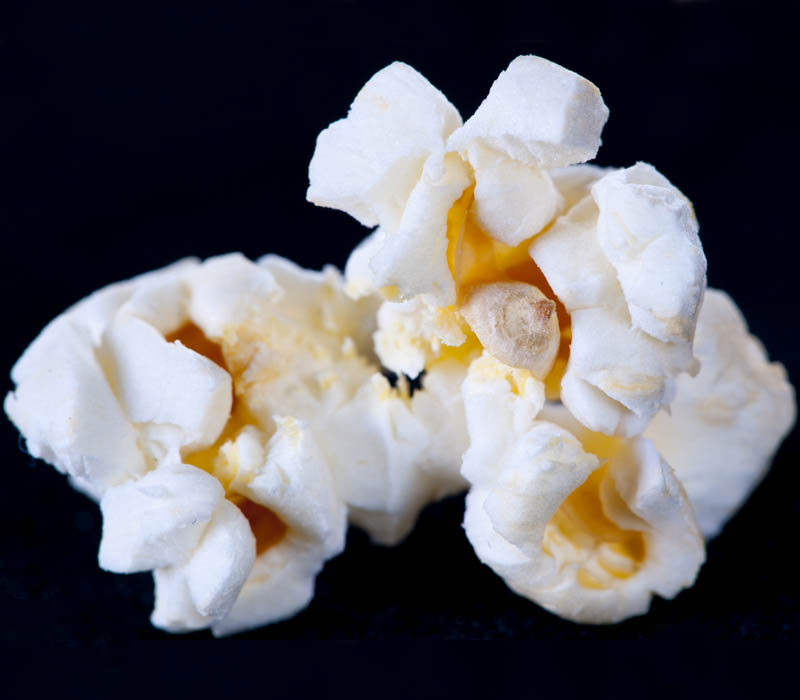
Exploding starch frozen in action. (© All Rights Reserved)
Each piece of popped popcorn is a totally unique example of exploding starch frozen in action.
(© All Rights Reserved)

The secret to popcorn’s popping ability lies in the composition of the kernel. The popcorn kernel consists of a hard, watertight outer shell, containing starch and a small amount of water and oil.

When the kernel is heated, the water inside tries to expand to steam, but the hard shell prevents this. The heat also gelatinizes the starch inside the shell. Once sufficient pressure has built up (to an incredible 930 kPa), the kernel bursts open in a violent explosion, freeing the steam and starch.

As the hot starch bursts out of the shell, it expands rapidly to as much as 50 times its original size. At the same time it experiences rapid cooling as it comes into contact with the air outside the shell.   It is this rapid cooling that sets the gelatinized starch into the familiar foamy popcorn puff.

So a popped popcorn is basically a starch explosion frozen in action!