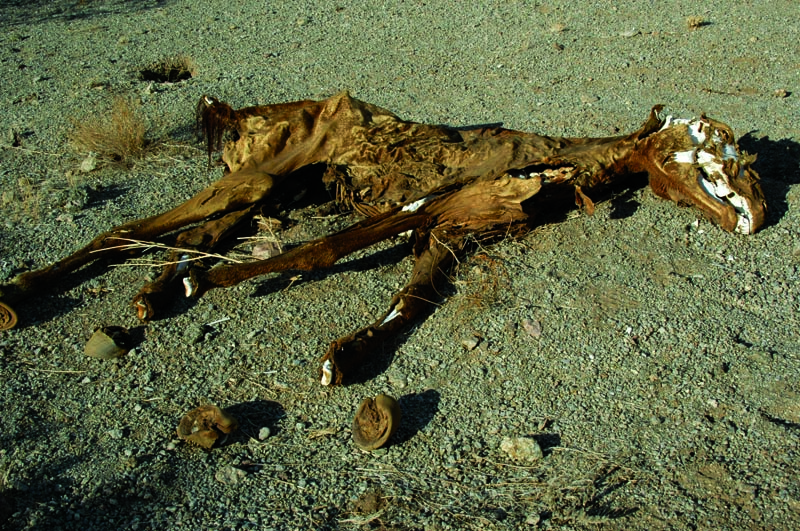
It is one of those almost-impossible-to-believe facts, but it is claimed that each year, an area of land three times the size of Switzerland is lost to desertification. That is almost 12 million ha or land turning into desert annually! (UNCCD, 2012)
To raise awareness about this shocking fact, and to promote ways of reversing the global growth in non-productive dryland, a World Day to Combat Desertification was introduced in 1995, to be celebrated annually on 17 June.
This year, the Day’s slogan is “Healthy soil sustains your life: Let’s go land-degradation neutral”. Not only is this a call to stress the severity of the situation, but also to reinforce the message that desertification needn’t be fatal, that solutions exist, and that it can be effectively tackled through strengthened community participation and cooperation at all levels.
Fertile soil is a critical non-renewable resource. Zero-net land degradation can be achieved when non-degraded soil is kept healthy and fertile, and degraded land is restored through reforestation, programmes to improve soil health etc. This is critical to help ensure international food security and alleviate rural poverty.
No matter where you are in the world, you can contribute to the fight against desertification. Planting trees or building terraces to combat soil erosion, contributing to soil enrichment programmes, even just doing your bit to combat climate change by practicing healthy green practices like recycling and reuse. It’s not someone else’s problem – your actions can make a real difference.
Its World Juggling Day! A day to marvel at the skill of all the jugglers out there, be it the ones who can magically keep multiple balls in the air, or those who are able to maintain a balance between different tasks and responsibilities – the master-multitaskers among us.
Juggling, at least in the traditional sense of the word, is all about objects in motion – as such, they are an intricate, entertaining demonstration of the laws of physics in action. Because of this fact, a number of jugglers have developed scientific juggling routines, where they teach and demonstrate fundamental laws of physics and mathematics through the art of juggling. I can’t help wishing I had a juggling maths teacher at school!
Did you know that juggling can actually stretch your brain? Neuroscientists from the University of Oxford did an experiment to study the effect of juggling on the brain. They took a group of non-juggler adults and measured a cross section of their brains with an fMRI scanner. Half of the group was then enrolled in a juggling course where they had to practice juggling for at least 30 minutes a day, and at the end of a six week training period the brains of the juggling group and the non-juggling control group were again scanned.
The results showed noticeable changes in the white matter of the brains of the juggling group, that is, the fibres that connect the different areas of the brain and that carry messages (electrical signals) between nerve cells.
What is important about this research is not so much that juggling is good for you, but that the adult brain still remains mobile and adaptable beyond childhood. The study shows that, instead of starting to degenerate in adulthood, its possible for the brain to continue to adapt and condition itself to operate more efficiently when faced with a new challenge. Juggling was chosen for the experiment because it’s a particularly difficult motor skill to master – precise body movements, tracking of fast-moving objects and peripheral vision – as such requiring extra effort from the brain.
Study leader, Dr Heidi Johansen-Berg, noted: “Knowing that pathways in the brain can be enhanced may be significant in the long run in coming up with new treatments for neurological diseases, such as multiple sclerosis, where these pathways become degraded.”
From light breezes to destructive gales, today is the day to celebrate wind in all its guises. Global Wind Day is all about discovering the possibilities wind holds for changing our world for the better.
Wind energy is one of the fastest growing forms of renewable, clean energy sources on the planet, with wind farms already operating in 75 countries, and exponential growth in technology to effectively harness the power of the wind.
With New Zealand being one of the most consistently windy countries in the world, it makes sense that it is very active in wind farming research and development. Having recently covered the New Zealand Wind Energy Conference, I was blown away by the level of wind energy related activity in the country. Wind currently provides about 5% of the country’s electricity, and at its current growth rate it is expected that this figure will rise to 20% by 2030. Considering the upward trend in energy consumption, this implies a massive increase in wind energy output over the next 20 years. Interestingly, given the consistency and reliability of New Zealand’s wind resource, NZ wind farms significantly outperform the international average.
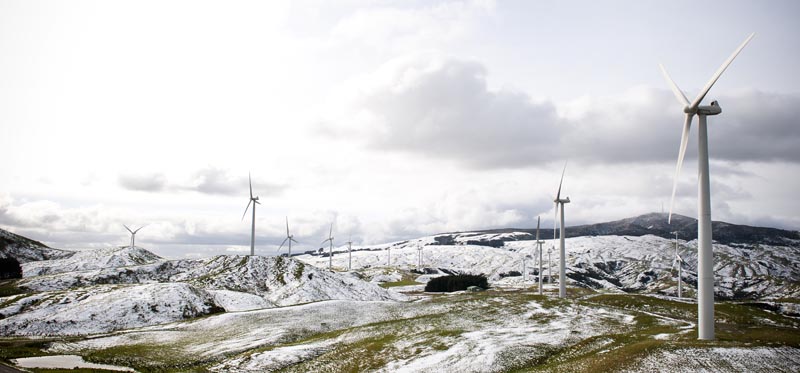
While detractors complain about the visual and noise impacts of wind farms, research results have largely refuted these arguments. (Living in the middle of New Zealand’s most active wind farming area, I find a hill covered in wind turbines aesthetically quite pleasing, to the extent that I can spend days looking for interesting new angles to photograph them!)
Wind energy has a number of very appealing features making it an environmentally sound choice for clean economic growth:
Wind never runs out, making it one of the most secure sources of electricity for future generations.
Since wind cannot be “owned”, investing in wind energy helps provide protection against the volatility of fossil fuel markets, where price and supply is dictated by political regimes.
Thanks to their small footprint, wind farms have minimal impact on land use. Land owners hosting wind farms can continue their normal farm activities with little need to adapt to the presence of wind farm infrastructure.
Wind farming has minimal environmental impact – it does not consume water, and produces no carbon dioxide, carbon monoxide, sulfur dioxide, nitrogen dioxide, mercury, radioactive waste, particulates, or any other type of air pollution, unlike fossil fuel power sources.
Given that the global need for electricity is real and is not going to go away any time soon, the rather serene sight of a set of wind turbines on a hill sure is a heck of a lot more appealing than a destructive, polluting fossil fuel plant on the horizon!
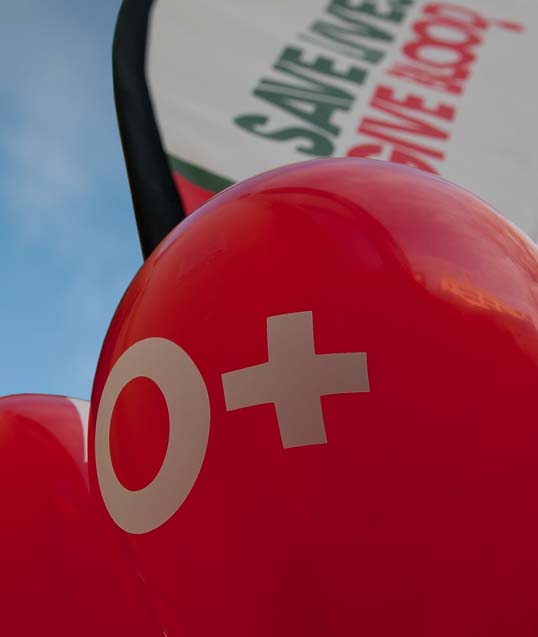
With today being World Blood Donor Day, I thought what better way to gather info for my blog than to immerse myself in the experience, and register to donate on the day. So I duly pre-registered, filled in some forms, and my booking for this morning was made.
Arriving at the blood bank, more forms had to be filled in, and having never donated blood in New Zealand before, I was quite surprised at some of the rules for eligibility to become a blood donor.
Most of the limitations (never give blood if you or your sexual partner(s) are HIV+, if you carry the Hepatitis B or C virus, if you’re on drugs, etc) seemed pretty sensible, as were the limitations placed on sexually promiscuous individuals. The geographic limitations, however, were more of an eye-opener, and this is where my good intentions sadly got derailed. It turns out that anyone who had previously lived in a region considered to be high-risk for HIV infection, were excluded from donating for 5 years. Excluded regions include the entire sub-Saharan Africa, large parts of Asia, as well as specific South American regions.
This exclusion is irrespective of sexual history, previous HIV test results, or any other ‘proof’ of not being HIV+. So, given my South African heritage I was greeted with a friendly but firm “No thank you”, putting a premature end to my intentions of becoming a blood donor in my adopted country. I can appreciate the logic of geographic exclusion, but cannot help finding it sad that, despite being married and faithful to my wife for many years, and having ‘passed’ a number of insurance and emigration-related HIV tests in the past, I am still considered to be a higher risk than someone earning a living as a prostitute in New Zealand (who only has to wait 1 year before being accepted as a donor).
What makes this experience more ironic, is that the international launch of World Blood Donor Day took place on 14 June 2004 in Johannesburg, South Africa.
Oh well… So unfortunately I cannot yet share with you any first hand donor experiences. What I can do, however, is to share some interesting facts and figures about blood and blood donation:
When “donating blood”, you can actually donate a number of different transfusable blood products – red blood cells, platelets, or plasma.
When donating a pint of “whole blood”, two to three of the above products can be produced from the donation, hence a single whole blood donation can save the lives of up to three people.
If you donate only specific blood components – red cells, plasma or platelets – the process is called apheresis. A single apheresis donation can produce one transfusable dose of platelets.
Of the blood products that can be donated, only plasma has a reasonably long shelf life – it can be frozen for up to two years and blood products made from plasma (e.g. cryoprecipitate) can be stored for up to two years.
Red blood cells must be transfused within 35 days from collection, while platelets have an even shorter shelf life – it has to be transfused within 5 days. As a result of this, there is a continuous need for fresh blood.
Healthy bone marrow is continuously working to produce new red blood cells, platelets and plasma in the body. Blood lost during a donation is replenished by the body over time – the fluids of the donated blood is replaced in just 24 hours. The red blood cells take a bit longer, and will be replaced within about 8 weeks. Typically a healthy donor can donate every three months.
In New Zealand, the treatment of cancer requires the biggest percentage of all donated blood products (22%), while blood needed to treat accident victims make up 18%. Mothers and babies receive about 7% of the blood supply.
The bottom line is that blood is always desperately needed, and it really is one of the easier ways of doing something truly amazing for your fellow man.
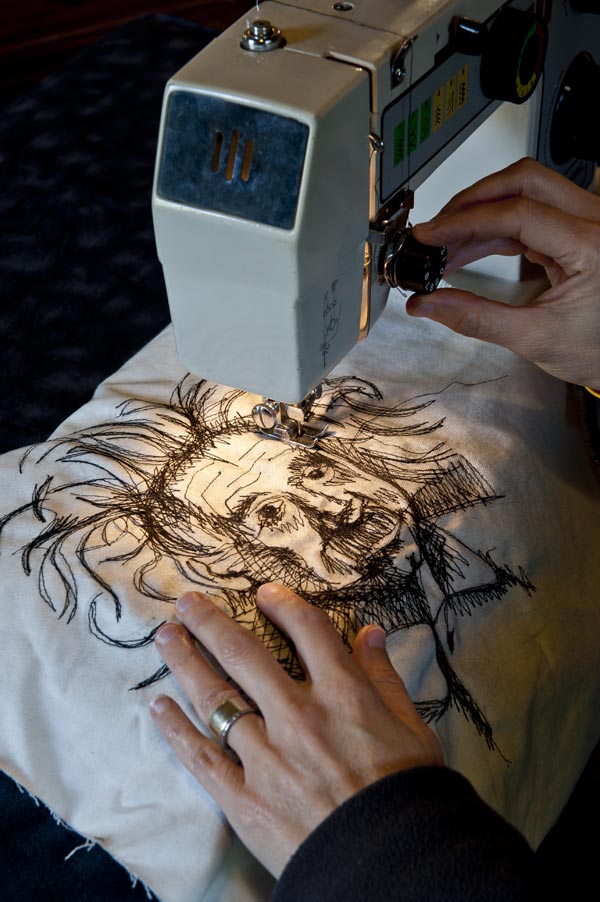
It’s Sewing Machine Day, the day to dust off and celebrate the trusty sewing machine, unsung hero of the industrial revolution.
Tracking the invention of the sewing machine is like reading the script of a sensational TV drama – a juicy tale of betrayal and deceit, industrial sabotage, stolen ideas and legal battles. The first patented design dates back to Thomas Saint in 1790, followed by various iterative improvements, but the first commercially viable design came some 60 years later, courtesy of Isaac Merritt Singer who combined ideas from various previous designs. Unfortunately he borrowed a bit too heavily from a patent by Elias Howe, who promptly took him to court for patent infringement, winning the case and forcing Singer to pay him a fee for every sewing machine sold.
Despite its checkered past, the sewing machine quickly gained popularity, vastly improving efficiency in the clothing and fabric industries. As such it played a key role in the industrialisation of the manufacturing sector.
By the early 20th century, the household sewing machine was a common appliance in almost every home. Most families had one in the house – used to sew new clothes, do alterations, or to mend worn or damaged clothes. This golden era of home sewing lasted almost a century, but with the proliferation of mass produced, super cheap clothes from giant producers like China, the trusty home sewing machine seems to be facing extinction.
So, with today being Sewing Machine Day, perhaps it is high time to dig out the old sewing machine, give it a good dusting and reacquaint yourself with the possibilities it offers. Or if you don’t have one, check out the secondhand stores or online auction sites – perfectly functional machines are going for a song.
Not only is home-sewing an excellent outlet for your inner Chanel or Versace – it is also a positive step towards green living. Sure, it may be quicker and easier to go out an buy a new $5 t-shirt, $30 jacket or a pair of $20 jeans, but Mother Nature will be so much better off if you rather patch up the elbows and cuffs on your old jacket, mend those torn jeans, and wear them for a while longer. The environmental impact of a few minutes of home sewing is negligible compared to the impact of creating a new garment in some industrial sweat-shop.
Like 150 years ago, when the sewing machine became a key player in the industrial revolution, it now has the potential to become a surprise hit in the green revolution.
Today is Corn on the Cob Day, a day to celebrate delicious, hearty, nutritious corn, served on the cob, as it should be.
Actually, when you think about it, corn is pretty cool… Not only is it a basic source of nutrition for millions of people the world over, it is also a key ingredient in a dizzying range of products, from antibiotics, adhesives and hand soap through to fireworks, dyes and cosmetics.
Given the widespread use of corn, it is not surprising that it has been one of the crops that have received most attention as far as the research and application of genetic modification is concerned.
I am no expert, and will not even attempt to express an opinion on the desirability or not of GM foods – it is a subject of widespread debate and many convincing arguments have been published for and against genetic modification.
“Plant breeding was once restricted to sexually compatible plants, and generations of offspring were selectively bred to create unique varieties. In fact, corn, along with rice and wheat—today’s global crop staples—would not exist without such techniques. With the goal of ever-widening the pool of genetic diversity, conventional plant breeding has gotten more technologically savvy in recent years. For example, realizing that natural mutants often introduce valuable traits, scientists turned to chemicals and irradiation to speed the creation of mutants. From test-tube plants derived from sexually incompatible crosses to the use of molecular genetic markers to identify interesting hereditary traits, the divide between engineering and genetics was narrowing long before kingdom boundaries were crossed.
But when geneticists began to explore microorganisms for traits of interest—such as Bacillus thuringiensis (Bt) genes that produce a protein lethal to some crop pests—they triggered an uproar over ethical, scientific, and environmental concerns that continues today.”
For or against, GM remains a fascinating subject, and considering the possibilities is quite mind-blowing. Genetic modification have been used to make crops more resistant to insects and other pests, more tolerant to pesticides, and higher in vitamin content.
Interestingly, increased beta carotene, vitamin C and folate in a white corn variety (M37W) from South Africa has resulted in corn with unusually bright orange kernels. Similarly, increasing the levels of beta carotene in rice have created golden rice. New colours and fragrances have also been introduced into flowers through genetic modification.
Imagine the possibilities in the creation of foods with increased visual appeal to the consumer – through changes in colour, taste, fragrance or size. Its scary, but I predict we may still see some very weird things in the supermarket aisles of the future!
Suffice to say, life as we know it would be very different without corn, in its natural or modified form.
On this day back in 1934, the world was introduced for the first time to Donald Fauntleroy Duck, when he made his first appearance in the cartoon “The Wise Little Hen”. The excitable, short-tempered but lovable duck went on to become one of the world’s favourite cartoon characters, and the de facto mascot for The Walt Disney Company.
So what does this have to do with science, you may ask? Well, Donald Duck often appeared in cartoons touching on traditionally non-cartoony subjects like politics, religion and, yes, science and mathematics.
In the 1959 cartoon “Donald in Mathmagic Land“, Donald accidentally stumbles into a magical land of mathematics – a land where trees have square roots, streams are filled with numbers, and a geometric bird recites the digits of Pi.
In the cartoon, Donald is shown that mathematics is not just for eggheads (his original opinion) and that it’s actually useful and even exciting. He meets, and plays some music with, Pythagoras and his secret band of Pythagorians, where he discovers that mathematics form the basis of musical scales. From Pythagoras he also receives a pentagram, through which he goes on to learn about the golden section and the golden rectangle, and how these appear in architecture (the Parthenon, etc) and art, such as the Mona Lisa.
Donald discovers that the golden section also shows itself in the human body and in nature, in flowers, plants and shells. He learns that mathematics even applies to sports and games, such as chess, baseball, basketball and billiards.
A cool bit of intertextuality in the cartoon comes through the inclusion of some themes from “Through the Looking Glass” by Lewis Carroll, who was himself also a mathematician.
In this cartoon Donald Duck, and with him millions of children, are introduced to the wonders of mathematics in a fun and humorous way, and the cartoon closes with the wonderful Galileo quote: “Mathematics is the alphabet with which God has written the universe”.
Here’s to you, Donald – Happy Birthday, you grumpy old duck!
It’s World Oceans Day, our annual opportunity to honor the great oceans linking us all, to celebrate what the ocean provides humanity, and also to appreciate its intrinsic value.
The theme for World Oceans Day 2012 is Youth: the Next Wave for Change, which firstly acknowledges the role the youth plays in the future of the ocean, and secondly reiterates the importance of everyone playing their part in securing the future of the world’s oceans for our youth.
One of the initiatives undertaken as part of this day is “Wear Blue, Tell Two“, an information sharing initiative where everyone is urged to dress in blue and to share with those around us two facts about the protection of the world’s oceans.
So, to do my bit (yes, I’m wearing blue jeans and a blue sweater, I promise!) herewith my two messages about our oceans:
1) The havoc caused by climate change
The ocean absorbs the majority of the heat added to the earth through climate change, resulting in a warmer ocean, which negatively impacts on the coral ecosystem and affects the life cycles of many fish species. This warmer water also decreases upwelling, which means that less nutrients reach the surface water, harming many marine ecosystems. Furthermore, the Poles are melting at an alarming rate, affecting polar marine environments and causing the ocean levels to rise, resulting in the loss of critical coastal habitats. It is also estimated that 10% of the global human population lives below 10m above sea level, which means about 700 million people are directly threatened by a significantly rising sea level. Not a pretty picture… And we haven’t even touched on the impact of the chemical changes in the oceans as a result of increased atmospheric greenhouse gases, or the changes in the ocean currents and the effects this is having on the earth’s climate.
(Source: Five Effects of Climate Change on the Ocean, http://www.conservation.org)
2) What we can do to help
Despite the doom and gloom of my first message, all is not irretrievably lost. Each of us can contribute our little bit to help the environment. By merely living more socially responsibly (recycling, reusing, limiting our carbon footprint) we can help slow global warming, which directly impacts on the wellbeing of our oceans. And there are numerous local and international initiatives we can get involved in. For example:
Conservation International runs an initiative called “Save a Mile” where you can make a donation to support initiatives focused on ocean conservation
The World Oceans Day website hosts the “Blue Planeteer” awareness drive, where you can volunteer to perform simple online tasks, such as tweeting about World Oceans Day or emailing a blog.
These are just two small online examples – if you live near the sea your local aquarium or nature centre may well have their own initiatives going, so ask around and get involved.
So spread the word on World Ocean Day – wear blue and tell two!
On this day, 120 years ago in 1892, Thomas Edison was granted a number of patents relating to electric lighting, including a “System of Electric Lighting”, an “Incandescent Electric Lamp”, a “System of Electrical Distribution” and an “Electric-Lighting System”. His initial design of the incandescent light bulb dates back even earlier, to 1879.
While inventions relating to the incandescent lamp had been suggested before Edison, his concept improved on previous attempts through the combination of three factors: a more effective and longer lasting filament, a higher vacuum than others were able to achieve, and a design that made power distribution from a centralized source economically viable.
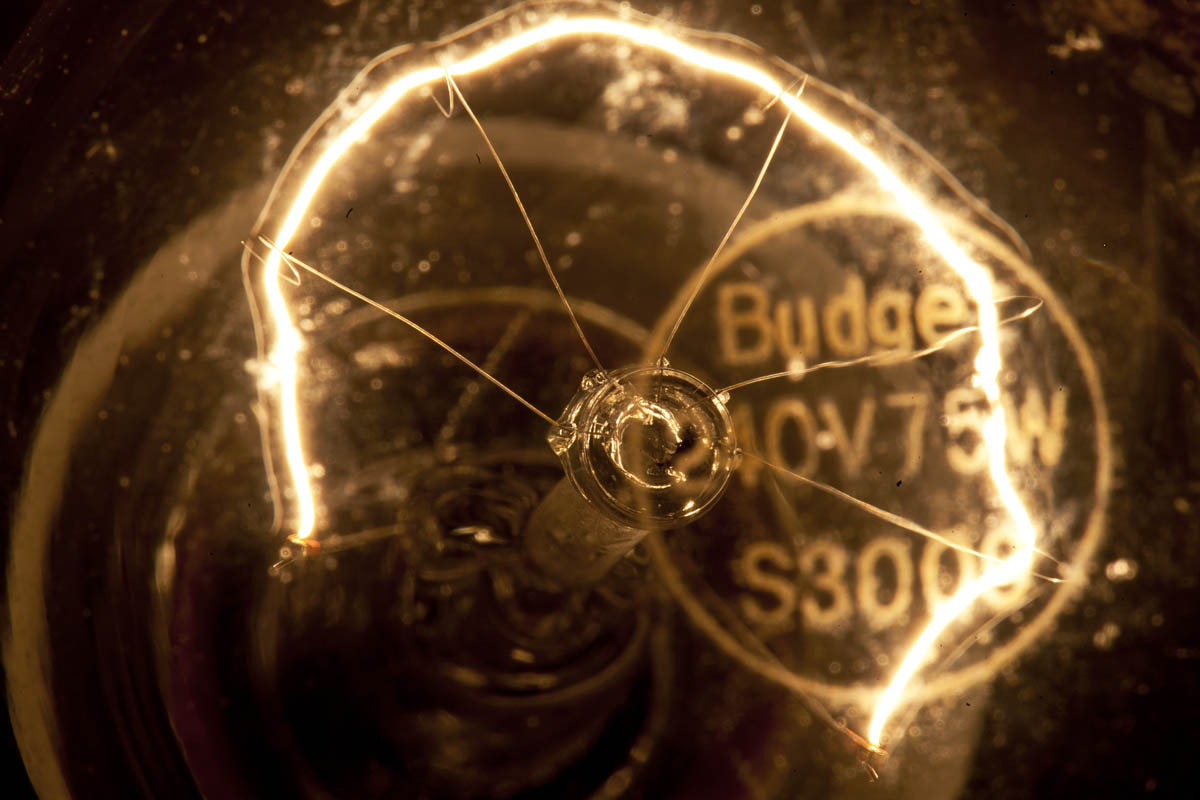
An incandescent bulb works by heating a filament to a high enough temperature that it starts glowing. This is done by passing an electrical current through the filament. To keep the filament from oxidizing and “burning out”, it is isolated in an enclosure (the glass bulb) that either contains an inert gas, or is evacuated to create a vacuum.
The invention of the incandescent light bulb fundamentally changed the world, providing convenient and affordable lighting to the masses. While it has since been surpassed by newer and more efficient lighting technologies like compact fluorescent lights and light-emitting diodes (LEDs), it still holds a place of prominence and importance within modern society.
Apparently it’s Drive-In Movie Day in the US, celebrating the first drive-in movie theater opening in Camden New Jersey in 1933. Today is also the commemoration of D-Day, 1944, when Allied troops invaded the beaches of Normandy, France. Hmmm, well yes.
Perhaps most significantly, today is the Transit of Venus – a once in a lifetime (ok, twice-in-125-years, to be exact) event when Venus will be seen passing in orbit between the earth and the sun. Next time this will happen will be 2117, so it’s a pretty big deal, but unfortunately things are looking heavily overcast here in NZ, so I’m not holding my breath.
No, instead of drive-in movies, invading troops or passing planets, today I’m celebrating fresh, clean and stain-free clothes! Because today in 1907, Persil was introduced by Henkel & Cie as the first commercially available “self-activated” washing powder in the world. The term self-activated refers to the fact that it combined bleach and soap in a single powder.
Interestingly, the name Persil comes from a combination of the two main chemical components in the detergent, namely sodium perborate (a bleaching agent) and silicate (a washing agent).
Before Persil came up with this innovative combination of bleach and soap, washing powder was really nothing more than crushed soap, which cleaned clothes but had little stain-removal effect. The sodium perborate in the new product oxygenated to form small bubbles that permeated the washing, and bleached out stains, replacing the earlier-used method of laying clothes out in the sun to bleach.
So not only did it save time, but also a lot of effort, making laundry day much less of a chore. And that must be worth celebrating!





 Sciencelens