Today is 22/7. No prizes for guessing what that means – yes, its Pi Approximation Day! March 14th (3.14) is also celebrated as Pi Day, but I kind of prefer the 22/7 version.
Pi, that curious little number that seems to pop up every time we start going in circles. A number so important that it even got its own name – not many numbers can claim that distinction!
Pi, or π, is a mathematical constant that represents the ratio between a circle’s circumference and its diameter, or π = C/d. It is what’s known as an irrational number – a number that cannot be expressed as a ratio between two integers. Being irrational, it has an infinite number of digits in its decimal representation, and it does not end with a repeating sequence of digits. It is also a trancendental number – a number that cannot be expressed with a finite sequence of algebraic operations.
In addition to its application in geometry and trigonometry, the constant π is found in many formulae, in a variety of sciences, including physics, number theory, thermodynamics, statistics, electromagnetism and mechanics.
The value of π (to 5 decimal places) is 3.14159, which is also approximately the value of 22 divided by 7. Calculating the value of π to higher and higher degrees of accuracy have been a challenge to mathematicians and computer scientists through the ages. Utilising the latest computing technology, the digital representation of π has now been calculated to more than 10 trillion digits. Memorising π to a large number of digits (a practice called piphology) is another challenge taken up by many pi-fanatics, and the current record stands at an astounding 67 890 digits, recited in 2005 in China by Lu Chao over a period of more than 24 hours. (Wow, he probably doesn’t get out much!)
A nice trick to remember the first few digits of pi is to use a poem or sentence where the lengths of the words correspond to the digits in pi. A well-known example, courtesy of English scientist James Jeans, is “How I want a drink, alcoholic of course, after the heavy lectures involving quantum mechanics”, cleverly representing pi’s first 15 digits.
Such is the pervasiveness of the number π that it can even boast numerous appearances in modern popular culture, from TV series (Simpsons, Twin Peaks) to novels (Carl Sagan’s “Contact”) to pop music (Kate Bush’s “Pi“).
Today we celebrate an event that may be somewhat unthinkable on this day to our Northern Hemisphere friends, especially everyone suffering in the US heat. On this day, back in 1983, the coldest ever temperature on earth was recorded at Vostok Station, Antarctica.
So how cold was it? Well, believe it or not, but exactly 19 years ago, the poor folk at Vostok Station recorded an icy -89.2°C (-128.6°F).
That’s pretty darn chilly… Certainly not a temperature you want to be exposed to for any length of time. Prolonged exposure to very cold temperatures has some interesting effects on the body.
Goose pimples and shivers
When the temperature falls below 8°C, touch sensitivity starts being compromised. Goose pimples appear, lifting hair follicles as the body tries to protect itself from the cold. Unfortunately this does not help us humans much, because we don’t have enough body hair to have a significant effect, but you can imagine how this can be very useful to an animal with a dense fur coat.
The next step is shivering, as the body starts to increase its heat production by working the muscles – shivering is said to increase the body’s heat production five-fold.
Skin discolouration
Your skin also starts doing strange things. From below 10°C, the surface blood vessels start to dilate (your skin becomes red). As it gets colder, the blood vessels start constricting again, to avoid heat loss through your extremities. This is followed by alternating periods of dilation and constriction, as the body tries to balance the supply of oxygen and nutrients to the skin, with protection from heat loss. So you may start sporting an interesting blend of red and white skin tones.
Frostbite
During extended exposure to cold, the body has to start making decisions on how its available heat should be best applied. In order to keep vital organs warm and avoid hypothermia, our extremities – fingers, feet, ears, nose – will be allowed to cool down, and blood flow to the extremities will also be reduced (to avoid blood cooling down as it circulates to the extremities). If this situation persists, it can lead to frost-bite, where the cells close to the skin surface start freezing and die. When heat returns to these cells, it results in swelling and blisters, forming a hardened black layer.
In extreme conditions, the frostbite can reach deeper layers of muscle and bone, resulting in permanent tissue damage, and ultimately amputation of body parts – a fate that has befallen many polar explorers and extreme mountaineers.
Hypothermia
Even though the body will do its best to maintain its core temperature, even sacrificing body parts in the process, it cannot keep up the heat if exposure to extreme cold continues. Next the body will slow its metabolism to minimize blood flow and limit energy loss. At some point, however, the body core starts to cool, and hypothermia sets in. Not much of a core drop is needed for this – clinically, hypothermia sets in when the core temperature drops below 35°C.
First symptoms of hypothermia include reduced motor skills and slowed reaction times. Judgment also becomes impaired, with the dangerous result that the hypothermia sufferer may lose the ability to recognize the condition.
As the core temperature drops below 35°C, the body starts shivering more violently in an attempt to reverse the situation. You get more sluggish and tired, with a strong need to give up and go to sleep. Below 32°C the shivering stops, as there is no energy to keep it going, resulting in even quicker heat loss.
Unconsciousness sets in when the body core drops below 30°C. In a final primal attempt to avoid death, the heart rate and breathing slows down severely, to the point where the metabolism is so slow that the sufferer basically appears to be dead.
Below 28°C cardiac arrhythmias become more common. If the sufferer has not yet died, the heart finally stops beating at a core temperature of about 20°C.
Gender and age matters
Interestingly, women can survive extreme cold better than men. The temperature gradient from skin to body core is greater in women – women’s bodies will more readily allow the skin surface and extremities to cool down, while better protecting core temperature. So while a woman may sooner suffer frostbite, her warm core is likely to keep her alive longer. Women also tent to have a higher subcutaneous fat percentage, further helping to protect core temperature.
Age also plays a role, with people losing their ability to handle extreme cold as they age. Children are more likely to recover from the effects of extreme hypothermia – their organs appear less likely to be affected by physical stresses that may be fatal to older organs.
Brrrrrr! Chilling stuff! Suddenly the chilly New Zealand mornings seem decidedy mild. Enjoy the weather – whether you’re basking in the northern summer heat or shivering in the southern winter cold. It could have been worse!
17 July is not just another ordinary day; just like a yellow pig is not just another ordinary pig. Today is Yellow Pig Day, the day to take a moment to honour the magical, mathematic pig that has inspired mathematicians for years.
The yellow pig was invented in the early 60’s by two Princeton maths students, Michael Spivak and David C. Kelly, while working on an assignment to identify unique properties of the number 17. After some intense mental gymnastics (and possibly a few pints at the local pub), when they finally ran out of ideas, they thought up the yellow pig, a mythical 17-eyelashed creature (that’s eight lashes on one eye and nine on the other, of course).
Spivak has since written a number of mathematics textbooks, where he regularly includes hidden references to yellow pigs, while David Kelly presents an annual mathematics summer school to high school students, where he introduces them to the “Cult of the Yellow Pig”. He is rumoured to be the proud owner of an impressive collection of between 289 (17 squared) and 4913 (17 cubed) yellow pigs. When asked about the significance of a yellow pig, he responds, “If you have to ask, you just won’t understand.”
Through Spivak and Kelly’s efforts, yellow pigs have become popular toys among mathematicians. Yellow Pig Day is also celebrated at various (mainly US) University Maths Departments, with the singing of yellow pig carols and the eating of yellow pig cake.
By the way, if you’re unsure about the significance of the number 17, look no further than this list. There’s no doubt the number is as special and magical as the yellow pig itself…
So today is World Snake Day. Which is quite an amusing thought when you live in New Zealand, where there are no snakes. OK, that’s not exactly true – we have snakes, but not of the terrestrial variety – a few sea snakes have been known to laze around our waters, if somewhat irregularly.
So why don’t we have any land snakes in New Zealand? After all, eons ago, when the New Zealand land mass first broke away from Australia, mammals and snakes were already sufficiently distributed that in all likelihood the island of New Zealand started out with its fair share of snakes.
It turns out that over many millions of years, as the climate changed and the world went through the most recent ice age, the snakes on the island, as well as most mammals, were unable to survive, and they became extinct. While numerous animal species have since been reintroduced to New Zealand, and various species of birds have returned, snakes were kept out, maintaining our current snake-free habitat. Similarly, many other island countries such as Hawaii, Ireland, Greenland and Antarctica are also snake-free.
To be honest, I am quite happy with the situation as is – like Indiana Jones, I’m not a great fan of the slimy suborder of Serpentes. Not that I don’t find them fascinating, but after numerous close encounters of the slithering kind, while hiking and travelling in Africa, I just prefer my current situation of having a significant body of water between me and them.
Here’s to all the snake lovers out there – I hope you have a great World Snake Day, wherever you are. Me, I think I’ll be snacking on some jelly snakes to celebrate.
Clerihew Day is the birthday of Edmund Clerihew Bentley (1875-1956), writer and poet, and most famously, the inventor of the ‘clerihew‘ – a light and frivolous 4-line biographical poetic form. The rhyme scheme is AABB, with lines of irregular length and meter. The first line typically contains a personal name, while subsequent lines are biographical in nature, but with a fun, lighthearted touch.
So, anyone else wants to have a go?
Please comment if you have a science clerihew!
Today we celebrate a device that, despite being a really innovative invention, has in the eyes of many become synonymous with anti-innovation in the kitchen.
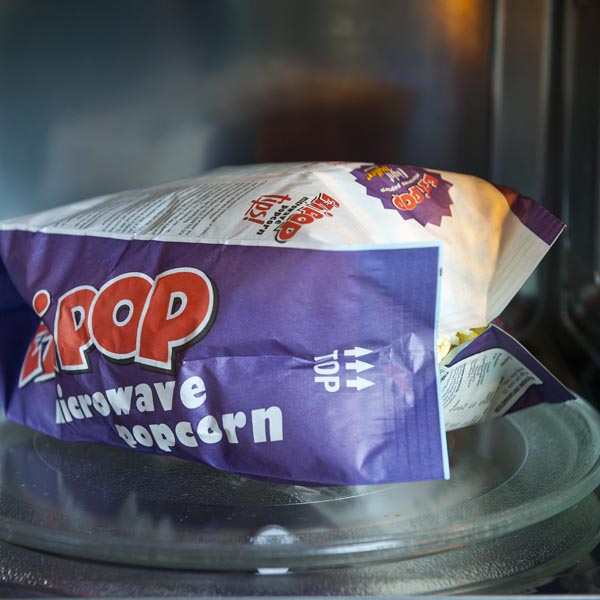
On this day, way back in 1894, Dr Percy Spencer (9 Jul 1894 – 7 Sep 1970) was born – the self-taught engineer who, many years later, invented the microwave oven. Before the Second World War, Sir John Randall and Dr HA Boot invented the magnetron tube, with which they were able to produce radar microwaves. A few years later, after the war, Percy Spencer was doing research work on the magnetron tube. While working on an active radar set he noticed that a chocolate bar in his pocket had melted – the radar melted the chocolate bar with microwaves. From this discovery, he started investigating the possibility of using microwaves to cook food. Spencer fed microwave power from a magnetron into a sealed metal box. When he placed food into the container and radiated it with microwave energy, the temperature of the food rose rapidly. This resulted in the development of the microwave oven – a device that cooks food with radiation used to heat polarised molecules in the food.
The first microwave ovens were large, heavy units, used in restaurants and commercial kitchens. The first countertop microwave was introduced in the mid sixties, soon becoming a ubiquitous device in kitchens around the world.
While the microwave oven is great for reheating food, cooking vegetables, and heating liquids like water or milk, it has not yet achieved any real culinary status. For the most part, it is used to heat ready-made, pre-packaged microwave meals. Microwave cooking can be quite healthy – it’s impact on nutrient content in food is said to be no worse than conventional heating, and thanks to the shorter preparation time, more micronutrients may be retained when microwaving vegetables, for example. But it is limited in application, and for the most part not capable of achieving the culinary effects and flavours created with conventional baking, frying, browning and slow-cooking. (Somehow I don’t expect to see Jamie Oliver’s “The Italian Microwave” or Nigella Lawson’s “The Microwave Goddess” hitting the cookery shelves anytime soon!)
So while the microwave oven definitely has it’s place in the modern kitchen, it may also probably stand trial as the primary culprit in thousands of dull, colourless and uninteresting meals prepared in the past 40 years.
Where do you stand – is the microwave oven an invention to celebrate, or to lament? Do you find it a must-have time-saver in the kitchen, or do you still have difficulty stomaching most microwave meals?
Pucker up, its Kissing Day, a day to celebrate all aspects of the age-old art of kissing.
Of course kissing is not just an art, so given that this blog has a bit of a science leaning, lets discuss the science of kissing, or philematology (my new word for the day!).
Philematology tells us that kissing not only activates and stimulates large parts of the brain, it also releases chemicals that reduce stress. Furthermore, the human lips apparently have the thinnest layer of skin on the body, and are more densely populated with sensory neurons than any other bodily region.
In a study on the chemical impact of kissing, Neuroscience Professor Wendy Hill from Lafayette College, Easton, Pennsylvania, studied 15 romantically involved couples before and after kissing and holding hands for 15 minutes. Their levels of oxytocin (a feel-good, ‘social bonding hormone’) and cortisol (a ‘stress hormone’) were measured before and after the kissing session. It was found that cortisol levels decreased in all subjects, while oxytocin levels increased in the men and decreased in the women. The oxytocin reduction in the women was quite a surprising result, but may have had to do with the fact that the experiment was conducted in an “unromantic” student health center, which may have had more of an inhibiting effect on the women than the men (who, lets face it, are normally not too fussed by their surroundings!).
In another project, this time by anthropologist Helen Fisher from Rutgers University in New Brunswick, New Jersey, a number of brain imaging studies were conducted to see how the brain reacts to kissing. Fisher believes kissing activates different chemicals that stimulate different regions of the brain, and more specifically different “primary brain systems”, involved in the human mating and reproduction process. The first of these systems is sex drive, primarily testosterone driven, which drives people to find a mate, or even multiple mates. The second, romantic love, motivates people to gravitate towards a particular mate, and the third, attachment, helps couples stay together so they can rear children. Kissing is considered to have beneficial effects on all these systems.
Fisher furthermore says that kissing is, at a basic level, about exchange of saliva. Men tend to be sloppier kissers, because this lets them transfer more testosterone to stimulate their partners’ sex drive. She also speculates that men might be able to assess a woman’s fertility by subconsciously analysing the levels of estrogen and other hormones in her saliva (but that sounds a bit like science fiction to me).
According to neuroendocrinologist Sarah Woodley, another important chemical that may be present in saliva is androstadienone, a mood-enhancing steroid that also plays a role in helping you focus. “It may not be a sex attractant, but it plays a role in enhancing responsiveness to other stimuli. It makes them feel better”, she explained.
So what to do with all this philematological knowledge? Well, the best advice on Kissing Day is probably to just put it all out of your mind and enjoy what the day has to offer. Just do it – you don’t want all this science to spoil the fun!
Today we celebrate the birthday of Dolly the Sheep (July 5, 1996 – February 14, 2003), the first mammal to have been successfully cloned from an adult cell.
Dolly was cloned at the Roslin Institute in Midlothian, Scotland. The technique used to clone her is called somatic cell nuclear transfer. It involves a cell being placed in a de-nucleated ovum, and when the two cells merge, it develops into an embryo. Originally code-named “6LL3”, Dolly was cloned from a mammary cell, which became the basis for her name. In the words of cloning scientist Ian Wilmut, “Dolly is derived from a mammary gland cell and we couldn’t think of a more impressive pair of glands than Dolly Parton’s”.
Dolly was born to three mothers – the ovum and the DNA were harvested from two different sheep, and a third carried the cloned embryo to term. Her birth placed the international spotlight firmly on cloning research, causing great controversy that still rages on today. Many scientific, governmental, religious and humanitarian organisations oppose cloning, with arguments ranging from the medical risks involved, to the protection of the sanctity of life, to the protection of the identity of the individual.
Dolly died young, at the age of 6, after developing a progressive lung disease typically prevalent in older sheep. After her death it was also revealed that she had developed premature arthritis. With many sheep living to twice her age, Dolly’s death re-ignited the debate over the health and life-expectancy of cloned animals. One of the arguments in the debate is that animals cloned from adult cells have shorter telomeres (the pieces of DNA that protect the ends of chromosomes) than other animals of the same age. Since telomeres naturally shorten as cells divide, they are, to some extent, a measure of age. It has been argued that, since Dolly was cloned from a six year old sheep, she was effectively born with a genetic age of six.
Since Dolly, many other large mammals have been cloned, including horses and cattle. Cloning can become a viable means of preserving endangered species, and potentially even reviving extinct species. In 2009, scientists in Spain succeeded in cloning a Pyrenean ibex, a wild mountain goat that had been officially extinct since 2000. While the animal died shortly after birth, it was considered the first successful cloning of an extinct species, showing a possible way forward in protecting endangered and recently extinct animals (using frozen tissue).
(I cannot help but wonder whether protecting our biodiversity and pursuing more sustainable ways of interacting with our planet, may not be a more proactive solution to the problem of more and more species being driven to extinction. But that’s another argument altogether.)
Cloning, in particular human cloning, has become a favourite topic in science fiction novels and movies, from the work of Aldous Huxley to the Star Wars series. This remains a highly sensitive topic, that is sure to continue being a point of public controversy for many years to come.
Not only is July 4th Independence Day in the US, it is also Independence from Meat Day. This day, originally created by the Vegetarian Awareness Network in Tennessee, has grown beyond its original US-only focus to being an international day for celebrating a meat-free diet and lifestyle.
Arguments for and against eating meat has raged for years, and while there has been many scientific studies published on the health benefits of a meat-free diet, many of these are inconclusive, given the huge variability on human diets both with and without meat. Also, many of the health risks posed by processed meat, for example, has more to do with the chemicals and fats introduced as part of the processing, than it has with the meat itself.
Much stronger arguments are made on moral grounds against the slaughter of animals for human consumption, and many great thinkers have made succinct arguments for a meat-free diet. In the words of outspoken vegetarian George Bernard Shaw, “Animals are my friends… and I don’t eat my friends.”
The fact of the matter is that, despite evolving as omnivores, the human mouth and gut is such that we don’t need meat in our diets. Our bodies can extract the necessary nutrients from a plant-based diet, as long as you take care to provide your body with good alternative sources of the proteins and other nutrients typically found in a meat-diet. Growing children require more protein in their diet than adults, so vegetarian children need to make extra sure they get all the required nutrients in sufficient doses.
Vegetarian or not – it can’t hurt enjoying a meat-free day every so often. So give it a go – celebrate your Independence from Meat, wherever you are.
Today in 1929, British scientist EA Murphy, who worked at the Dunlop Latex Development Laboratories in Birmingham, must have been a little bored, or mischievous, because he decided to whip up some latex rubber with a kitchen mixer. As is often the case with such seemingly arbitrary actions, he ended up inventing a product that, up to this day, has a huge impact in all our lives – foam rubber. It is said that Murphy’s colleagues were initially unimpressed, but this soon changed when they caught on to the amazing cushioning and shape retaining properties of this new invention, and it wasn’t long before foam rubber was used in motorcycle and car seats, mattresses and much more.
In its natural form, latex is a milky white liquid tapped from the trunks of rubber trees. This pure latex gets whipped up with water to create a thick froth. The froth is sometimes exaggerated using CO2 gas. Once frothy, the mixture is heated to the point of vulcanization (about 240°F) which results in the formation of long molecular chains with strong crosslinked bonds, giving the resultant foam rubber its ability to recover its shape after compression.
While the shape retention characteristics of foam rubber make it a very versatile substance, it does have some limitations. When it gets exposed to very high temperatures it will melt, and if its frozen it can shatter.
Now researchers at the National Institute of Advanced Industrial Science and Technology in Japan, have come up with a new carbon-based nanotube rubber that has even better shape memory than foam rubber, and that can withstand extreme temperatures without any negative effects.
The unique features of this new super-rubber make it ideally suited for use in extreme conditions like spacecraft and car shock absorbers. Incorporating it into clothing also means that you can have a truly non-wrinkle shirt. Perhaps most exciting is the electricity conducting abilities of the carbon nanotubes, which means that, if its used in shoes or shock absorbers, the material could theoretically harvest and store the electricity generated.
While high costs mean the large-scale application of these super-rubbers are still some way off, one can just imagine it becoming as pervasive as foam rubber over the next decades.








 Sciencelens