Page 13 of 18

Viva la difference – celebrating Left-Handers Day

So, today it’s a shout out to you if you’re one of those people who cannot help doing things a little differently – it’s Left-Handers Day!

Being left-handed is not always easy in a world designed for right-handers. Lefties, who make up about 10% of the world population, are continuously having to either contort themselves or get really innovative, being forced to use all sorts of right-handed gadgets and tools. But then again, that is what makes them feel just that little bit extra special, like being part of an exclusive, secret club.

Getting emotional about left-handedness.
(© All Rights Reserved)

So why are some people left-handed, some right-handed, and a very small group fully ambidextrous? No one knows for sure, but there are many theories on the matter, including that it may be genetic – a team of researchers from the Wellcome Trust Centre for Human Genetics at the University of Oxford, believe that they have discovered a gene that influences the chance of being left handed. The gene, called LRRTM1, seems to modify the development of asymmetry in the brain. According to the researchers, the ‘normal’ brain pattern, where the left-hand side of the brain controls speech and language, while the right-hand side controls emotion, is often reversed in left-handers, and LRRTM1 seems to control this development.

The LRRTM1 gene also seems to be associated with a slight increase in certain mental illnesses, like schizophrenia, but that’s another story.

Being a minority group that is said to be, statistically speaking, more intelligent than average, it’s not surprising that left-handers should enjoy collecting theories, statistics and research related to their lefthandedness. No wonder then, that a plethora of websites exist, dedicated to interesting leftie stats and theories.

One of the more interesting theories I’ve come across is that lefties appear to be more easy to scare than the rest of us. Researchers from the Queen Margaret University in Edinburgh exposed a group of volunteers to an eight minute clip from a scary movie (Silence of the Lambs), and then tested them for symptoms of post-traumatic stress disorder (PTSD). According to study leader, Dr Carolyn Cloudhary, “The prevalence of post traumatic stress disorder is almost double in left handers compared to right handers (…) It is apparent the two sides of the brain have different roles in PTSD and the right hand-side of the brain seems to be involved in fear. In people who are left handed, the right hand side of their brain is dominant, so it may have something to do with that.”

Hmm, definitely something to remember that the next time you want to play a practical joke on your favourite leftie friend!

To all the left-handers out there – the innovators, the scaredy-cats, the smarty-pants, the insomniacs, the dyslexics, the alcoholics, the multi-taskers, the creatives, the politicians, the magicians – have a great Left-Handers Day!


Give your feet some breathing space on Wiggle Your Toes Day

Are you wearing shoes all day? Forced to tuck your feet into constricting footgear for the sake of societal acceptance?

Well then today is the day to take a stand – kick off those shoes, kick back, and spend some quality time pampering your poor, abused feet – it’s Wiggle Your Toes Day. You can do yourself a huge favour by making a habit of going shoe-less on a more regular basis. It can make a world of difference to your health and general well-being.

Kick back, spread your toes and flex your feet – it’s good for you.
(© All Rights Reserved)

In a study by Phil Hoffman published in the Journal of Bone and Joint Surgery, the feet of barefooted and shoe-wearing cultures are compared, highlighting the severe injustices our feet are subjected to.

Genetically, the feet of shoe-wearing people are no different from those of barefooted cultures – we have not yet evolved to having shoe-shaped feet, and up to shoe-wearing age we’re all, pardon the pun, on pretty much equal footing. At this point, however, things take a serious turn for the worse for the shoe-wearers, as we start forcing our feet into shoes that are shaped to conform to some weird societal concept of beauty, rather than footgear that fit the natural form of the foot.

From years of constrictive shoe-wearing, the shape of the feet of shoe-wearing adults diverge completely from adults barefooted cultures. In barefooted people, feet tend to widen towards the toes, and the toes themselves are comfortably spread, with the big toe in particular being separated from it’s neighbour by a considerable interval. This helps with balance and flexibility. Shoe-wearing, however, constricts the spread of the front-foot, and in particular crowds the toes. This results in a narrower, more pointed foot-shape, with the toes close together and often even overlapping their neighbours.

Not only are our shoes the wrong shape, but they are also often too small, even for our already squashed feet. And if that’s not enough, there’s high-heeled shoes – fashion accessories that force the foot into an even more unnatural position, forcing the wearer to stand largely on the front-foot, which as a result has to bear more that it’s proportionate share of the body-weight. This leads to a shortening of the calf muscles to such an extent that many middle aged women cannot dorso-flex the foot to a right angle without bending their knees to relax the calf muscles.

So compared to the healthy, stable, wide, flexible and strong feet of barefooted people, the shoe-wearing cultures have given themselves deformed, pointy, inflexible, weakened, calloused, smelly feet and deformed muscles. Not too clever for a so-called advanced culture, are we?

And given that our feet play such a critical role in our overall health and well-being, is it any wonder that we suffer from so many ailments?  Crazy stuff indeed.

So, why don’t you do yourself a favour – kick off your shoes and wiggle your toes. And do this as often as you can. Even if your physical environment makes it difficult to go barefoot, at least opt for some non-constrictive sandals (or jandals, as we call them here in New Zealand), or even some loose-fitting sneakers.

Do this regularly, and your body will love you for it!

Blue skies, blue eyes – its the Tyndall effect

Tell me why the stars do shine 
Tell me why the ivy twines 
Tell me why the sky’s so blue 
And then I’ll tell you just why I love you…

Well, if you could have sung this little tune to the Irish physicist John Tyndall, born on this day back in 1820, he would have had some strong opinions, at least on the blue sky question.

In addition to many other achievements, Tyndall published studies on acoustic properties of the atmosphere and the blue colour of the sky – he suggested the colour was the result of the scattering of light by small water particles. He discovered that, when light passes through a substance containing small suspended particles, the shorter wavelengths (blue side of the spectrum) are scattered more than the longer, red wavelengths. Since the blue light is scattered in all directions, the substance appears blue.

This phenomenon became known as the Tyndall effect.

What we see as a lovely blue sky, John Tyndall saw as a scientific challenge.
(© All Rights Reserved)

Thus, a clear day-time sky is blue because molecules in the air scatter blue light from the sun more than they scatter red light. Towards sunset, when we look towards the sun, we see reddish colours, because the blue light has been scattered away from the line of sight.

The Tyndall effect also causes other interesting blue colourings in nature, including blue eyes, opalescent gemstones and the wings of some birds and butterflies. When colour is caused by scattering of light it is known as a structural colour, as opposed to a pigment colour.

Now about those stars and ivy…

(Source: Why is the sky blue?)

Celebrating creepy-crawlies on Spider-Man Day

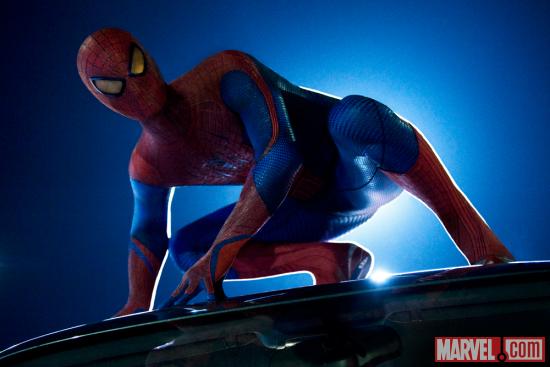
I’m not sure how official it is, but according to various sources on the web, today is Spider-Man Day. So, while I haven’t been able to find anything else of much interest, let’s just go with that, shall we?

(Source: Marvel Comics)

Spider-Man is undoubtably one of the best loved superheroes ever dreamt up by Marvel Comics. This has a lot to do with the fact that the person behind the suit, Peter Parker, was pitched as a bit of a nerd, an outsider with whom many young readers could easily relate.


But beyond this human touch, Spider-Man’s lasting fascination must have a lot to do with our fascination of the creepy crawly that gave the superhero his powers. Spiders (order Araneae), the eight legged, predatory anthropods that evokes equal measures of fascination and fear in the human race. More than 40 000 species of spiders have been identified, and they are one of the most widely distributed groups of organisms, having established themselves in an extremely diverse range of habitats.

Spiders – fascinating and just a little bit scary.
(© All Rights Reserved)

Indeed there is much to find fascinating, and scary, in spiders, from miniscule, deadly poisonous species to huge monsters that can take on birds and lizards. Spiders use various techniques to hunt and capture their prey – trapping them in sticky webs, camouflaging themselves to avoid detection, running down their prey, and more. Some hunting spiders even show signs of intelligence in their ability to develop new hunting tactics.

Spider venom, fatal to their prey and in many cases also deadly to humans, have been researched for use in medicine and natural insecticides.

And then there’s the incredible spider silk – the sticky stuff excreted by spiders that exceed almost all synthetic materials in terms of lightness, strength and elasticity, and without doubt the most fascinating ‘superpower’ in Spider-Man’s arsenal. Spider silk is composed mainly of protein. It is initially a liquid, and it hardens as a result of being drawn out, changing it’s internal protein structure. It’s tensile strength is similar to nylon and cellulose, but it’s way more elastic. Spiders use their silk for numerous applications, from webs to capture prey, to parachutes to carry them on the slightest breeze.

Fascinating creatures indeed, and definitely worthy of your admiration, whether you’re a Spider-Man fan or not!

Celebrating our fingerprints – hands off, criminals!

Today is a celebration only for those of us without criminal intentions – we commemorate the day in 1858 that fingerprints were used for the first time for identification purposes.

The little ridges on our skin that constitute our fingerprints. Not only are their patterns unique to each individual, but they also help with our sense of touch, and enable us to grip smooth and slippery surfaces.
(© All Rights Reserved)

The story goes that Sir Wiliam James Herschel, British Chief Magistrate of the Hooghly district in Jungipoor, India, began using fingerprints in contracts with the native people. On this day in 1858 he decided, on a whim, to get a local business man to make a hand-print on a contract, to “frighten [him] out of all thought of repudiating his signature.” This made a big impression on the signee, and Herschel ended up using the hand-print technique on all his contracts. In later contracts he scaled down the process, taking only the prints of the index and middle fingers. People who had their hand-prints captured on contracts, believed that it somehow bound them tighter to the contract than simply placing their signatures on the paper. So, interestingly, the first use of fingerprints were motivated more by superstition than by science.

Since these early, superstitious beginnings, things have of course changed a lot, with fingerprint-recognition developing into a precise science, and with personal identification technologies becoming the stuff science fiction fantasies are made of, including DNA profiling, also known as genetic fingerprinting..

A fingerprint, in the most basic sense, is an impression left by the friction ridges (raised portions of the epidermis) on the finger. These ridges exist on the skin to assist in our sense of touch – they help, for example, to amplify the sensation of a finger brushing against some surface, transmitting the sensory signals to the nerves. The friction ridges also assist us in gripping smooth and slippery surfaces.

The discovery that the little patterns on our fingers are unique, and that the prints we leave at a scene can identify us after the fact, was not good news to criminals, who were suddenly faced with the extra hassle of wiping off weapons, wearing gloves and more, to avoid identification. I guess some career criminals would give anything to contract the medical condition known as adermatoglyphia. People suffering from this condition have completely smooth fingertips, palms, toes and soles, without suffering any other known problems. While this must be a terrible affliction if you want to go through certain legal procedures that require fingerprint identification, it does equip you well for a life of crime. I am sure that law enforcers the world over would be happy to know that only four families suffering from  this condition have so far been identified.

For the rest of us, I guess staying on the right side of the law remains the best option. And at least our fingerprints make us better equipped to pick up smooth, slippery objects like an ice cold beer!

Fifty Shades of Red

Do you know why your blood is red? It’s thanks to the red blood pigment, haemin, which is one of the components of haemoglobin.

And why do I know this? Well, because I’ve been reading up on Hans Fischer, the German biochemist who was born on this day in 1881, and who was awarded the Nobel Prize for Chemistry in 1930, primarily for his work on the structure and synthesis of the blood pigment haemin. In 1929, Fischer succeeded in synthesising haemin, the deep red, oxygen-carrying, non-protein, ferrous component of haemoglobin, that gives blood its red colour.

It’s elementary, my dear Watson – this is definitely not alien blood.
(© All Rights Reserved)

Oxygen-rich blood (such as arterial blood and capillary blood) is bright red, as the oxygen intensifies the colour in the haemin. When oxygen is extracted from the blood it turns a darker shade of red – this can be seen in the veins, and in the blood collected during blood donation. The colour of blood can also be an indicator for certain medical conditions. Both carbon monoxide poisoning and cyanide poisoning result in bright red blood, as it inhibits the body’s ability to extract and utilise the oxygen in the blood. On the other hand, severe deoxygenation (which can be caused by respiratory diseases, cardiac disorders, hypothermia, drug overdose or exposure to high altitude) results in a condition called cyanosis, where the blood darkens to such an extent that it gets an almost purple-blueish hue, resulting in the skin turning a blue colour.

While the blood of humans and all vertebrates is always a shade of red (containing haemin), it’s interesting to note that it is, in a strange way, surprisingly close to being green! In addition to his work on blood pigmentation, Thomas Fischer also studied the components of the pigments in leaves. He found that, like the haemin in blood, the chlorophyll in leaves is a porphyrin, and that haemin and chlorophyll share a very similar structure, with only subtle differences.

All of this talk of blood, and red and green pigmentation, conjure scenes of science fiction in my mind – if haemin (that makes blood red), is so similar to chlorophyll (that makes leaves green), perhaps the idea of green-blooded aliens is not such a stretch. It makes scientific sense, right?

Anyway, let me rather stop before I get too carried away. Enjoy the day, and keep an eye out for those little green men! 🙂

Celebrating robots and robotics – useful and seriously cool!

Today we celebrate the birthday of Joseph F. Engelberger (born in New York City, July 26, 1925), physicist, engineer and entrepreneur, and the man often called the “Father of Robotics”.

Engelberger, together with inventor George Devol, was responsible for the development of the first industrial robot in the US, in the late 1950’s. The robot, called the Unimate, worked on a General Motors assembly line at the Inland Fisher Guide Plant in New Jersey in 1961. It picked up die castings from an assembly line and welded these to the auto bodies – a potentially dangerous task for humans.

The Unimate was inducted into the Robot Hall of Fame in 2003.

Engelberger and Devol also started Unimation, the world’s first robot manufacturing company. Engelberger was a strong advocate for robotic technology beyond the manufacturing plant, and promoted the use of robotics in fields as diverse as health care and space exploration.

Robots – not only are they useful in fields as diverse as manufacturing, transport, space exploration and surgery, but they make seriously cool toys!
(© All Rights Reserved)

The field of robotics deal with automated machines that can take the place of humans, performing various activities in potentially hazardous or tedious processes in fields ranging from manufacturing to research to exploration. While Engelberger was responsible for the first industrial robot, the robotics concept dates back much further, to the start of the 20th century. The word “robot” was first coined by the Czech writer Karel Čapek in 1920.  In 1942, science fiction writer Isaac Asimov published his “Three Laws of Robotics”, which constituted the first use of the term “robotics”.

A lot of effort and investment has gone into research and development in the field of human-machine interaction, covering areas such as voice synthesis, gesture recognition, and facial expressions.

I’m not sure if it’s thanks to the fact that robots are so popular in science fiction – often depicted as an intelligent, cunning and efficient super-race – but I find it difficult not to feel awed, and even a little threatened, when facing one of these amazing inventions.

Dōmo arigatō, Mr. Roboto!

Celebrating the birth of the first ‘test tube’ baby

Today we celebrate a special birthday – Louise Joy Brown, the world’s first ‘test tube’ baby, was born on this day back in 1978 in Oldham, England.

Louise was conceived in a petri dish (so technically she was a ‘petri dish baby’ rather than a ‘test tube baby’), via the process of in vitro fertilisation (IVF). Her parents, Lesley and John Brown, had been trying to conceive for nine years, but faced complications of blocked fallopian tubes.

The process was a great success, and amazingly, by the time Louise turned 21 in 1999, more than 300 000 babies had been born using similar IVF techniques.

Louise’s IVF was performed by Dr Robert Edwards of Cambridge, who had previously successfully performed similar procedures with animals. He was assisted by gynaecologist Patrick Steptoe, who was already the Browns’ doctor. Edwards was awarded the 2010 Nobel Prize in Medicine for his contributions in the field of reproductive medicine.

The Latin term ‘in vitro’ is used for any biological process that occurs outside the organism it would normally be occurring in.
(© All Rights Reserved)

In vitro fertilisation is a procedure where an egg cell gets fertilised by sperm outside the body. After successful fertilisation, the fertilised egg (zygote) gets transferred to the patient’s uterus in order to continue developing like a normal pregnancy.

The term in vitro (Latin: ‘in glass’) came about to describe a procedure that specifically occurred in a glass container (such as a test tube or petri dish), but its use has been extended to refer to any biological procedure that occurs outside the organism it would normally be occurring in.

Louise Brown got married in 2004, and her own son, conceived naturally, was born in late 2006. Happy 34th birthday, Louise!

Have you heard the one about…?

Today is ‘Tell an Old Joke Day’.

It is also the day we commemorate the death of Sir James Chadwick (20 Oct 1891 – 24 Jul 1974), who was awarded the 1935 Nobel Prize for Physics for the discovery of the neutron.

So I guess my old joke for this special day kind of selects itself…

A neutron walks into a bar…
(© All Rights Reserved)

A neutron walks into a bar and orders a whisky.
The bartender pours him a stiff one.
“How much do I owe you?”, the neutron asks.
“For you?” replies the bartender, “no charge!”

Pervasive or Invasive: the Birth of Ubiquitous Computing

Today we celebrate the birthday of Mark David Weiser (23 Jul 1952 – 27 Apr 1999), the visionary American computer scientist who first coined the term ‘Ubiquitous Computing’.

Weiser, who worked as Chief Technologist at XEROX PARC, came up with the term in 1988, describing a future scenario where personal computers will be largely replaced by a distributed network of interconnected “tiny computers” embedded in everyday items like toasters, fridges, photocopiers, phones, couches etc, turning these into “smart” objects. Sound familiar?

While Weiser’s scenario has not come to full fruition yet, things are definitely moving in that direction. Smart phones are already a common sight, smart TV’s are popping up all over the place, connectivity and interconnected devices is becoming the norm… It certainly no longer requires a stretch of the imagination to visualise a world of ubiquitous computing, or ‘pervasive computing’, ‘ambient intelligence’, or ‘everyware’, as the paradigm has also been described.

The common site of a shopping list stuck up on the fridge may soon be a thing of the past, with your future fridge likely to interact with the rest of the kitchen, checking your supplies and auto-ordering any depleted groceries.
(© All Rights Reserved)

While the concept sounds daunting – computers everywhere, no getting away from it, etc – Weiser actually described it as the era of “calm technology”, where technology recedes into the background of our lives. He defined it as “machines that fit the human environment instead of forcing humans to enter theirs”. So the idea is that while you will continually engage with numerous computing devices, this will happen in a largely unobtrusive manner, allowing you to go on with your life. The fully connected environment also implies a greater degree of location independence, so you won’t necessarily be stuck at a desk behind a computer screen – this is already happening, with the shift from desktops to laptops to tablets and cloud computing.

Of course the idea of computers fitting in with, rather than changing, the human environment, is a bit of a false utopia. While smart phones definitely adapt more to the human environment than, say, a laptop computer, it does fundamentally chance the way humans act and operate – simply look at a group of school children with their smart phones, and compare that to the pre-mobile-phone scenario.

Like it or not, the pervasiveness of computers and computing devices are unlikely to disappear any time soon. The question is in which direction the pervasive-invasive balance will tip, and how things will progress along the man-serving-machine-serving-man continuum.

Where do you see us heading?