Page 3 of 5

Artificially green – celebrating the synthesis of chlorophyll

Today seems to be one of those ordinary days in history – at a cursory glance, nothing seriously bad happened, but nothing too exciting either.

Well, I am no chemist, but the fact that chlorophyll A was for the first time synthesised in a laboratory on this day back in 1960, is probably pretty exciting. Its chlorophyll, after all – the abundant green stuff which allows plants to absorb energy from light, and through the process of photosynthesis, fuel much of our planet.

The organic chemist responsible for this achievement was Robert Burns Woodward, from the Converse Memorial Laboratory at Harvard University. For this, and his other work in the field of organic synthesis, Woodward was awarded the 1965 Nobel Prize in Chemistry.

Chlorophyll – fuelling our planet.
(© All Rights Reserved)

Talking about synthesized chlorophyll and photosynthesis, I read an interesting 2011 Economist blog post, Babbage Science and Technology, about work being done around artificial photosynthesis and the creation of the “artificial leaf”. The science-fiction style scenario envisaged from this is a world where roofs of city buildings etc can be covered with “artificial trees” replicating the photosynthesis process to create hydrocarbon fuel directly from sunlight. These “forests” could help offset the emission of carbon dioxide from fossil fuels, and create an unlimited supply of fuel for transport – a magical concept.

In the USA, hundreds of millions of dollars are being spent in research laboratories in California etc working, in the words of President Obama, on “developing a way to turn sunlight and water into fuel for our cars”.

The potential energy produced by the sun is vast – apparently the energy from the sun hitting the earth in a single hour, exceeds all the energy consumed by humans in an entire year! Imagine if a significant portion of that energy could be harvested in a commercially viable manner. Currently solar energy (in the form of sustainable biomass) provide less that 1.5% of our energy needs, with solar panels contributing less than 0.1%.

Current solar power generators suffer from the fact that the supply of sunlight is not constant, and energy has to be stored in batteries – a wasteful process. What scientists are working on (and what chlorophyll has been quietly doing for millions of years), is to turn the sunlight directly into chemical fuel – a potentially huge paradigm shift in the harvesting of solar energy.

While scientists have already been able to efficiently create fuel from sunlight in laboratory conditions, the problem is that it cannot yet be done at an economically viable cost. The technology is also highly fragile, nowhere near the robustness required for continuous commercial implementation.

So they are looking at nature for inspiration, and more specifically chlorophyll. In the words of Babbage, “chlorophyll acts as a catalyst that drives the oxidation-reduction reaction between carbon dioxide and water to produce carbohydrates and oxygen. In the pursuit of the artificial leaf, then, the main task is to find catalysts that can mimic the intricate dance of electron transfers that chlorophyll makes possible.”

Amazing research is being conducted on this topic, creating and studying different light absorbers, chemical catalysts and membranes to support these. And interestingly, it appears one of the wild cards in this research race is a small research group from Massey University down here in New Zealand. A research team at the university’s Nanomaterials Research Centre, led by Wayne Campbell, has produced a porphyrin dye that works with solar cells based on titanium dioxide. In the lab, these cells are reported to generate electricity 10 times more economically than conventional photovoltaic panels.

I have been unable to find any information on the current status of this research (much of the published results are about 5 years old), but potentially, these porphyrin dyes can become an economically viable catalyst for producing solar fuel for cars and electricity for homes.

It’s exciting stuff, and potentially huge for a greener future (even if some of the green may be artificial)!

Blown away on Global Wind Day

From light breezes to destructive gales, today is the day to celebrate wind in all its guises. Global Wind Day is all about discovering the possibilities wind holds for changing our world for the better.

Wind energy is one of the fastest growing forms of renewable, clean energy sources on the planet, with wind farms already operating in 75 countries, and exponential growth in technology to effectively harness the power of the wind.

With New Zealand being one of the most consistently windy countries in the world, it makes sense that it is very active in wind farming research and development. Having recently covered the New Zealand Wind Energy Conference, I was blown away by the level of wind energy related activity in the country. Wind currently provides about 5% of the country’s electricity, and at its current growth rate it is expected that this figure will rise to  20% by 2030. Considering the upward trend in energy consumption, this implies a massive increase in wind energy output over the next 20 years. Interestingly, given the consistency and reliability of New Zealand’s wind resource, NZ wind farms significantly outperform the international average.

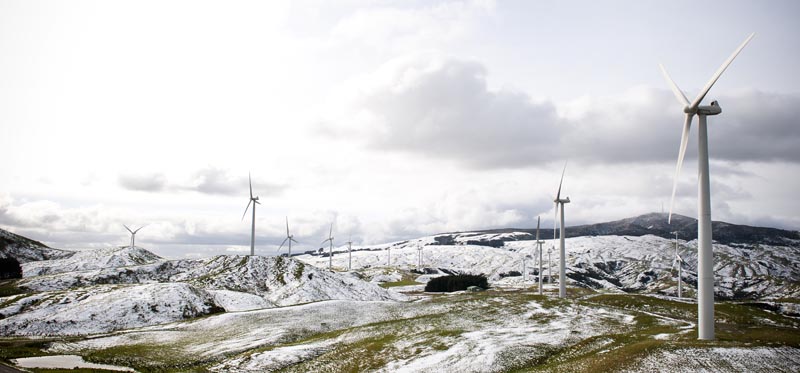
While detractors complain about the visual and noise impacts of wind farms, research results have largely refuted these arguments. (Living in the middle of New Zealand’s most active wind farming area, I find a hill covered in wind turbines aesthetically quite pleasing, to the extent that I can spend days looking for interesting new angles to photograph them!)

An imposing sight, wind energy embodies New Zealand’s “100% pure” reputation.
(© All Rights Reserved)

Wind energy has a number of very appealing features making it an environmentally sound choice for clean economic growth:

  • Wind never runs out, making it one of the most secure sources of electricity for future generations.
  • Since wind cannot be “owned”, investing in wind energy helps provide protection against the volatility of fossil fuel markets, where price and supply is dictated by political regimes.
  • Thanks to their small footprint, wind farms have minimal impact on land use. Land owners hosting wind farms can continue their normal farm activities with little need to adapt to the presence of wind farm infrastructure.
  • Wind farming has minimal environmental impact – it does not consume water, and produces no carbon dioxide, carbon monoxide, sulfur dioxide, nitrogen dioxide, mercury, radioactive waste, particulates, or any other type of air pollution, unlike fossil fuel power sources.

Given that the global need for electricity is real and is not going to go away any time soon, the rather serene sight of a set of wind turbines on a hill sure is a heck of a lot more appealing than a destructive, polluting fossil fuel plant on the horizon!

Going Green on Sewing Machine Day

It’s Sewing Machine Day, the day to dust off and celebrate the trusty sewing machine, unsung hero of the industrial revolution.

Tracking the invention of the sewing machine is like reading the script of a sensational TV drama – a juicy tale of betrayal and deceit, industrial sabotage, stolen ideas and legal battles. The first patented design dates back to Thomas Saint in 1790, followed by various iterative improvements, but the first commercially viable design came some 60 years later, courtesy of Isaac Merritt Singer who combined ideas from various previous designs.  Unfortunately he borrowed a bit too heavily from a patent by Elias Howe, who promptly took him to court for patent infringement, winning the case and forcing Singer to pay him a fee for every sewing machine sold.

Despite its checkered past, the sewing machine quickly gained popularity, vastly improving efficiency in the clothing and fabric industries. As such it played a key role in the industrialisation of the manufacturing sector.

By the early 20th century, the household sewing machine was a common appliance in almost every home. Most families had one in the house – used to sew new clothes, do alterations, or to mend worn or damaged clothes. This golden era of home sewing lasted almost a century, but with the proliferation of mass produced, super cheap clothes from giant producers like China, the trusty home sewing machine seems to be facing extinction.

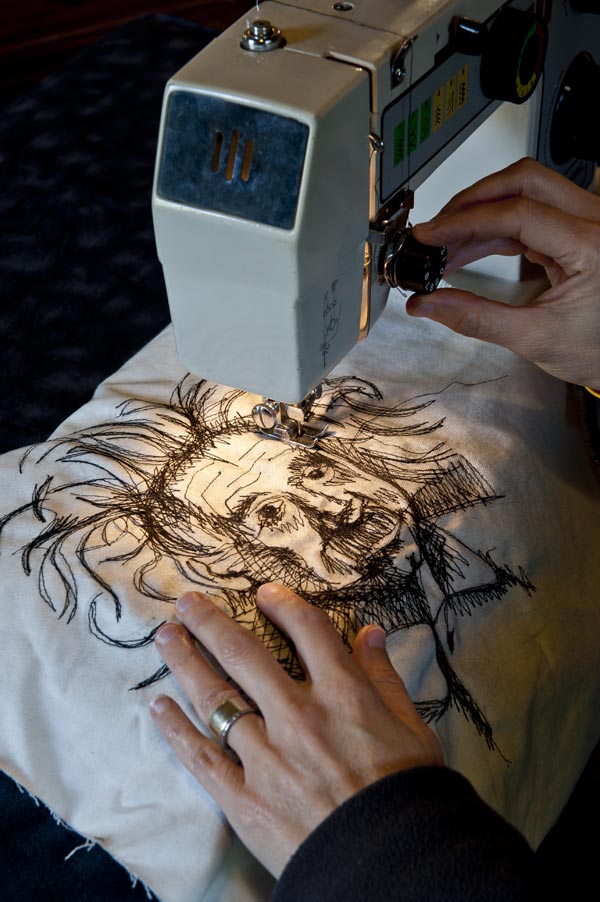
Scientific sewing? Even a basic sewing machine offers many more creative opportunities than just shortening a pair of pants.
(© All Rights Reserved)

So, with today being Sewing Machine Day, perhaps it is high time to dig out the old sewing machine, give it a good dusting and reacquaint yourself with the possibilities it offers. Or if you don’t have one, check out the secondhand stores or online auction sites – perfectly functional machines are going for a song.

Not only is home-sewing an excellent outlet for your inner Chanel or Versace – it is also a positive step towards green living.  Sure, it may be quicker and easier to go out an buy a new $5 t-shirt, $30 jacket or a pair of $20 jeans, but Mother Nature will be so much better off if you rather patch up the elbows and cuffs on your old jacket, mend those torn jeans, and wear them for a while longer.  The environmental impact of a few minutes of home sewing is negligible compared to the impact of creating a new garment in some industrial sweat-shop.

Like 150 years ago, when the sewing machine became a key player in the industrial revolution, it now has the potential to become a surprise hit in the green revolution.

It’s (genetically modified?) Corn on the Cob day

Today is Corn on the Cob Day, a day to celebrate delicious, hearty, nutritious corn, served on the cob, as it should be.

Actually, when you think about it, corn is pretty cool… Not only is it a basic source of nutrition for millions of people the world over, it is also a key ingredient in a dizzying range of products, from antibiotics, adhesives and hand soap through to fireworks, dyes and cosmetics.

Given the widespread use of corn, it is not surprising that it has been one of the crops that have received most attention as far as the research and application of genetic modification is concerned.

Who can say no to deliciously fresh, steaming corn on the cob, served with a lump of butter? Imagine corn genetically modified for increased visual impact – perhaps not as far-fetched as it looks… And I’m sure it will win the kids over!
(© All Rights Reserved)

I am no expert, and will not even attempt to express an opinion on the desirability or not of GM foods – it is a subject of widespread debate and many convincing arguments have been published for and against genetic modification.

In a sense, GM is an extension of selective breeding, a practice that is as old as farming.  In her article “Genetically Modified Corn – Environmental Benefits and Risks“, Virginia Gewin states:

“Plant breeding was once restricted to sexually compatible plants, and generations of offspring were selectively bred to create unique varieties. In fact, corn, along with rice and wheat—today’s global crop staples—would not exist without such techniques. With the goal of ever-widening the pool of genetic diversity, conventional plant breeding has gotten more technologically savvy in recent years. For example, realizing that natural mutants often introduce valuable traits, scientists turned to chemicals and irradiation to speed the creation of mutants. From test-tube plants derived from sexually incompatible crosses to the use of molecular genetic markers to identify interesting hereditary traits, the divide between engineering and genetics was narrowing long before kingdom boundaries were crossed.

But when geneticists began to explore microorganisms for traits of interest—such as Bacillus thuringiensis (Bt) genes that produce a protein lethal to some crop pests—they triggered an uproar over ethical, scientific, and environmental concerns that continues today.”

For or against, GM remains a fascinating subject, and considering the possibilities is quite mind-blowing. Genetic modification have been used to make crops more resistant to insects and other pests, more tolerant to pesticides, and higher in vitamin content.

Interestingly, increased beta carotene, vitamin C and folate in a white corn variety (M37W) from South Africa has resulted in corn with unusually bright orange kernels. Similarly, increasing the levels of beta carotene in rice have created golden rice. New colours and fragrances have also been introduced into flowers through genetic modification.

Imagine the possibilities in the creation of foods with increased visual appeal to the consumer – through changes in colour, taste, fragrance or size. Its scary, but I predict we may still see some very weird things in the supermarket aisles of the future!

Suffice to say, life as we know it would be very different without corn, in its natural or modified form.

Happy Birthday to Donald, the Mathmagical Duck

On this day back in 1934, the world was introduced for the first time to Donald Fauntleroy Duck, when he made his first appearance in the cartoon “The Wise Little Hen”.  The excitable, short-tempered but lovable duck went on to become one of the world’s favourite cartoon characters, and the de facto mascot for The Walt Disney Company.

So what does this have to do with science, you may ask?  Well, Donald Duck often appeared in cartoons touching on traditionally non-cartoony subjects like politics, religion and, yes, science and mathematics.

Donald Duck is no stranger to the magical world of mathematics
(© All Rights Reserved)

In the 1959 cartoon “Donald in Mathmagic Land“, Donald accidentally stumbles into a magical land of mathematics – a land where trees have square roots, streams are filled with numbers, and a geometric bird recites the digits of Pi.

In the cartoon, Donald is shown that mathematics is not just for eggheads (his original opinion) and that it’s actually useful and even exciting.  He meets, and plays some music with, Pythagoras and his secret band of Pythagorians, where he discovers that mathematics form the basis of musical scales.  From Pythagoras he also receives a pentagram, through which he goes on to learn about the golden section and the golden rectangle, and how these appear in architecture (the Parthenon, etc) and art, such as the Mona Lisa.

Donald discovers that the golden section also shows itself in the human body and in nature, in flowers, plants and shells.  He learns that mathematics even applies to sports and games, such as chess, baseball, basketball and billiards.

A cool bit of intertextuality in the cartoon comes through the inclusion of some themes from “Through the Looking Glass” by Lewis Carroll, who was himself also a mathematician.

In this cartoon Donald Duck, and with him millions of children, are introduced to the wonders of mathematics in a fun and humorous way, and the cartoon closes with the wonderful Galileo quote:
“Mathematics is the alphabet with which God has written the universe”.

Here’s to you, Donald – Happy Birthday, you grumpy old duck!

World Oceans Day

It’s World Oceans Day, our annual opportunity to honor the great oceans linking us all, to celebrate what the ocean provides humanity, and also to appreciate its intrinsic value.

World Ocean Day is a day for celebration, but also a day to start spreading the word on the importance of protecting the ocean for future generations
(© All Rights Reserved)

The theme for World Oceans Day 2012 is Youth: the Next Wave for Change, which firstly acknowledges the role the youth plays in the future of the ocean, and secondly reiterates the importance of everyone playing their part in securing the future of the world’s oceans for our youth.

One of the initiatives undertaken as part of this day is “Wear Blue, Tell Two“, an information sharing initiative where everyone is urged to dress in blue and to share with those around us two facts about the protection of the world’s oceans.

So, to do my bit (yes, I’m wearing blue jeans and a blue sweater, I promise!) herewith my two messages about our oceans:

1) The havoc caused by climate change
The ocean absorbs the majority of the heat added to the earth through climate change, resulting in a warmer ocean, which negatively impacts on the coral ecosystem and affects the life cycles of many fish species. This warmer water also decreases upwelling, which means that less nutrients reach the surface water, harming many marine ecosystems. Furthermore, the Poles are melting at an alarming rate, affecting polar marine environments and causing the ocean levels to rise, resulting in the loss of critical coastal habitats. It is also estimated that 10% of the global human population lives below 10m above sea level, which means about 700 million people are directly threatened by a significantly rising sea level. Not a pretty picture… And we haven’t even touched on the impact of the chemical changes in the oceans as a result of increased atmospheric greenhouse gases, or the changes in the ocean currents and the effects this is having on the earth’s climate.
(Source: Five Effects of Climate Change on the Ocean, http://www.conservation.org)

2) What we can do to help
Despite the doom and gloom of my first message, all is not irretrievably lost. Each of us can contribute our little bit to help the environment. By merely living more socially responsibly (recycling, reusing, limiting our carbon footprint) we can help slow global warming, which directly impacts on the wellbeing of our oceans. And there are numerous local and international initiatives we can get involved in. For example:

  • Conservation International runs an initiative called “Save a Mile” where you can make a donation to support initiatives focused on ocean conservation
  • The World Oceans Day website hosts the “Blue Planeteer” awareness drive, where you can volunteer to perform simple online tasks, such as tweeting about World Oceans Day or emailing a blog.

These are just two small online examples – if you live near the sea your local aquarium or nature centre may well have their own initiatives going, so ask around and get involved.

So spread the word on World Ocean Day – wear blue and tell two!

Celebrating Edison’s light bulb

On this day, 120 years ago in 1892, Thomas Edison was granted a number of patents relating to electric lighting, including a “System of Electric Lighting”, an “Incandescent Electric Lamp”, a “System of Electrical Distribution” and an “Electric-Lighting System”. His initial design of the incandescent light bulb dates back even earlier, to 1879.

While inventions relating to the incandescent lamp had been suggested before Edison, his concept improved on previous attempts through the combination of three factors: a more effective and longer lasting filament, a higher vacuum than others were able to achieve, and a design that made power distribution from a centralized source economically viable.

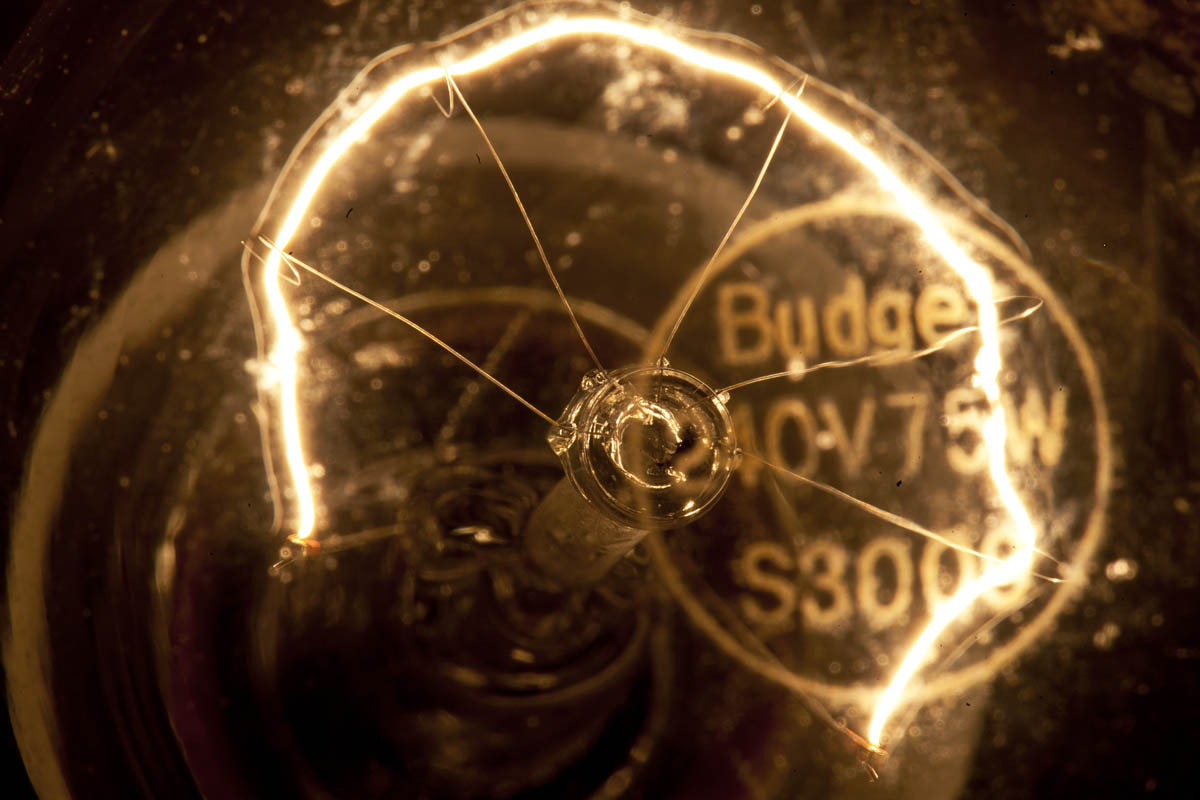
Thomas Edison’s light bulb, lighting up our lives for more than a century.
(© All Rights Reserved)

An incandescent bulb works by heating a filament to a high enough temperature that it starts glowing.  This is done by passing an electrical current through the filament.  To keep the filament from oxidizing and “burning out”, it is isolated in an enclosure (the glass bulb) that either contains an inert gas, or is evacuated to create a vacuum.

The invention of the incandescent light bulb fundamentally changed the world, providing convenient and affordable lighting to the masses.  While it has since been surpassed by newer and more efficient lighting technologies like compact fluorescent lights and light-emitting diodes (LEDs), it still holds a place of prominence and importance within modern society.

World Environment Day

Today we celebrate World Environment Day, a global event initiated by the United Nations Environment Programme (UNEP) to promote awareness regarding global environmental issues, and to create positive environmental action. Its a day for all people to join hands and start taking action to ensure a cleaner, greener, brighter future.

The 2012 theme for World Environment Day is Green Economy: Does it include you? In the first place, this is meant to raise general awareness of the concept of the “green economy”, and secondly to promote personal involvement in activities supporting a greener future. Simply stated, the green economy is one “whose growth in income and employment is driven by public and private investments that reduce carbon emissions and pollution, enhance energy and resource efficiency, and prevent the loss of biodiversity and ecosystem services” (UNEP, 2012).

The theme for World Environment Day 2012 is Green Economy: Does it include you?
(© All Rights Reserved)

At a macro level, the green economy is about a move to more sustainable energy sources such as solar, water and wind energy, about infrastructure development promoting green buildings and clean transportation, about water and waste management, about big business investing in more sustainable business practices, and about sustainable job creation and poverty reduction.

While these are all critically important initiatives that need to be promoted and supported, it really does start with each of us, at an individual level, investing in a more environmentally aware lifestyle. Recycling household waste, doing your own composting, growing your own (organic) fruit and veges, conserving water and electricity, minimising waste, buying used products & buying bulk – these are all ways in which we can do our bit for a greener, healthier planet.

The green economy is all about preserving our natural heritage for future generations.
(© All Rights Reserved)

For more ideas on living responsibly, this How to be Green Guide is a nice place to start.

Enjoy the world, responsibly!

It’s Drawing Day – time to get creative

Happy Drawing Day, everyone! (Or perhaps I should say Happy Pencil Day – there seems to be some disagreement on the correct title of this day.)

To participate is easy – simply grab a pencil and start drawing, and most importantly, share your artwork with as many as possible. And don’t fret if you think you’re not artistic – this day is not so much about great art as it is about nurturing your creative side, and about sharing.

You can share your doodles with friends, or you can even go global and upload your drawings on the Drawing Day website.

Come on, drop that daily chore, and get drawing – it’s good for your soul.

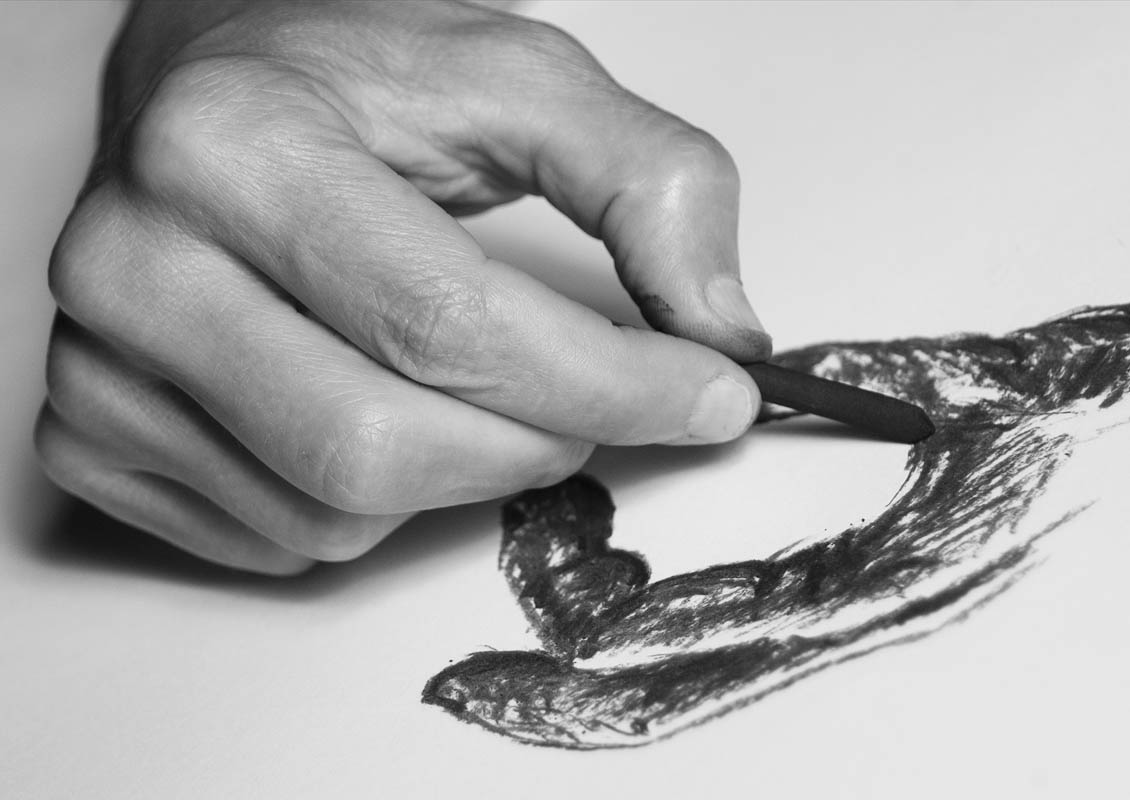
Despite the apparent ease of drawing with a pencil, artists often prefer to work with graphite sticks as it allows a greater range of creative expression.
(© All Rights Reserved)

By the way (this is Sciencelens, after all), did you know that the “lead” inside a pencil that makes it write is not lead at all, but a mix of graphite (a type of carbon), clay, wax, and chemicals?  Coloured pencils work the same, except that they have colour pigment added to the mix instead of graphite.

Pencils are manufactured by mixing ground graphite (or colour pigment), clay and water, and squeezing out this mixture into long spaghetti-like strings.  These are cut into pencil lengths, baked, and then covered with a wax coating to make them write smoothly.

So how do they get them inside the wood? The wood around a pencil may look solid, making it appear as though a hole was drilled through the wood to insert the graphite, but that sounds like some extreme manufacturing.  In fact, most wooden pencils are made from blocks of wood cut into slats.  Grooves, half as deep as the graphite string, are cut into the slats, and the graphite strings are placed in these grooves. Another grooved slat is glued on top of the first, encasing the graphite in the wood.  The slats are then cut into individual pencils, sanded and painted to give it the appearance of a solid structure.

Pencils are sharpened to reveal the graphite inside, and when you write, fiction causes a small amount of the graphite from the core of the pencil to be deposited on the paper, creating your images or words.

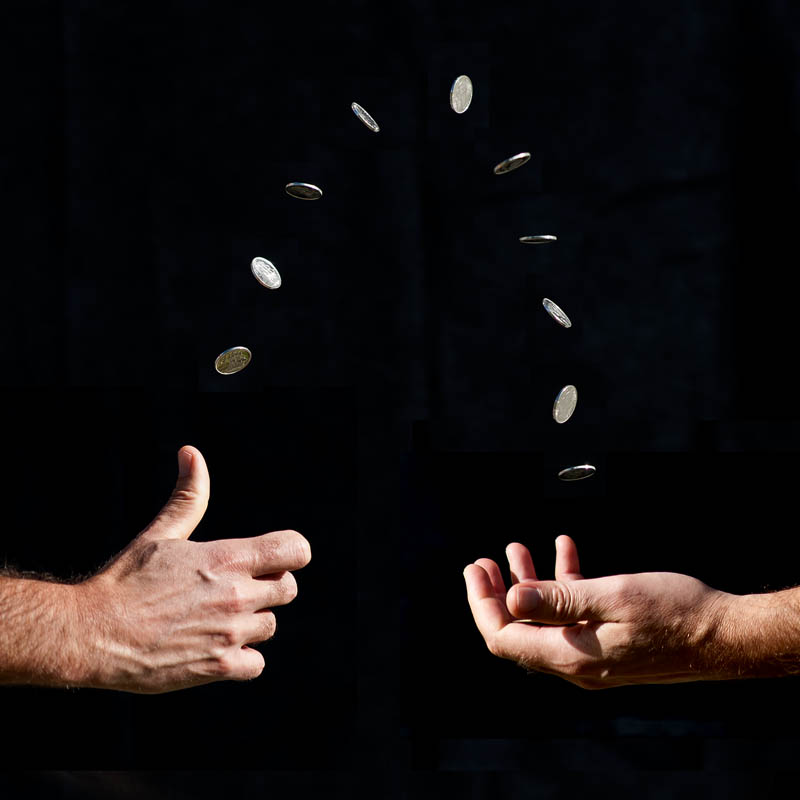
Flip a Coin day

Today we celebrate the randomness of coin flipping.  Do you have some tough decisions to make? Why not use this day as an excuse to leave it to chance, by simply flipping a coin?

The practice of coin flipping is said to date back to Julius Caesar, who used the technique for decisions where the right choice was unclear.  Roman coins had the head of Caesar on one side, so a “heads” result was considered a positive, or “yes” outcome.

Leave it to fate – today is the one day when making all those tough decisions can be as easy as flipping a coin.
(© All Rights Reserved)

The statistics of coin flipping is described through the Bernoulli process, and a single flip of a coin is called a Bernoulli trial.  The use of coin flipping examples is also a popular way of introducing some of the complexities of statistics.

Conditional probability is a specific field of statistics that is often quite difficult to understand intuitively, and is illustrated very well through a coin flipping game called “Penney’s Game”.

In this game, two opposing players each choose a sequence of (usually 3) coin flipping outcomes of heads (H) or tails (T), e.g. H-H-T, T-H-T, etc.  A coin is then flipped, and the player whose sequence appears first is the winner. If the second player knows the “trick” he is always more likely to be the victor.  The correct choice for player 2 will be to take the first two outcomes of player 1, and to precede this with the opposite of the second outcome, for example:

Player 1: H-H-T   Player 2: T-H-H
Player 1: T-H-H   Player 2: T-T-H
Player 1: H-T-H   Player 2: H-H-T
Player 1: T-H-T   Player 2: T-T-H
etc.

In all the above cases, player 2 is always at least twice as likely to win as player 1 – definitely not something that makes immediate intuitive sense!
(See the mathematical explanation here.)

Getting back to that difficult decision we mentioned earlier – if you secretly want to do one thing, but think you should do the other, use Penney’s Game and your new-found knowledge of conditional probability to stack the odds in your favour.

Come on, go flip a coin!