Page 34 of 34

International Day Against Drug Abuse and Illicit Trafficking

“I’ve seen the needle and the damage done
A little part of it in everyone
But every junkie’s like a settin’ sun.”
(Neil Young, The Needle and the Damage Done)

Every year, more than 200 million people use illicit drugs. Of these, more than 200 000 die. Every year. Many many more end up in a downward spiral of crime and abuse, with young people today being exposed to drugs earlier than ever before.

The illegal drug trade feeding this global cancer causes thousands more deaths annually, directly through gang violence and indirectly as a result of socio-economic instability.

Drug abuse – it is everyone’s problem.
(© All Rights Reserved)

Today is International Day Against Drug Abuse and Illicit Trafficking.  The theme this year is “Global Action for Healthy Communities without Drugs”.

I cannot add anything new to the drug debate without merely repeating what has been said many times over by people who are closer to the problem and who have a better understanding of it. The issues feeding this social disease – peer pressure, glamorising of drug use, targeting of people on the fringes of the community, social insecurities – can only be addressed at community level, by each and every one of us.

This is not a hypothetical problem. In all likelihood, you know someone who is or has been affected by drugs, directly or indirectly. You can do something about it.

Celebrating the invention of Barbed Wire

On this day in 1867, American Lucien B Smith from Kent, Ohio, filed a patent that fundamentally impacted on cattle farming in the US and internationally.

Before barbed wire, cattle fencing was made of single wire strands which didn’t deter livestock and was easily broken. Other alternatives were wooden fencing which was costly, or rock/stone walls that were very labour intensive for large areas.

Barbed wire – elegant, simple, effective.
(© All Rights Reserved)

Smith’s patent for barbed wire, or what he referred to as an artificial thorn hedge, simply consisted of wire with short metal spikes (barbs) twisted onto the wire by hand at regular intervals. This resulted in four projecting nail-like points radiating from the wire at each point, 2-3 feet apart.

While Smith’s patent showed great potential for restraining cattle, it did not solve the breakage problems – this was cleverly addressed through subsequent improvements, first by Michael Kelly and later Joseph Glidden, who twisted two wires together to form a barbed cable, resulting in a stronger wire which still had the deterring quality of Smith’s original concept.

Glidden’s 1874 patent turned out to be the most effective, most commercially viable design, consisting of a method for locking the barbs in place and a design for the machinery to mass produce barbed wire.

Beyond its obvious agricultural application, barbed wire became widely used during wars, for security purposes, and for prisoner confinement. As such, barbed wire has become a symbol for confinement and restriction, rather than being the empowering tool it was initially meant to be in its agricultural context.

Celebration of the Senses Day – taste, smell, hear, see, touch (and more)

Today is Celebration of the Senses Day – a day to remind yourself of your body’s amazing sensory abilities.

Given that, at any moment in time, we are bombarded by such a diverse combination of sensory experiences, our appreciation of the individual senses can become somewhat muddled. Our taste experience is affected by the smell, texture and temperature of our food. Similarly, our hearing is said to decrease after overeating, and our sight is affected by noises around us. Sight can also be hampered after eating fatty foods.

On Celebration of the Senses Day, how about conducting a couple of in-house experiments to give your senses a shake up?  Have a blindfolded smell-a-thon of items in the fridge. Listen to a piece of music in a pitch dark room. While you’re at it, dance around in the dark! Mix up your food experience by mashing, freezing or colouring different foods to create new and surprising sensory variations. Look at things around you through a looking glass. In short, utilise your senses to experience the world anew.

Here’s another interesting snippet – if a sad, depressed person tells you their world is dull and grey, and flowers have lost their smell, they’re not just speaking metaphorically. Research shows that sensory perception can actually be diminished in depressed individuals.

So focussing on a renewed appreciation of your senses can actually even help you to get out of that emotional rut you’re in.

Focusing on your sensory experiences can help make you a happier person.
(© All Rights Reserved)

Five senses? Try ten!
The categorisation of our five primary senses (sight, smell, hearing, taste and touch) is attributed to Aristotle. While this categorisation is still valid, humans have a number of additional ‘sensory abilities’ not covered by the above. These secondary senses include:

  • Sense of balance and acceleration – the ability to sense body movement, direction and acceleration, and to maintain balance and equilibrium.
  • Temperature sense – the ability to sense heat and the absence of heat (cold).
  • Kinesthetic sense – the ability of the brain to be aware of the relative positions of various parts of the body without sensing these via the ‘normal’ senses (like being able to touch your nose with your finger, with your eyes closed).
  • Sense of Pain – the sense of pain was previously believed to be an overloading of pressure receptors, but it has since been identified as a distinct phenomenon that intertwines with the other senses, including touch.
  • Sense of Time – the ability to perceive the passage of time, both short passages as well as longer time cycles.
    (Source: Wikipedia)

Cool, isn’t it?  Even more senses to experiment with on Celebration of the Senses Day… Have fun!

Celebrating the birth of Alan Turing, father of modern computer science

This year is the centennial celebration of the birth of Alan Turing, giant in the fields of computing, artificial intelligence and cryptoanalysis.

Turing was a man very much ahead of his time, both intellectually and socially. A brilliant logical mind, Turing played a pioneering role in the development of the field of computer science through his description of a hypothetical machine called the “Turing machine”, which has become the blueprint of the modern computer.

He also played a key role in the success of the Allied Forces in World War II, through his contribution to cracking the German Enigma code. He designed and helped build a code breaking machine known as the “Bombe”, which represented a huge leap forward in the field of cryptoanalysis.

After the war, Turing made further contributions to the field of computer science and created the ‘Turing Test’, which tests the ‘thinking ability’ of a computer, thus laying the foundation for the field of artificial intelligence.

Alan Turing, computer science giant and tragic gay hero.
(© All Rights Reserved)

Sadly, as mentioned, Turing was also out of time at a social level – being gay in an era when homosexuality was still a criminal offense. An incident with his boyfriend led to Turing being arrested for ‘gross indecency’. To avoid prison, he agreed to “chemical castration” through estrogen therapy. As a result of his arrest, Turing’s military clearance was also revoked and he was unable to do further work for the British government, severely stunting his further academic contributions.

Two years after his conviction, Turing committed suidice by eating an apple poisoned with cyanide, a sad reference to Snow White and the Seven Dwarves, which apparently was one of his favourite films.

Turing received a posthumous apology from British Prime Minister Gordon Brown in 2009, where his contribution, and the social injustice he was subjected to, was finally publicly acknowledged.

One can but wonder how much more the brilliant Turing may have contributed, had he been afforded more time.

Take Your Dog To Work Day – what’s your pooch thinking?

Today, believe it or not, is Take Your Dog To Work Day. This day was initiated by Pet Sitters International, and has been celebrated since 1999.

The rationale behind the day is the celebration of the human-canine bond, and the promotion of pet adoption by making life – including the workplace – more accepting to pets, in particular dogs. Employers are encouraged to open their workplace to employees’ pets on this special day.

The lovable bulldog – breed of choice for Adam Sandler and Winston Churchill, among others.
(© All Rights Reserved)

Seems a good enough idea, doesn’t it? I think the following bit of research has the potential to further promote and enhance the human-canine bond:

According to a recent article in Scientific American, scientists have (pun alert!) embarked on a study of dogs’ thoughts, by means of fMRI brain scans of unsedated dogs. The research team says this provides a first peak into the thought processes of dogs.

Of course the key problem in scanning the brain of an fully awake, unrestrained dog, is that the animal is unlikely to remain still for the duration of the scan. However, after seeing the level of training achieved with dogs in the US Navy, lead researcher Gregory Berns from the Emory University Center for Neuropolicy, felt they should be able to train a dog to behave inside the fMRI.

Two dogs – a 2-year old feist and a 3-year old border collie – were trained to walk into the scanner and remain still while being scanned. In addition, they were trained to respond to certain hand signals – one indicating the dog was about to receive a treat, and the other that it wasn’t.

Recognition of the “treat” signal caused activity in the caudate region of the dogs’ brains – a region also associated with reward in the human brain.

While this can perhaps be viewed as a rather simplistic result, it is early-stage canine  neuro-research, and it does open the door for further studies into canine cognition, for example how they respond to human facial expressions, and how they process human speech.

Such research could definitely shed new light on the 15 000 year old human-canine bond – perhaps it can even help explain why certain people prefer certain breeds.

World Music Day with a jolt of Maths

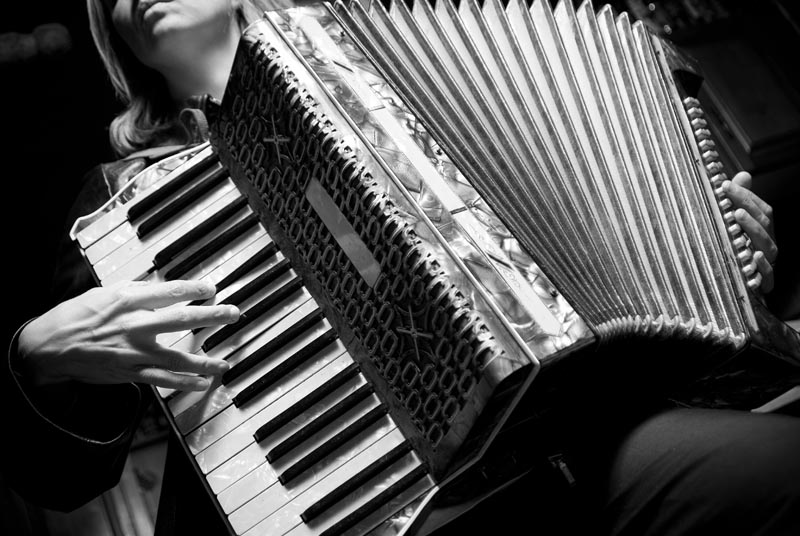
World Music Day is the brainchild of American musician Joel Cohen, who first proposed the idea in France in 1976, while working at a French radio station.  His idea – an all night festival of free music on summer solstice – won favour with the French Minister of Culture, and the first Fête de la Musique took place in 1982.

Now in its 30th year, the celebration has grown into a huge international celebration of free music.  On 21 June, musicians the world over take to the streets and share their art in public spaces, shop-fronts and side-streets to create a beautiful global noise – the only ‘rule’ being that the performances should be free of charge.

Keep on rockin’ in the free world!
(© All Rights Reserved)

If you’re scientifically inclined, of course, a global celebration of music also happens to be a celebration of mathematics. Yes indeed, when you celebrate the beauty and emotion inherent in music, you are also acknowledging the beauty of mathematical theory and logic.

Simply speaking, rhythm, musical notes and chords can all be explained mathematically, defined in terms of numerical patterns, scales and equations. At a deeper level, composers are often drawn (consciously or not) to mathematical structures – Bach made use of mathematical symmetry, Debussy employed fibonacci number sequences, Erik Satie used the golden ratio in several of his compositions, and many more. Complex, atypical rhythmic structures, as employed in the work of modern minimalist composers like John Cage and Steve Reich, has found favour in a modern rock music sub-genre known as math-rock, where musicians employ complex rhythms, odd, asymmetrical time signatures, angular melodies and dissonant chords.

Where there is music, mathematics is never far away.  In the words of Igor Stravinsky, “Mathematics swims seductively just below the surface.”

So when you’re out enjoying your free musical fix on World Music Day, you may just get a little jolt of maths in the process – enjoy it!

Music = Mathematics + Magic
(© All Rights Reserved)

World Refugee Day

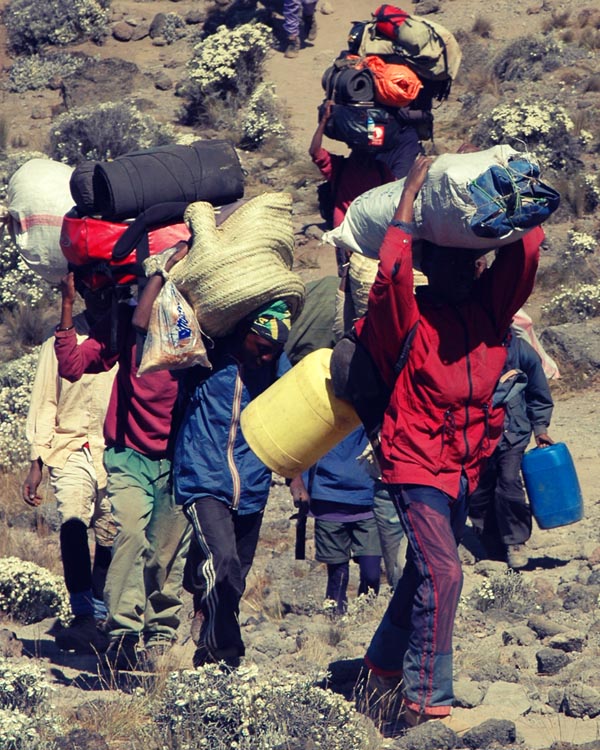
Today is World Refugee day. The aim of this day is to create awareness of the plight of forcibly displaced people throughout the world. It is also an opportunity to honor the courage, strength and determination of people forced to flee their homes under threat of persecution, conflict and violence, and to recognize the contribution these refugees are making in their adopted environments.

Each year, hudreds of thousands of people are forced to flee their countries for survival.
(© All Rights Reserved)

In 2011, a record 800 000 people were forced to flee their homes and cross borders for survival. Worldwide, almost 44 million people are currently classed as refugees. It does not take a degree in mathematics to recognise that this is a shockingly high number – more than 0.5% of the world population. Of these, almost 80% are women and children.

People who become refugees are often forced to remain in refugee status for many years, often living in refugee camps or other temporary environments. The UN’s refugee agency, UNHCR, provides tents, shelter, supplies and life-saving services to refugees.

There are many things each of us can do to assist these humanitarian efforts. The most obvious and direct contribution is donating money or volunteering services via the UNHCR website. Alternatively, helping to organise local fund raising events in your community, or even just raising awareness either through physical events or online initiatives and social networking activities.

Refugees have no choice. You do.

World Sauntering Day

(© All Rights Reserved)

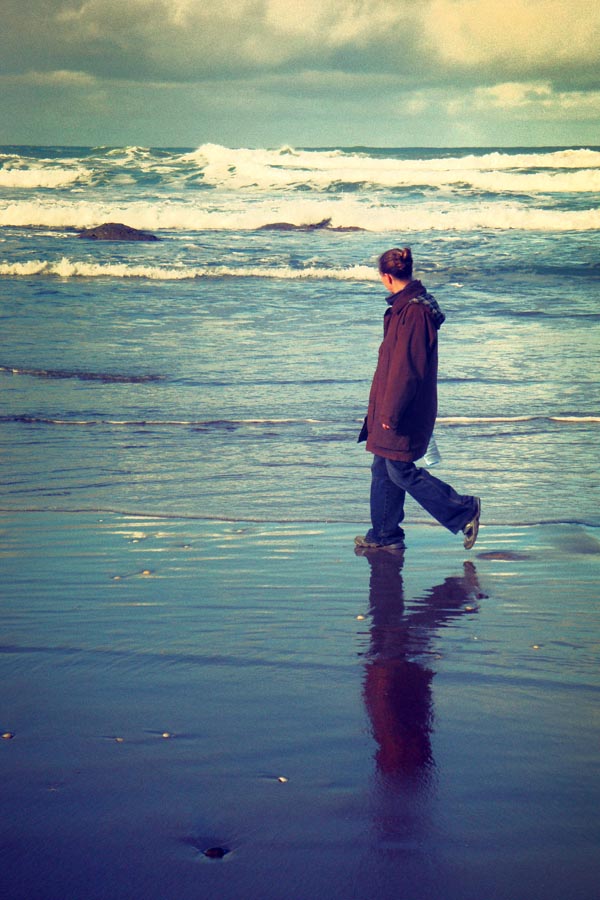
sauntering
blindly, aiming only where I’m not
full heart, empty mind
thinking freely
associating

ambling
guided by footprints in the sand
sandy path, path of light
light diffracted, fractured, structured
structure birthed in chaos
infinite possibilities
synapses firing infinitely
saturating

meandering
connecting with strangers, friends forgotten
fragments of conversations
focused, defocused, defined
concepts conjured
assimilating

running
eagerly, aiming whence I came
animated by sparkling prospects
calculating courageously
percolating

(© 2012)