Page 33 of 34

Create some chemistry on International Kissing Day

Pucker up, its Kissing Day, a day to celebrate all aspects of the age-old art of kissing.

Of course kissing is not just an art, so given that this blog has a bit of a science leaning, lets discuss the science of kissing, or philematology (my new word for the day!).

Philematology tells us that kissing not only activates and stimulates large parts of the brain, it also releases chemicals that reduce stress. Furthermore, the human lips apparently have the thinnest layer of skin on the body, and are more densely populated with sensory neurons than any other bodily region.

Kissing is good for you – it’s a scientific fact, ask any philematologist!
(© All Rights Reserved)

In a study on the chemical impact of kissing, Neuroscience Professor Wendy Hill from Lafayette College, Easton, Pennsylvania, studied 15 romantically involved couples before and after kissing and holding hands for 15 minutes. Their levels of oxytocin (a feel-good, ‘social bonding hormone’) and cortisol (a ‘stress hormone’) were measured before and after the kissing session. It was found that cortisol levels decreased in all subjects, while oxytocin levels increased in the men and decreased in the women. The oxytocin reduction in the women was quite a surprising result, but may have had to do with the fact that the experiment was conducted in an “unromantic” student health center, which may have had more of an inhibiting effect on the women than the men (who, lets face it, are normally not too fussed by their surroundings!).

In another project, this time by anthropologist Helen Fisher from Rutgers University in New Brunswick, New Jersey, a number of brain imaging studies were conducted to see how the brain reacts to kissing. Fisher believes kissing activates different chemicals that stimulate different regions of the brain, and more specifically different “primary brain systems”, involved in the human mating and reproduction process. The first of these systems is sex drive, primarily testosterone driven, which drives people to find a mate, or even multiple mates. The second, romantic love, motivates people to gravitate towards a particular mate, and the third, attachment, helps couples stay together so they can rear children. Kissing is considered to have beneficial effects on all these systems.

Fisher furthermore says that kissing is, at a basic level, about exchange of saliva. Men tend to be sloppier kissers, because this lets them transfer more testosterone to stimulate their partners’ sex drive. She also speculates that men might be able to assess a woman’s fertility by subconsciously analysing the levels of estrogen and other hormones in her saliva (but that sounds a bit like science fiction to me).

According to neuroendocrinologist Sarah Woodley, another important chemical that may be present in saliva is androstadienone, a mood-enhancing steroid that also plays a role in helping you focus. “It may not be a sex attractant, but it plays a role in enhancing responsiveness to other stimuli. It makes them feel better”, she explained.

So what to do with all this philematological knowledge? Well, the best advice on Kissing Day is probably to just put it all out of your mind and enjoy what the day has to offer. Just do it – you don’t want all this science to spoil the fun!

(Source: Chemical attraction: The science of kissing.)

Seeing double – it’s Dolly the Sheep’s birthday!

Today we celebrate the birthday of Dolly the Sheep (July 5, 1996 – February 14, 2003), the first mammal to have been successfully cloned from an adult cell.

Dolly was cloned at the Roslin Institute in Midlothian, Scotland. The technique used to clone her is called somatic cell nuclear transfer. It involves a cell being placed in a de-nucleated ovum, and when the two cells merge, it develops into an embryo. Originally code-named “6LL3”, Dolly was cloned from a mammary cell, which became the basis for her name. In the words of cloning scientist Ian Wilmut, “Dolly is derived from a mammary gland cell and we couldn’t think of a more impressive pair of glands than Dolly Parton’s”.

Cloning is the process of creating an identical copy of an original organism.
(© All Rights Reserved)

Dolly was born to three mothers – the ovum and the DNA were harvested from two different sheep, and a third carried the cloned embryo to term. Her birth placed the international spotlight firmly on cloning research, causing great controversy that still rages on today. Many scientific, governmental, religious and humanitarian organisations oppose cloning, with arguments ranging from the medical risks involved, to the protection of the sanctity of life, to the protection of the identity of the individual.

Dolly died young, at the age of 6, after developing a progressive lung disease typically prevalent in older sheep. After her death it was also revealed that she had developed premature arthritis. With many sheep living to twice her age, Dolly’s death re-ignited the debate over the health and life-expectancy of cloned animals. One of the arguments in the debate is that animals cloned from adult cells have shorter telomeres (the pieces of DNA that protect the ends of chromosomes) than other animals of the same age. Since telomeres naturally shorten as cells divide, they are, to some extent, a measure of age. It has been argued that, since Dolly was cloned from a six year old sheep, she was effectively born with a genetic age of six.

Since Dolly, many other large mammals have been cloned, including horses and cattle. Cloning can become a viable means of preserving endangered species, and potentially even reviving extinct species. In 2009, scientists in Spain succeeded in cloning a Pyrenean ibex, a wild mountain goat that had been officially extinct since 2000. While the animal died shortly after birth, it was considered the first successful cloning of an extinct species, showing a possible way forward in protecting endangered and recently extinct animals (using frozen tissue).

(I cannot help but wonder whether protecting our biodiversity and pursuing more sustainable ways of interacting with our planet, may not be a more proactive solution to the problem of more and more species being driven to extinction. But that’s another argument altogether.)

Cloning, in particular human cloning, has become a favourite topic in science fiction novels and movies, from the work of Aldous Huxley to the Star Wars series. This remains a highly sensitive topic, that is sure to continue being a point of public controversy for many years to come.

Bean me up, Scotty! It’s Independence from Meat Day.

Not only is July 4th Independence Day in the US, it is also Independence from Meat Day. This day, originally created by the Vegetarian Awareness Network in Tennessee, has grown beyond its original US-only focus to being an international day for celebrating a meat-free diet and lifestyle.

Vegetables – they taste so good, ’cause they look so good!
(© All Rights Reserved)

Arguments for and against eating meat has raged for years, and while there has been many scientific studies published on the health benefits of a meat-free diet, many of these are inconclusive, given the huge variability on human diets both with and without meat. Also, many of the health risks posed by processed meat, for example, has more to do with the chemicals and fats introduced as part of the processing, than it has with the meat itself.

Much stronger arguments are made on moral grounds against the slaughter of animals for human consumption, and many great thinkers have made succinct arguments for a meat-free diet. In the words of outspoken vegetarian George Bernard Shaw, “Animals are my friends… and I don’t eat my friends.”

The fact of the matter is that, despite evolving as omnivores, the human mouth and gut is such that we don’t need meat in our diets. Our bodies can extract the necessary nutrients from a plant-based diet, as long as you take care to provide your body with good alternative sources of the proteins and other nutrients typically found in a meat-diet. Growing children require more protein in their diet than adults, so vegetarian children need to make extra sure they get all the required nutrients in sufficient doses.

Vegetarian or not – it can’t hurt enjoying a meat-free day every so often. So give it a go – celebrate your Independence from Meat, wherever you are.

Celebrating the invention of foam rubber

Today in 1929, British scientist EA Murphy, who worked at the Dunlop Latex Development Laboratories in Birmingham, must have been a little bored, or mischievous, because he decided to whip up some latex rubber with a kitchen mixer.  As is often the case with such seemingly arbitrary actions, he ended up inventing a product that, up to this day, has a huge impact in all our lives – foam rubber. It is said that Murphy’s colleagues were initially unimpressed, but this soon changed when they caught on to the amazing cushioning and shape retaining properties of this new invention, and it wasn’t long before foam rubber was used in motorcycle and car seats, mattresses and much more.

In its natural form, latex is a milky white liquid tapped from the trunks of rubber trees. This pure latex gets whipped up with water to create a thick froth. The froth is sometimes exaggerated using CO2 gas. Once frothy, the mixture is heated to the point of vulcanization (about 240°F) which results in the formation of long molecular chains with strong crosslinked bonds, giving the resultant foam rubber its ability to recover its shape after compression.

Close-up view of frothy foam rubber.
(© All Rights Reserved)

While the shape retention characteristics of foam rubber make it a very versatile substance, it does have some limitations. When it gets exposed to very high temperatures it will melt, and if its frozen it can shatter.

Now researchers at the National Institute of Advanced Industrial Science and Technology in Japan, have come up with a new carbon-based nanotube rubber that has even better shape memory than foam rubber, and that can withstand extreme temperatures without any negative effects.

The unique features of this new super-rubber make it ideally suited for use in extreme conditions like spacecraft and car shock absorbers. Incorporating it into clothing also means that you can have a truly non-wrinkle shirt. Perhaps most exciting is the electricity conducting abilities of the carbon nanotubes, which means that, if its used in shoes or shock absorbers, the material could theoretically harvest and store the electricity generated.

While high costs mean the large-scale application of these super-rubbers are still some way off, one can just imagine it becoming as pervasive as foam rubber over the next decades.

Look up – it’s World UFO Day!

World UFO Day is celebrated on 2 June each year, with this year being the 11th celebration of the event. World UFO Day aims to unite all UFO believers, and to highlight what many believe to be a continued conspiracy by governments over the world to hide proof of the existence of UFO’s, aliens and extraterrestrial activity.

Close encounters of the fake kind…
(© All Rights Reserved)

While a Google search for UFO’s and extraterrestrial activity can result in much weirdness and amusement, there is no denying the continued, widespread interest in the subject. And alongside the many dubious alien-chasers out there, there are numerous more scientifically sound activities like the SETI (Search for Extra Terrestrial Intelligence) initiatives at Harvard University, the University of California, Berkeley and the SETI Institute. These form part of a well coordinated global initiative with millions of contributors and supporters. SETI@Home, hosted at Berkeley, is a scientific experiment that uses Internet-connected computers in a quest to detect intelligent life outside Earth. Members of the public can participate by running a free program that downloads and analyzes radio telescope data. SETI@Home, originally launched in May 1999, is currently the largest international distributed computing effort with over 3 million concurrent users.

In reaction to some SETI activities, renowned physicist Stephen Hawking has expressed the opinion that humanity’s efforts to radio communicate with extraterrestrials could in fact be endangering us. If aliens detecting our signals could travel to earth, which would prove their vast technological superiority, Hawking is reported to have said “I think the outcome would be much as when Christopher Columbus first landed in America, which didn’t turn out very well for the Native Americans”.

The National Geographic Channel recently polled American citizens on various topics related to the extraterrestrial. No less than 36% of those polled believe that UFO’s exist, with the majority of these being sure that government officials are hiding paranormal activities from the public. More surprisingly, 11% (about one in ten) believe they’ve personally seen a UFO. Furthermore, if the US was faced with an alien takeover, 65% Americans feel President Barrack Obama would be better suited to handle the situation than presidential candidate Mitt Romney.

It’s not only the Americans who are regularly seeing unidentified objects in the skies. UFO interest groups are a global phenomenon, and down here in New Zealand, an organisation called the UFocus NZ Research Network maintains a hub of information on New Zealand UFO sightings and contact experiences.

In 2012 alone, the UFocus NZ website lists no less than 43 sightings for the first half of the year – quite incredible, considering the size of the country.

And here I was thinking we were safely off the beaten track down under!

Feast on some cherries on International Fruit Day

July 1st is International Fruit Day. It also appears to be International Joke Day, but that’s another story for another time…

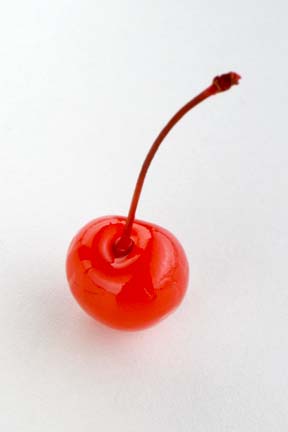
From a bit of online research, I’ve discovered that there is a specific fruit assigned to each year, a Fruit of the Year, if you will. 2009 was the year of the apple, in 2010 it was the pineapple’s turn, last year was mango’s chance to shine, and this year we celebrate the cherry – a favourite for deserts, yoghurt, cakes, sweets and shakes, but also wonderful eaten by itself.

The cherry, almost too good to be true – beautiful, tasty and good for you!
(© All Rights Reserved)

In mythology, cherries can symbolize fertility, merrymaking, and festivity. In Japan, where cherry blossoms are the national flower, cherries represent beauty, courtesy, and modesty. The ancient Chinese regarded the fruit as a symbol of immortality.

In addition to being blessed with gorgeous looks, cherries are also something of a health marvel, packing a mighty punch for such a small fruit. They are an abundant source of anthocyanin (the red pigment in berries), an antioxidant which has been shown to reduce pain and inflammation, and is also said to aid in the reduction of heart disease and cancer. Anthocyanin has also been found to benefit the brain, improving one’s memory abilities. Cherries furthermore contain melatonin, an antioxidant known to regulate heart rhythms and the body’s sleep patterns. A veritable vitamin bomb, cherries are also rich in Vitamins A, C, E, potassium, magnesium, and iron.

Go on and feast on some cherries – they’re good for you, and that’s no joke…

Scoring an extra second on Leap Second Adjustment Day

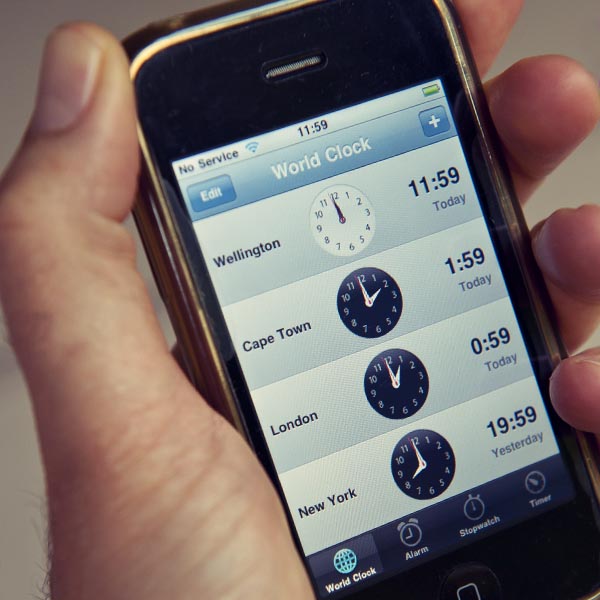
Have you ever felt that time is slipping away from you? Well, then you’ll be happy to know that today is Leap Second Adjustment Day, a day when time will be held back for a second, with an extra second being inserted into the atomic time scale at midnight, June 30 UTC (Co-ordinated Universal Time). This time corresponds to noon, July 1 in New Zealand. To mark this moment, Radio New Zealand listeners will hear an extra time ‘pip’ before the midday news bulletin.

Today time will be held back for a second, to compensate for the slowing rotation of the earth.
(© All Rights Reserved)

The rotation of the earth is gradually slowing down, effectively resulting in our days becoming fractionally longer. Hence the adjustment is required to prevent the atomic clocks from moving ahead of solar time. Leap second adjustment was introduced for the first time in 1972. It does not happen every year, with the decision being made by the International Earth Rotation Service, based on data collected from observatories around the world. Leap second adjustment has been done 24 times over the past 40 years.

In earlier times, time was measured by the position of the sun and stars in relation to the earth, so the slight slowing of the rotation of the earth was automatically accommodated for. However, since time measurement has changed to atomic time, which uses the pulsations of the atoms of the chemical element caesium, time measurement has become, weirdly enough, too accurate. Time can now be measured down to 10 billionths of a second, and only one atomic second is lost every 300 million years, so to keep time in sync with the slightly irregular movements of our solar system, its necessary to make an adjustment every now and then.

When the leap second is added, the atomic clocks will not go from 11:59:59 directly to 12:00:00, but rather to 11:59:60, and then 12:00:00. As a result, the day on which the leap second is inserted has 86,401 seconds, instead of the usual 86,400.

Hmmm, wonder what I’m going to do with all this extra time!?

Love your camera on Camera Day

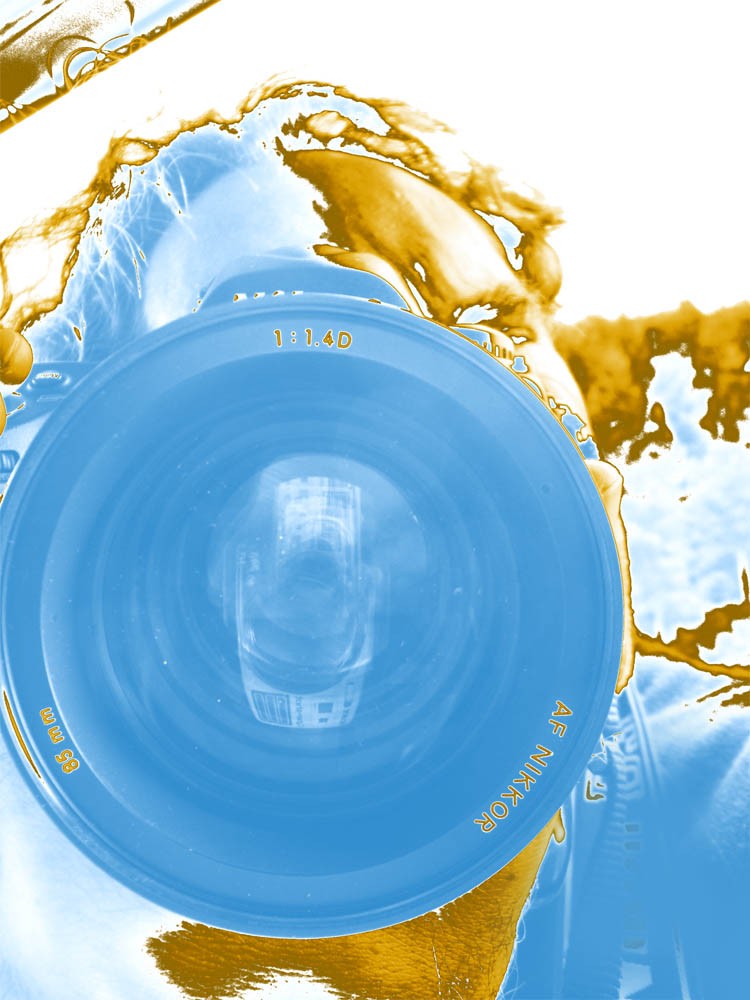
Me and my camera; my camera and me.

The photographer and his camera – where does one start and the other end? How much of what you see in an image is down to the brilliance of the photographer, and how much can be attributed to the technical abilities of his photographic tools?

(© All Rights Reserved)

I am, generally speaking, a supporter of the school of thinking that a great artist will produce great art irrespective of his tools. I have seen photos taken on mobile phone cameras that are significant artistic achievements, and there are movements in photography who go to great lengths to show how great art can be produced by technically “bad” equipment. The Lomographic Society International, for example, owns galleries, etc, showcasing photographs taken with very low-tech LOMO cameras. LOMO, a former Russian state-owned camera manufacturer, produced 35mm compact cameras that have become iconic for producing unique, sometimes blurry images, at times with light leakage, and various other “faults”.

On the other hand, particularly in technical fields of photography, the camera plays a critical role in enabling the photographer – think about fields like macro photography, for example. In some ways the camera also dictates the photographers’ approach to the subject. For instance, the time and effort required to set up a large format view camera to photograph a landscape, will almost by default result in a different stylistic approach to the subject compared to, say, a photo snapped with a mobile phone.

Given my current context (photographing science, technology and industry) my “weapon of choice” is my Nikon D3 DSLR, with a range of lenses for different applications, and I have to admit I love this bulky machine – its reassuring weight, ever willing, ever ready for anything I may throw at it.

That is not to say I am not eagerly eyeing the D4 and even the D800, not to mention the wonderful, iconic Leica M9. And don’t even get me started on some of the glorious medium format cameras out there, just waiting for me to take them in my arms!

On the other end of the technology scale, I’ve recently started playing around with pinhole photography again – in a sense this still remains to me the most magical, wonderfully rewarding field of photography. But more on that in a future post.

Whether you photograph with a mobile phone or a Hasselblad, today is Camera Day – the day to show some special appreciation for your camera, and to take it out and capture the world around you. Wherever you may be – have fun.

Hitting the high notes on the Birthday of the Saxophone

On this day 166 years ago, the saxophone, darling instrument in much of jazz and blues music, was patented by its Belgian inventor, Adolphe Sax. The saxophone combines the single reed and mouthpiece used in a clarinet, with the wider bore of the oboe. Despite usually being made from brass, it is classified as a woodwind instrument, because the sound of a saxophone is created by an oscillating reed rather than the vibration of the player’s lips against a brass mouthpiece.

The combination of features from the woodwind and brass families make it quite unique – while it has the volume capacity of a brass instrument, it possesses the timbre and dexterity of a woodwind. The shape of the saxophone also results in a complex wave packet compared to other woodwind instruments.

Science shows its about the musician, not the instrument.
(© All Rights Reserved)

It seems the saxophone not only fascinates music lovers, but scientists as well. A group of acoustics researchers from the University of New South Wales in Sydney, Australia, set about trying to determine exactly how jazz masters like John Coltrane achieve the piercing high notes they are famous for. More specifically, they studied how the shape of the saxophonist’s vocal tract influences the notes he can achieve.

There has long been debate about the role that the acoustics of the vocal tract has on the notes saxophonists and other reed instrumentalists can play. The assumption under investigation in the research was that professional saxophonists achieve “impossible” notes by shaping their vocal tracts in different ways to amplify the high-pitched notes. Of course the challenge lay in the methodology – how do you directly measure the acoustics of a vocal tract in mid-note without interfering with the player’s sound?

What acoustician Jer Ming Chen and his colleagues did, was to modify the mouthpiece of a saxophone by adding a device that emits different tones into the vocal tract of the player, and then records the intensities of the tones bouncing back into the mouthpiece. From this information, they could calculate acoustic resonances in the vocal tract.

The reseach showed that, when playing “normal” notes, the acoustics of the vocal tract seemed to have only modest effects on how notes sounded, but the moment professional players broke into the altissimo, a clear result emerged – the resonance in the vocal track aligned with the note being played, thus serving to amplify and strengthen the note.

What is interesting is that many expert players were unaware of the ways in which they “tuned” their vocal tracts while playing. They knew they “did something” to their throats, but weren’t able to explain exactly how it happened. It does, however, seem to be a skill that can be learnt, and not something certain players are simply born with.

However they do it, it seems blowing that sax not only gives your lungs a workout, it exercises your mind as well.

(Source: Scientific American)

Artificially green – celebrating the synthesis of chlorophyll

Today seems to be one of those ordinary days in history – at a cursory glance, nothing seriously bad happened, but nothing too exciting either.

Well, I am no chemist, but the fact that chlorophyll A was for the first time synthesised in a laboratory on this day back in 1960, is probably pretty exciting. Its chlorophyll, after all – the abundant green stuff which allows plants to absorb energy from light, and through the process of photosynthesis, fuel much of our planet.

The organic chemist responsible for this achievement was Robert Burns Woodward, from the Converse Memorial Laboratory at Harvard University. For this, and his other work in the field of organic synthesis, Woodward was awarded the 1965 Nobel Prize in Chemistry.

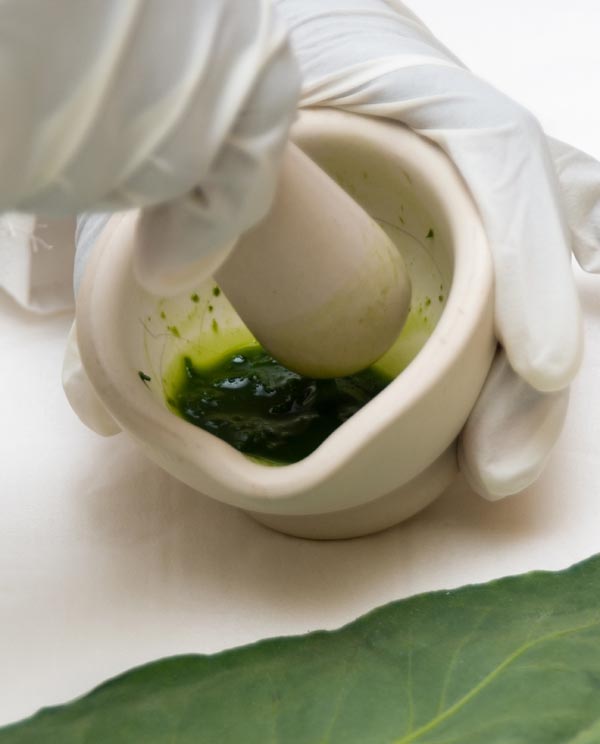
Chlorophyll – fuelling our planet.
(© All Rights Reserved)

Talking about synthesized chlorophyll and photosynthesis, I read an interesting 2011 Economist blog post, Babbage Science and Technology, about work being done around artificial photosynthesis and the creation of the “artificial leaf”. The science-fiction style scenario envisaged from this is a world where roofs of city buildings etc can be covered with “artificial trees” replicating the photosynthesis process to create hydrocarbon fuel directly from sunlight. These “forests” could help offset the emission of carbon dioxide from fossil fuels, and create an unlimited supply of fuel for transport – a magical concept.

In the USA, hundreds of millions of dollars are being spent in research laboratories in California etc working, in the words of President Obama, on “developing a way to turn sunlight and water into fuel for our cars”.

The potential energy produced by the sun is vast – apparently the energy from the sun hitting the earth in a single hour, exceeds all the energy consumed by humans in an entire year! Imagine if a significant portion of that energy could be harvested in a commercially viable manner. Currently solar energy (in the form of sustainable biomass) provide less that 1.5% of our energy needs, with solar panels contributing less than 0.1%.

Current solar power generators suffer from the fact that the supply of sunlight is not constant, and energy has to be stored in batteries – a wasteful process. What scientists are working on (and what chlorophyll has been quietly doing for millions of years), is to turn the sunlight directly into chemical fuel – a potentially huge paradigm shift in the harvesting of solar energy.

While scientists have already been able to efficiently create fuel from sunlight in laboratory conditions, the problem is that it cannot yet be done at an economically viable cost. The technology is also highly fragile, nowhere near the robustness required for continuous commercial implementation.

So they are looking at nature for inspiration, and more specifically chlorophyll. In the words of Babbage, “chlorophyll acts as a catalyst that drives the oxidation-reduction reaction between carbon dioxide and water to produce carbohydrates and oxygen. In the pursuit of the artificial leaf, then, the main task is to find catalysts that can mimic the intricate dance of electron transfers that chlorophyll makes possible.”

Amazing research is being conducted on this topic, creating and studying different light absorbers, chemical catalysts and membranes to support these. And interestingly, it appears one of the wild cards in this research race is a small research group from Massey University down here in New Zealand. A research team at the university’s Nanomaterials Research Centre, led by Wayne Campbell, has produced a porphyrin dye that works with solar cells based on titanium dioxide. In the lab, these cells are reported to generate electricity 10 times more economically than conventional photovoltaic panels.

I have been unable to find any information on the current status of this research (much of the published results are about 5 years old), but potentially, these porphyrin dyes can become an economically viable catalyst for producing solar fuel for cars and electricity for homes.

It’s exciting stuff, and potentially huge for a greener future (even if some of the green may be artificial)!