Page 32 of 34

Some slithering stories on World Snake Day

So today is World Snake Day. Which is quite an amusing thought when you live in New Zealand, where there are no snakes. OK, that’s not exactly true – we have snakes, but not of the terrestrial variety – a few sea snakes have been known to laze around our waters, if somewhat irregularly.

The frightening Dispholidus jellytypus, one of New Zealand’s few indigenous snakes. Best advice when you come across one is to eat it before it eats you!
(© All Rights Reserved)

So why don’t we have any land snakes in New Zealand? After all, eons ago, when the New Zealand land mass first broke away from Australia, mammals and snakes were already sufficiently distributed that in all likelihood the island of New Zealand started out with its fair share of snakes.

It turns out that over many millions of years, as the climate changed and the world went through the most recent ice age, the snakes on the island, as well as most mammals, were unable to survive, and they became extinct. While numerous animal species have since been reintroduced to New Zealand, and various species of birds have returned, snakes were kept out, maintaining our current snake-free habitat. Similarly, many other island countries such as Hawaii, Ireland, Greenland and Antarctica are also snake-free.

To be honest, I am quite happy with the situation as is – like Indiana Jones, I’m not a great fan of the slimy suborder of Serpentes. Not that I don’t find them fascinating, but after numerous close encounters of the slithering kind, while hiking and travelling in Africa, I just prefer my current situation of having a significant body of water between me and them.

Here’s to all the snake lovers out there – I hope you have a great World Snake Day, wherever you are. Me, I think I’ll be snacking on some jelly snakes to celebrate.


Celebrating the Invention of Margarine

Way back in 1869, French chemist Hippolyte Mege-Mouries entered a contest held by Emperor Napoleon III, who offered a prize to anyone who could come up with an satisfactory substitute for butter, for use by the French armed forces. Mege-Mouries won, and patented his butter-replacement on 15 July 1869.

Mege-Mouries called his invention oleomargarine – the name that, after shortening, became the trade name ‘margarine’. (In some places it is still colloquially called ‘oleo’.) He set up a manufacturing operation for his margarine, but it did not prove successful, so he eventually sold his patent in 1871 to Jurgens, a Dutch company that became part of Unilever.

Vegan delight – a dollop of margarine melting into a hot, fresh potato.
(© All Rights Reserved)

From early in its history, margarine (typically composed of vegetable oils) faced fierce rivalry from the dairy industry, who was concerned about the impact it would have on butter sales. In its basic form, margarine is a pearly white colour, so noting this could be a point of differentiation between margarine and butter, the dairy industry lobbied legislators to restrict the addition of artificial colouring agents in margarine. Long-standing legislative bans on added colour were put in place in the US, Canada and Australasia, with Australia and some US states only starting to allow coloured margarine by the mid 1960s and Canada hanging on to their colour restrictions until as late as 1995 (Ontario) and 2008 (Quebec). Canada clearly did not take kindly to margarine – it was completely banned there until 1948.

Even today, although butter and margarine no longer have to look different, the battle between the two camps rage as fiercely as ever. While there is general consensus that a low-fat polyunsaturated margarine is much less harmful to your heart (it doesn’t contain the cholesterol abundant in butter), the butter lobby is quick to point out that margarine is not a “natural food” and that its artificial colourants have been linked to cancer. From an environmental point of view, the margarine-manufacturing and packaging processes are said to be more intensive and thus less desirable. Then there is the moral and ethical debate, with veganism promoting plant-based margarine over animal-based butter.

Opting for butter or margarine remains a personal decision, based on taste, health, morals and cost. But with health, moral and cost arguments leaning strongly towards the margarine camp, it is no surprise that, worldwide, margarine is definitely the spread of choice, outselling butter by significant margins.

Celebrating the start of the Open Source Operating System revolution

When mentioning Open Source Operating Systems, Linux is often the first to spring to mind. However, the real pioneer in the Open Source revolution was 386BSD, an operating system released as open source on this day 20 years ago.

Open source software is typically created as a collaborative effort where programmers improve upon the code and share the changes within the community.
(© All Rights Reserved)

386BSD (sometimes called “Jolix”, after the names of its developers) was developed mainly by Berkeley alumni Lynne Jolitz and William Jolitz. While a first version (0.0) was made public in March 1992, the version released on 14 July 1992 (0.1) was the first usable version, and became the basis of further development. The first completely free BSD, it ran on PC compatible computer systems based on the Intel 80386 microprocessor.

After the Jolitzes released 386BSD 0.1, a user group formed, developing and collecting bug fixes and enhancements to the system. However, differences of opinion developed between the Jolitzes and the maintainers of the patchkits. The Jolitzes tried to maintain quality-control by doing most of the development on 386BSD themselves, leading to frustratingly slow release cycles. This eventually lead to the splitting off of two subsequent BSD-based open operating systems, FreeBSD and NetBSD.

While 386BSD ended up being a rather short-lived project in itself, both FreeBSD and NetBSD went on to become critical players in the Open Source revolution, with versions of both these operating systems still being used and developed to this day.

The Jolitzes’ insight that the world needed an open-source Unix-like operating system running on Intel’s x86 microprocessors has been triumphantly borne out by history, with the success of open source operating systems like FreeBSD and Linux playing a key role in many computing developments and innovations over the past two decades.

Embrace your Geekness on International Puzzle Day

Are you quicker with your multiplication tables than you are running down an athletics track? Can you synthesize complex molecules but have difficulty opening a bottle of jam? Do you have no problem understanding quantum physics, but fail to understand the importance of crossing the goal line in football? Well then today is your day – it’s Embrace your Geekness Day.

And if this special day is not already enough reason to look down your nose at the lesser brains around you, whip out a Rubik’s Cube and dazzle them with your mental dexterity, because 13 July is also International Puzzle Day!

Rubik’s cube – super-puzzle, brilliant design, and one of the lasting symbols of the Eighties.
(© All Rights Reserved)

It’s the 68th birthday for Erno Rubik, Hungarian sculptor, architect and puzzle inventor, who came up with the biggest selling geeky toy in history, the Rubik’s Cube. This amazing handheld puzzle sold in excess of 100 million units in the first two years after it’s 1980 release, and has to date racked up total sales of over half a billion.

I guess many of you weren’t around in 1980 when the Rubik’s cube first appeared, but it really was the bees knees – cube-solving competitions were held, super-fast cube solvers were featured on TV, books were published with different solutions to the puzzle. Even just knowing the number of permutations that can be reached by rotating the sides of the cube (ahem, not factoring in the orientation of the centre blocks, that’s about 43 quintillion, or 43 252 003 274 489 856 000, to be exact) made you look clever. It became a brief flash of glory for geeks the world over, who could suddenly appear cool by solving the puzzle faster than any of the jocks. OK, so they ended up getting roughed up even worse than usual by said jocks, in an attempt to restore the status quo, but the moment sure was sweet.

Of course you don’t have to be a rocket scientist or puzzle master to celebrate this day – mastering your smart phone is already quite an act of geeky puzzle-solving, and definitely qualifies you for a pat on the back.

But I guess the day really is one for the geeks, the nerds, the computer whizzes, the comic book lovers, the science fiction fanatics, the brainy ones. (Who, let’s face it, has since the advent of personal computers and the Internet age, become a pretty cool and exclusive group in their own right.)

Go big, everybody!

Celebrating the father of modern photography, George Eastman

Today we celebrate the birthday of George Eastman, which is a bit like saying today we celebrate photography.

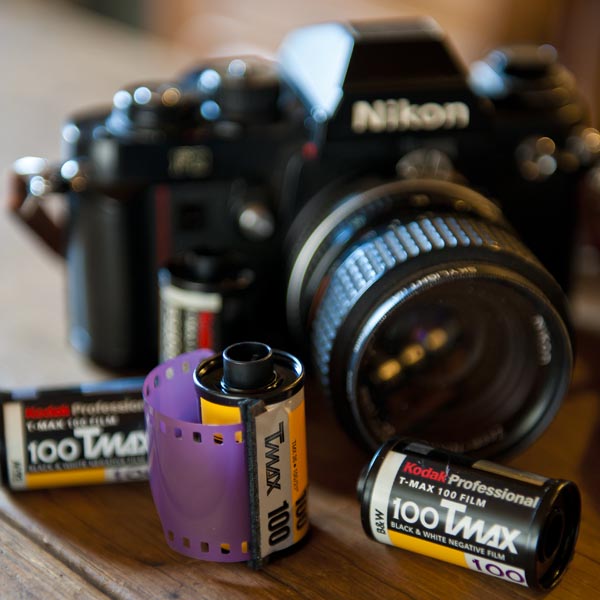
Eastman-Kodak, serving professional and amateur photographers for more than a century.
(© All Rights Reserved)

George Eastman (born 12 Jul 1854; died 14 Mar 1932) was an American inventor and industrialist who is considered by many to be the father of modern photography. Founder of the Eastman-Kodak Company, he invented roll film in 1884, which, after various improvements and refinements, resulted in the famous Kodachrome film in 1935. Eastman also developed the Kodak camera (1888) – the first camera designed specifically for his roll film, and the single photographic innovation that probably played the biggest role in expanding photography from a specialist field to a populist hobby for everyday people. Thanks to these and other photographic innovations, Eastman’s legacy looms large over the last century of photography.

Besides being a great innovator, Eastman was also a major philanthropist. He established, among others, the Eastman School of Music as well as schools of Dentistry and Medicine at Rochester University. He also funded clinics serving low-income residents in various European cities.

Amazingly, George Eastman’s life ended in suicide (he suffered chronic pain in the later part of his life due to a degenerative spinal problem), but even this dark tale has a silver lining of dry wit – he left a suicide note reading, “To my friends: my work is done. Why wait?”

The Eastman-Kodak company was a dominant player in the photographic market throughout the 20th century, at one stage in the mid 70s claiming a 90% market share of photographic film sales in the US. The name “Kodak” became so synonymous with everyday, amateur photography that the company tagline, “A Kodak moment”, entered the common lexicon as any moment or event that is special enough to be captured on film.

While large volumes has been written about George Eastman and his Eastman Kodak Company, I thought I’d leave the last word to musician Paul Simon and his 1973 ode to Kodachrome:

Kodachrome, they give us those nice bright colors
They give us the greens of summers
Makes you think all the world’s a sunny day, oh yeah
I got a Nikon camera, I love to take a photograph
So mama don’t take my Kodachrome away!

Get proactive on World Population Day

The world population currently numbers about 7 053 000 000 people. That’s a little over 7 billion.

According to the latest figures, an expected 350 000 new babies will be born into the world today. Over the same 24 hour period about 150 000 deaths will occur. To put this into perspective – in the 2-odd minutes you may spend reading this blog post, almost 500 births will take place, and 200 people will die.

For this year’s World Population Day, the focus falls on Universal Access to Reproductive Health Services.

Access to proactive reproductive health care holds the key to a world where every pregnancy is wanted, every childbirth is safe, and every young person’s potential is fulfilled.

Of the 350 births today, many will be to women who are shockingly uninformed and under-serviced on all aspects of reproductive health, from birth control to safe childbirth to maternal and newborn healthcare. As a result of this, it is estimated that no less than 800 women die each day during childbirth, which is a tragedy in itself, but also means almost a thousand new children each day who have to face the world without a mother – their primary source of love, care and support. Given this situation, it is not surprising that among children below the age of 5, there are almost 20 000 deaths per day.

Universal access to Reproductive Health Services, with a key focus on education and services relating to pregnancy and contraception, is a critical, basic component of a healthy, stable population.

In a report by the Guttmacher Institute entitled “Adding it Up – Costs and Benefits of Investing in Contraceptive Services in the Developing World” it is reported that among women of reproductive age in developing countries, 867 million require contraception because they are sexually active but do not want a child in the next two years. Of these, 222 million currently don’t have access to modern contraceptive methods and rely on traditional, often unsafe and ineffective methods. As a result, an estimated 80 million unintended pregnancies will occur in the developing world in 2012. These will result in 30 million unplanned births, 40 million abortions and 10 million miscarriages.

Of course a critical issue in addressing this problem is funding. The cost of the current provision of contraceptive care in the developing world is about US$ 4 billion annually, while the required cost for fully meeting the total need for modern contraceptive methods in the developing world would exceed US$ 8 billion.

On the positive side (and this is the key message), this additional US$ 4 billion investment in contraception is estimated to result in a saving of almost US$ 6 billion in maternal and newborn health services costs. Addressing a humanitarian tragedy and gaining almost US$ 2 billion in the process – surely that makes sense?

So what can we do about it? Given that investing in improved reproductive health services is actually an investment with positive returns, it is not a case of the funds not being available, but of a need for the refocusing of some of the available funds towards proactive pre-pregnancy education and health services rather than reactive post-childbirth services. The best we can do is to get involved and support organisations who are working towards this change, and who are putting pressure on governments and donor agencies to apply available funding more proactively. Even just talking about this and creating awareness can help.

We can work together towards achieving the vision of the United Nations Population Fund‘s vision: “Achieving a world where every pregnancy is wanted, every childbirth is safe, and every young person’s potential is fulfilled.”

Happy World Population Day!

Get your rhyming caps on – it’s Clerihew Day!

In celebration of Clerihew Day, and in keeping with the science slant of this blog, herewith my clerihew for the day:

Isaac Newton was a Sir
whose theories caused quite a stir
problems that made others grapple
he solved by being hit by an apple!

Newton, putting the science into the apple!
(© All Rights Reserved)

A clerihew? Say what?

Clerihew Day is the birthday of Edmund Clerihew Bentley (1875-1956), writer and poet, and most famously, the inventor of the clerihew – a light and frivolous 4-line biographical poetic form. The rhyme scheme is AABB, with lines of irregular length and meter. The first line typically contains a personal name, while subsequent lines are biographical in nature, but with a fun, lighthearted touch.

So, anyone else wants to have a go?
Please comment if you have a science clerihew!

Invention of the microwave oven – time-saver or taste-killer?

Today we celebrate a device that, despite being a really innovative invention, has in the eyes of many become synonymous with anti-innovation in the kitchen.

On this day, way back in 1894, Dr Percy Spencer (9 Jul 1894 – 7 Sep 1970) was born – the self-taught engineer who, many years later, invented the microwave oven. Before the Second World War, Sir John Randall and Dr HA Boot invented the magnetron tube, with which they were able to produce radar microwaves. A few years later, after the war, Percy Spencer was doing research work on the magnetron tube. While working on an active radar set he noticed that a chocolate bar in his pocket had melted – the radar melted the chocolate bar with microwaves. From this discovery, he started investigating the possibility of using microwaves to cook food. Spencer fed microwave power from a magnetron into a sealed metal box. When he placed food into the container and radiated it with microwave energy, the temperature of the food rose rapidly. This resulted in the development of the microwave oven – a device that cooks food with radiation used to heat polarised molecules in the food.

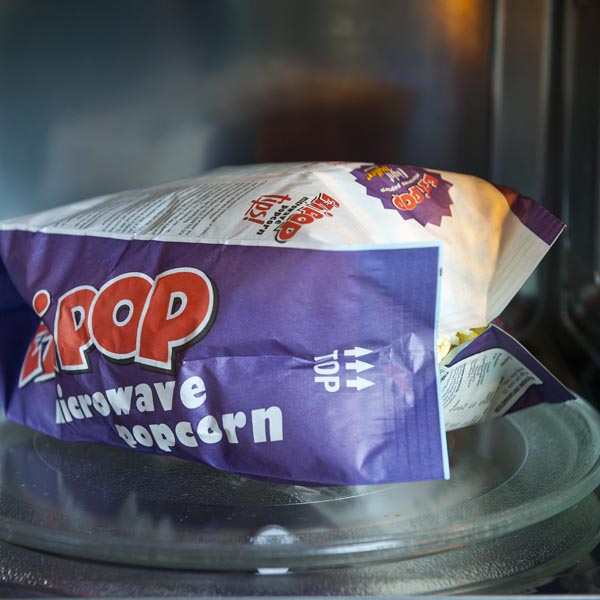
The microwave oven – only good for popping corn?
(© All Rights Reserved)

The first microwave ovens were large, heavy units, used in restaurants and commercial kitchens. The first countertop microwave was introduced in the mid sixties, soon becoming a ubiquitous device in kitchens around the world.

While the microwave oven is great for reheating food, cooking vegetables, and heating liquids like water or milk, it has not yet achieved any real culinary status. For the most part, it is used to heat ready-made, pre-packaged microwave meals. Microwave cooking can be quite healthy – it’s impact on nutrient content in food is said to be no worse than conventional heating, and thanks to the shorter preparation time, more micronutrients may be retained when microwaving vegetables, for example. But it is limited in application, and for the most part not capable of achieving the culinary effects and flavours created with conventional baking, frying, browning and slow-cooking. (Somehow I don’t expect to see Jamie Oliver’s “The Italian Microwave” or Nigella Lawson’s “The Microwave Goddess” hitting the cookery shelves anytime soon!)

So while the microwave oven definitely has it’s place in the modern kitchen, it may also probably stand trial as the primary culprit in thousands of dull, colourless and uninteresting meals prepared in the past 40 years.

Where do you stand – is the microwave oven an invention to celebrate, or to lament? Do you find it a must-have time-saver in the kitchen, or do you still have difficulty stomaching most microwave meals?

Today is SCUD Day! What day!? Read on…

According to numerous holiday and celebration sources, today is the day to ‘SCUD’, that is, to Savour the Comic and Unplug the Drama. Still a bit confused? So was I.

The basic idea behind the day is to remind people to focus on the bright side of life, and to stop being such drama queens and kings. Have some fun, take life a little less seriously, laugh more. And given the health benefits such a turn of attitude can bring, it’s certainly a day (and a sentiment) worth celebrating.

Don’t worry, be happy!
(© All Rights Reserved)

It has long been suggested that, just like we tend to smile when we’re in a good mood, the arrow also points the other way – our mood may improve when we smile (the “facial feedback” hypothesis). This is nothing new – Charles Darwin already suggested in 1872 that “the free expression of outward signs of an emotion intensifies it”.

The problem is that scientifically proving this relationship is quite difficult, with various factors potentially affecting the results. it is possible that, aside from the action of smiling, the instruction to smile may also create an emotional response (positive or negative – try telling a teenager to smile and watch the reaction!). Furthermore, sitting in a room full of smiling people is likely to raise your mood, whether you’re smiling or not.

Various research projects have been reported where these problems have been innovatively addressed, for example, by asking recipients to hold a pencil either between their teeth (which mimicks a smiling action) or between their lips (which does not), or by using more neutral smiling instructions, such as “Move your lips to expose your teeth while keeping your mouth closed, and pull the corners of your lips outward”.

Once participants were made to simulate a smiling expression, their responses to various positive and negative stimuli were measured, and compared to non-smiling control groups. In general it has been found that the smiling action intensified the participants’ reaction to positive stimuli, but seems to have less impact in response to negative stimuli.

For example, looking at a funny cartoon will lift your mood more when you’re smiling than when you’re not. On the other hand, reading a list of your monthly debts is depressing, and smiling while reading it is unlikely to leave you notably less depressed.

[Strack (1988), Soussignan (2002)]

So, your assignment on SCUD Day is to think happy thoughts and to expose yourself to positive stimuli. At the same time, pack out a big smile, and you will double the positive impact. Oh, and while you’re at it, surround yourself by others doing the same thing – the positive reinforcement of seeing others happily smiling back at you will lift your mood even more.

Come on, Savour the Comic, Unplug the Drama!

Very clever! Commemorating the design of the Phillips screw

There are so many amazingly clever inventions around us that we often fail to appreciate, or even notice them. Especially if it’s something basic and workmanlike.

The Phillips screw is one of those inventions.

Three cheers to the Phillips screw – simple, elegant, effective.
(© All Rights Reserved)

Patented by Henry F. Phillips on this day in 1936, the Phillips screw and screwdriver had a fundamental impact on the manufacturing and production industries. The Phillips screw facilitated greater automation in production lines that use powered screwdrivers, through the introduction of a clever tapered crosshead screw design that ensures the screwdriver centres itself in the screw head.

Based on his screw and screwdriver patents, Phillips founded the Phillips Screw Company, and after some initial rejections, managed to persuade the American Screw Company to invest half a million dollars in the manufacture of the screws.

The first major application of the Phillips screw was in the manufacture of the 1936 Cadillac, and within 4 years most manufacturers had switched to the new screws. Worldwide, the Phillips screw and screwdriver quickly became the most popular design – a position that it still occupies to this day, despite numerous attempts at an improved design.