Page 25 of 34

Give Mother Earth a break on Zero Emissions Day

Care for the health and wellbeing of Mother Earth? Then today is a good day to show her how you feel – it’s Zero Emissions Day, time to take a 24 hr holiday from fossil fuel energy.

Zero Emissions Day (ZeDay) celebrates it’s 5th birthday in 2012, and this year the theme is ‘Reboot!’. As the ZeDay website says, “Shut down everything non-essential powered by fossil fuels for a day – press reset – and then start up fresh. ZeDay 2012 marks our new beginning and you can help make it happen…”
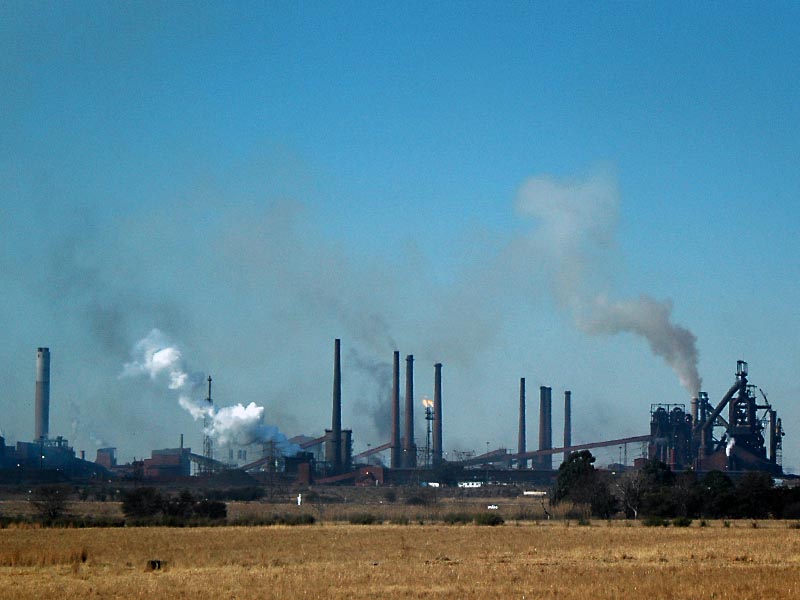
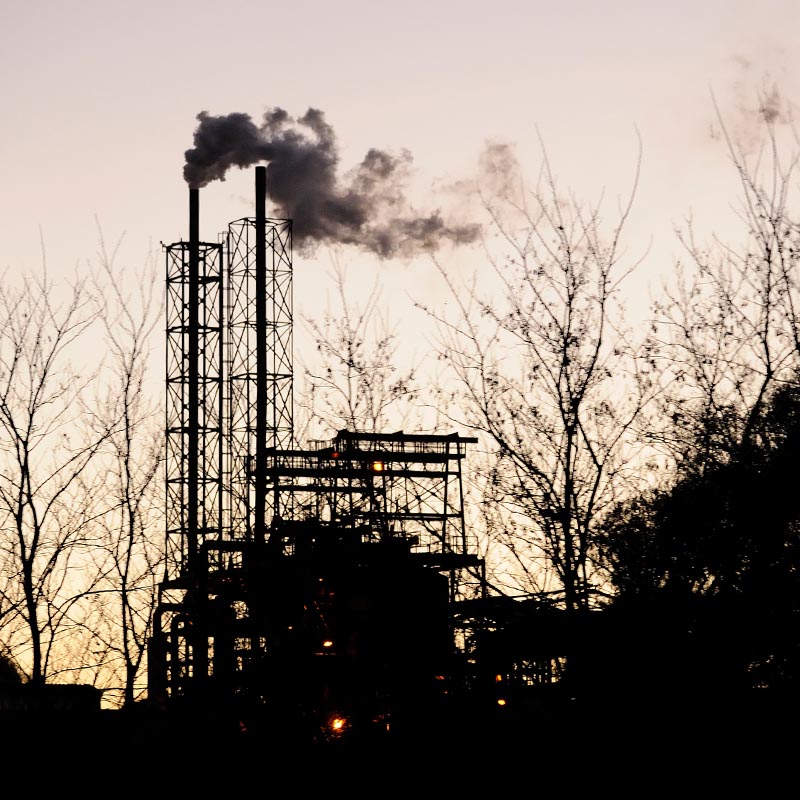
This is what we’re doing to the environment with our energy-hungry lifestyles.
(© All Rights Reserved)

The idea is simple – don’t burn oil, gas or coal and minimize your electricity use – do this for just one day. The amount of energy consumed by modern society is staggering, with more and more power-hungry devices becoming part of our daily lives – ebook readers replacing books, tablets replacing notepads, GPS devices replacing maps, smartphones replacing personal contact… The list goes on. And all these devices need to be charged and powered… And all this power needs to be generated… And the bulk of the electricity generated globally is still fossil-fuel based, with only a small percentage generated through renewable sources such as water and wind.

The purpose of ZeDay is to give the earth a ‘rest day’ – from biblical times, the idea of a day of rest at regular intervals was promoted as a good thing, and with the pace of life increasing to the point where we simply don’t slow down anymore, re-instituting the rest day concept is a very necessary. We all need a chance to shut down and reboot every now and then, and the same applies to the environment. The date of 21 September was selected to coincide with the United Nations International Day of Peace.

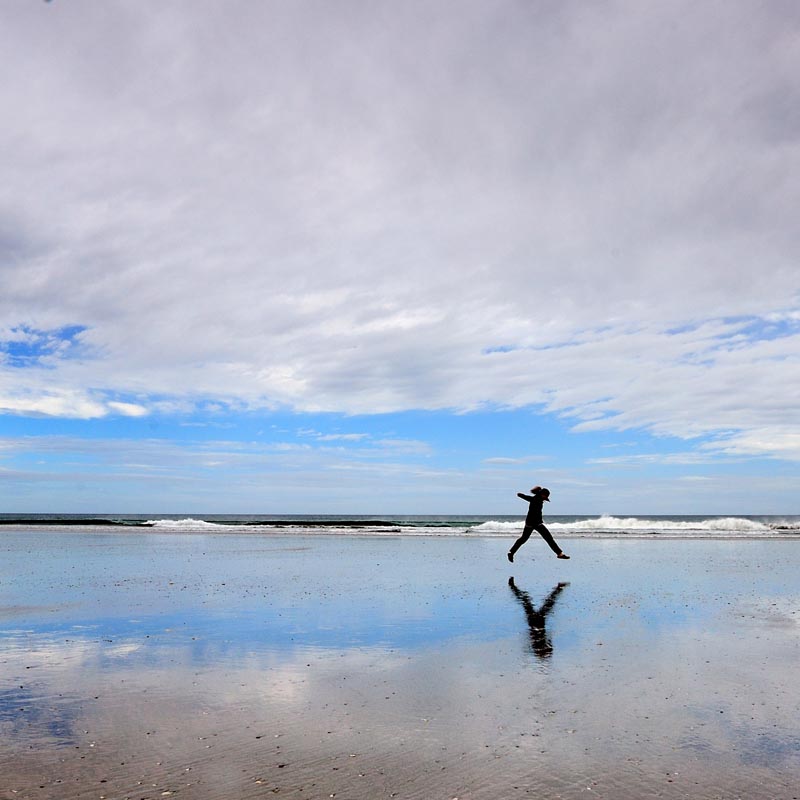
Take a break, and give Mother Nature a breather as well.
(© All Rights Reserved)

Realistically, completely avoiding the consumption of any fossil-fuel generated energy for 24 hours is almost unthinkable – no driving, no cooking, no hot water, no computers, no TV, radio or Internet – and people who have done it have reported the experience to be ‘profoundly transformative’. Definitely something to strive towards – even if it’s too late to do it today, seeing that the day is already halfway through, nothing stops us from celebrating our own private ZeDay on any other date. In fact, if you can achieve more than one a year, even better. Admittedly many people will never quite go this far, but even if the day just acts as a reminder that we can all do our bit to limit our energy consumption in daily life, it would already be a victory for Mother Earth.

Go one, try it – imagine how good it’ll make you feel about yourself!

(OK, I should switch off now…)

James Dewar, Thermos and the vacuum flask

Today we celebrate the birthday of Sir James Dewar, Scottish chemist and physicist, born on 20 September 1842.

Dewar was a dynamic, innovative scientist who was responsible for many scientific advances in both chemistry and physics at the turn of the century, but is perhaps best remembered for an innovation that he never received any financial recognition for. In 1892 he developed an insulating flask known as the Dewar flask, which became the inspiration for the legendary Thermos insulating flasks. The design of Dewar’s vacuum flask, commercially introduced by Thermos in 1904, is so simple and elegant that it has remained virtually unchanged to this day, and it remains as useful as it was more than a century ago.

A thermos flask and a steaming cuppa – gotta love a simple, effective design.
(© All Rights Reserved)

Dewar’s initial motivation for developing an insulating container came from his work in the liquefaction of gases, where he needed to keep the liquified gases at a very low temperature. In the early 1890’s he designed a vacuum-jacketed container (a double-walled flask with a vacuum between the two silvered layers of steel or glass) to store the gas. The vacuum layer in the flask proved so efficient at preventing the transfer of heat to the gas that he was able to preserve it in liquid form for much longer than was previously possible, thus enabling him to study the properties of the liquified gas in much more detail.

Sadly, Dewar never patented his invention, which allowed the newly formed German company Thermos GmbH to take over the concept and develop a commercial version of the vacuum flask.

The Thermos flask was an international success, used extensively in both domestic and industrial applications ever since it’s release. The name “Thermos” became colloquially synonymous with vacuum flasks in general, to such an extent that it was declared a ‘genericized trademark’ in the US in 1963.

Personally, while I find it sad that Dewar never got any financial recognition for this amazing invention, I have to admit my undying commitment to my good old Thermos flask. It goes everywhere with me – I am seldom on assignment out of town without a trusty flask of hot, home-brewed coffee by my side.

Come to think of it, I should definitely pour myself a steaming cuppa from my trusty Thermos in celebration of Dewar and his great invention!

Machine translation, social media and talking like a pirate

Today, as you most likely know, is Talk Like a Pirate Day. Of all the holidays on the silly side of the spectrum, this is surely one of the most famous – the amount of websites and blogs dedicated to the day is mind-boggling, and it even features regularly in the news.

Thanks to smartphones, social media and machine translation, pirate-speak rules the cyber seas for a day.
(© All Rights Reserved)

My personal theory on the popularity of the day is that it is all thanks to technology, and more specifically machine translation and social media. Thanks to advances in machine translation there are numerous translators available on the web and downloadable as smartphone apps, allowing you to enter a sentence or phrase in English, and instantly get some pirate-speak version of the phrase spat back at you.

And thanks to social media, every poster and tweeter becomes a foul-mouthed pirate for a day, filling up cyberspace with their pirate-speak wisdom.

While many of these pirate-speak translators only perform the most basic word substitutions, with perhaps a small set of additional linguistic rules, the fact remains that machine translation – not long ago still only the subject of science fiction and academic research – has well and truly become part of our daily lives.

Machine translation can be done using a range of different techniques, including rule-based, statistical and example-based translation – different approaches work best in different applications. While no systems have yet achieved the ultimate goal of fully automated, high-quality machine translation of general text, massive progress are still being made, and excellent results have been achieved when applying machine translation within limited, well defined domains, for example weather reports or legal documents. The technology also deals effective with short phrases, making it very useful in search engines, social media sites and the like.

Getting back to Talk like a Pirate Day, here’s the results from a few web-based pirate-speak translators, using as our input the classic opening line from Ernest Hemingway’s The Old Man and the Sea (1952), “He was an old man who fished alone in a skiff in the Gulf Stream and he had gone eighty-four days now without taking a fish.”

“Blimey! He was an barnacle-covered scurvy dog who fished alone in a skiff in thee Gulf Stream and he had gone eighty-four days now without taking a fish.” (http://speakpirate.com/)

“He be an old man who fished alone in a skiff in th’ Gulf Stream an’ he had gone eighty-four days now without takin’ a fish.”
(http://www.syddware.com/cgi-bin/pirate.pl)

“The orrrnerrry cuss werrre bein’ an barrrnacle-coverrr’d swashbucklerrr who fish’d like an isle in a skiff in th’ Gulf Strrream and he had gone eighty-fourrr days now without takin’ a fish, and a bottle of rum!.”
(http://www.capstrat.com/go/pirate/)

“He was an old man who fished alone in a skiff in t’ Gulf Stream and he had gone eighty-four days now without takin’ a fish.”
(http://www.fissio.com/pirate.pl)

Well there you have it – conclusive prove that not all translators are created equal!  Whichever dialect you opt for, have fun and enjoy all the seafaring silliness. 🙂

Get in on the action on World Water Monitoring Day

September 18th is World Water Monitoring Day. This day has been observed since 2003, with the aim being to increase public awareness of water quality and water quality monitoring.

Even though World Water Monitoring Day is still observed on 18 September each year, the initiative has in recent years (since 2009) been expanded to become the World Water Monitoring Challenge, a programme promoting citizen participation in monitoring local water resources around the globe. Basic, low cost water test kits can be ordered through the World Water Monitoring Challenge website, and facilities are provided for volunteers to upload their test results to a global water quality database. The parameters being tested include temperature, acidity (pH), clarity (turbidity) and dissolved oxygen (DO).

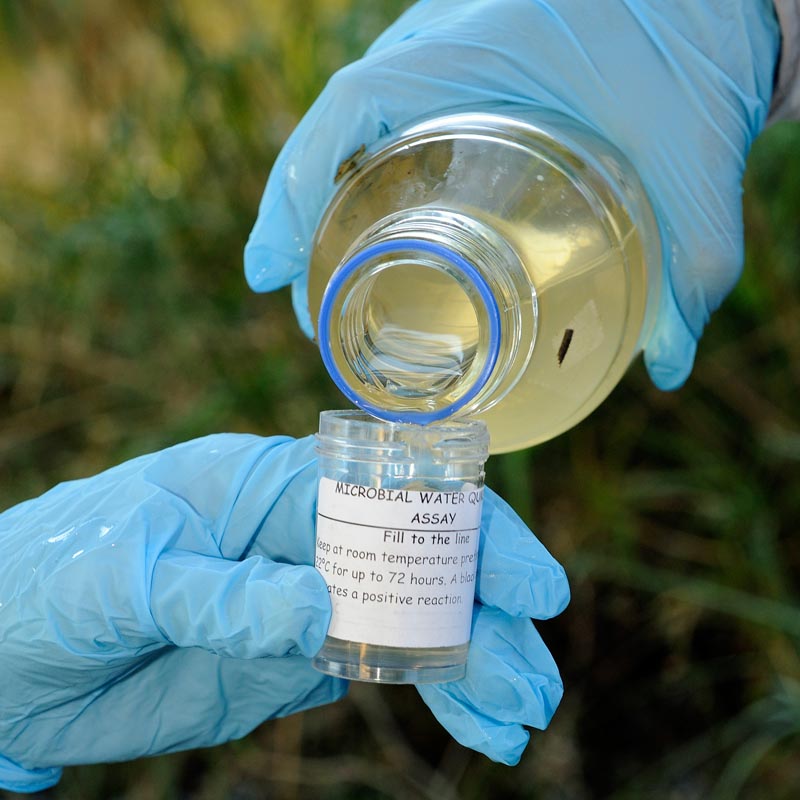
Getting schools and community groups involved in water monitoring is a practical and useful way to spread the water quality message.
(© All Rights Reserved)

One of the goals of the Challenge is to expand participation to a million people in 100 countries by 2012. This is quite a stretching target, given that 2011 saw the involvement of just over 330 000 people from 77 countries. Even if the one million target is not reached this year yet, it remains a most impressive initiative, and considering the importance of keeping our global water resources useful and healthy, something that is definitely worth supporting and promoting. Conducting water tests as a schools programme or community initiative not only helps gather valuable data, but also raises awareness among participants about water quality and how their actions can directly and indirectly impact on their local water resources.

To ensure maximum particilation, the extended World Water Monitoring Challenge now runs from March 22 (United Nations World Water Day) to December 31 each year. So there’s no excuse not to get in on the action.

Occupy Wall Street and the rise of the 99%

It’s hard to believe a year has passed already, but today marks the first anniversary of the Occupy Wall Street movement that started on 17 September 2011 in Zuccotti Park in New York City’s Wall Street financial district.

The protest, organised by Adbusters, a Canadian activist group, started with a group of 200 people overnighting in Zuccotti Park, with sleeping bags and blankets. The group grew rapidly and the protest sparked similar actions around the world, becoming one of the most visible and high profile international peaceful protest actions in recent memory.

The original occupation of Zuccotti Park lasted less than 2 months (protesters were forced out of the park on 15 November 2011) but the larger movement continued for three more months, with occupations of banks, corporate headquarters, board meetings etc. in numerous cities across the world.

Protesting against a world built on money and greed.
(© All Rights Reserved)

The main issues that protesters of Occupy Wall Street, and the wider Occupy Movement, have focused on include corporate greed and corruption (particularly in the financial sector) as well as social and economic inequality. One of the most effective and striking parts of the movement has been their “We are the 99%” slogan – a concise, catchy, thought-provoking statement addressing the huge inequalities that exist in terms of income and wealth distribution between the rich (the 1%) and the poor (the 99%). The movement also suggests that the “99%” suffer as a consequence of the greedy and self-serving actions of a tiny minority.

The “We are the 99%” campaign has ben criticised as being overly simplistic, with many of those being protested against (Corporate CEO’s, bankers, stock traders and the like) falling outside the “1%”, while a number of sport stars and artists (including some celebrities who came out in support of the campaign) actually form part of the vilified few. In terms of the campaign’s effectiveness, however, the New York Times reported that, “Whatever the long-term effects of the Occupy Movement, protesters succeeded in implanting “we are the 99 percent” into the cultural and political lexicon.” Similarly, Paul Taylor from the Huffington Post called the slogan “arguably the most successful slogan since ‘Hell no, we won’t go,'” of Vietnam war era.

The Occupy movement has also been an interesting case study of the use of technology and social media to organise widespread protest actions. Using the hashtag #Occupy, and organising through websites such as Occupy Together protesters have managed to very effectively organise their activities. The protests have also been actively promoted and supported on social media sites like Facebook, with 125 Occupy-related pages being listed on Facebook by mid-October, less than a month after the start of Occupy Wall Street.

Thanks to the global, immediate nature of these communication channels, protests spread internationally at an incredible rate. By 9 October 2011, protests have taken place in almost 100 cities in more than 80 countries.

Protests were initially allowed to carry on without serious interference from authorities. This started to change by mid November – between November and December most major protest camps have been cleared out, with the last camps, in Washington DC and in London at St Paul’s Cathedral, cleared by February 2012.

Looking back a year after the fact, it is difficult to accurately quantify the impact that the Occupy Movement has made in the US and internationally. The terms “Occupy”, “1%” and “99%” have very much become part of global dialogue, and the movement has certainly raised significant awareness regarding income inequality, and the social and political problems that flow from this.

Whether this will have any long term effects, I guess we will have to wait and see.

Celebrating the International Day for the Preservation of the Ozone Layer

Today, 16 September, is a critically important day for this little planet of ours – it’s World Ozone Day, or to be more precise, the International Day for the Preservation of the Ozone Layer.

The day was officially proclaimed as one of the United Nations’ International Observances in 1994, falling under the United Nations Environment Programme, UNEP. The date was specifically selected to commemorate the signing of the Montreal Protocol on Substances that Deplete the Ozone Layer on 16 September 1987, marking this year as the 25th anniversary of the Montreal Protocol.

So why is the preservation of the ozone so important? I’m sure it’s a lot more complicated than my basic understanding of the subject, but in essence the ozone in the stratosphere plays a critical role in absorbing much of the sun’s harmful ultraviolet radiation. Furthermore ozone in the lower atmosphere also plays a role in removing pollutants from the air.

Not a pretty picture.
(© All Rights Reserved)

Now as we humans are prone to do, many of our actions are not all that considerate of the health of the earth, and can be very detrimental to the ozone layer. The Montreal Protocol aimed to identify and address substances and actions that contribute to the depletion of the ozone in the atmosphere, and is one of the great examples of international cooperation towards a global good. As an outcome of the Protocol, the phasing out of the use of ozone depleting substances is helping protect the ozone layer for generations to come. The international awareness created through the Montreal Protocol has also contributed to a greater appreciation and awareness of the effects of climate change on the earth.

To help create continued awareness, UNEP’s OzonAction Programme has developed a Public Service Announcement (PSA) video, in 6 UN languages, for global broadcasting and viral distribution.  The English announcement is embedded below, while links to the Arabic, Chinese, French, Russian and Spanish announcements can be found here.


For more information, the UN website provides some very interesting general background on ozone preservation, as well as information of some ozone depleting substances in different industry sectors.

Protecting our atmosphere (and environment) for generations to come.
(© All Rights Reserved)

In celebration of World Ozone Day, take a minute today to appreciate the ozone layer and how it contributes to the world and the environment as we know it. Not only does it protect us humans from life threatening cancer-causing UVB radiation, but it is also critical for plant health, marine ecosystems and terrestrial and aquatic biogeochemical cycles.

The theme of this year’s event is “Protecting our atmosphere for generations to come” – surely a cause well worth supporting and celebrating.

Greenpeace and the international environmental debate

Today we commemorate the founding of the well-known international non-governmental, environmental organisation, Greenpeace.

Greenpeace grew out of the anti-nuclear protests in Vancouver, Canada in the early Seventies. On this day, 41 years ago in 1971, protesters boarded a chartered ship, which they christened ‘Greenpeace’, to protest the nuclear tests conducted by the US in Alaska. The name of the ship became associated with the protesters, and the Greenpeace organisation developed out of this protest. While its founding was not very formal, and many individuals were involved in the early days, a number of people have been singled out by Greenpeace itself as being influential in its establishment. These include long-haired, beardy journalist Bob Hunter, former entrepreneur David McTaggart and long-time activist couple Dorothy and Irving Stowe.

Over time the organisation spread to several countries, and their activities have expanded from anti-nuclear protests to campaigning on a wide range of environmental issues including climate change, deforestation, toxic pollution and agriculture.

Whether or not you agree with the sentiments expressed by environmental activists, you have to appreciate the important role they play in the environmental debate.
(© All Rights Reserved)

Greenpeace has been described as the most visible environmental organisation in the world. As such, they play an extremely important role in keeping sensitive environmental issues in the public eye, and influencing both the public and private sectors to limit negative impact on the earth and its people. They certainly don’t shy away from controversy, adopting a decidedly in-your-face stance against companies, organisations and activities they consider dangerous or detrimental to the environment. It is no surprise then, that Greenpeace has been on the receiving end of more than their share of lawsuits for reputational damage and lost profits.  At a more shady level, some of Greenpeace’s enemies have also been reported to adopting rather unsavoury tactics, including spying, phone tapping, death threats, violence and even terrorism against the organisation.

Greenpeace has been validly criticised for their sometimes fundamentalist and anti-science stance, with critics citing unfortunate cases where invaluable scientific research have been destroyed through their activities.

That said, Greenpeace, and other organisations of their ilk, continue to play a critical role in the international environmental debate, and considering the multinational industrial giants they are up against, they probably need all the support they can get.

Happy birthday, Greenpeace – keep ’em honest…

Conquering mountains with a little help from Viagra

Today we celebrate the birthday of Ferid Murad, born on this day in 1936.

So why is the birth of this American-Albanian physician noteworthy? Well, he is the co-winner of the 1998 Nobel Prize in Physiology or Medicine, together with Robert Furchgott and Louis Ignarro. Their award-winning research involved studying the effect of nitroglycerin and related nitric oxide-releasing drugs on the body. The release of nitric oxide in the body acts as a signalling molecule in the cardiovascular system, which causes blood vessels to dilate.

While the above fact may not necessarily cause Joe Average to sit up and take note, what is interesting is that the research of Murad et al was instrumental in the development of the drug Sildenafil citrate, used to treat, among other things, erectile disfunction and pulmonary arterial hypertension.

Yep, Dr Ferid Murad’s research was critical in the development of Viagra.

Now even though the mention of Viagra almost involuntarily calls to mind the sexual application of the drug, this is a family friendly blog, and so I thought it might be prudent to discuss a different, and rather interesting, application of Sildenafil citrate. it has been reported, fairly recently, that Sildenafil can be successfully used in the treatment and prevention of high-altitude pulmonary edema (HAPE), a condition associated with altitude sickness typically suffered by mountaineers.

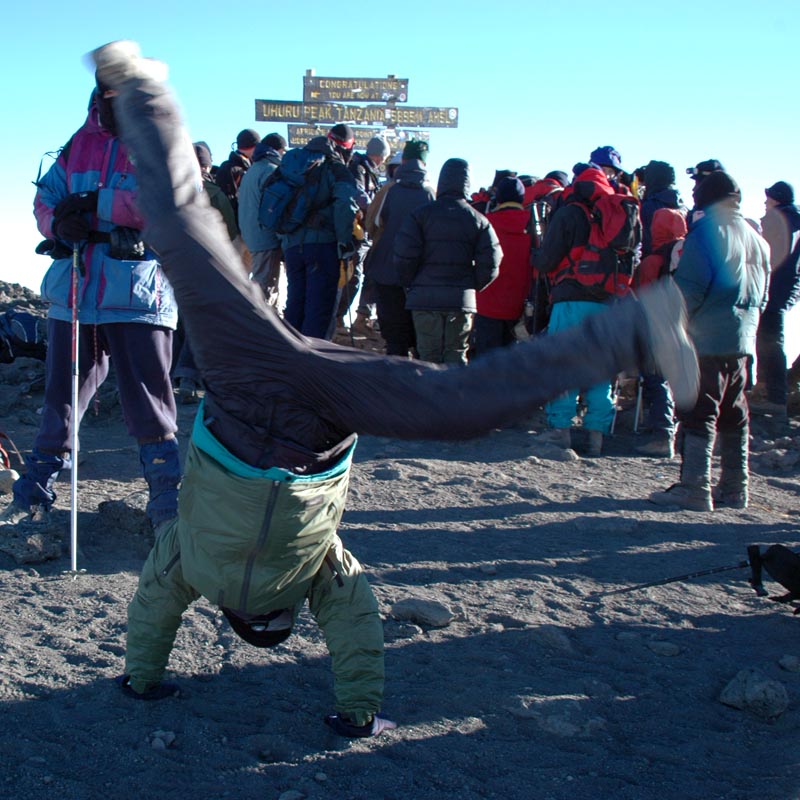
Uhuru Peak, Mount Kilimanjaro, Tanzania. 5895 metres above sea level. Guess who took Viagra!?
(© All Rights Reserved)

Anyone who has ever climbed a mountain of significant height, will be well aware of the dangers of HAPE and altitude sickness. HAPE involves the accumulation of fluid in the lungs, a condition that can occur in otherwise healthy mountaineers, typically at altitudes above 2500 metres. The scary thing is that there is almost no preventative actions that can be taken to avoid altitude sickness striking – it can strike the healthiest, fittest member of a mountaineering team, and mountaineers can scale the same heights countless times without problems, only to become victim to altitude sickness the next time they climb.

As such, having a treatment such as Sildenafil handy as part of your mountaineering first aid kit can be extremely valuable, and even life-saving, if for some reason the normal treatment of HAPE (rapid descent) is not possible.

Scaling high mountains can be a potentially safer experience with Sildenafil citrate on hand to fight altitude sickness.
(© All Rights Reserved)

So, Viagra can help you scale mountains.  Which I guess makes the fact that tall mountain peaks also happen to have something of a crude Freudian symbolism to them, very apt.

My, who’d have thought?

Positive Thinking Day – Accentuate the positive (but acknowledge the negative…)

Today is Positive Thinking Day. The day reminding you that if you can think it, you can do it. That if you smile and focus on positive thoughts, you will feel better. That you need to visualise success in order to achieve it.

Yeah right…

The ‘power of positive thinking’ has been one of the most jumped-upon bandwagons ever in motivational pop-psychology – so simple, such a positive message. Try a Google or Amazon search for ‘positive thinking’ and you will be inundated with self-help books, courses, motivational posters, famous quotes, you name it.

“Happiness is evolution’s way of saying, go out and discover new things. Go play, go explore” – Adam Anderson Canada Research Chair in Affective Neuroscience at the University of Toronto.
(© All Rights Reserved)

It all started as a legitimate new field of psychology in the 90’s, known as Positive Psychology, led by the likes of psychologist Martin Seligman. Where much of the the focus in psychology had historically been rather negative (mental illness, addiction, etc), the idea behind positive psychology was to explore and better understand positive aspects such as happiness, virtue, resilience and optimism. The idea was never, however, to advocate indiscriminate, mindless optimism  – even Seligman long ago expressed the warning that optimism “may sometimes keep us from seeing reality with the necessary clarity”.

Many aspects of positive psychology struck an obvious chord with motivational speakers, self-help authors and the like, and soon positive thinking went from one weapon in the psychologist’s arsenal to the silver bullet to solve all the world’s problems.

As such it’s not surprising that there has been a bit of a backlash from the scientific community to the magical magnificence of positive thinking. For example, some of the literature showing the correlation between a positive attitude and good health, may have stretched things a bit by using this relationship to support the claim that a positive attitude will result in improved health. Yes, there seems to be a clear correlation between attitude and health, but little prove of causality. Does positive thinking cause good health, or does good health result in a positive attitude? Or can it be that there is no causative relation between health and attitude at all, and that it is just that a specific subset of people in society (perhaps those with, for example, naturally high energy levels) happen to exhibit both good health and a generally positive attitude.

A healthy dose of pessimism or negativity may also help us identify potential challenges we face in pursuing our goals, which may help us better prepare for these eventualities, thereby actually increasing our chances of success.

Researchers at Wellesley College have found that forcing people out of their natural attitudinal state may have a detrimental effect on their performance – a group of defensive pessimists who were forced to try and change their attitude and ‘cheer up’ actually performed worse at subsequent tasks. A 2001 study by Seligman and Isaacowitz, involving participants from an elderly community, also found that the pessimists in the group were less likely than the optimists to fall into depression after experiencing negative life events such as the death of a partner or good friend.

Recent years have seen a resurgence in the field of positive psychology, with psychologists like Canadian Jamie Gruman, co-founder of the new Canadian Positive Psychology Association, again promoting the study of human well-being and happiness and emphasizing strengths rather than ailments. The new proponents of the field are careful, however, not to be seen as just another ‘lollipops-and-rainbows’ approach, but rather to promote a balanced approach to living a positive life.

So, I guess the message on Positive Thinking day should be to think as positively as you feel comfortable doing. Even if positive thinking may not necessarily be the magical prescription for good health and a long happy life, I am at least not aware of any studies showing that being positive may actually be bad for your health.

Except of course if you go happily venturing down dodgy, dark and dangerous alleyways because of your unshakably optimistic belief in the goodness of your fellow man…  Or if your unflinching positivity starts driving your less flowery fellow workers to physical violence…

Whichever way you roll, here’s a little song (a wonderful new version of an old classic) to brighten your day. Happy Positive Thinking Day everyone…

Sources:
Can Positive Thinking Be Negative? Scientific American.
Canadian social psychologist proposes science of positive thinking. The Vancouver Sun.


On logical paradoxes and talking sheep

It’s time for a bit of serious concentration again – here’s another fun paradox to get your head around…

Today is the birthday of Haskell Brooks Curry (12 Sep 1900 – 1 Sep 1982), an American mathematician and a pioneer of mathematical logic. He specialised in combinatorial logic, and some of his work found application in the development of modern computer programming languages.

While working on a strand of logic called ‘naïve logic’, he came up with a logical construct that became known as Curry’s paradox.

Curry’s paradox – confirming that sheep are smarter than we think!
(© All Rights Reserved)

The paradox is based on the idea of a ‘conditional claim’, or (If A, then B). Consider the following conditional claim:

“If this sentence is true, then sheep can speak English.”

Even though the second part of the sentence is false (last time I checked), there’s nothing stopping us from analysing the truth of the sentence.

The quoted sentence is of the form (If A then B) where (A) refers to the sentence itself and (B) refers to the claim “sheep can speak English”. Within the context of Curry’s naïve logic, the way to prove a conditional sentence is to assume that the hypothesis (A) is true, and then to prove, based on that assumption, that the conclusion (B) is true.

So, lets start with the assumption (A) is true. Because (A) refers to the overall sentence, therefore assuming (A) is true implies that the statement (If A then B) is also true. So, because (A) is true, (B) must be true. Assuming the truth of (A) is therefore sufficient to guarantee that (B) is true, regardless of the actual truth of statement (B). Which of course results in a paradox if (B) is, in fact, false.

Phew….

We can even show Curry’s paradox occurring in formal symbolic logic. Assuming there is a formal sentence (X → Y), where X itself is equivalent to (X → Y), then a formal proof can be given for Y:

1. X → X
(rule of assumption, also called restatement of premise or of hypothesis)
2. X → (X → Y)
(substitute right side of 1, since X is equivalent to X → Y by assumption)
3. X → Y
(from 2 by contraction)
4. X
(substitute 3, since X = X → Y)
5. Y
(from 4 and 3 by rule of inference)

There you have it – convincing mathematical proof that sheep CAN speak English! 🙂