Page 10 of 34

Carolus Clusius, father of the Dutch tulip industry

Today is the birthday of Charles de L’Écluse (19 Feb 1526 – 4 Apr 1609), also known as Carolus Clusius. A Flemish doctor and botanist of French descent, he introduced the tulip to Holland, and effectively shaped the image of an entire nation.

Clusius worked throughout Europe as a collector of botanical information and material and also introduced various new plants from outside Europe. In 1593 he became the Chair of Botany at the University of Leiden in the Netherlands. Here he established one of the earliest botanical gardens, where he introduced and grew a wide variety of flowering bulbs, including the tulip. He planted the first tulip bulbs in 1593, and hence 1594 is considered the official date of the first tulip flowering in the Netherlands.

The tulip, one of the main export products of the Netherlands.(© All Rights Reserved)
The tulip, one of the main export products of the Netherlands.
(© All Rights Reserved)

Interest in the lovely tulip flowers quickly blossomed (excuse the pun!), to such an extent that it resulted in a frenzy that came to be known as the ‘tulip mania’. Tulip prices spiraled out of control, and they were even treated as currency by speculators. Tulips became the fourth largest export product of the Netherlands (behind gin, herring and cheese) and many traders became very rich very quickly. It is said that at the height of tulip mania, sought-after tulip bulbs were sold for prices 10 times the annual income of a skilled worker. Of course the economic bubble couldn’t be sustained, and as quickly as fortunes were made, fortunes were lost. Subsequent to this manic period the bulb industry stabilised, eventually growing again to become a huge international trade. Holland currently produces approximately 3 billion tulip bulbs annually, of which the majority is exported.

Clusius’ work laid the foundations of Dutch tulip breeding and their bulb industry, including the tulip industry in particular – a flower that to this day forms an integral component of the visual identity of the Netherlands. The country is popular for its tulip festivals, and it plays host to the world’s largest permanent display of tulips, at Keukenhof.


Drink Wine Day – keep it moderate and reap the benefits

Today, my research tells me, is Drink Wine Day – a day that I (and many people I know) enjoy celebrating a bit more often than only on the 18th of February.

The idea of the day is to celebrate the joys of wine, and specifically the health benefits that moderate wine consumption holds. More than enough has been written about the benefits of drinking wine – many of it, I sometimes think, by writers and columnists who are trying to make themselves feel better about their own wine habits.

Wine - it can be good for you, but watch out that moderation does not spill over into excess.(© All Rights Reserved)
Wine – it can be good for you, but watch out that moderation does not spill over into excess.
(© All Rights Reserved)

Indeed, it has been reported that the antioxidant resveratrol in red wine “helps prevent damage to blood vessels, reduces ‘bad’ cholesterol and prevents blood clots.” Other reported benefits include that it reduces the risk of type 2 diabetes, lowers the risk of colon cancer, slows brain decline, cuts the risk of cataracts and promotes longevity. It may even lower the risk of depression in women.

The key, of course, is that all these benefits apply to wine consumption ‘in moderation’ – a difficult measure to quantify, as it varies from person to person based on age, gender and weight, as well as genetic factors. Most sources, however, seem to agree with the 2005 US dietary guidelines as well as the US Centre for Disease Control and Prevention’s recommendation, which define moderate drinking as one drink (150ml) a day for women and two a day for men. Some guidelines consider anything up to four drinks a day to still be moderate. Different countries also tend to have different measures of moderation, with France appearing to be particularly lenient.

Personally, I think if we’re honest, each person pretty much knows, intuitively, what moderate alcohol consumption is. You may not want to admit it, but you know when you’re exceeding ‘moderate’. And the bottom line is, when you pass this point drinking wine is no longer good for you. It may be fun at the time, but it’s no longer beneficial, and any long term benefits that may be gained from moderate consumption is quickly lost through excessive drinking.

So here’s to wine; here’s to moderation; and here’s to a long and healthy life. Cheers!!

Going dotty about halftone printing

Today we celebrate the birthday of Frederic Eugene Ives (17 Feb 1856 – 27 May 1937), the American photographer who patented the first successful method for halftone photographic printing.

The halftone process was an innovative new way of reproducing photographs in the printed press that enabled printers to produce different shades of grey, as opposed to the basic black and white line-drawings that was the norm until Ives’ invention.

The Ives halftone process basically involved converting a photograph into a pattern of black dots. Darker areas in the photograph were represented by larger dots placed close together, while lighter areas were made up of tiny, spread-out dots. By varying the size and distribution of the black dots, an illusion of shades of grey can be created.

An image rendered as RGB colour halftone and greyscale halftone.(© All Rights Reserved)
An image rendered as RGB colour halftone and greyscale halftone. Even though the images are clearly made up of individual dots, an effect of visual continuity is created when viewed from a distance. (Click on the image for a larger view.)
(© All Rights Reserved)

Frederic Ives wasn’t the first to come up with the idea of halftone printing. William Fox Talbot, one of the great innovators in the history of photography, is credited with the original concept, but his method wasn’t practically viable.

Various screening techniques are used to break up an image into dots. The most common method, based on amplitude modulation, produces a regular grid of dots differing in size only. Other techniques can result in dots with different distributions, and even dots of different shapes.

Moving into colour imagery, Ives also became the first to make a three-colour print from halftone blocks.

The colour halftone process still forms the basis of colour printing; by repeating the halftone process for each colour in the CMYK colour space – cyan, magenta, yellow and black – the optical effect of full colour imagery is achieved thanks to the semi-opaque property of printing ink.

DuPont’s nylon – hard to imagine the world without it

Our subject for today is nylon, the wonder-plastic developed and first produced in the 1930’s by DuPont. Today, 16 February, is the day in 1937 that Dr Wallace Carothers, inventor and research chemist for DuPont, received the first patent for the new synthetic polymer fiber that came to be known as nylon.

The new plastic fiber proved tremendously useful, and to this day is used in a wide range of applications, from industrial (screws and nuts, gears, bearings), to sports (fabrics, fishing line, racket strings), to entertainment (guitar strings), to domestic products (brush bristles, hosiery, carpeting) and many more.

Nylon's strength, flexibility and durability make it a popular material for 3D prototype printing.(© All Rights Reserved)
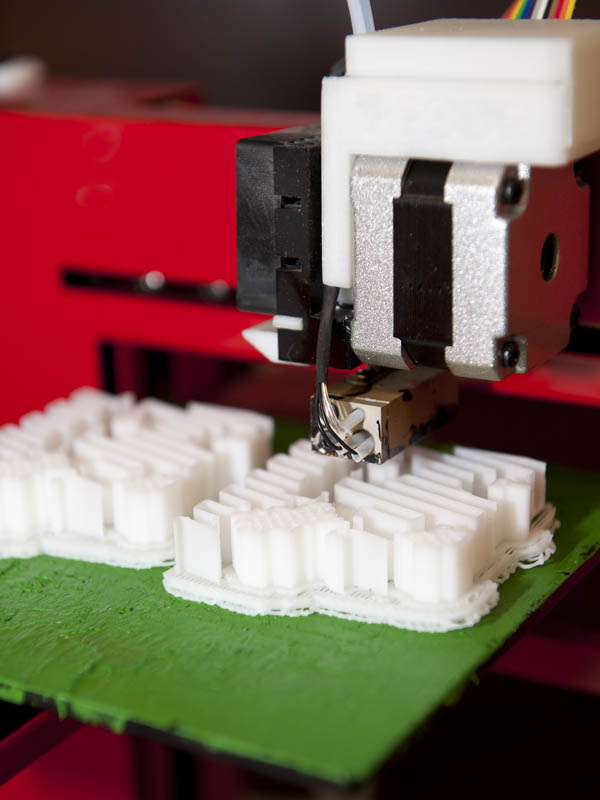
Nylon’s strength, flexibility and durability make it a popular material for 3D prototype printing.
(© All Rights Reserved)

Nylon’s usefulness is the result of a combination of many advantageous properties – it is strong, flexible and durable, with excellent resistance to heat, chemicals, abrasion and wear. It is also resistant to fungi, mould and mildew.

It’s flexibility and strength make nylon ideal for 3D printing applications. Complex gears, bearings etc can be printed using a 3D plastic printer – this is particularly useful for the production of strong, durable engineering prototypes.

Of course few things in life are perfect, and along with all it’s positive attributes nylon does have some drawbacks. Producing nylon is an energy intensive activity, and it is rather difficult to recycle. Burning it produces hazardous smoke and toxic fumes often containing hydrogen cyanide, and if it’s dumped in the garbage it decays very slowly. Some nylon is recycled, often creating nylon pellets for industrial use, but this only accounts for a very small percentage of nylon produced annually.

Despite the recycling downside, nylon has become a ubiquitous part of daily life – so much so that imagining a world without it is nigh impossible.

Decimal Day and the decimalisation of the Pound

It’s 15 February, and today we celebrate the power of 10. More specifically, we celebrate Decimal Day, commemorating the day in 1971 when the UK and Ireland finally decimalised their currencies.

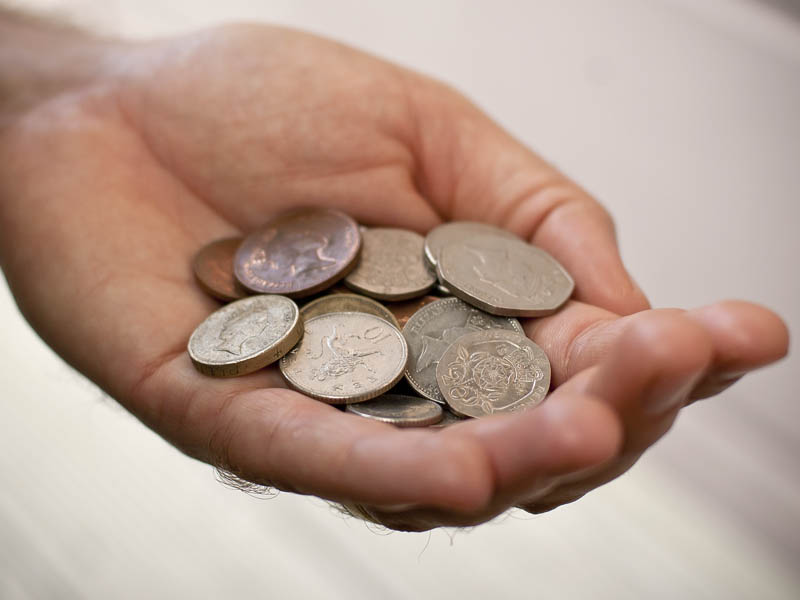
Before decimalisation the UK, and most of the Commonwealth, operated on a rather odd monetary system, where a pound was made up of 20 shillings, and a shilling consisted of 12 pence. Hence a pound was worth 240 pence. Working in this monetary system was not only much more difficult than using decimal currency, but it also left tourists utterly confused, having to contend with things like a ‘half-crown’, which was worth two shillings and a sixpence, or one eighth of a pound. It was certainly far from ideal for international trade too. Given these hassles, it surely is testament to the unique character of the Brits that they clung to their old monetary system for so long.

An English decimal handful.(© All Rights Reserved)
An English decimal handful.
(© All Rights Reserved)

It’s not as though there wasn’t a realisation, many years before, that decimalisation made logical sense in a world where international trade became more and more common. Proposals to decimalise the UK currency date back to the early 1820’s and a Decimal Association was founded in 1841 to promote decimalisation and metrification. This prompted a Royal Commission on Decimal Coinage, tasked to investigate the pros and cons of decimal currency. Amazingly, in their final report (1859), they recommended that decimalisation be scrapped as it had ‘few merits’.

Things puttered along until a new Royal Commission on Decimal Coinage (1918-1920) revisited the idea. This commission was slightly more open minded, yet still decided that, all things considered, decimalising the currency would just be too inconvenient.

It was only after a joint report in 1960 by the British Association for the Advancement of Science and the Association of British Chambers of Commerce, that the adoption of a decimal system gained serious ground. The feasibility of moving to a decimal currency was based in part on the recent success of decimalisation in Australia, New Zealand and South Africa. A Decimal Currency Board was created to manage the process.

Changing the currency was obviously not without complications. First it had to be decided what the basis for the new currency should be. In Australia and New Zealand, for instance, a replacement for the pound was adopted – the new Australian Dollar and New Zealand Dollar was defined as being worth 10 shillings, and this was divided into 100 cents. Thus the currency was not only decimalised, but the naming of the currency units was also internationalised. In the UK, however, the historical importance of the pound resulted in its value being retained, and instead the British pound was divided into 100 ‘new pence’. In addition, 5p and 10p coins were introduced, followed later by a 50p coin.

So, after 150 years of lobbying and investigation, and the formation of numerous commissions, boards and asociations, the British currency finally entered the decimal age.

In this era of international e-commerce, where buying from anywhere in the world is the norm, and transacting between different currencies is almost a no-brainer, it’s hard to imagine that a mere 50 years ago, such a big part of the world operated on a non-decimal currency!

Promise your heart (and some other organs)

It’s 14 February – that special day where we celebrate the unique bond that certain people share. That’s right, today is Organ Donor Day! Surely there can be no more special bond between two people than sharing an organ?

Yes of course, it’s Valentine’s Day as well, the day when millions of people around the world passionately promise their hearts to each other. But how about a kidney? Or some bone marrow? Even just donating your blood can already change, and save, the lives of many around you.

While you promise your heart to your valentine, make some extra effort and sign up to offer your other organs too.(© All Rights Reserved)
While you promise your heart to your valentine, make some extra effort and sign up to offer your other organs too.
(© All Rights Reserved)

Globally there are hundreds of thousands of people waiting on potentially life-saving organs from organ donors. Yet the number of organ donors in many countries remain extremely low. This is partly affected by the organ donor policy adopted in a country. Countries can either adopt an opt-in or an opt-out policy – in an opt-in system you have to explicitly give consent to become a donor, while in an opt-out system consent is assumed unless you explicitly refuse. The opt-in system obviously results in much less organ donors, and the number becomes even lower in legislative systems where the family of the deceased also have to consent  – in 2011, for example, Australia had about 15 donors/million, Germany had 16 donors/million and New Zealand didn’t even make it into double figures, with less than 9 donors/million. Spain, who has an opt-out system, had 34 donors/million.

The above figures specifically relate to deceased donors – interestingly there tends to be many more donations from living donors. This is partially because the consent process is less complex when you’re alive, but also because people are more likely to be moved to perform the selfless act of donating an organ or some body tissue if they know it is going to be used to save a loved one, rather than going the more passive/generic route of offering their body parts to whoever might need it, once you’re dead.

Often, especially in an opt-in system, the low donor numbers are not because people are fundamentally opposed to organ donation, it is simply because they are not aware that they need to actually, while they’re alive, consent to becoming a donor. Or it’s one of those things you just don’t get around to. As such, there really is a huge need for more urgent communication and information sharing on this topic – people need to understand how the system in their country works, and importantly they need to be made aware of the massive positive impact they can make after their death by simply taking the time and making the effort to fill in a donor consent form. Or, if you’re in a system where your family has the final say, like in Australia and New Zealand, talking to your loved ones and making sure that they know you wish to be a donor.

So next time 14 February rolls around, and love is in the air, why not give the ultimate gift of love and opt-in to become an organ donor. Besides potentially becoming a life-saver to your own loved ones, you can touch the lives of many people you’ve never even met – it is estimated that a single person becoming an organ and tissue donor can affect, and potentially save, the lives of no less than 50 people.

Think about it – you can fundamentally touch the lives of 50 people in the time it takes to shop for a valentine’s card. That’s huge…

Radio: the power to inform

It’s 13 February, which means today is World Radio Day.  This day, proclaimed by UNESCO, is a celebration of radio as a truly non-discriminatory information and communication medium.

As explained in the World Radio Day 2013 press release, the day aims to “improve international cooperation between broadcasters; and to encourage major networks and community radio alike to promote access to information and freedom of expression over the airwaves.”

No matter how old the radio, you can still access the latest news, views and information.(© All Rights Reserved)
No matter how old the radio, you can still access the latest news, views and information.
(© All Rights Reserved)

As the world continues to evolve into multiple levels of digital connectedness, radio remains the medium that reaches the widest audience worldwide. From commercial FM stations to shortwave community radio, the medium continues to entertain and inform a diverse audience, across all ages, genders and cultures.

Despite changes and developments in broadcasting technology (from shortwave and medium wave to frequency modulation to digital broadcasting), the interface to its audience has remained largely unchanged, making it the simplest, most affordable and most widely accessible communication medium. The fact that radio can carry its message without the need for electrical connectivity at the receiving end makes it particularly suited to disseminate information in conflict situations and during natural disasters.

While traditional broadcasting remains at the core of radio, digital technology has opened up new opportunities – online radio stations are decreasing the cost of broadcasting, resulting in more citizen journalists and community groups using the medium to give voice to their unique messages.

It is this far-reaching power of radio that UNESCO wants to communicate on World Radio Day. To quote Irina Bokova, Director-General of UNESCO in her message on the occasion of World Radio Day: “UNESCO is determined to make full use of community radio to address poverty and social exclusion at the local level and to empower marginalized rural groups, young people and women. Radio is the key platform for education and for protecting local cultures and languages. It is also a powerful way to amplify the voices of young people around the world on issues that affect their lives. We must bolster their skills and give them opportunities to engage fully with radio.”

Calculating the perfect pancake on Pancake Day

Today, 12 February 2013, is Shrove Tuesday, the day immediately preceding Lent – an observance in many Christian denominations, running for approximately 6 weeks from Ash Wednesday to Maundy Thursday (or Easter Eve). Lent is a period of religious preparation for Easter weekend.

In many parts of the Commonwealth, including the UK, Ireland, New Zealand, Australia and Canada, Shrove Tuesday is commonly known as Pancake Day, based on the tradition of eating pancakes on the day.

Pancakes became associated with this day because it was traditionally considered a good way to consume a range of rich foods – eggs, milk, sugar, butter, fat, cream – before Lent’s period of self-denial. Of course, as with gift-giving during Christmas, the original religious association has moved somewhat into the background, with Pancake Day now being about pancakes and little more.

Sadly I am not doing much to reverse this tradition, as the rest of my post is pretty much only about pancakes…

A stack of American style pancakes with bananas and strawberries, topped with a generous helping of ice-cream and drizzled with liquidised strawberries - so fresh and fruity, it almost feels healthy! (© All Rights Reserved)
A stack of American style pancakes with bananas and strawberries, topped with a generous helping of ice-cream and drizzled with liquidised strawberries – so fresh and fruity, it almost feels healthy!
(© All Rights Reserved)

Just a quick point of clarification – pancakes in Europe (thin, flat pancakes, usually rolled up and eaten with sweet or savoury filling – also called crêpes) aren’t exactly the same as pancakes in the US and Canada (smaller, thicker ‘cakes’ that are often stacked on top of each other, dusted with icing sugar and eaten with syrup – also known as Scotch pancakes, pikelets or flapjacks).

Now you may be curious about the link between pancakes and science. While I don’t know how much science there is in a pancake, I can report that it has apparently been the subject of some rather rigorous scientific scrutiny. A mathematics professor from Wolverhampton University, Dr Ruth Fairclough, has developed what has been reported as “a complicated formula for the perfect pancake”.

Dr Fairclough’s full pancake ‘recipe’ is:

100 – [10L – 7F + C(k – C) + T(m – T)]/(S – E)

where
L = number of lumps in the batter
F = flipping score
C = consistency of the batter
k = ideal consistency
T = pan temperature
m = ideal pan temperature
S = standing time of batter before cooking
E = time the pancake stands before eating

The closer a pancake gets to the perfect score of 100, the better.

I’ve played around with the formula, and while most of it makes sense, it doesn’t always stand up to scrutiny. My main concern relates to the 1/(S-E) factor – if the standing time of the batter before cooking is equal to the time the pancake stands before being eaten, you end up dividing by zero. But perhaps I misunderstand the way these variables should be measured…

The bottom line, however, is that Dr Fairclough’s formula agrees that batter with perfect consistency and no lumps, stood to rest for a while, and then cooked at the perfect temperature and eaten piping hot off the pan, should give you a pretty perfect pancake.

But then you don’t need a PhD in maths to know that, do you? 😉

The electrific Thomas Alva Edison, and you

11 February is, amusingly, known as Be Electrific Day. It’s the celebration of the birth of Thomas Alva Edison (11 Feb 1847 – Oct 1931), so today is obviously all about electricity. But electricity wasn’t the only domain Edison dabbled it – in fact he held the world patenting record, being granted a mindblowing 1093 patents in his lifetime. So today is also about being terrific, standing out, being the best you can be. This is the day to be ‘electrific’, a term first coined by inspirational speaker Carolyn Finch in 1998 – she defined being electrific is “an abbreviation for an electrification project – which means to put light where light has not been before.”

Be Electrific Day - the perfect time to allow all facets of your unique brilliance to shine brightly. (© All Rights Reserved)
Be Electrific Day – the perfect time to allow all facets of your unique brilliance to shine brightly.
(© All Rights Reserved)

Talking about Edison – among his dazzling array of patents are the first commercially practical incandescent lightbulb; an electric vote-recording machine, a phonograph, storage batteries, a dictaphone and a mimeograph.

1879 was, literally, Edison’s light bulb year – he built his first high-resistance, incandescent bulb in his laboratory in January 1879, and from that success worked tirelessly on thousands of filament substances before settling on the carbon filament presented for public demonstration on 31 December of the same year.

Beyond that, however, I suppose at a symbolic level Edison’s whole life can be considered a light bulb life. With the light bulb often being associated with creativity and invention, I guess it’s fair to sat that Thomas Edison had more light bulb moments than most.

I cannot help but wonder what it is in the wiring of some people’s brains that result in such seemingly unlimited inventiveness. Are they smarter than everyone else, or is it just a specific way of looking at the world?

But let me not get started on the topics of creativity and innovation, otherwise this post may never end. So for now, let’s just take Edison as a role model for the day, and strive to ‘electrificate’ as best we can!

The umbrella, a tool of many uses

Today is Umbrella Day. Whatever you call it – brolly, parasol, gamp, bumbershoot – there’s no denying the umbrella is one super-useful accessory.

I haven’t been able to find out where it originated, but there seems to be references to umbrellas in all the ancient cultures. The ancient Egyptians, Greeks, Romans and Chinese all found good use for some or other form of the trusty umbrella – for protection from the elements, as a stylish fashion accessory, in religious ceremonies, even as a symbol of social standing.

The brolly - a useful lighting accessory, used with a speedlight. (© All Rights Reserved)
The brolly – a useful lighting accessory, especially used on location with a speedlight.
(© All Rights Reserved)

But of course the main use of brollies are to keep you dry in the rain, and cool in the sun. And while they’re far from perfect (they flip inside out in strong winds, they drip, they can cause serious bodily harm to bystanders), it’s difficult to imagine how the basic design can be much improved. The last really significant design update has been the development of an umbrella with segmented ribs that can be folded in three, to create a much smaller folded unit. Not that inventors the world over are not continuously trying to come up with improved concepts – rain-forecasting umbrellas, biodegradable umbrellas, see-through umbrellas that rest on your shoulders like a backpack, two-person umbrellas, even umbrellas that can store water so you can later water your plants with them. Then there’s the Hollinger umbrella, a teardrop-shaped design with a distinctive rounded front and tapered back to optimise wind flow around it, enabling it to withstand much higher winds. The elongated back also shields your legs from rain while you’re walking.

Personally, being a photographer, my immediate connotation when thinking about a brolly is less about the weather, and more about photographic lighting. Umbrellas made with a reflective inside can reflect the light from a flash light unit pointed away from the subject you are photographing, to create a softer light than having the flash point directly at the subject. Alternatively, an umbrella sporting a translucent cloth can become a ‘shoot-through umbrella’. Placed between your flash unit and subject, this umbrella can help create lovely soft and diffused lighting.

While photographing with an umbrella doesn’t give you the same level of control that you can achieve with specialised lighting accessories like softboxes, honeycombs, and the like, their portability does make them very useful, especially when used as a makeshift on-location lighting unt when used together with an off-camera flash or speedlight.

So here’s to the brolly, the gamp, the parasol – it may be far from perfect, but it’s hard to imagine the world without it.