Page 5 of 38

Celebrating monuments and cultural diversity on World Heritage Day

It is 18 April 2013, and today we celebrate World Heritage Day, also sometimes referred to as the International Day for Monuments and Sites.

‘Heritage’ refers, literally, to something inherited from the past. In the context of World Heritage Day, heritage refers mostly to cultural heritage, the legacy of physical and intangible artefacts and attributes built up through the ages by the people of the world. And monuments and historical sights are the tangible representation of man’s cultural heritage.

Celebrate your heritage while you can  - it's vulnerable and may disappear in the blink of an eye. (© All Rights Reserved)
Celebrate your heritage while you can – it’s vulnerable and may disappear in the blink of an eye. This view of the Christchurch Cathedral Square was forever changed in the February 2011 Christchurch earthquake. The iconic cathedral sadly did not survive the disaster, but the Chalice sculpture by Neil Dawson, a much more recent part of the city’s heritage, remains unharmed.
(© All Rights Reserved)

As stated on the World Heritage Day website, “World Heritage is the shared wealth of humankind. Protecting and preserving this valuable asset demands the collective efforts of the international community. This special day offers an opportunity to raise the public’s awareness about the diversity of cultural heritage and the efforts that are required to protect and conserve it, as well as draw attention to its vulnerability.”

So what can you do to celebrate the day? Well, how about visiting local monuments and sites, especially those you may not have visited before, or even those that you’ve come to take for granted. Or read up on the cultural history of your town, your state, your country. Or, for a more exotic touch, find out about interesting monuments and heritage sites in other parts of the world.

No matter what inspires, amuses and entertains you, there’s sure to be a monument to suit you – from truly inspiring monuments around the world, to the downright bizarre and baffling.

It’s all part of our multi-faceted human heritage, so celebrate it!

World Haemophilia Day, marking 50 years of advancing treatment for all

Today, 17 April, is World Haemophilia Day, the day shining a spotlight on the global bleeding disorders community. This year, 2013, marks ’50 Years of Advancing Treatment for All’.

To quote Wikipedia, haemophilia “is a group of hereditary genetic disorders that impair the body’s ability to control blood clotting or coagulation, which is used to stop bleeding when a blood vessel is broken.” The most common type, Haemophilia A, occurs in about 1-2 in 10 000 male births, while Haemophilia B is about half as common. Both forms are more likely to occur in males than females. It is a recessive sex-linked, X chromosome disorder, and since females have two X chromosomes while men have only one, the defective gene will manifest itself in every male who carries it, while it may not manifest itself in a female carrier.

Everybody bleeds, but while this is may be a minor issue for most of us, it can be a matter of life and death for those suffering from haemophilia. (© All Rights Reserved)
Everybody bleeds, but while this is may be a minor issue for most of us, it can be a matter of life and death for those suffering from haemophilia.
(© All Rights Reserved)

People suffering from haemophilia do not bleed more vigorously than a healthy person, but they are likely to bleed longer due to the lack of coagulation or blood clotting. Thus even a rather minor injury can result in excessive blood loss. In some injuries, such as injuries to the brain, and injuries to the insides of the joints, this can be fatal or permanently debilitating.

No cure yet exists for haemophilia, but it can be treated with regular infusion into the body of the deficient clotting factor. Sufferers also have to adapt their lifestyles and activities to minimise injury risk. Exercises to strengthen the joints, and to increase flexibility, tone and muscle strength are also recommended. There are indications that hypnosis and self-hypnosis may have some effectiveness at reducing the severity and duration of bleeding, but much investigation is still required in this regard.

As with many diseases and disorders, haemophilia impacts most severely on people living in developing countries, people who do not have access to proper care and/or treatment. It is estimated that globally 75% of people living with bleeding disorders receive very inadequate treatment, or no treatment at all, with the majority of these people living in the developing world.

Through World Haemophilia Day, it is hoped that increased awareness and support can be gained for people living with bleeding disorders, and that this can help inch us closer to the goal of quality treatment for all.

Love your voice on World Voice Day

It’s 16 April, and today we celebrate World Voice Day. To quote the official website, “World Voice Day is a worldwide annual event devoted to the celebration of the phenomenon of voice.”

Today we celebrate our voices and the “enormous importance of the voice in our daily life, as a tool of communication, and as an application of a large number of sciences, such as physics, psychology, phonetics, art, and biology.”

Whether you're a professional singer or can hardly hold a tune, your voice is unique to you, and deserve to be cared for and celebrated. (© All Rights Reserved)
Whether you’re a professional singer or can hardly hold a tune, your voice is unique to you, and deserve to be cared for and celebrated.
(© All Rights Reserved)

We use our voices to communicate, to share our thoughts and ideas, to educate, to make music, to laugh, to cry. Our voices are unique to each of us, and even as we age, our vocal ‘fingerprint’ remains uniquely ours.

World Voice Day serves as a reminder that our voices are fragile, and need to be treated with the same care we afford our eyes, hearing etc. In the same way that we exercise and train our muscles, starting with light training and moving on to more strenuous training as our strength and fitness increase, we can also exercise our voices and mouths with daily voice warm-up exercises. These are particularly valuable if you are likely to find yourself in vocally strenuous situations – if you are doing public speaking, or if you’re a singer or other vocal artist. Hoarseness is a sign that your voice may be overstrained, or even that you suffer from infection, and need to be treated immediately by resting the body as much as possible, drinking lots of water, doing general stress reduction exercises, and avoiding to speak unless really necessary (whispering strains the vocal chords as much as speaking does). When singing or speaking in daily life it is also wise to, as far as possible, operate within our given and familiar vocal range.

Take care of your voice; celebrate your voice; love your voice.

Celebrating art and creativity on World Art Day

In commemoration of the birth of Leonardo da Vinci (15 Apr 1452 – 2 May 1519), the 15th of April has been declared World Art Day. The idea was born at the 2012 General Assembly Meeting of the International Association of the Arts (IAA) in Guadalajara, Mexico.

As the World Art Day website notes, “the turmoil our world is currently living through, needs the power that freedoms of thought, and speech can bring to this tumultuous world. And who better to lead this effort than the artists of this world.”

It is hoped that the day will help in spreading an international awareness of the arts.

Art, making the world a better place. (© All Rights Reserved)
Art, making the world a better place.
(© All Rights Reserved)

By having World Art Day coincide with the birth of da Vinci, rather than any number of other equally renowned and deserving artists, the day also hints at the importance of the arts, and artistic thinking, beyond the strictly fine arts domain. In addition to being a brilliant painter and sculptor, da Vinci excelled as a philosopher, mathematician, architect, engineer and inventor. The great Renaissance Man, da Vinci showed that greatness could be achieved at the intersection between art, science and technology. As such, da Vinci’s birthday is the perfect day “to commemorate the role of art in the contemporary world, with its complex artistic, social and political layers.”

So join me in taking some time to remind ourselves of the key role art plays in our lives, and to show appreciation for the artists who make the world a better, more meaningful and more aesthetically agreeable place. I don’t even want to begin imagining the emptiness and poverty of a world bereft of art.

It’s the International Moment of Laughter, so grab the opportunity with both hands.

Today, Sunday 14 April, we celebrate the International Moment of Laughter, an opportunity for everyone to laugh loudly, freely and openly, without holding back. The day was initiated by American motivational speaker and ‘humorologist’ Izzy Gesell to encourage people to laugh more.

Laugh long and hard enough, and eventually the world will laugh with you. (© All Rights Reserved)
Laugh long and hard enough, and eventually the world will laugh with you.
(© All Rights Reserved)

I’ve posted a couple of times before about the benefits and value of laughing and smiling, and generally having a positive attitude. After all, “laughter is the best medicine”, as the saying goes.

So let’s just say that today is yet another chance to cash in on some free medication – smile, laugh and be positive, and feel the benefits flowing back to you, reducing your stress, relaxing tired muscles, and strengthening your immune system.

Watch your favourite funny movie, share some jokes, or simply get silly. And if you really want to optimise the benefits, share the laughter with those around you! As the great Mark Twain once said, “The human race has only one really effective weapon and that is laughter.”

The day the microscope got it’s name

microscope_top3

On this day, 13 April, back in 1625, Giovanni Faber (also known as Johannes Faber) first suggested the word ‘microscope’ for an enlargement viewing device developed by Galileo Galilei in order to see tiny objects that are too small for the naked eye (Galilei himself called it an ‘occhiolino’ or ‘little eye’). Faber used the term in a letter to Federigo Cesi, founder of the Accademia dei Lincei (Academy of the Lynx) in Italy, one of the earliest academies of science.

Once the term ‘microscope’ became accepted, this also resulted in the coining of the term ‘microscopy’ for the science of investigating tiny objects through a microscope. The term ‘microscopic’ is used for something that is too small to see unless viewed through a microscope.

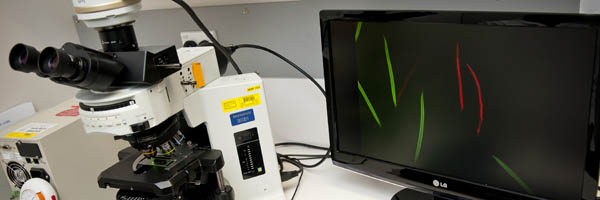
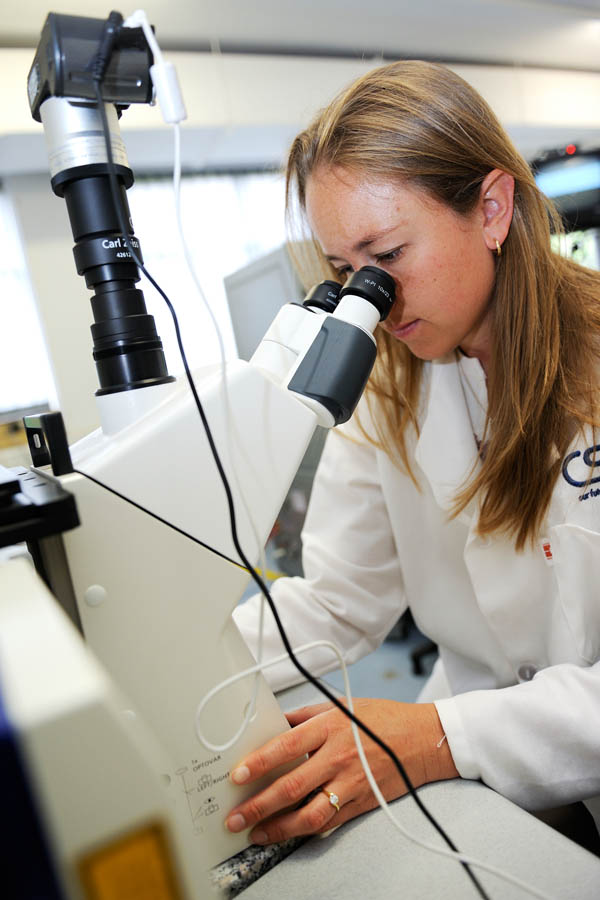
Microscopes - impossible to imagine science without them. (© All Rights Reserved)
Microscopes – impossible to imagine science without them.
(© All Rights Reserved)

The microscope is another of those devices that is synonymous with science – it is impossible to imagine a scientific lab, and science in general, without microscopes. From the first optical microscopes (still in use), further developments and technological innovations led to the development of more powerful microscopes including the electron microscope (using electrons rather than light to generate an image) and scanning probe microscopes such as the atomic force microscope (AFM).

The AFM is an extremely high resolution device that can achieve a resolution of the order of fractions of a nanometer. The increased resolution achieved by this device opened up amazing new research possibilities in the nanosciences. To acknowledge this, the developers of the AFM, Gerd Binnig and Heinrich Rohrer of IBM Research, were awarded the Nobel Prize for Physics in 1986.

While only a very select few of us will ever have the opportunity to see one of these incredible pieces of scientific equipment, let alone experience using it, I am sure many out there remember the magical world that opened up when you got your first hobby microscope. I certainly remember the wonder of first getting to use a little microscope handed down to me by my dad – it was old and worn and not fancy at all, but man, was it amazing to look at anything and everything, from a fly’s wing to a drop of blood.

Did you have a microscope when you grew up?

Celebrating liquorice, sweet or savoury, strong or mild

Today, 12 April, is the celebration of National Licorice Day, an unofficial US holiday thought up by US licorice company Licorice International. As I tend to do with these regional days, I will again simply disregard the ‘national’ and internationalise the day for the rest of us – why, after all, should our US friends have the exclusive right to celebrate this amazing candy? So let’s just standardise the English, and celebrate (international) Liquorice Day.

Liquorice is made from the root of the Glycyrrhiza glabra plant, a legume native to southern Europe and Asia. As a legume, it is related to beans and peas, and despite its flavour it is not related to the similar tasting and smelling aniseed or fennel. Interestingly, in many liquorice flavoured sweets, the liquorice flavour is in fact enhanced with aniseed oil (in some cases, there may not even be any liquorice in the candy!). The liquorice extract from the the Glycyrrhiza glabra plant is created by boiling the root of the plant and evaporating most of the water.

Liquorice candy comes in all shapes and sizes, with some types really tempting you to play with your food! (© All Rights Reserved)
Liquorice candy comes in all shapes and sizes, with some types really tempting you to play with your food!
(© All Rights Reserved)

Flavours and styles of liquorice differ vastly between different parts of the world. Most liquorice produced and sold in the US, UK, Australia and New Zealand tend to be sweet, ranging from very mildly flavoured to medium strong. Continental Europe, on the other hand, prefer their liquorice strong and robust, in both sweet and salty varieties. Dutch liquorice is sometimes flavoured with mint for a different taste sensation. Italian and Spanish liquorice is often enjoyed as small pieces made from unsweetened, 100% pure liquorice extract. In China, liquorice is used as a culinary spice for savoury dishes.

Beyond its use as candy, liquorice is also consumed for medicinal purposes. Liquorice contains glycerrhizic acid, which, among other things, increases mucus production and decreases acid secretion. These properties make liquorice useful as an aid in the treatment of mouth and stomach ulcers, and the general treatment of an upset stomach. It is also used to treat irritable bowel syndrome and Crohn’s disease. Liquorice is also used to relieve a spasmodic cough. In Japan liquorice extract is used for the treatment of chronic viral hepatitis, while the Chinese use it to treat tuberculoses.

(Note that, while it has beneficial properties, excessive liquorice consumption may cause hypertension, hence it is recommended that liquorice products should be consumed in moderation.)

Whether you prefer your liquorice sweet or salty, strong or mild, and whether you eat it for medicinal purposes, or simply because it is so irresistibly yummy, I am sure you’ll agree that it is worthy of a day of celebration!

Sony, heavyweight of Japanese electronic entertainment

It’s 11 April, and today we celebrate the birthday of Masaru Ibuka (11 Apr 1908 – 19 Dec 1998), Japanese electronics pioneer and co-founder of the Sony Corporation.

Sony started as a small post-WWII electronics and radio repair company, Tokyo Tsushin Kogyo, founded by Ibuka, who was joined soon after by his colleague, Akio Morita. Ibuka and Morita’s company changed it’s name to Sony in 1958. The name ‘Sony’, devised largely to make the company name easy for Westerners to pronounce and remember, was a combination of the Latin word ‘Sonus’ (the root of sonic and sound) and the familiar American term ‘Sonny’.

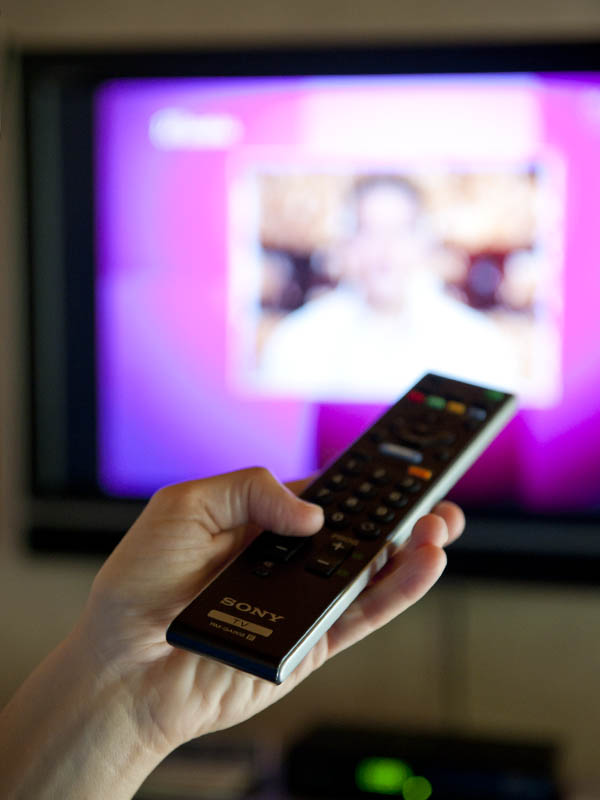
From the first colour television set, Sony Corporation has continued to set the pace in advancing television technology.(© All Rights Reserved)
From the first colour television set, Sony Corporation has continued to set the pace in advancing television technology.
(© All Rights Reserved)

From these small beginnings grew the Sony Corporation, one of the industry giants that changed the face of the Japanese electronics sector. Where earlier Japanese firms were more likely to simply make copies of Western products at cheaper prices, Sony was an innovator. Some of the many achievements of the Sony Corporation include introducing transistor technology into Japan, developing the world’s first transistor TV, pioneering colour television and introducing many consumer-electronics innovations such as the Walkman and the compact disk player. In the digital age, Sony has emerged as an important player in the mobile phone market, and as a true contender in the digital photography market, presenting a viable alternative to more traditional players such as Nikon and Canon. Through their PlayStation gaming consoles, Sony is also one of the main players in the electronic gaming industry.

In all, Sony Corporation is without doubt one of the most comprehensive electronic entertainment companies in the world, and in 2012 was ranked 87th in the Fortune Global 500.

It is not an overstatement to say that, through the Sony Corporation, Ibuka played an absolute key role in building international confidence in the Japanese electronics industry, and through that, rebuilding the Japanese economy in particular, and Asian economies in general.

Celebrating simplicity and practicality on International Safety Pin Day

After getting rather esoteric yesterday on Internet of Things Day, we get right back to practical reality today – 10 April is International Safety Pin Day.

Apparently the inventor of the Safety Pin, Walter Hunt, was never short on clever ideas – he invented a flax spinning machine, a fire engine gong, a forest saw and a coal-burning stove, among others. But as good as he was with coming up with clever new inventions, finances probably wasn’t his strong suit.

Consider the safety pin, for example…

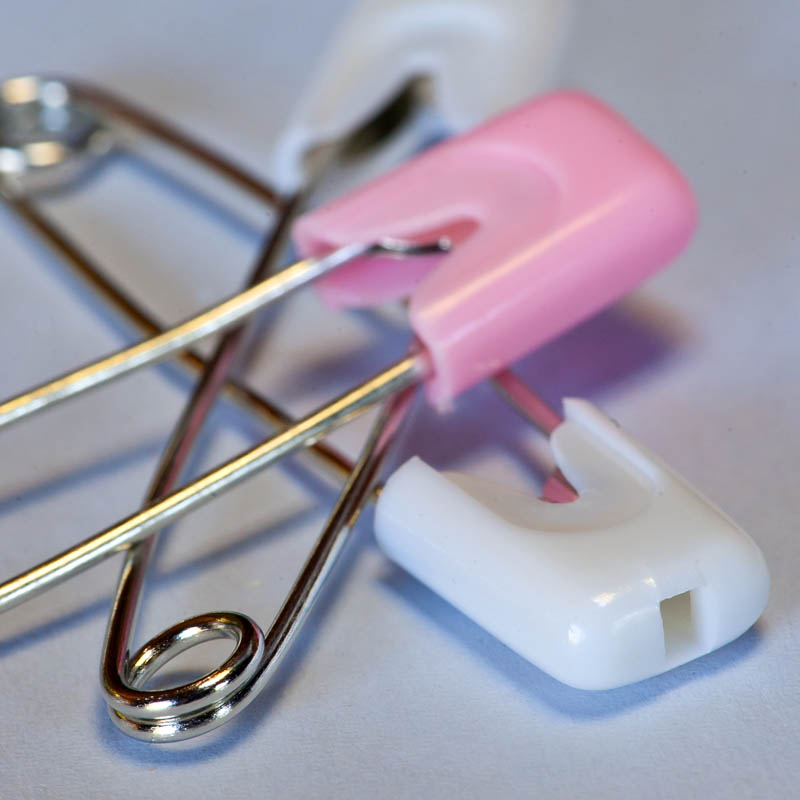
The safety pin - strong, durable and practical, yet safe enough to fasten a baby's nappy.(© All Rights Reserved)
The safety pin – strong, durable and practical, yet safe enough to fasten a baby’s nappy.
(© All Rights Reserved)

Legend has it that, faced with a $15 debt to a friend, Hunt figured the best way to get the money was to invent something new. So, armed with a piece of sharpened brass wire which he coiled in the middle and equipped with a clasp at the end to hold and shield the sharp edge, he created the first safety pin. He patented the concept on 10 April 1849, sold it to W. R. Grace and Company for $400, paid his friend the $15 he owed, and was left with the rather attractive sum of $385 for his efforts. Not too shabby! Sadly for Hunt the story didn’t end there. The new owners of the safety pin patent ran with the concept and is said to have made millions from the invention. I can imagine this must have left Hunt with a rather sour taste in the mouth, but then again, he may not have noticed, most likely being kept busy working on some other new inventions already.

To this day, Walter Hunt’s safety pins remains one of those super-useful things to have around in the house, the car and anywhere you may ever have a need for a fastener or a pin. The safety clasp means you won’t hurt yourself feeling around for it in a cupboard or the car’s cubbyhole, and beyond its function as a ‘normal’ pin, it’s great for holding together torn or damaged clothing, or any variety of other things that need holding together.

And of course, if you’re that way inclined, you can even use it as a piece of emergency jewellery!

The Internet of Things and the future of data capturing

Today, 9 April 2013, is Internet of Things Day.

The Internet of Things? Yep, I had no idea what it was either, until I did a bit of searching and reading on the subject. It is a rather complex concept, first introduced during a talk in 1999 by British technology pioneer Kevin Ashton. 10 years later in 2009, Ashton wrote a note in RFID Journal explaining in more detail “That ‘Internet of Things’ Thing”, as he called it.

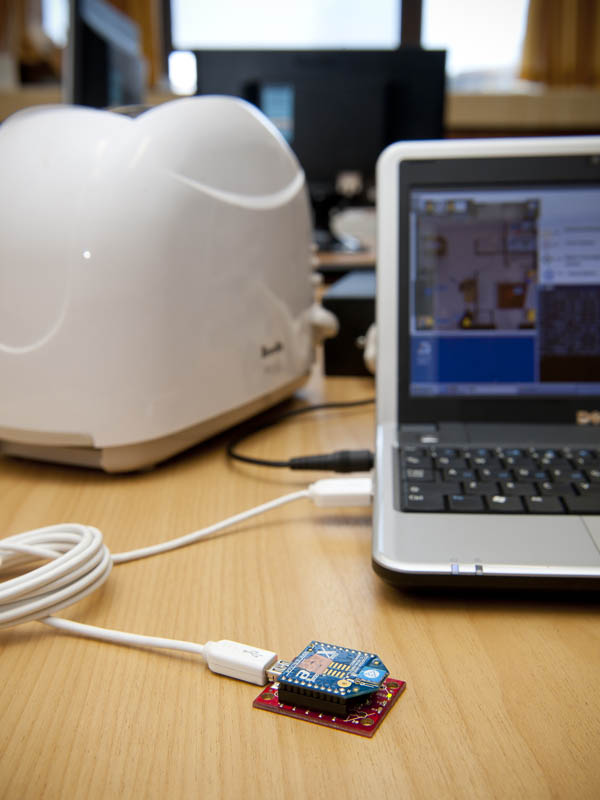
The internet of things is about measuring, monitoring and recording of data by computers and other enabled devices (often everyday appliances around us), without human assistance or intervention.(© All Rights Reserved)
The internet of things is about measuring, monitoring and recording of data by computers and other enabled devices (often everyday appliances around us), without human assistance or intervention.
(© All Rights Reserved)

Basically, his idea is that the vast majority of the information contained in the Internet, as we know it, has been captured and created by human beings, “by typing, pressing a record button, taking a digital picture or scanning a bar code”. People, however, have limited time, and are in many circumstances not that good (in terms of attention, accuracy etc) at capturing data anyway. By getting computers and other machines. without human intervention, to gather and capture information about ‘things’, we would gain access to unthinkably vast sets of information. This will allow us to track and count everything – we will know the status of things, when they need to be replaced, repaired or recalled; whether they’re fresh or past their useful date.

Ashton’s vision is to “empower computers with their own means of gathering information, so they can see, hear and smell the world for themselves, in all its random glory. RFID and sensor technology enable computers to observe, identify and understand the world—without the limitations of human-entered data.”

Various alternative definitions have been suggested for the Internet of Things (IoT), but as I understand it, in a nutshell, it is a connected network of computers and other smart devices measuring and capturing information about any number of ‘things’ out there. The data collected by this IoT is vast and powerful, and to a large extent still untapped. Closely related concepts include ‘ambient intelligence’ and ‘ubiquitous computing’.

The range of applications of the IoT is massive, including waste management, intelligent shopping, emergency response, home automation and urban planning, to name a few.

Internet of Things Day exists to create increased awareness about the concept, and how it may impact on life as we know it. While I am pretty sure my understanding is still on the dangerous side of rudimentary, I have to admit I find it exciting, scary and just plain daunting in more or less equal measures.

So here’s to an interesting and exciting Internet of Things Day to you and all the machines and devices around you…