Page 34 of 38

Look up – it’s World UFO Day!

World UFO Day is celebrated on 2 June each year, with this year being the 11th celebration of the event. World UFO Day aims to unite all UFO believers, and to highlight what many believe to be a continued conspiracy by governments over the world to hide proof of the existence of UFO’s, aliens and extraterrestrial activity.

Close encounters of the fake kind…
(© All Rights Reserved)

While a Google search for UFO’s and extraterrestrial activity can result in much weirdness and amusement, there is no denying the continued, widespread interest in the subject. And alongside the many dubious alien-chasers out there, there are numerous more scientifically sound activities like the SETI (Search for Extra Terrestrial Intelligence) initiatives at Harvard University, the University of California, Berkeley and the SETI Institute. These form part of a well coordinated global initiative with millions of contributors and supporters. SETI@Home, hosted at Berkeley, is a scientific experiment that uses Internet-connected computers in a quest to detect intelligent life outside Earth. Members of the public can participate by running a free program that downloads and analyzes radio telescope data. SETI@Home, originally launched in May 1999, is currently the largest international distributed computing effort with over 3 million concurrent users.

In reaction to some SETI activities, renowned physicist Stephen Hawking has expressed the opinion that humanity’s efforts to radio communicate with extraterrestrials could in fact be endangering us. If aliens detecting our signals could travel to earth, which would prove their vast technological superiority, Hawking is reported to have said “I think the outcome would be much as when Christopher Columbus first landed in America, which didn’t turn out very well for the Native Americans”.

The National Geographic Channel recently polled American citizens on various topics related to the extraterrestrial. No less than 36% of those polled believe that UFO’s exist, with the majority of these being sure that government officials are hiding paranormal activities from the public. More surprisingly, 11% (about one in ten) believe they’ve personally seen a UFO. Furthermore, if the US was faced with an alien takeover, 65% Americans feel President Barrack Obama would be better suited to handle the situation than presidential candidate Mitt Romney.

It’s not only the Americans who are regularly seeing unidentified objects in the skies. UFO interest groups are a global phenomenon, and down here in New Zealand, an organisation called the UFocus NZ Research Network maintains a hub of information on New Zealand UFO sightings and contact experiences.

In 2012 alone, the UFocus NZ website lists no less than 43 sightings for the first half of the year – quite incredible, considering the size of the country.

And here I was thinking we were safely off the beaten track down under!
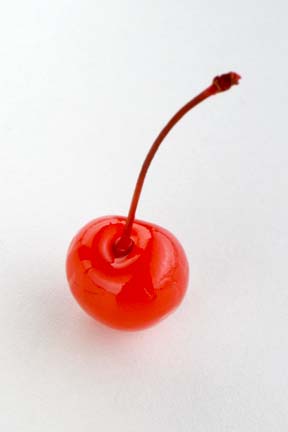
Feast on some cherries on International Fruit Day

July 1st is International Fruit Day. It also appears to be International Joke Day, but that’s another story for another time…

From a bit of online research, I’ve discovered that there is a specific fruit assigned to each year, a Fruit of the Year, if you will. 2009 was the year of the apple, in 2010 it was the pineapple’s turn, last year was mango’s chance to shine, and this year we celebrate the cherry – a favourite for deserts, yoghurt, cakes, sweets and shakes, but also wonderful eaten by itself.

The cherry, almost too good to be true – beautiful, tasty and good for you!
(© All Rights Reserved)

In mythology, cherries can symbolize fertility, merrymaking, and festivity. In Japan, where cherry blossoms are the national flower, cherries represent beauty, courtesy, and modesty. The ancient Chinese regarded the fruit as a symbol of immortality.

In addition to being blessed with gorgeous looks, cherries are also something of a health marvel, packing a mighty punch for such a small fruit. They are an abundant source of anthocyanin (the red pigment in berries), an antioxidant which has been shown to reduce pain and inflammation, and is also said to aid in the reduction of heart disease and cancer. Anthocyanin has also been found to benefit the brain, improving one’s memory abilities. Cherries furthermore contain melatonin, an antioxidant known to regulate heart rhythms and the body’s sleep patterns. A veritable vitamin bomb, cherries are also rich in Vitamins A, C, E, potassium, magnesium, and iron.

Go on and feast on some cherries – they’re good for you, and that’s no joke…

Scoring an extra second on Leap Second Adjustment Day

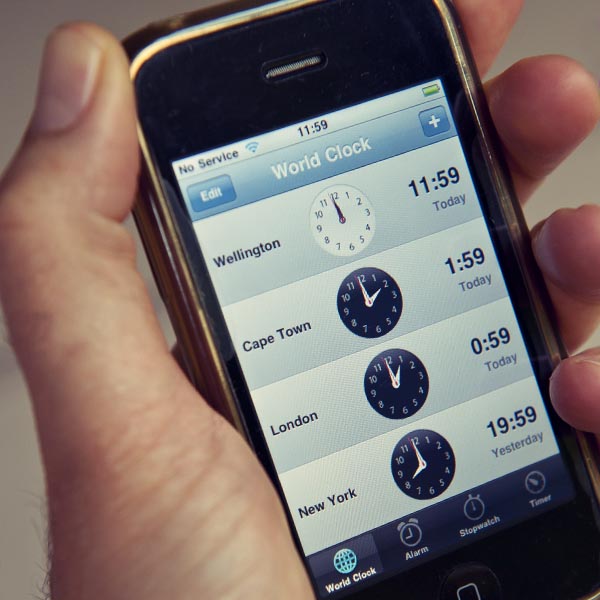
Have you ever felt that time is slipping away from you? Well, then you’ll be happy to know that today is Leap Second Adjustment Day, a day when time will be held back for a second, with an extra second being inserted into the atomic time scale at midnight, June 30 UTC (Co-ordinated Universal Time). This time corresponds to noon, July 1 in New Zealand. To mark this moment, Radio New Zealand listeners will hear an extra time ‘pip’ before the midday news bulletin.

Today time will be held back for a second, to compensate for the slowing rotation of the earth.
(© All Rights Reserved)

The rotation of the earth is gradually slowing down, effectively resulting in our days becoming fractionally longer. Hence the adjustment is required to prevent the atomic clocks from moving ahead of solar time. Leap second adjustment was introduced for the first time in 1972. It does not happen every year, with the decision being made by the International Earth Rotation Service, based on data collected from observatories around the world. Leap second adjustment has been done 24 times over the past 40 years.

In earlier times, time was measured by the position of the sun and stars in relation to the earth, so the slight slowing of the rotation of the earth was automatically accommodated for. However, since time measurement has changed to atomic time, which uses the pulsations of the atoms of the chemical element caesium, time measurement has become, weirdly enough, too accurate. Time can now be measured down to 10 billionths of a second, and only one atomic second is lost every 300 million years, so to keep time in sync with the slightly irregular movements of our solar system, its necessary to make an adjustment every now and then.

When the leap second is added, the atomic clocks will not go from 11:59:59 directly to 12:00:00, but rather to 11:59:60, and then 12:00:00. As a result, the day on which the leap second is inserted has 86,401 seconds, instead of the usual 86,400.

Hmmm, wonder what I’m going to do with all this extra time!?

Love your camera on Camera Day

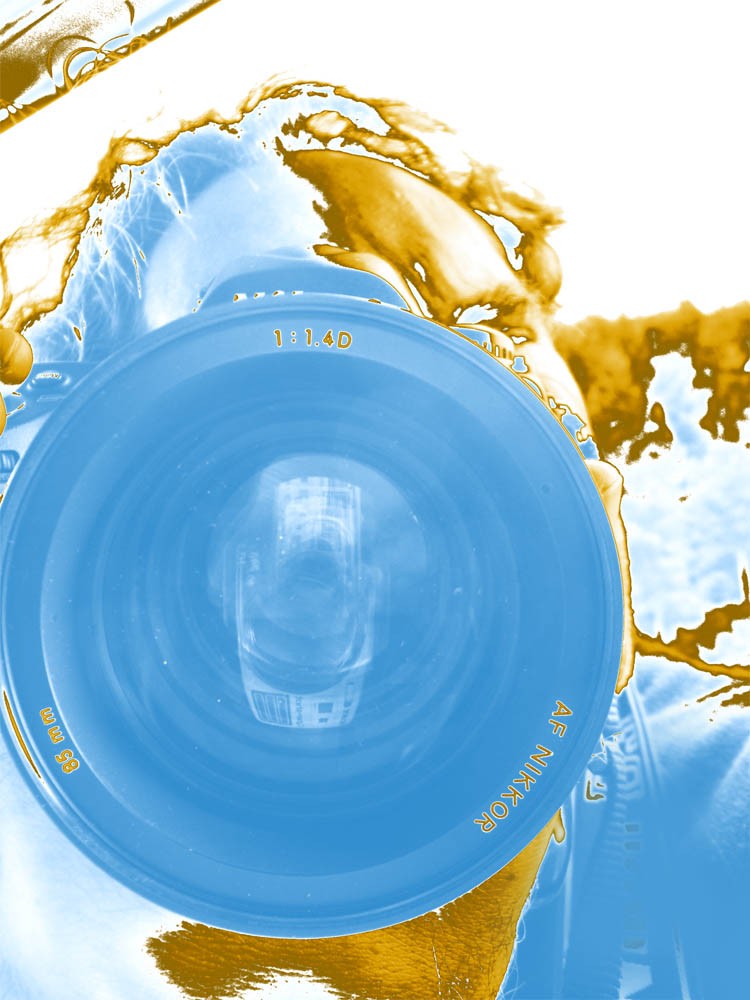
Me and my camera; my camera and me.

The photographer and his camera – where does one start and the other end? How much of what you see in an image is down to the brilliance of the photographer, and how much can be attributed to the technical abilities of his photographic tools?

(© All Rights Reserved)

I am, generally speaking, a supporter of the school of thinking that a great artist will produce great art irrespective of his tools. I have seen photos taken on mobile phone cameras that are significant artistic achievements, and there are movements in photography who go to great lengths to show how great art can be produced by technically “bad” equipment. The Lomographic Society International, for example, owns galleries, etc, showcasing photographs taken with very low-tech LOMO cameras. LOMO, a former Russian state-owned camera manufacturer, produced 35mm compact cameras that have become iconic for producing unique, sometimes blurry images, at times with light leakage, and various other “faults”.

On the other hand, particularly in technical fields of photography, the camera plays a critical role in enabling the photographer – think about fields like macro photography, for example. In some ways the camera also dictates the photographers’ approach to the subject. For instance, the time and effort required to set up a large format view camera to photograph a landscape, will almost by default result in a different stylistic approach to the subject compared to, say, a photo snapped with a mobile phone.

Given my current context (photographing science, technology and industry) my “weapon of choice” is my Nikon D3 DSLR, with a range of lenses for different applications, and I have to admit I love this bulky machine – its reassuring weight, ever willing, ever ready for anything I may throw at it.

That is not to say I am not eagerly eyeing the D4 and even the D800, not to mention the wonderful, iconic Leica M9. And don’t even get me started on some of the glorious medium format cameras out there, just waiting for me to take them in my arms!

On the other end of the technology scale, I’ve recently started playing around with pinhole photography again – in a sense this still remains to me the most magical, wonderfully rewarding field of photography. But more on that in a future post.

Whether you photograph with a mobile phone or a Hasselblad, today is Camera Day – the day to show some special appreciation for your camera, and to take it out and capture the world around you. Wherever you may be – have fun.

Hitting the high notes on the Birthday of the Saxophone

On this day 166 years ago, the saxophone, darling instrument in much of jazz and blues music, was patented by its Belgian inventor, Adolphe Sax. The saxophone combines the single reed and mouthpiece used in a clarinet, with the wider bore of the oboe. Despite usually being made from brass, it is classified as a woodwind instrument, because the sound of a saxophone is created by an oscillating reed rather than the vibration of the player’s lips against a brass mouthpiece.

The combination of features from the woodwind and brass families make it quite unique – while it has the volume capacity of a brass instrument, it possesses the timbre and dexterity of a woodwind. The shape of the saxophone also results in a complex wave packet compared to other woodwind instruments.

Science shows its about the musician, not the instrument.
(© All Rights Reserved)

It seems the saxophone not only fascinates music lovers, but scientists as well. A group of acoustics researchers from the University of New South Wales in Sydney, Australia, set about trying to determine exactly how jazz masters like John Coltrane achieve the piercing high notes they are famous for. More specifically, they studied how the shape of the saxophonist’s vocal tract influences the notes he can achieve.

There has long been debate about the role that the acoustics of the vocal tract has on the notes saxophonists and other reed instrumentalists can play. The assumption under investigation in the research was that professional saxophonists achieve “impossible” notes by shaping their vocal tracts in different ways to amplify the high-pitched notes. Of course the challenge lay in the methodology – how do you directly measure the acoustics of a vocal tract in mid-note without interfering with the player’s sound?

What acoustician Jer Ming Chen and his colleagues did, was to modify the mouthpiece of a saxophone by adding a device that emits different tones into the vocal tract of the player, and then records the intensities of the tones bouncing back into the mouthpiece. From this information, they could calculate acoustic resonances in the vocal tract.

The reseach showed that, when playing “normal” notes, the acoustics of the vocal tract seemed to have only modest effects on how notes sounded, but the moment professional players broke into the altissimo, a clear result emerged – the resonance in the vocal track aligned with the note being played, thus serving to amplify and strengthen the note.

What is interesting is that many expert players were unaware of the ways in which they “tuned” their vocal tracts while playing. They knew they “did something” to their throats, but weren’t able to explain exactly how it happened. It does, however, seem to be a skill that can be learnt, and not something certain players are simply born with.

However they do it, it seems blowing that sax not only gives your lungs a workout, it exercises your mind as well.

(Source: Scientific American)

Artificially green – celebrating the synthesis of chlorophyll

Today seems to be one of those ordinary days in history – at a cursory glance, nothing seriously bad happened, but nothing too exciting either.

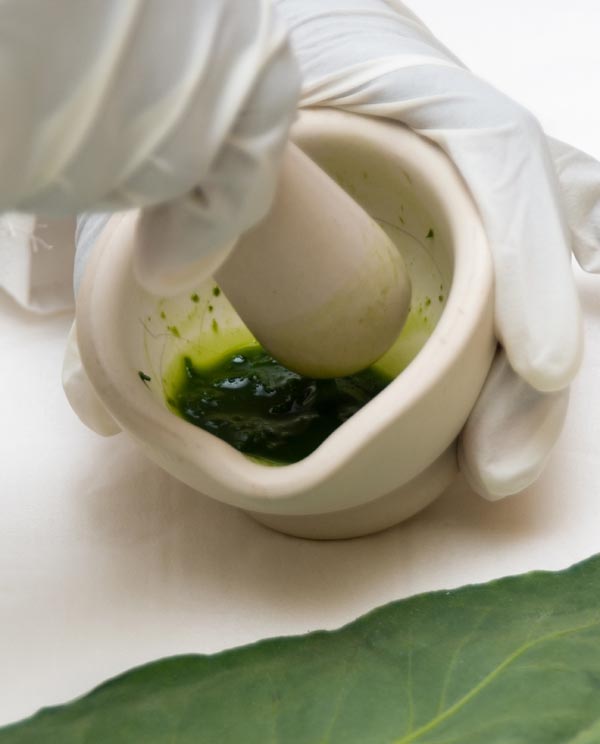
Well, I am no chemist, but the fact that chlorophyll A was for the first time synthesised in a laboratory on this day back in 1960, is probably pretty exciting. Its chlorophyll, after all – the abundant green stuff which allows plants to absorb energy from light, and through the process of photosynthesis, fuel much of our planet.

The organic chemist responsible for this achievement was Robert Burns Woodward, from the Converse Memorial Laboratory at Harvard University. For this, and his other work in the field of organic synthesis, Woodward was awarded the 1965 Nobel Prize in Chemistry.

Chlorophyll – fuelling our planet.
(© All Rights Reserved)

Talking about synthesized chlorophyll and photosynthesis, I read an interesting 2011 Economist blog post, Babbage Science and Technology, about work being done around artificial photosynthesis and the creation of the “artificial leaf”. The science-fiction style scenario envisaged from this is a world where roofs of city buildings etc can be covered with “artificial trees” replicating the photosynthesis process to create hydrocarbon fuel directly from sunlight. These “forests” could help offset the emission of carbon dioxide from fossil fuels, and create an unlimited supply of fuel for transport – a magical concept.

In the USA, hundreds of millions of dollars are being spent in research laboratories in California etc working, in the words of President Obama, on “developing a way to turn sunlight and water into fuel for our cars”.

The potential energy produced by the sun is vast – apparently the energy from the sun hitting the earth in a single hour, exceeds all the energy consumed by humans in an entire year! Imagine if a significant portion of that energy could be harvested in a commercially viable manner. Currently solar energy (in the form of sustainable biomass) provide less that 1.5% of our energy needs, with solar panels contributing less than 0.1%.

Current solar power generators suffer from the fact that the supply of sunlight is not constant, and energy has to be stored in batteries – a wasteful process. What scientists are working on (and what chlorophyll has been quietly doing for millions of years), is to turn the sunlight directly into chemical fuel – a potentially huge paradigm shift in the harvesting of solar energy.

While scientists have already been able to efficiently create fuel from sunlight in laboratory conditions, the problem is that it cannot yet be done at an economically viable cost. The technology is also highly fragile, nowhere near the robustness required for continuous commercial implementation.

So they are looking at nature for inspiration, and more specifically chlorophyll. In the words of Babbage, “chlorophyll acts as a catalyst that drives the oxidation-reduction reaction between carbon dioxide and water to produce carbohydrates and oxygen. In the pursuit of the artificial leaf, then, the main task is to find catalysts that can mimic the intricate dance of electron transfers that chlorophyll makes possible.”

Amazing research is being conducted on this topic, creating and studying different light absorbers, chemical catalysts and membranes to support these. And interestingly, it appears one of the wild cards in this research race is a small research group from Massey University down here in New Zealand. A research team at the university’s Nanomaterials Research Centre, led by Wayne Campbell, has produced a porphyrin dye that works with solar cells based on titanium dioxide. In the lab, these cells are reported to generate electricity 10 times more economically than conventional photovoltaic panels.

I have been unable to find any information on the current status of this research (much of the published results are about 5 years old), but potentially, these porphyrin dyes can become an economically viable catalyst for producing solar fuel for cars and electricity for homes.

It’s exciting stuff, and potentially huge for a greener future (even if some of the green may be artificial)!

International Day Against Drug Abuse and Illicit Trafficking

“I’ve seen the needle and the damage done
A little part of it in everyone
But every junkie’s like a settin’ sun.”
(Neil Young, The Needle and the Damage Done)

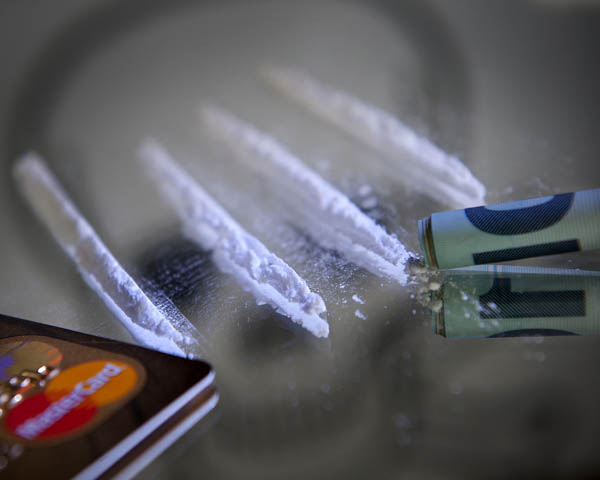
Every year, more than 200 million people use illicit drugs. Of these, more than 200 000 die. Every year. Many many more end up in a downward spiral of crime and abuse, with young people today being exposed to drugs earlier than ever before.

The illegal drug trade feeding this global cancer causes thousands more deaths annually, directly through gang violence and indirectly as a result of socio-economic instability.

Drug abuse – it is everyone’s problem.
(© All Rights Reserved)

Today is International Day Against Drug Abuse and Illicit Trafficking.  The theme this year is “Global Action for Healthy Communities without Drugs”.

I cannot add anything new to the drug debate without merely repeating what has been said many times over by people who are closer to the problem and who have a better understanding of it. The issues feeding this social disease – peer pressure, glamorising of drug use, targeting of people on the fringes of the community, social insecurities – can only be addressed at community level, by each and every one of us.

This is not a hypothetical problem. In all likelihood, you know someone who is or has been affected by drugs, directly or indirectly. You can do something about it.

Celebrating the invention of Barbed Wire

On this day in 1867, American Lucien B Smith from Kent, Ohio, filed a patent that fundamentally impacted on cattle farming in the US and internationally.

Before barbed wire, cattle fencing was made of single wire strands which didn’t deter livestock and was easily broken. Other alternatives were wooden fencing which was costly, or rock/stone walls that were very labour intensive for large areas.

Barbed wire – elegant, simple, effective.
(© All Rights Reserved)

Smith’s patent for barbed wire, or what he referred to as an artificial thorn hedge, simply consisted of wire with short metal spikes (barbs) twisted onto the wire by hand at regular intervals. This resulted in four projecting nail-like points radiating from the wire at each point, 2-3 feet apart.

While Smith’s patent showed great potential for restraining cattle, it did not solve the breakage problems – this was cleverly addressed through subsequent improvements, first by Michael Kelly and later Joseph Glidden, who twisted two wires together to form a barbed cable, resulting in a stronger wire which still had the deterring quality of Smith’s original concept.

Glidden’s 1874 patent turned out to be the most effective, most commercially viable design, consisting of a method for locking the barbs in place and a design for the machinery to mass produce barbed wire.

Beyond its obvious agricultural application, barbed wire became widely used during wars, for security purposes, and for prisoner confinement. As such, barbed wire has become a symbol for confinement and restriction, rather than being the empowering tool it was initially meant to be in its agricultural context.

Celebration of the Senses Day – taste, smell, hear, see, touch (and more)

Today is Celebration of the Senses Day – a day to remind yourself of your body’s amazing sensory abilities.

Given that, at any moment in time, we are bombarded by such a diverse combination of sensory experiences, our appreciation of the individual senses can become somewhat muddled. Our taste experience is affected by the smell, texture and temperature of our food. Similarly, our hearing is said to decrease after overeating, and our sight is affected by noises around us. Sight can also be hampered after eating fatty foods.

On Celebration of the Senses Day, how about conducting a couple of in-house experiments to give your senses a shake up?  Have a blindfolded smell-a-thon of items in the fridge. Listen to a piece of music in a pitch dark room. While you’re at it, dance around in the dark! Mix up your food experience by mashing, freezing or colouring different foods to create new and surprising sensory variations. Look at things around you through a looking glass. In short, utilise your senses to experience the world anew.

Here’s another interesting snippet – if a sad, depressed person tells you their world is dull and grey, and flowers have lost their smell, they’re not just speaking metaphorically. Research shows that sensory perception can actually be diminished in depressed individuals.

So focussing on a renewed appreciation of your senses can actually even help you to get out of that emotional rut you’re in.

Focusing on your sensory experiences can help make you a happier person.
(© All Rights Reserved)

Five senses? Try ten!
The categorisation of our five primary senses (sight, smell, hearing, taste and touch) is attributed to Aristotle. While this categorisation is still valid, humans have a number of additional ‘sensory abilities’ not covered by the above. These secondary senses include:

  • Sense of balance and acceleration – the ability to sense body movement, direction and acceleration, and to maintain balance and equilibrium.
  • Temperature sense – the ability to sense heat and the absence of heat (cold).
  • Kinesthetic sense – the ability of the brain to be aware of the relative positions of various parts of the body without sensing these via the ‘normal’ senses (like being able to touch your nose with your finger, with your eyes closed).
  • Sense of Pain – the sense of pain was previously believed to be an overloading of pressure receptors, but it has since been identified as a distinct phenomenon that intertwines with the other senses, including touch.
  • Sense of Time – the ability to perceive the passage of time, both short passages as well as longer time cycles.
    (Source: Wikipedia)

Cool, isn’t it?  Even more senses to experiment with on Celebration of the Senses Day… Have fun!

Celebrating the birth of Alan Turing, father of modern computer science

This year is the centennial celebration of the birth of Alan Turing, giant in the fields of computing, artificial intelligence and cryptoanalysis.

Turing was a man very much ahead of his time, both intellectually and socially. A brilliant logical mind, Turing played a pioneering role in the development of the field of computer science through his description of a hypothetical machine called the “Turing machine”, which has become the blueprint of the modern computer.

He also played a key role in the success of the Allied Forces in World War II, through his contribution to cracking the German Enigma code. He designed and helped build a code breaking machine known as the “Bombe”, which represented a huge leap forward in the field of cryptoanalysis.

After the war, Turing made further contributions to the field of computer science and created the ‘Turing Test’, which tests the ‘thinking ability’ of a computer, thus laying the foundation for the field of artificial intelligence.

Alan Turing, computer science giant and tragic gay hero.
(© All Rights Reserved)

Sadly, as mentioned, Turing was also out of time at a social level – being gay in an era when homosexuality was still a criminal offense. An incident with his boyfriend led to Turing being arrested for ‘gross indecency’. To avoid prison, he agreed to “chemical castration” through estrogen therapy. As a result of his arrest, Turing’s military clearance was also revoked and he was unable to do further work for the British government, severely stunting his further academic contributions.

Two years after his conviction, Turing committed suidice by eating an apple poisoned with cyanide, a sad reference to Snow White and the Seven Dwarves, which apparently was one of his favourite films.

Turing received a posthumous apology from British Prime Minister Gordon Brown in 2009, where his contribution, and the social injustice he was subjected to, was finally publicly acknowledged.

One can but wonder how much more the brilliant Turing may have contributed, had he been afforded more time.