Page 33 of 38

Celebrating the father of modern photography, George Eastman

Today we celebrate the birthday of George Eastman, which is a bit like saying today we celebrate photography.
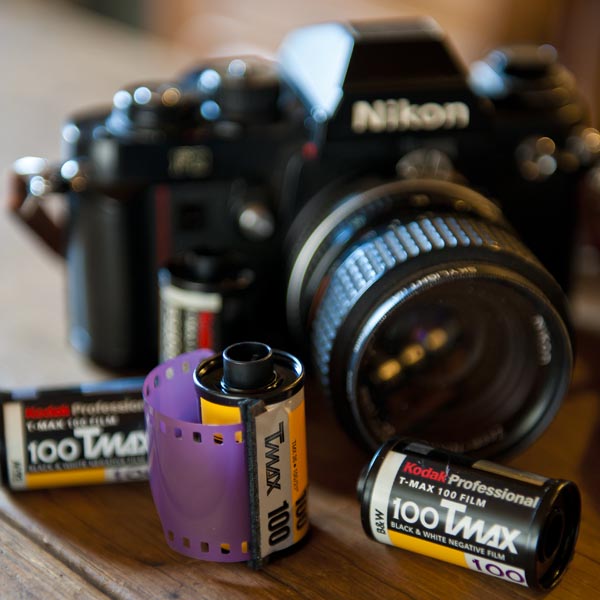
Eastman-Kodak, serving professional and amateur photographers for more than a century.
(© All Rights Reserved)

George Eastman (born 12 Jul 1854; died 14 Mar 1932) was an American inventor and industrialist who is considered by many to be the father of modern photography. Founder of the Eastman-Kodak Company, he invented roll film in 1884, which, after various improvements and refinements, resulted in the famous Kodachrome film in 1935. Eastman also developed the Kodak camera (1888) – the first camera designed specifically for his roll film, and the single photographic innovation that probably played the biggest role in expanding photography from a specialist field to a populist hobby for everyday people. Thanks to these and other photographic innovations, Eastman’s legacy looms large over the last century of photography.

Besides being a great innovator, Eastman was also a major philanthropist. He established, among others, the Eastman School of Music as well as schools of Dentistry and Medicine at Rochester University. He also funded clinics serving low-income residents in various European cities.

Amazingly, George Eastman’s life ended in suicide (he suffered chronic pain in the later part of his life due to a degenerative spinal problem), but even this dark tale has a silver lining of dry wit – he left a suicide note reading, “To my friends: my work is done. Why wait?”

The Eastman-Kodak company was a dominant player in the photographic market throughout the 20th century, at one stage in the mid 70s claiming a 90% market share of photographic film sales in the US. The name “Kodak” became so synonymous with everyday, amateur photography that the company tagline, “A Kodak moment”, entered the common lexicon as any moment or event that is special enough to be captured on film.

While large volumes has been written about George Eastman and his Eastman Kodak Company, I thought I’d leave the last word to musician Paul Simon and his 1973 ode to Kodachrome:

Kodachrome, they give us those nice bright colors
They give us the greens of summers
Makes you think all the world’s a sunny day, oh yeah
I got a Nikon camera, I love to take a photograph
So mama don’t take my Kodachrome away!

Get proactive on World Population Day

The world population currently numbers about 7 053 000 000 people. That’s a little over 7 billion.

According to the latest figures, an expected 350 000 new babies will be born into the world today. Over the same 24 hour period about 150 000 deaths will occur. To put this into perspective – in the 2-odd minutes you may spend reading this blog post, almost 500 births will take place, and 200 people will die.

For this year’s World Population Day, the focus falls on Universal Access to Reproductive Health Services.

Access to proactive reproductive health care holds the key to a world where every pregnancy is wanted, every childbirth is safe, and every young person’s potential is fulfilled.

Of the 350 births today, many will be to women who are shockingly uninformed and under-serviced on all aspects of reproductive health, from birth control to safe childbirth to maternal and newborn healthcare. As a result of this, it is estimated that no less than 800 women die each day during childbirth, which is a tragedy in itself, but also means almost a thousand new children each day who have to face the world without a mother – their primary source of love, care and support. Given this situation, it is not surprising that among children below the age of 5, there are almost 20 000 deaths per day.

Universal access to Reproductive Health Services, with a key focus on education and services relating to pregnancy and contraception, is a critical, basic component of a healthy, stable population.

In a report by the Guttmacher Institute entitled “Adding it Up – Costs and Benefits of Investing in Contraceptive Services in the Developing World” it is reported that among women of reproductive age in developing countries, 867 million require contraception because they are sexually active but do not want a child in the next two years. Of these, 222 million currently don’t have access to modern contraceptive methods and rely on traditional, often unsafe and ineffective methods. As a result, an estimated 80 million unintended pregnancies will occur in the developing world in 2012. These will result in 30 million unplanned births, 40 million abortions and 10 million miscarriages.

Of course a critical issue in addressing this problem is funding. The cost of the current provision of contraceptive care in the developing world is about US$ 4 billion annually, while the required cost for fully meeting the total need for modern contraceptive methods in the developing world would exceed US$ 8 billion.

On the positive side (and this is the key message), this additional US$ 4 billion investment in contraception is estimated to result in a saving of almost US$ 6 billion in maternal and newborn health services costs. Addressing a humanitarian tragedy and gaining almost US$ 2 billion in the process – surely that makes sense?

So what can we do about it? Given that investing in improved reproductive health services is actually an investment with positive returns, it is not a case of the funds not being available, but of a need for the refocusing of some of the available funds towards proactive pre-pregnancy education and health services rather than reactive post-childbirth services. The best we can do is to get involved and support organisations who are working towards this change, and who are putting pressure on governments and donor agencies to apply available funding more proactively. Even just talking about this and creating awareness can help.

We can work together towards achieving the vision of the United Nations Population Fund‘s vision: “Achieving a world where every pregnancy is wanted, every childbirth is safe, and every young person’s potential is fulfilled.”

Happy World Population Day!

Get your rhyming caps on – it’s Clerihew Day!

In celebration of Clerihew Day, and in keeping with the science slant of this blog, herewith my clerihew for the day:

Isaac Newton was a Sir
whose theories caused quite a stir
problems that made others grapple
he solved by being hit by an apple!

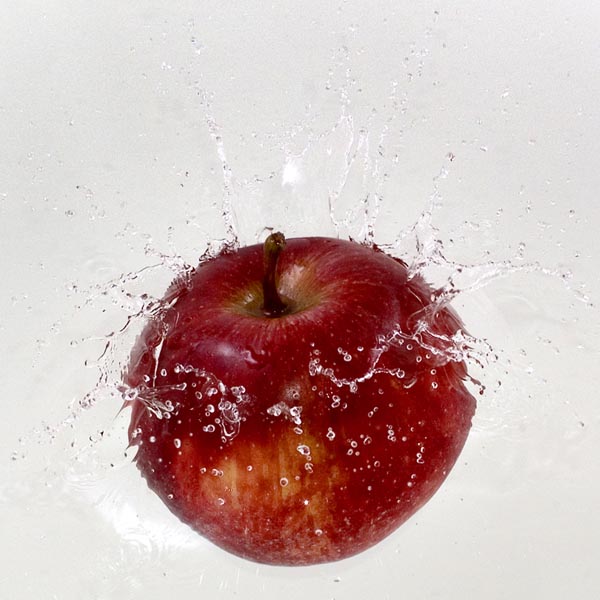
Newton, putting the science into the apple!
(© All Rights Reserved)

A clerihew? Say what?

Clerihew Day is the birthday of Edmund Clerihew Bentley (1875-1956), writer and poet, and most famously, the inventor of the clerihew – a light and frivolous 4-line biographical poetic form. The rhyme scheme is AABB, with lines of irregular length and meter. The first line typically contains a personal name, while subsequent lines are biographical in nature, but with a fun, lighthearted touch.

So, anyone else wants to have a go?
Please comment if you have a science clerihew!

Invention of the microwave oven – time-saver or taste-killer?

Today we celebrate a device that, despite being a really innovative invention, has in the eyes of many become synonymous with anti-innovation in the kitchen.

On this day, way back in 1894, Dr Percy Spencer (9 Jul 1894 – 7 Sep 1970) was born – the self-taught engineer who, many years later, invented the microwave oven. Before the Second World War, Sir John Randall and Dr HA Boot invented the magnetron tube, with which they were able to produce radar microwaves. A few years later, after the war, Percy Spencer was doing research work on the magnetron tube. While working on an active radar set he noticed that a chocolate bar in his pocket had melted – the radar melted the chocolate bar with microwaves. From this discovery, he started investigating the possibility of using microwaves to cook food. Spencer fed microwave power from a magnetron into a sealed metal box. When he placed food into the container and radiated it with microwave energy, the temperature of the food rose rapidly. This resulted in the development of the microwave oven – a device that cooks food with radiation used to heat polarised molecules in the food.

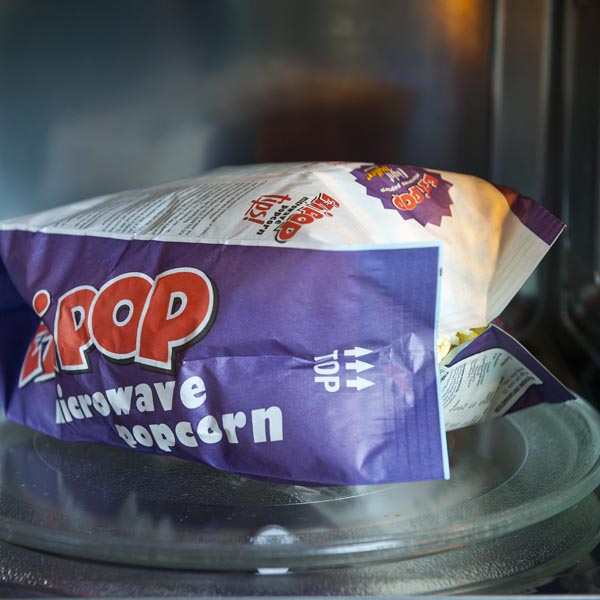
The microwave oven – only good for popping corn?
(© All Rights Reserved)

The first microwave ovens were large, heavy units, used in restaurants and commercial kitchens. The first countertop microwave was introduced in the mid sixties, soon becoming a ubiquitous device in kitchens around the world.

While the microwave oven is great for reheating food, cooking vegetables, and heating liquids like water or milk, it has not yet achieved any real culinary status. For the most part, it is used to heat ready-made, pre-packaged microwave meals. Microwave cooking can be quite healthy – it’s impact on nutrient content in food is said to be no worse than conventional heating, and thanks to the shorter preparation time, more micronutrients may be retained when microwaving vegetables, for example. But it is limited in application, and for the most part not capable of achieving the culinary effects and flavours created with conventional baking, frying, browning and slow-cooking. (Somehow I don’t expect to see Jamie Oliver’s “The Italian Microwave” or Nigella Lawson’s “The Microwave Goddess” hitting the cookery shelves anytime soon!)

So while the microwave oven definitely has it’s place in the modern kitchen, it may also probably stand trial as the primary culprit in thousands of dull, colourless and uninteresting meals prepared in the past 40 years.

Where do you stand – is the microwave oven an invention to celebrate, or to lament? Do you find it a must-have time-saver in the kitchen, or do you still have difficulty stomaching most microwave meals?

Today is SCUD Day! What day!? Read on…

According to numerous holiday and celebration sources, today is the day to ‘SCUD’, that is, to Savour the Comic and Unplug the Drama. Still a bit confused? So was I.

The basic idea behind the day is to remind people to focus on the bright side of life, and to stop being such drama queens and kings. Have some fun, take life a little less seriously, laugh more. And given the health benefits such a turn of attitude can bring, it’s certainly a day (and a sentiment) worth celebrating.

Don’t worry, be happy!
(© All Rights Reserved)

It has long been suggested that, just like we tend to smile when we’re in a good mood, the arrow also points the other way – our mood may improve when we smile (the “facial feedback” hypothesis). This is nothing new – Charles Darwin already suggested in 1872 that “the free expression of outward signs of an emotion intensifies it”.

The problem is that scientifically proving this relationship is quite difficult, with various factors potentially affecting the results. it is possible that, aside from the action of smiling, the instruction to smile may also create an emotional response (positive or negative – try telling a teenager to smile and watch the reaction!). Furthermore, sitting in a room full of smiling people is likely to raise your mood, whether you’re smiling or not.

Various research projects have been reported where these problems have been innovatively addressed, for example, by asking recipients to hold a pencil either between their teeth (which mimicks a smiling action) or between their lips (which does not), or by using more neutral smiling instructions, such as “Move your lips to expose your teeth while keeping your mouth closed, and pull the corners of your lips outward”.

Once participants were made to simulate a smiling expression, their responses to various positive and negative stimuli were measured, and compared to non-smiling control groups. In general it has been found that the smiling action intensified the participants’ reaction to positive stimuli, but seems to have less impact in response to negative stimuli.

For example, looking at a funny cartoon will lift your mood more when you’re smiling than when you’re not. On the other hand, reading a list of your monthly debts is depressing, and smiling while reading it is unlikely to leave you notably less depressed.

[Strack (1988), Soussignan (2002)]

So, your assignment on SCUD Day is to think happy thoughts and to expose yourself to positive stimuli. At the same time, pack out a big smile, and you will double the positive impact. Oh, and while you’re at it, surround yourself by others doing the same thing – the positive reinforcement of seeing others happily smiling back at you will lift your mood even more.

Come on, Savour the Comic, Unplug the Drama!

Very clever! Commemorating the design of the Phillips screw

There are so many amazingly clever inventions around us that we often fail to appreciate, or even notice them. Especially if it’s something basic and workmanlike.

The Phillips screw is one of those inventions.

Three cheers to the Phillips screw – simple, elegant, effective.
(© All Rights Reserved)

Patented by Henry F. Phillips on this day in 1936, the Phillips screw and screwdriver had a fundamental impact on the manufacturing and production industries. The Phillips screw facilitated greater automation in production lines that use powered screwdrivers, through the introduction of a clever tapered crosshead screw design that ensures the screwdriver centres itself in the screw head.

Based on his screw and screwdriver patents, Phillips founded the Phillips Screw Company, and after some initial rejections, managed to persuade the American Screw Company to invest half a million dollars in the manufacture of the screws.

The first major application of the Phillips screw was in the manufacture of the 1936 Cadillac, and within 4 years most manufacturers had switched to the new screws. Worldwide, the Phillips screw and screwdriver quickly became the most popular design – a position that it still occupies to this day, despite numerous attempts at an improved design.

Create some chemistry on International Kissing Day

Pucker up, its Kissing Day, a day to celebrate all aspects of the age-old art of kissing.

Of course kissing is not just an art, so given that this blog has a bit of a science leaning, lets discuss the science of kissing, or philematology (my new word for the day!).

Philematology tells us that kissing not only activates and stimulates large parts of the brain, it also releases chemicals that reduce stress. Furthermore, the human lips apparently have the thinnest layer of skin on the body, and are more densely populated with sensory neurons than any other bodily region.

Kissing is good for you – it’s a scientific fact, ask any philematologist!
(© All Rights Reserved)

In a study on the chemical impact of kissing, Neuroscience Professor Wendy Hill from Lafayette College, Easton, Pennsylvania, studied 15 romantically involved couples before and after kissing and holding hands for 15 minutes. Their levels of oxytocin (a feel-good, ‘social bonding hormone’) and cortisol (a ‘stress hormone’) were measured before and after the kissing session. It was found that cortisol levels decreased in all subjects, while oxytocin levels increased in the men and decreased in the women. The oxytocin reduction in the women was quite a surprising result, but may have had to do with the fact that the experiment was conducted in an “unromantic” student health center, which may have had more of an inhibiting effect on the women than the men (who, lets face it, are normally not too fussed by their surroundings!).

In another project, this time by anthropologist Helen Fisher from Rutgers University in New Brunswick, New Jersey, a number of brain imaging studies were conducted to see how the brain reacts to kissing. Fisher believes kissing activates different chemicals that stimulate different regions of the brain, and more specifically different “primary brain systems”, involved in the human mating and reproduction process. The first of these systems is sex drive, primarily testosterone driven, which drives people to find a mate, or even multiple mates. The second, romantic love, motivates people to gravitate towards a particular mate, and the third, attachment, helps couples stay together so they can rear children. Kissing is considered to have beneficial effects on all these systems.

Fisher furthermore says that kissing is, at a basic level, about exchange of saliva. Men tend to be sloppier kissers, because this lets them transfer more testosterone to stimulate their partners’ sex drive. She also speculates that men might be able to assess a woman’s fertility by subconsciously analysing the levels of estrogen and other hormones in her saliva (but that sounds a bit like science fiction to me).

According to neuroendocrinologist Sarah Woodley, another important chemical that may be present in saliva is androstadienone, a mood-enhancing steroid that also plays a role in helping you focus. “It may not be a sex attractant, but it plays a role in enhancing responsiveness to other stimuli. It makes them feel better”, she explained.

So what to do with all this philematological knowledge? Well, the best advice on Kissing Day is probably to just put it all out of your mind and enjoy what the day has to offer. Just do it – you don’t want all this science to spoil the fun!

(Source: Chemical attraction: The science of kissing.)

Seeing double – it’s Dolly the Sheep’s birthday!

Today we celebrate the birthday of Dolly the Sheep (July 5, 1996 – February 14, 2003), the first mammal to have been successfully cloned from an adult cell.

Dolly was cloned at the Roslin Institute in Midlothian, Scotland. The technique used to clone her is called somatic cell nuclear transfer. It involves a cell being placed in a de-nucleated ovum, and when the two cells merge, it develops into an embryo. Originally code-named “6LL3”, Dolly was cloned from a mammary cell, which became the basis for her name. In the words of cloning scientist Ian Wilmut, “Dolly is derived from a mammary gland cell and we couldn’t think of a more impressive pair of glands than Dolly Parton’s”.

Cloning is the process of creating an identical copy of an original organism.
(© All Rights Reserved)

Dolly was born to three mothers – the ovum and the DNA were harvested from two different sheep, and a third carried the cloned embryo to term. Her birth placed the international spotlight firmly on cloning research, causing great controversy that still rages on today. Many scientific, governmental, religious and humanitarian organisations oppose cloning, with arguments ranging from the medical risks involved, to the protection of the sanctity of life, to the protection of the identity of the individual.

Dolly died young, at the age of 6, after developing a progressive lung disease typically prevalent in older sheep. After her death it was also revealed that she had developed premature arthritis. With many sheep living to twice her age, Dolly’s death re-ignited the debate over the health and life-expectancy of cloned animals. One of the arguments in the debate is that animals cloned from adult cells have shorter telomeres (the pieces of DNA that protect the ends of chromosomes) than other animals of the same age. Since telomeres naturally shorten as cells divide, they are, to some extent, a measure of age. It has been argued that, since Dolly was cloned from a six year old sheep, she was effectively born with a genetic age of six.

Since Dolly, many other large mammals have been cloned, including horses and cattle. Cloning can become a viable means of preserving endangered species, and potentially even reviving extinct species. In 2009, scientists in Spain succeeded in cloning a Pyrenean ibex, a wild mountain goat that had been officially extinct since 2000. While the animal died shortly after birth, it was considered the first successful cloning of an extinct species, showing a possible way forward in protecting endangered and recently extinct animals (using frozen tissue).

(I cannot help but wonder whether protecting our biodiversity and pursuing more sustainable ways of interacting with our planet, may not be a more proactive solution to the problem of more and more species being driven to extinction. But that’s another argument altogether.)

Cloning, in particular human cloning, has become a favourite topic in science fiction novels and movies, from the work of Aldous Huxley to the Star Wars series. This remains a highly sensitive topic, that is sure to continue being a point of public controversy for many years to come.

Bean me up, Scotty! It’s Independence from Meat Day.

Not only is July 4th Independence Day in the US, it is also Independence from Meat Day. This day, originally created by the Vegetarian Awareness Network in Tennessee, has grown beyond its original US-only focus to being an international day for celebrating a meat-free diet and lifestyle.

Vegetables – they taste so good, ’cause they look so good!
(© All Rights Reserved)

Arguments for and against eating meat has raged for years, and while there has been many scientific studies published on the health benefits of a meat-free diet, many of these are inconclusive, given the huge variability on human diets both with and without meat. Also, many of the health risks posed by processed meat, for example, has more to do with the chemicals and fats introduced as part of the processing, than it has with the meat itself.

Much stronger arguments are made on moral grounds against the slaughter of animals for human consumption, and many great thinkers have made succinct arguments for a meat-free diet. In the words of outspoken vegetarian George Bernard Shaw, “Animals are my friends… and I don’t eat my friends.”

The fact of the matter is that, despite evolving as omnivores, the human mouth and gut is such that we don’t need meat in our diets. Our bodies can extract the necessary nutrients from a plant-based diet, as long as you take care to provide your body with good alternative sources of the proteins and other nutrients typically found in a meat-diet. Growing children require more protein in their diet than adults, so vegetarian children need to make extra sure they get all the required nutrients in sufficient doses.

Vegetarian or not – it can’t hurt enjoying a meat-free day every so often. So give it a go – celebrate your Independence from Meat, wherever you are.

Celebrating the invention of foam rubber

Today in 1929, British scientist EA Murphy, who worked at the Dunlop Latex Development Laboratories in Birmingham, must have been a little bored, or mischievous, because he decided to whip up some latex rubber with a kitchen mixer.  As is often the case with such seemingly arbitrary actions, he ended up inventing a product that, up to this day, has a huge impact in all our lives – foam rubber. It is said that Murphy’s colleagues were initially unimpressed, but this soon changed when they caught on to the amazing cushioning and shape retaining properties of this new invention, and it wasn’t long before foam rubber was used in motorcycle and car seats, mattresses and much more.

In its natural form, latex is a milky white liquid tapped from the trunks of rubber trees. This pure latex gets whipped up with water to create a thick froth. The froth is sometimes exaggerated using CO2 gas. Once frothy, the mixture is heated to the point of vulcanization (about 240°F) which results in the formation of long molecular chains with strong crosslinked bonds, giving the resultant foam rubber its ability to recover its shape after compression.

Close-up view of frothy foam rubber.
(© All Rights Reserved)

While the shape retention characteristics of foam rubber make it a very versatile substance, it does have some limitations. When it gets exposed to very high temperatures it will melt, and if its frozen it can shatter.

Now researchers at the National Institute of Advanced Industrial Science and Technology in Japan, have come up with a new carbon-based nanotube rubber that has even better shape memory than foam rubber, and that can withstand extreme temperatures without any negative effects.

The unique features of this new super-rubber make it ideally suited for use in extreme conditions like spacecraft and car shock absorbers. Incorporating it into clothing also means that you can have a truly non-wrinkle shirt. Perhaps most exciting is the electricity conducting abilities of the carbon nanotubes, which means that, if its used in shoes or shock absorbers, the material could theoretically harvest and store the electricity generated.

While high costs mean the large-scale application of these super-rubbers are still some way off, one can just imagine it becoming as pervasive as foam rubber over the next decades.