Page 21 of 38

Celebrating stout beer (not just for nursing mothers and athletes…)

So, today is International Stout Day. I recently discussed stout beer, Guinness in particular, on Arthur’s Day, the 28th of September. But what the heck, I don’t need too much convincing to return to this lovely, dark, malty style of beer again. And of course Guinness, despite being the most famous of the stouts, is far from the only stout beer out there.

Lovely day for a Guinness! 🙂
(© All Rights Reserved)

Guinness is an example of an Irish Stout, also known as a ‘Dry Stout’, one of a range of traditional stout styles.  Dry stouts tend to be very dark in colour, with a toasted, coffee-like taste. Because of their robust taste they are often thought to be quite high in alcohol, which is not always the case – a can of Guinness Draft, for example, has only 4.2% alcohol – lower than many standard lager beers.

The second main stout category is the ‘Imperial Stout’, a stout beer of Russian origin, which is also quite dark, but with a brown, rather than black, hue. This is typically the strongest of the stout beers, with alcohol percentages often up towards the 10% mark. A stout hearty enough to curl a Russian bloke’s chest hair, Imperial stout was traditionally a popular drink to warm the cold winter evenings.

Another style of stout is the ‘Milk Stout’, also dark in colour, but often low in alcohol. The main feature of a milk stout is the addition of milk sugar, or lactose, to the brew, making it sweeter and smoother than dry stout.

Finally, ‘Oatmeal Stout’ is very similar to milk stout, but has an even smoother and sweeter taste, thanks to the addition of up to 30% oatmeal. The ‘oatmeal and milk’ image associated with this type of stout has helped strengthen the idea of stout beer as a hearty meal in it’s own right. The nutritional value of oatmeal stout made it a popular choice in centuries past for nursing mothers and athletes in England .

Beyond the traditional categories above, stout beer is still developing and evolving, with various new styles appearing, such as the ‘American-style Stout’, a medium-bodied malt beer with hints of caramel and chocolate, created using various specialty malts. Often quite dark-roasted, with a burnt-coffee flavour.

Stout beers are also quite popular with home-brewing enthusiasts, and I fondly recall one of the more pleasant beer-tasting experiences I’ve had, at a get-together of the Wort Hog Brewers Club in South Africa. One enterprising home brewer had a specialist stout he called his ‘Black Forest Stout’ – a traditional, full-bodied dry stout with chocolate and berries added to the brew to create what I can only describe as the liquid equivalent of a dark, moist black forest cake. Lovely stuff!

I unfortunately don’t have access to a black forest stout at the moment, but I’m sure a glass of Guinness from my local pub will more than adequately hit the spot.

Happy Stout Day, everyone! “May your Guardian Angel be at your side to pick ya up off the floor and hand ya another cold stout from the store!”


The sixth sick sheik’s sixth sheep’s sick

Yes indeed, today is International Tongue Twister Day, and in celebration I thought I should share the above twister deluxe – apparently rated the toughest of all tongue twisters.

Actually tongue twisters are very interesting phenomena. Why do certain combinations of words cause our tongues to tie up in knots? And more fundamentally – is it actually our tongues that get confused, or do we get stuck in the brain even before we get to verbalise the twister?

The very term ‘tongue twister’ blames the tongue for getting tied in a knot over certain word combinations, when it may in fact be the brain that stumbles first.
(© All Rights Reserved)

Reading a sentence out loud involves an amazingly complex set of actions. Firstly, the brain has to make sense of the letters on the page and comprehend the sounds that are to be produced. Then it has to fire off signals to various parts of the body in order to create the actual sounds – the diaphragm has to move to move air and create the correct pressure to articulate the sounds; the vocal chords have to relax and/or contract; the lips have to pull into different shapes; and then of course the tongue has to set off on a series of extremely complex and yet very precise movements. While the diaphragm, vocal chords and lips can shape the varying blocks of sound needed to speak, the lips are responsible for all the finer details, rolling, bending, clicking and sliding to turn the sounds from rough slabs into precise shapes.

So where do things go wrong when we hit a tongue twister?

A number of studies indicate it may be the brain that stumbles before the words even reach the tongue. In a 1982 study by Ralph and Lyn Haber from the University of Illinois, a group of adult test subjects were asked to silently read different sections of text, some containing tongue twisters, and some not. They found that it took people significantly longer to read through the tongue twisters, indicating that our difficulty articulating these specific sections of speech may be more complex than merely being a case of the tongue not being able to handle the gymnastics it has to perform. It all has to do with phonology. Even when we read silently, we still arrange letters into phonemes, or ‘sound packages’, and rapidly switching between specific phonemes may cause problems even at the conceptual level.

The above result is confirmed by a later study by Keller, Carpenter and Just of Carnegie Mellon University, who studied the brain activity of test subjects while they silently read texts containing tongue twisters. It was found that people not only took longer to read through the tongue twisters, but there were also increased levels of activity in a number of language-related cortical areas. This confirms that it is the brain that is already having a hard time sorting out specific phoneme combinations.

Having said that, there are certain phoneme combinations that, physically, causes the tongue some real difficulty. This includes rapidly reversing the order of sounds, like the ‘s’ and ‘sh’ in “She sells seashells by the seashore” – the tongue’s muscle memory wants to repeat the sounds in the same order. Switching between single and double sounds is another challenge – the ‘s’ and ‘sh’ above, or the ‘b’ and ‘bl’ in “A big black bug bit a big black bear, made the big black bear bleed blood.” Things also go pear-shaped when we are forced to quickly make major changes to the shape and position of the tongue and lips, like rapidly repeating “toy boat” – the ‘oy’ part lifts the middle of your tongue to the top of your palate and pulls the lips into a rounded shape, and then the ‘b’ makes the tongue drop back to the mouth floor and the lips has to quickly close and open to make the air ‘pop’ out of your mouth. Doing this repeatedly gets the muscles all tied up.

Perhaps the problem is that the brain, when reading a tongue twister, already starts thinking about the trouble it is going to face to get the tongue to do what it is supposed to, and this causes it to get stuck. Whatever the case – whether it’s a tongue twister or really a brain twister, or a brain-tongue combination twister, today is the day to have fun with these crazy little phonetic constructs – just don’t try and say “I slit the sheet, the sheet I slit; and on the slitted sheet I sit” too loudly in public!

David Marine, pioneer of salt iodisation

Our subject for today is table salt, or more specifically, iodised table salt. We are commemorating the work of David Marine, an American pathologist who died on this day back in 1976.

Marine did research on the treatment of goiter (swelling of the thyroid gland in the neck) with iodine. Between 1917 and 1922 he ran medical trials on a large sample of school girls, showing that iodine supplementation significantly reduced the incidence of goiter. Recognising the potential health benefits of iodine supplementation, Marine worked on the World Health Organisation’s salt iodisation programme.

When you do use salt, opting for an iodised variety cannot hurt.
(© All Rights Reserved)

Adding trace amounts of various iodine salts to regular table salt is an easy and effective way of preventing iodine deficiency in people. Worldwide, iodine deficiency is said to affect almost 2 billion people, causing mental retardation and various thyroid problems including goiter. While people in some regions, for example near the coast, can potentially get enough iodine from their general diet, the majority of the world has low natural iodine levels, resulting in the need for artificial supplementation.

Over the years there has been some opposition to iodisation of salt, mainly from fringe groups such as small salt producers concerned about the added production expense, manufacturers of iodine supplements who are obviously at risk of losing their market, and health groups concerned that the promotion of iodised salt will lead to excessive salt intake. Of course there will always be lobbies (rightly) promoting foods and food products that are as ‘natural’ and ‘pure’ as possible, and who would prefer to rather get their iodine in some more natural way. For this reason, most countries allow both iodised and non-iodised salt to be sold to consumers.

While the iodisation of salt has contributed a great deal to improve global iodine deficiency levels, there are indications in many countries, including new Zealand, of a re-emergence of iodine deficiency. This is due in part to the increased consumption of commercially prepared foods made with cheaper, non-iodised salt, and because of decreased general use of salt (iodised and not) as a response to health programmes recommending reduced salt intake.

Of course using less salt, iodised or not, is a good thing, as we discussed previously. But the key message from most health bodies, in terms of iodine intake, is to opt for iodised salt when we do use salt, and to generally give preference to freshly prepared, non-processed foods. Non-vegetarians can boost their iodine intake with iodine rich foodsources like seafood, milk, eggs and meat, but vegetarians may well consider an iodine supplement.

Just remember that the iodine in iodised salt disappears over time due to evaporation and oxidation, so even when you do use iodised salt, that bag of salt that’s been sitting in the cupboard for years may not be of much use as an iodine supplement anymore.

James Clerk Maxwell – the man who changed everything

Today, we commemorate the life and work of James Clerk Maxwell, the Scottish mathematical physicist who died on this day in 1879.

James Clerk Maxwell, 13 June 1831 – 5 November 1879
(wikimedia commons)

While most people will have heard of arguably the two most prominent physicists of all time – Isaac Newton and Albert Einstein – far less are likely to recognise the name of the third person on the list: James Clerk Maxwell. Maxwell, who formulated classical electromagnetic theory, has been hailed as the 19th century scientist whose work had the greatest influence on 20th century physics, and Einstein described it as the “most profound and the most fruitful that physics has experienced since the time of Newton.”

What makes Maxwell’s electromagnetic theory so important is that it is one of the great unifying theories in physics, combining the fields of electricity, magnetism and optics into a single, consistent theory. He showed that electric fields and magnetic fields both travel as waves, and they travel at the speed of light. This led him to postulate that light, electricity and magnetism behave the same, and can be described through the same equations and theories. In his own words, “We can scarcely avoid the conclusion that light consists in the transverse undulations of the same medium which is the cause of electric and magnetic phenomena,” and “The agreement of the results seems to show that light and magnetism are affections of the same substance, and that light is an electromagnetic disturbance propagated through the field according to electromagnetic laws.”

Maxwell’s electromagnetic theory has been reduced down to four fundamental differential equations, known as ‘Maxwell’s Equations’, first presented in his book “A Treatise on Electricity and Magnetism” (1873).

Another contribution by the great man, possibly less grand than his electromagnetic theory, but fundamentally important in its own way, came in the field of colour and optics. His theory of colour vision made a key contribution to colour photography.

Thanks to Maxwell we now understand that a colour image can be split into red, green and blue channels, and that the full colour image can be recreated by combining these channels.
(© All Rights Reserved)

Maxwell was the first to show that a colour image can be created by photographing the same subject through red, green and blue filters, and then projecting the three resultant images through the same colour filters onto a screen. This showed that the additive primary colours are red, green and blue and not red, yellow and blue, as was previously assumed. It introduced the principle of additive colour synthesis used to this day in colour displays.

So here’s to Scotsman extraordinaire James Clerk Maxwell, one of the greatest minds of modern times and, to paraphrase his biography, ‘the man who changed everything’.

Frederick Bowen and the fascinating ferns

Today we celebrate the birthday of one Frederick Orpen Bower, born 4 November 1855. Bower, an English botanist, was famous for his studies of the origins and evolution of primitive land plants such as ferns and mosses. In his research, published in books like Origin of a Land Flora (1908), Ferns (1923-28), and Primitive Land Plants (1935), Bower concluded that these plants had evolved from algal ancestors.

Ferns, the subject of much of Bower’s research, is a fascinating plant in many ways. Unlike mosses, ferns are vascular plants with stems, leaves and roots. Unlike other vascular plants, however, they reproduce via spores rather than flowers and seeds.

The shape and structure of young fern fronds can provide endless visual fascination.
(© All Rights Reserved)

While we typically associate ferns with moist, shady areas, they can be found in a wide variety of habitats, from desert rocks to mountains to water bodies. They can prosper in marginal areas where many flowering plants fail to grow. This tenacity make certain fern species serious weeds, such as the Bracken Fern in Scotland, and the giant water fern, one of the world’s worst aquatic weeds.

From a biochemical point of view, ferns can be particularly useful in fixing nitrogen from the air into compounds usable by other plants, and for removing heavy metals from the soil.

Another beautiful young frond, appearing almost animal-like.
(© All Rights Reserved)

Patterns and motives based on fern shapes are popular in traditional art and culture. In New Zealand, for example, the silver fern is a very prominent cultural symbol, featured often in traditional art. The leaf of the silver fern is also the proud emblem of many of the country’s top sporting teams such as All Blacks (rugby) and Silver Ferns (netball).

On a more esoteric level, ferns are a wonderful embodiment of mathematics in nature, with young fern fronds unrolling in stunning Fibonacci spirals. The patterns and structure of fern leaves can also be simulated by means of iterative mathematical functions.

Definitely a plant that fascinates on many levels. No wonder Frederick Bowen committed his life to studying these wonderful plants!

That cliche rings a bell!

Rise and shine! Today is Cliche Day, so don’t worry, be happy!

Cliches may come a dime a dozen, but once in a blue moon one comes along that hits you between the eyes. On Cliche Day, the idea is to look through new eyes at these well-worn expressions, and leave no stone unturned to try to find the diamonds in the rough.

In the good old days we used to call a spade a spade, but in this day and age everyone beats around the bush. Often it’s all talk and no action. You have to dig deep to get to the bottom of things. With age comes wisdom, so if you get your act together and hang in there, at the end of the day you may end up sadder and wiser. Better late than never, I always say!

The classic visual cliches – sunsets and silhouettes.
(© All Rights Reserved)

In this life you can go with the flow or kick against the pricks. There’s a time and place for everything, but when push comes to shove it’s every man for himself. So get your ducks in a row or you may end up between a rock and a hard place.

Forgive me if I’m all over the map with this post, but I hope my words of wisdom will do the trick – good things come to those who wait. Always look on the bright side of life, and remember all’s well that ends well.

In the final analysis, when all is said and done, all that’s left for me is to let it be and say Happy Cliche Day. 🙂

Having some fun on ‘Look for Circles Day’

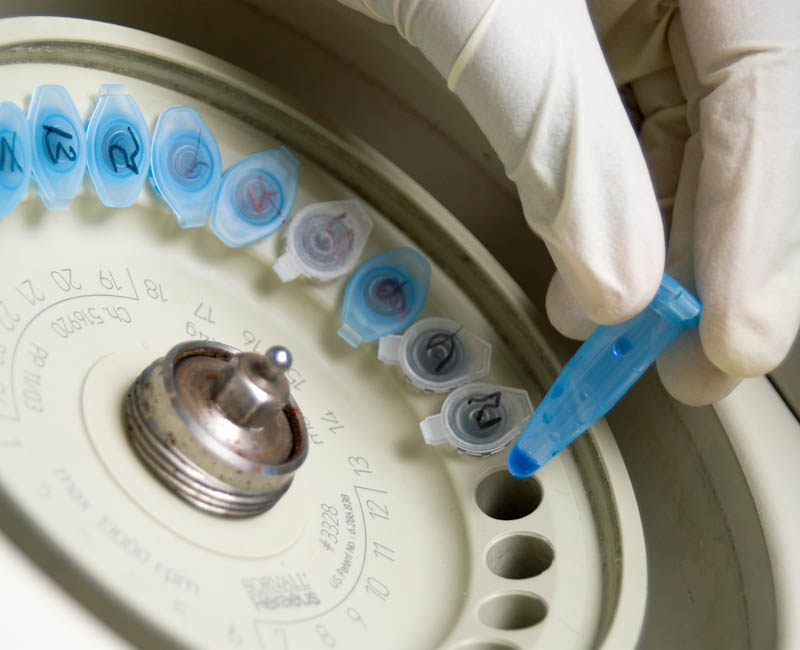
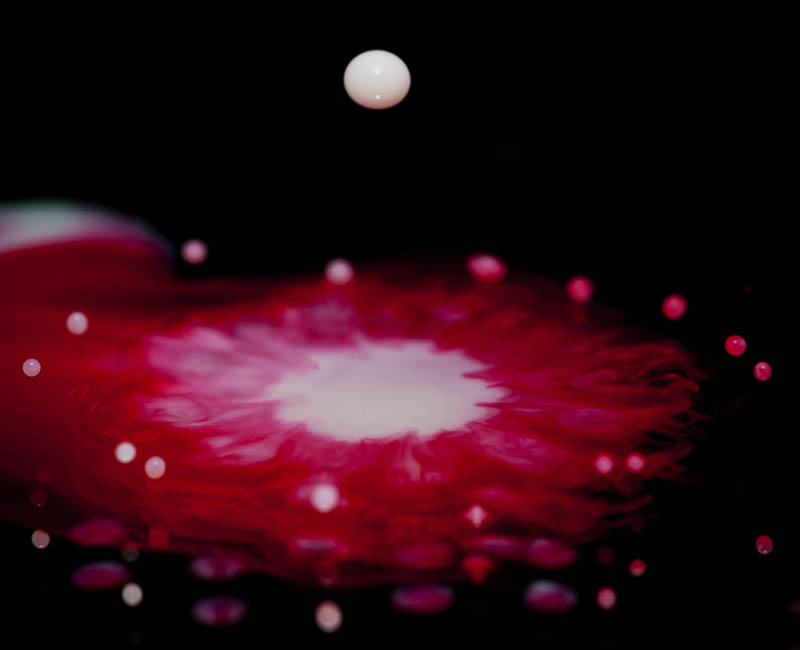
Today, they say, is Look for Circles Day. The idea of the day, aimed mostly at entertaining the young ‘uns, is to see how many circles you can spot. We come across hundreds of circles each day, so in addition to the obvious ones, try to look for circles in unexpected places, and even look for implied circles (where objects occur, or are placed, in such a way that they form a circle).

A science lab can be an abundant source of circles.
(© All Rights Reserved)
Liquid droplets splattering – a stunning symphony of circles and spheres.
(© All Rights Reserved)

Look for Circles Day is a great opportunity to entertain kids of all ages with one of the most interesting shapes in nature, and to teach them some maths and geometry in the process. Here are some interesting circle facts:

  • A circle is an infinite set of points on a plane that are all the same distance from a specific, predefined point.
  • Of all shapes with a given perimeter, the circle has the largest area. Or to put it another way, circles have the minimum possible perimeter for a given area.
  • They are the only single-sided shape with an area.
  • A circle with an infinitely large radius is a straight line (there’s a hint to give you the upper hand when searching for circles!)
  • A circle can be split in two identical halves in an infinite number of ways, or stated more formally, a circle has an infinite number of lines of symmetry.
  • The circumference and perimeter of a circle are related through the mathematical constant pi, or π – a very interesting number in itself, as we discussed previously.
  • A solid circle is a wheel, and we all know what useful invention the wheel was!
  • Apparently, according to research done by the Max Planck Institute for Biological Cybernetics in Tübingen, when we have no way to navigate – for example in a thick fog, or a moonless night – we tend to walk in circles (literally).
  • There is a form of divination called ‘gyromancy’ where people are made to walk in a circle until they fall down from dizziness, and the location where they fell is then used to predict future events.

Yep, as I said – circles are amazing things… Happy circle spotting!

Dubious facial hair alert – it’s Movember!

It’s the 1st of November, and summer is well and truly upon us here in the far South. Being November, of course it also means this is Movember – the one month men around the world become heroes for sporting facial hair that would, during any other month, raise serious questions about their state of mind.

Floppy, curly, twisty, bushy, or perfectly groomed, Movember is the month for crafting your own unique moustache – as individual as your fingerprints.

According to the Movember rules, you start the month clean shaven, so herewith the month’s famous last big shave.
(© All Rights Reserved)

The reason of growing a ‘mo’ during Movember is to help raise awareness about men’s health,  specifically prostate cancer and depression. As stated on the Movember site, “Mo Bros effectively become walking, talking billboards for the 30 days of November and through their actions and words raise awareness by prompting private and public conversation around the often ignored issue of men’s health.”

Movember started in Australia (good on ya, mate!), and has since grown into a truly global movement, with almost 2 million participants in a wide range of countries, including Australia, New Zealand, the US, Canada, the UK, South Africa, Ireland, Finland, the Netherlands, Spain, Denmark, Norway, Belgium and the Czech Republic. Movember aims to “change established habits and attitudes men have about their health, to educate men about the health risks they face, and to act on that knowledge, thereby increasing the chances of early detection, diagnosis and effective treatment.”

In New Zealand, funds raised through the Movember initiative go specifically to the Cancer Society of New Zealand and the Mental Health Foundation of New Zealand.

You can get involved informally, simply by not shaving your moustache for a month. However, to really go the whole nine yards, why not register through your national Movember website/forum, where you can formally commit to the challenge, and update your progress throughout the month. Different countries have their own unique sites, typically http://<your country code>.movember.com/ (simply going to www.movember.com should also redirect to your local site). Committing on such a public forum not only helps to keep you honest (to keep you from shaving your mo for that special date or meeting halfway through the month) but it also means that you officially become part of the Movember fundraising initiative. And, most importantly, you become a registered Mo Bro, part of the global Mo Brotherhood.

Of course it’s not just for men – women are also encouraged to register as ‘Mo Sistas’, in support of the men in their lives.

Day 1 – clean shaven (well, almost), and slightly worried about what this picture is going to look like in 30 days…
(© All Rights Reserved)

To visit me, Mo Bro Gerry, drop by my Mo Space Page – I will try to update the space every so often and will also be posting updates on this blog, so let this serve as an early dubious facial hair alert.

Let the growing begin… Ready, steady, Mo! 🙂

World Savings Day – today’s other holiday

Today, 31 October is Halloween – that ain’t news to anyone. But did you know that today is also World Savings Day? This day, also known as World Thrift Day, dates back to 1924 when it was established during the 1st International Savings Bank Congress.

I am sure it felt right, on that last day of the ISB Congress, for Italian Professor Filippo Ravizza to excitedly declare that the day should in future be commemorated as an international day promoting savings all over the world. You have to wonder, however, how wise it was to establish this day on the same day already celebrated as Halloween.  Let’s see, what shall we do today – go for fancy dress and trick-or-treat, or discuss the value of a thrifty life? Yes, well, no wonder you don’t see too many Savings Day headlines on this day…

Changing from ‘financial fate’ to ‘financial fortune’ can be as simple as switching from a credit to a debit account.
(© All Rights Reserved)

Of course the idea promoted by World Savings Day is a very good one – if everyone took a slightly more thrifty approach to life, and opted to save up for something rather than buy it on credit to pay off later, they’d be amazed how much further their money stretched. And the world wouldn’t be in the dire financial state it finds itself in.

The financial repercussions of a consumerist lifestyle, where shops make it very easy and appealing for people to buy now and pay later, rather than living debt free, is still not well understood by many people, and they are all too easily tempted into an ever deepening circle of credit and debt and eventual financial ruin. Understanding the value of saving is a critical life skill, and teaching children from an early age to save money in a savings account, or even just a piggy bank, can have life-long benefits.

So here’s to World Savings Day, the other October 31st holiday. While you may not be able to avoid the costumes and candy on this day, you can still teach the kids some degree of thrift by making homemade candy rather than buying from the shops, and even making a project of creating Halloween costumes from secondhand material. And then, when all the Halloween fun is over, pop all the money not spent on candy and costumes into their piggy banks, or help them deposit it into their savings accounts. Who knows, that might just get the message across.

Commemorating the end of shoe rationing

Today is a good day to celebrate shoes – leather and rubber shoes in particular. Because today we commemorate the day in 1945 when the US government announced the end of shoe rationing.

In the Second World War, many things were rationed in various parts of the world, due to production delays, lack of raw materials, etc. As it happens, one of these was shoes (here’s a nice story about the WWII shoe rationing in the US). Apparently, serious rubber shortages at the time meant that rubber shoes were in very short supply, and the military’s leather requirements (for boots, jackets and more) resulted in limitations also being placed on leather shoes.

Having more than one pair of rubber work boots in the home must have been quite a luxury in the early 1940s.
(© All Rights Reserved)

From 1942, rubber boots and rubber work shoes were rationed – you had to apply for a new pair at a rationing board, and if your application was approved, you had to turn in your old pair. And only work shoes were allowed – no sports sneakers could be purchased. Similarly, rationing of leather shoes started in 1943. Each person (adult and child) was allowed up to 3 pairs of new leather shoes per year, bought using special rationing stamps.

And then, on 30 October 1945 – a happy day for shoe lovers! – the rationing was lifted. Men were again able to buy as many pairs of work boots as they liked. Shoe addicts were no longer bound by the painful limit of three pairs of new must-have’s a year. Children could get all the shoes they needed to accommodate their growing feet. And athletes could burn through as many pairs of sneakers as they wanted.

I for one would have easily been able to carry on as normal during the great WWII shoe rationing – shoes are practical things, after all, and surely don’t need replacing until they fall apart, do they? And, in most cases, they’re not even good for you – as I’ve mentioned before, you’re definitely better off going barefoot when possible. So the whole shoe addiction thing is a bit of a mystery to me.

After 1945, those who cannot say no to a pretty shoe could again shop to their heart’s content.
(© All Rights Reserved)

In trying to add a bit of science to this post, I thought I might be able to find some research on the topic of shoe addiction, but alas, that seems to be a field of study that’s still wide open for psychologists and cognitive scientists. And it’s not as if there’s a lack of outspoken test subjects out there – just Google “shoe addiction” and you will be swamped in millions of blog-posts and other articles from self-confessed shoe addicts. From the average girl next door who would happily forego food for a week to afford another special pair of shoes, to Danielle Steele, who apparently owns in excess of 6000 pairs (quite an interesting addiction, by the way, for a writer who, one would assume, should be spending a significant amount of her time in front of a keyboard…).

So, where do you stand on the shoe debate – are they an undeniable passion or a necessary evil?