Page 20 of 38

Commemorating the World Day of Remembrance for Road Traffic Victims

Today, 18 November 2012, is the World Day of Remembrance for Road Traffic Victims. In a resolution adopted by the United Nations General Assembly in October 2005, it was decided that the 3rd Sunday in November should be set aside as a day of remembrance for those who had died from road traffic accidents, and to draw the public’s attention to the horror of these accidents, their cost (at various levels) and steps to prevent these tragedies.

Worldwide, sights like this next to the road, small shrines of remembrance for those who have died, highlight the horror of road accidents. This sign next to a road in South Africa reads “Will always remember you, with love”.
(© All Rights Reserved)

Almost 1.3 million people are killed in road accidents each year – drivers, passengers and pedestrians. 50 million more are injured or disabled as a result of these accidents. They are the leading global cause of death among young people in the 15-29 age category. Of course road accidents not only impact on the direct victims, but also the relatives of these victims, who have to deal with the sudden, unexpected and brutal death or disability of loved ones, and cope with the practical and emotional consequences.

Interestingly, more than 90% of the annual road fatalities occur in low and middle income countries, despite these countries having less than half of the world’s vehicles. Almost half of these deaths are among the so-called ‘vulnarable road users’ – pedestrians, cyclists and motorcyclists. It is predicted that, without serious intervention, the annual road traffic death toll will rise to 1.9 million in 2020.

The above facts highlight many key problems causing road accidents, particularly in developing countries – unsafe, non-roadworthy vehicles, inadequate road conditions, and importantly, a lack of road traffic traffic law enforcement. It is estimated that only 15% of the world’s countries have comprehensive laws covering the main road traffic risk areas – speeding, drunk driving, use of motorcycle and bicycle helmets, seat-belts and child restraints. These are issues that need serious attention, particularly given the population growth, and rapid urbanisation in the developing world, making lack of road safety an accident waiting to happen (excuse the pun).

In the developed world, many of the above problems are adequately addressed, and most road accidents are caused by driver behaviour – speeding, inadequate following distances, risky overtaking etc. Irresponsible driver behaviour is a major personal bugbear for me – looking at the way people drive, and the chances they take, simply because they’re late, or in a hurry, or just generally inconsiderate pigs, one cannot help but question the intelligence of these people who put their daily rushed lived ahead of their, and others’, safety.  And of course, sadly, it often isn’t the offender who ends up dead or maimed for life, but rather his/her innocent fellow road users.

Another sad roadside reminder.
(© All Rights Reserved)

Together with the World Health Organisation (WHO), many governmental and civil organisations worldwide contribute to awareness creation initiatives related to road safety. Some of the main international non-governmental organisations (NGOs) actively involved and doing commendable work in this area include RoadPeace, the Association for Safe International Road Travel (ASIRT) and the European Federation of Road Traffic Victims (FEVR). In recognition of the World Day of Remembrance for Road Traffic Victims, the WHO, FEVR and RoadPeace have developed a World Day of Remembrace Guide for Organisers, which offers a range of ideas and suggestions for events that can be organised on this day, and support mechanisms that organisers can call on. It is hoped that the guide will help in spreading the message and supporting global advocacy regarding road safety.

If you have been directly or indirectly affected by a road accidents, this day is especially for you. But even if you’re just a road user, as a driver, passenger or pedestrian, this day is for you too – get involved, be aware, and be safe. Safe travels, everyone!

Celebrating August Möbius and his crazy, twisty Möbius strips

Today we celebrate the birth of August Möbius (17 Nov 1790 – 26 Sep 1868), German astronomer, mathematician and author, and the man who introduced the concept of the Möbius Strip, one of the more interesting objects in mathematical topology.

Getting into the mathematics behind the Möbius strip is beyond the scope of this blog, but suffice to say that a Möbius strip is a two dimensional surface with only one side. Mathematically it is said to be a non-orientable object.

The one-sided, non-orientable Möbius strip.
(© All Rights Reserved)

A physical model of a Möbius strip can be constructed by taking a long, rectangular strip of paper, giving it a 180 degree half-twist and joining the ends together to form a loop.  Starting at any point on the surface of the resultant loop, you can draw a line along its centre, passing along both sides of the strip and eventually returning to your original starting point, without once lifting your pen.

Moreover, cutting the Möbius strip along this centre line with a pair of scissors will not result in two separate loops, but rather a single loop, double the length of the original, and with two full twists in it. Thanks to having an even number of twists, the resultant loop will not be a Möbius strip anymore – if you draw a line along its centre, you will remain on one side of the strip, and the line will not traverse both sides.

If you repeat the cutting exercise and cut this new loop along its centre, you will end up with two separate loops, wound through each other, and each having two full twists.

Getting back to our original Möbius strip, another ‘trick’ is to make your cut 1/3 from the one edge. If you keep cutting until reaching your original point, you end up with two loops – one new, thin Möbius strip (the center third of the original), which will be the same length as the original, and one thin loop with two twists and twice the length of the original.

In the same way that a Möbius strip (with 1 half-twist) when bisected, results in a new loop with 2 full twists, loops with more half-twists will lead to different end results. Generally speaking, a loop with N half-twists (where N is an odd number), when cut along its centre, becomes a loop with N+1 full twists.

These crazy, twisty loops are not only amusing things to cut up and play with – they have lots of useful practical applications. When designed in the shape of a Möbius strip, conveyer belts can be made to last longer, as wear and tear will be shared between the two sides. Similarly, typewriter ribbons can be more effective when shaped with a half-twist. Möbius strips, with their unique geometry, also occur in physics and chemistry, and even have applications in electric circuitry.

Amusing things indeed, and surely well deserving of their own special day!

Albert Hofmann and the psychedelic bicycle

It was on this day back in 1938 that Swiss chemist Albert Hofmann first synthesized the psychedelic drug LSD, or lysergic acid diethylamide.

The story goes that Hofmann, working in the pharmaceutical-chemical department of Sandoz laboratories in Basel, was investigating the purification and synthesis of active constituents from the squill plant and ergot fungus, for use in new pharmaceuticals. While studying derivatives of lysergic acid for use in a respiratory and circulatory stimulant, he synthesized LSD, a semi-synthetic derivative of ergot alkaloids. The newly discovered drug apparently didn’t show much promise, as the project was set aside for 5 years until 1943, when Hofmann decided to return to it for some further investigations. After re-synthesizing LSD, a small amount of the drug was absorbed in his body when it accidentally came in contact with his fingertips.

It was this accidental contact that illustrated the potency of his discovery in a most vivid way. His notes on the experience included the following description:

“At home I lay down and sank into a not unpleasant intoxicated-like condition, characterized by an extremely stimulated imagination. In a dreamlike state, with eyes closed (I found the daylight to be unpleasantly glaring), I perceived an uninterrupted stream of fantastic pictures, extraordinary shapes with intense, kaleidoscopic play of colors. After some two hours this condition faded away.”

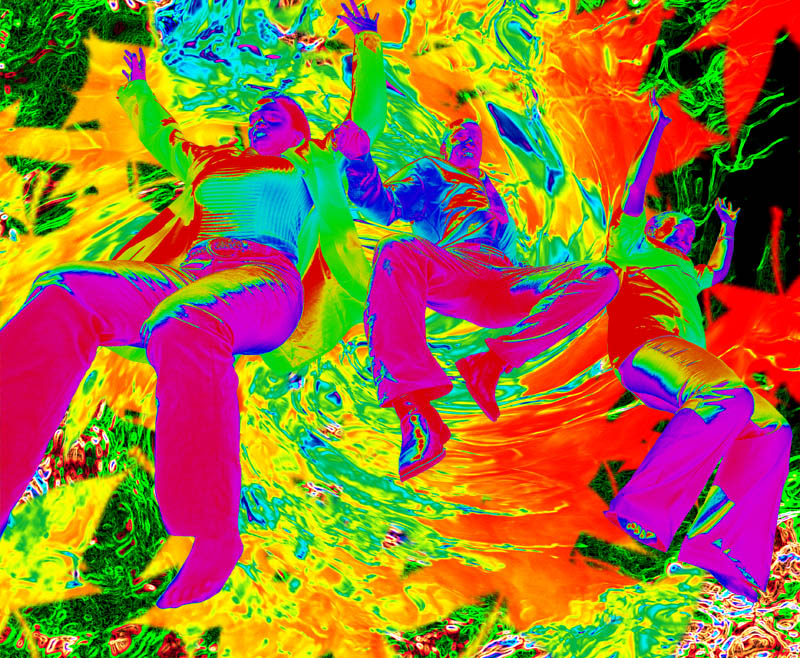
LSD played a significant role in influencing music and art through the psychedelic movement of the 1960s.
(© All Rights Reserved)

Impressed by its power, he decided to study it in more detail, and on 19 April 1943 he performed a self-experiment, ingesting 0.25mg of LSD. Within an hour he started experiencing an extreme reaction and requested his lab assistant to escort him home. As wartime restrictions prohibited the use of motor vehicles, they had to make the journey by bicycle. During the journey home Hofmann experienced severe hallucinations and heightened anxiety, fearing that he poisoned himself. His house doctor was called in, but he could find no physical abnormalities, except for very dilated pupils. This gave Hofmann some reassurance, and after a while his anxious state subsided, giving way to a state of hallucinatory euphoria where he again experienced vividly coloured and constantly changing dream-images.

Hofmann, realising the potency of the drug, felt it had huge potential as a psychiatric tool. Given the intensity of his experience, he had no inkling that anyone would consider using it recreationally.

(He was clearly wrong on this point – his experience, dubbed ‘Bicycle Day’, became famous in drug history, and continued to be celebrated enthusiastically in psychedelic communities many years later.)

After Hofmann’s initial experience, interest in LSD soared, and over the next 15 years it was the subject of extensive studies, becoming the topic of hundreds of academic papers and even entire scientific conferences. It became used in psychotherapy, treatment of depression, and as a supposed cure for alcoholism. At the same time, the CIA also became interested in the potential of the drug for their applications, funding a project known as MK-ULTRA where subjects (many unwittingly) were exposed to the drug to test its effects. This highly controversial project, that continued for almost two decades, included investigations on the potential for various drugs in combination with stress or specific environmental conditions, to break down prisoners or induce confessions, and had a lasting psychological impact on many of its subjects.

It wasn’t long before the popularity of the drug went beyond its medicinal application. Initially psychiatrists started using it recreationally and sharing it with their friends., and by the early 60s its recreational use had gained much wider popularity. It has had a huge influence on music and art, particularly the psychedelic movement of the 60s. LSD had a number of highly visible and vocal supporters, including one-time academic turned LSD guru Dr Timothy Leary, and author Ken Kesey (whose experiences as part of the CIA’s MK-ULTRA programme became the inspiration for his “One Flew Over the Cuckoo’s Nest”)

By April 1966 LSD had become so popular that Time magazine, who had published a number of positive reports on the drug in the 1950s, published a warning about its dangers. At the same time, the US government stepped in and declared the drug illegal, giving it a Schedule 1 (“high potential for abuse”) status. California banned the drug in October 1966, with other states, and the rest of the world, following soon after.

Albert Hofmann’s pharmaceutical research sparked a generation of psychedelia.
(© All Rights Reserved)

I can only wonder what Albert Hofmann, working in his lab in the late 1930s, would have thought if he could have had a glimpse into the future to see the range of effects and applications of the drug he was working on. In chaos theory, the example is often given of a butterfly flapping its wings in one part of the world potentially being the impetus for a massive storm thousands of miles away, but I think the image of Albert Hofmann’s laboratory research in the 1930s resulting in a psychedelic festival of music and culture in the 1960s, would be an equally vivid illustration!

Open your mind: think, reason, question, engage

It’s World Philosophy Day today. An official UNESCO day since 2002, World Philosophy Day is celebrated annually on the third Thursday of November. The theme for 2012 is ‘Future Generations’.

The objective of the day is “to encourage the peoples of the world to share their philosophical heritage and to open their minds to new ideas, as well as to inspire a public debate between intellectuals and civil society on the challenges confronting our society.” On the day, governments, educational institutions and organisations of all kinds are encouraged to organise workshops, dialogues, debates, and other events to promote intellectual debate, reasoning and informed thinking.

Getting your brain in a knot on World Philosophy Day.
(© All Rights Reserved)

In terms of this year’s theme, the focus is specifically on promoting philosophical thought among young people, to nurture their taste for the the joys and rigour of critical thought. The great philosophers challenge us to question accepted truths; to not merely accept opinions as the truth; to test hypotheses; to reach our own conclusions. Surely developing this mode of thinking among the next generation is the wisest means of ensuring the future well-being of the world and its people. Abraham Lincoln captured it well when he said: “The philosophy of the school room in one generation will be the philosophy of government in the next.”

So, today is the day to don your thinking cap, and tackle the big subjects – or, as Douglas Adams would say, “Life, the Universe and Everything”.  Philosophy is not about passively sitting around thinking – it’s about actively engaging with those around you. Take a stand, don’t shy away from controversy. Get the big debates going.

Just remember that philosophical debate is not a competition – differences of opinion is a good thing. To quote Thomas Jefferson: “I never considered a difference of opinion in politics, in religion, in philosophy, as a cause for withdrawing from a friend.”

Location, location, location (and time) – it’s GIS Day

November 14th is GIS Day, an annual event focusing attention on the field of Geographic Information Systems, its use and potential to impact on our lives.

GIS Day started in 1999 to create an opportunity for people to learn about geography and to discover and explore the benefits of GIS.

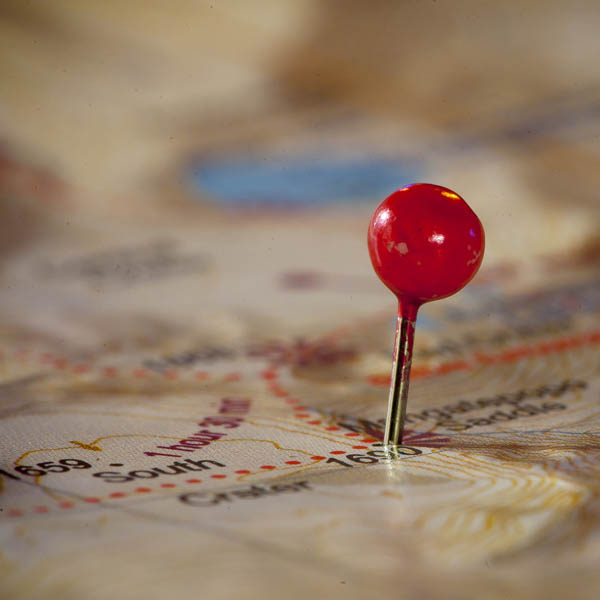
Spatially mapping your data enables you to identify trends and relationships that might not otherwise be apparent.
(© All Rights Reserved)

So what exactly is GIS? According to Esri, one of the leading international developers and vendors in the field of GIS, “A geographic information system (GIS) integrates hardware, software, and data for capturing, managing, analyzing, and displaying all forms of geographically referenced information. GIS allows us to view, understand, question, interpret, and visualize data in many ways that reveal relationships, patterns, and trends in the form of maps, globes, reports, and charts.”

Or, as Wikipedia puts it: “In the simplest terms, GIS is the merging of cartography, statistical analysis, and database technology.”

Spatially visualising information has many benefits. GIS enables us to map where things are and in what quantities and densities they are distributed. Modern GIS tools also allow us to map and visualise changes in these quantities over time. By seeing how various fields of data are dispersed geographically, and how they are changing, it is often possible to identify trends and relationships that might not otherwise be apparent.

This in turn leads to better decision making and improved communication.

GIS is a pervasive supporting technology throughout all aspects of modern society, with applications in business (banking, retail, etc), law enforcement, health, transportation, environmental systems, conservation, agriculture, forestry, mining, telecommunications, utilities management, research and education.

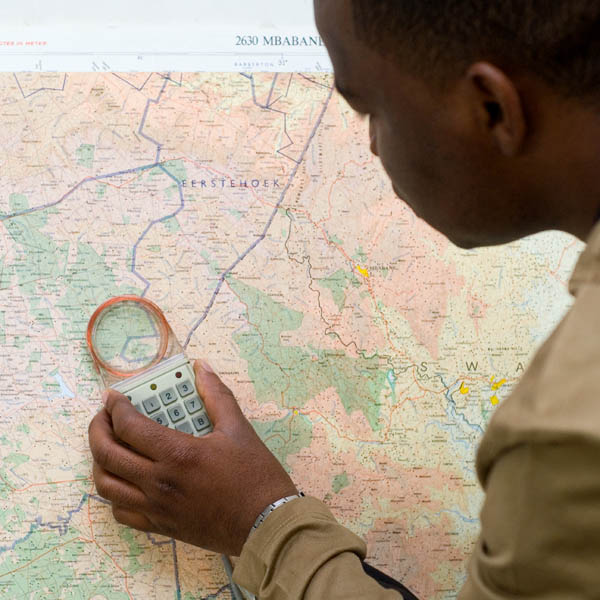
Capturing spatio-temporal location is key to GIS.
(© All Rights Reserved)

A GIS can typically employ and integrate data from a huge range of sources, as long as it has some key through which to relate it to the other data in the system. This key is spatio-temporal location – you need to know the location and time represented by the data. To map climate change, for example, you would include information on temperature and rainfall. But just having a list of temperatures and rainfall figures means nothing – to make it useful, you need some indicator of where and when each value was measured.

By promoting an understanding of this simple basic concept – that you massively increase the value and usefulness of any set of data by recording and including the spatio-temporal location of each data item – time and money spent on data collecting efforts can be leveraged so much more effectively.

Are you involved in data collection? Know someone who is? Even if space and time appear unimportant, record it anyway. Who knows – you may just discover something no-one’s thought of before…

Cloud seeding: Making your own rain and snow

Today, 13 November, marks the date back in 1946 when Vincent J Schaefer, American chemist and meteorologist, performed the first cloud seeding experiment, artificially inducing snow by sprinkling clouds with pellets of dry ice from an airplane.

While this first attempt was not completely successful – the artificially created snow evaporated as it fell through the dry air and disappeared before it hit the ground – it showed that the concept of cloud seeding is possible. This resulted in the GE Research Laboratory (where Schaefer was working at the time) receiving funding for further research into cloud seeding and weather modification.

New Zealand – getting enough rain and snow the natural way!
(© All Rights Reserved)

While initial experiments in cloud seeding was done using dry ice, later substances used include silver iodide, liquid propane and, more recently, salt. Cloud seeding has been done to different extents around the world, in Asia, North America, Europe, Australia and Africa, with China having the world’s largest commercial operation in this domain.

In some of the most recent experimental work in the field of cloud seeding, German scientists at the University of Geneva experimented with firing short infrared laser pulses into the air, the idea being that the pulses might encourage the formation of atmospheric particles which could act as seeding particles in the clouds. According to lead researcher Jerome Kasparian, “the laser pulses generate clouds by stripping electrons from atoms in air, which encourage the formation of hydroxyl radicals. Those convert sulphur and nitrogen dioxides in air into particles that act as seeds to grow water droplets.”

While this work is still at an experimental stage, it has shown promising results in laboratory conditions. A field experiment, where the pulses were aimed at the skies over Berlin, has also shown notable increases in the density and size of water droplets in the area, when measured using weather LIDAR and it is believed that, using the right frequencies and intensities, generation of rain by this means might become a real possibility.

This really feels like science fiction, doesn’t it? Quite incredible to imagine, really!

And of course it immediately reminded me of Kate Bush’s song ‘Cloudbusting’. So herewith, in commemoration of the pioneering work of Vincent Schaefer, father of cloud seeding, the wonderful short film produced for ‘Cloudbusting’ by Kate Bush and Terry Gilliam, starring Donald Sutherland as Wilhelm Reich and Bush as his young son Peter.

Enjoy!

World Pneumonia Day: we can make a difference

On this day, 12 November, we commemorate World Pneumonia Day. This day, established in 2009, is aimed at raising awareness about pneumonia, promoting interventions for protection, prevention and treatment, and generating action to combat pneumonia.

Globally, a child dies from pneumonia every 20 seconds.
(© All Rights Reserved)

It is a sobering fact that, to this day, pneumonia remains the number 1 killer of children under the age of 5, responsible for more than 18% of all deaths in this age category. With some basic interventions, pneumonia can be largely prevented, and yet a child still dies from the infection every 20 seconds. The vast majority of these deaths occur in the developing world, where access to basic health care is severely limited, and out of reach for most children.

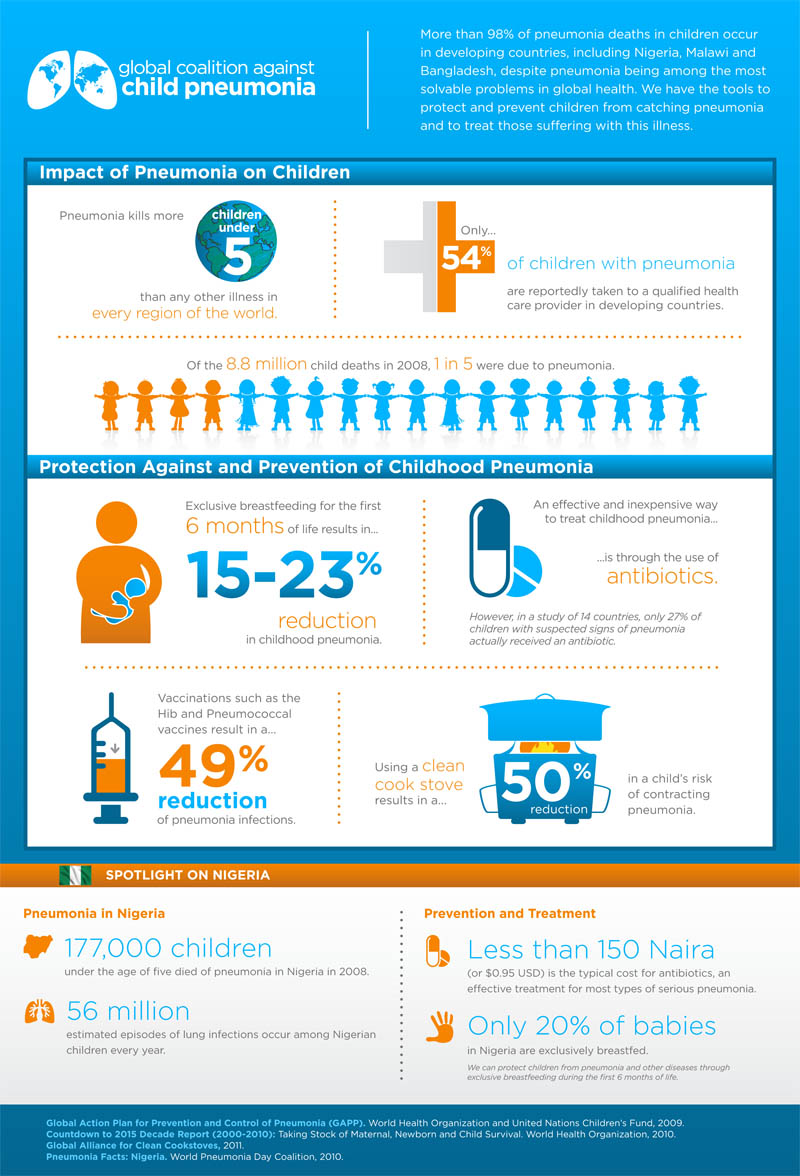
To facilitate knowledge sharing, the following infographic has been made available by the Global Coalition Against Childhood Pneumonia. Sharing is encouraged, so feel free to share it on Facebook or Twitter here.

You can also access the high-quality PDF of the infographic here:
pneumonia-infographic-print-version

The World Pneumonia Day website suggests a number of things we can do to get involved. These include:

  • learning more about pneumonia here;
  • supporting the knowledge sharing drive by getting involved in the World Pneumonia Day social media campaign above; and
  • donating $10 to provide one child with a lifetime of protection, via the GAVI Campaign.

The fight against pneumonia can be won, and we can help make it happen.

A personal ode to running on World Run Day

Today, 11 November, is World Run Day. Nothing fancy, just a day founded first and foremost to celebrate the joy of running, and secondly to create an opportunity for runners to organise their own local World Run Day events, with the aim of collecting funds for a charity of their choice.

I love running. Simple as that. To me, running, and distance running in particular, really is the purest sport of all – no fancy equipment, no complicated rules, just you and the road. Be it a tarred road in a city or a dirt track in the mountains, the idea is to get from point A to point B using no other means of propulsion than your own body, sometimes with a specific target time in mind, and other times with no goal other than to have as much fun as possible while you’re out doing it.

The benefits of running are numerous – from a physical point of view, it has huge cardiovascular benefits, and despite the stories about ‘runner’s knee’ etc, it really is good for your musculoskeletal system. And the benefits are not just physical – few things clear the mind and calm the soul like a long run in the early morning before the city wakes up and all the craziness starts. Not to mention the mental boost of jogging on a beautiful single track path in the wilderness. And as any runner will tell you, few things beat the ‘runner’s high’ you get after a long, tough run.

Before I ‘became a runner’ (I still often doubt if I can call myself that, especially when I see these huge gaps in my running diary, but that’s another story…) I remember seeing these people seemingly slogging along on the pavement, often in terrible weather, and I thought to myself they must be crazy. Why on earth would you do this to yourself? And it looks so boring! And then, one day, for whatever reason, you decide to go for a jog; and then another; and then perhaps you enter some fun run… And so it evolves, and before you know it, you’ve finished your first marathon. Or perhaps you never bother entering a race, and simply get into the habit of going out for a run every day, some rain or shine. But suddenly things are different – you’re the one out running in the rain, and seeing these people driving past, looking at you like you’re some crazy nut.

But you know better…

Join me in celebrating World Run Day. Go for a run. Whether you’ve done it before, or not. Whatever the weather.

It’s good for you.

The birth of the motorcycle

This day in 1885 saw the debut of the world’s first motorcycle, the Petroleum Reitwagen, designed and built by Germans Gottlieb Daimler and Wilhelm Maybach. Essentially a wooden ‘bicycle’ with power transferred from its newly designed Daimler engine to the wooden wheels via a leather belt, the 264cc, 0.5hp motorcycle was capable of a blistering 12km/h top speed.

While Daimler and Maybach moved their focus to car development, some early innovators in the motorcycle world stuck to their craft, producing increasingly advanced motorcycles. William Harley and the brothers Arthur and Walter Davidson, for example, launched the Harley Davidson in 1903, and the company continues to this day to produce a range of iconic, highly desirable bikes.
(© All Rights Reserved)

With no suspension and a very basic leather seat, the Petroleum Reitwagen certainly wasn’t the ultimate in comfort. It did, however, pave the way for a lineage of wonderful two-wheeled motorised beauties to come. From all-American classics like the Harley Davidson through to British beauties such as the Triumph, to Italian design masterpiece Ducati, to the superbikes from Japan, the history of the motorcycle is certainly littered with marvelous machines that will make the heart of many a red-blooded man (and women) beat a little faster.

For many, motorcycling is a lifestyle statement.
(© All Rights Reserved)

Beyond the ‘wild and free’ appeal of motorcycles, they are also an increasingly practical option, allowing more flexibility, reduced running expenses, and a viable solution to the urban congestion facing many large cities the world over.

So here’s to all the motorcycle fan(atic)s out there. As a wise man once said, “Four wheels move the body. Two wheels move the soul.”

Gordon Gould, laser shows and space battles

If you were young in the late 70s/early 80s, you may have a special appreciation for today’s subject. Remember those high-tech night club laser shows that were so popular at the time? Well, today we celebrate the invention of the laser.

On this day back in 1957, the American physicist Gordon Gould, noted down the principles of ‘Light Amplified by Stimulated Emission of Radiation’, or ‘LASER’ in a dated notebook entry. His notes also included various applications for laser light, and he was the first to coin the term ‘LASER’ at a conference in 1959.

(© All Rights Reserved)

Sadly Gould’s patenting savvy at the time didn’t match his physics skills, and his 1959 patent application was denied by the US Patent Office. The USPO subsequently went on to grant a patent in 1960 to Bell Laboratories, whose scientists, Charles Townes and Arthur Schawlow, were independently and in parallel to Gould, also working on the concept of lasers.

This effectively ‘robbed’ Gould of his share of the benefits – money, prestige, science acumen – derived from the invention. Not willing to accept this fate, Gould took the matter to court, an action that set in motion 28 years of lawsuits. He won a minor patent in 1977, but it was only in 1987 that he succeeded in achieving a major victory, claiming patents for a number of laser devices.

To this day, science historians are not in agreement about who to give primary credit for the invention of the laser, but there is no doubt that Gould deserves a large portion of the credit.

Since its discovery, many different types of lasers have been developed, producing emissions in ways too intricate to try and discuss in a blog post. However, the key feature of a laser beam is its high degree of spatial and temporal coherence. ‘Spatial coherence’ means there is very little diffraction in a laser beam, so it can be focused on a tiny spot over a significant distance. ‘Temporal coherence’ means the wave phase of the light beam is correlated over a large distance, producing a polarised wave at a single frequency.

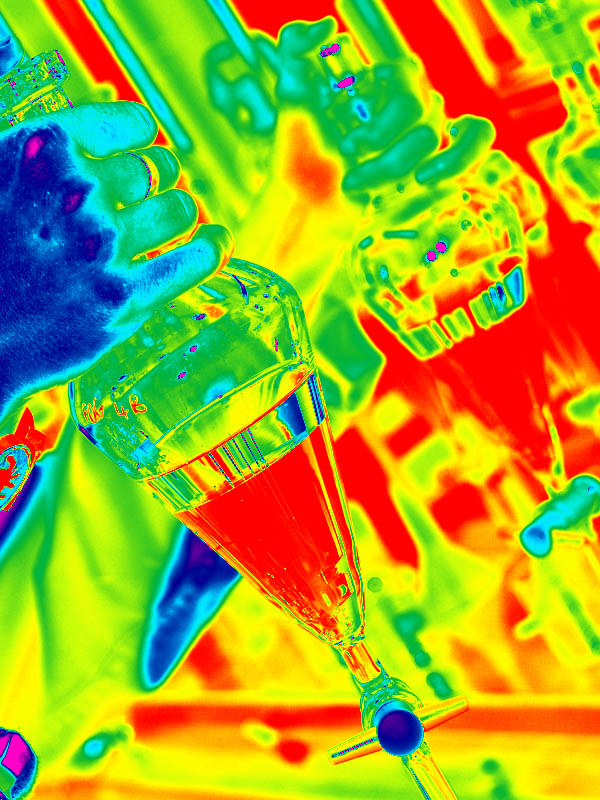
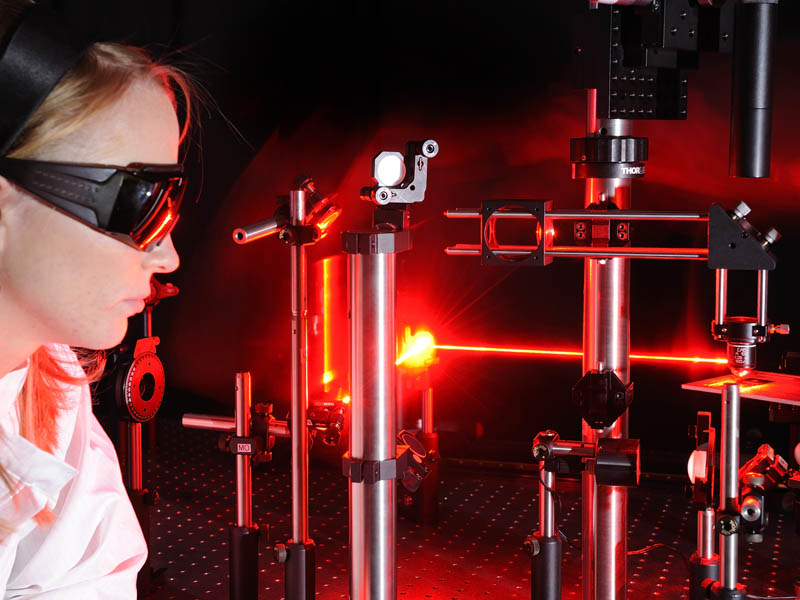
Lasers are not just important scientific tools – they’re also a great subject for science photography.
(© All Rights Reserved)

Of course lasers are far more useful than simply creating special effects light shows. They have become a ubiquitous part of modern society, being used in electronics, information technology, medicine, industry and military applications. In any single day you may encounter lasers in barcode scanners, CD players, computer hard disks, laser printers and more.

Thanks to their precise focusing ability, lasers are used in a range of medical applications, including surgery, treatment of kidney stones, eye treatments etc. They are also used in cosmetic skin treatments. Their accurate cutting ability makes them extremely useful in many modern industrial cutting and part-making applications. They are also an integral part of many military systems, including guidance and electro-optical defence systems.

And perhaps most importantly, judging by countless science fiction movies over the years, lasers will be absolutely indispensable as the weapon of choice to defend our planet and obliterate enemy space ships!