Page 19 of 38

Look inwards and get creative on Make Your Own Head Day

So today, according to the holiday websites, is Make Your Own Head Day. Bit of a clumsily named day, if you ask me, but apparently the day is all about getting creative, with a bit of self-reflection thrown in. Grab a pencil, or a heap of clay, or whatever material strikes your fancy, and start creating an image in your likeness.

If your drawing looks more like a particularly abstract Rorschach test than a self-portrait, don’t worry – it’s all about self-expression, and there’s no prizes for the best artwork. After all, if you subscribe to the American developmental psychologist Howard Gardner’s theory of multiple intelligences, spatial intelligence (‘picture smart’) is just one dimension of intelligence. This type of intelligence – the ability to think and express yourself in three dimensions – is shared between the creative types who express themselves spatially, like artists, architects and designers, and people who are skilled at orienting themselves spatially like pilots, sailors etc.

OK, a bit of a cheat from my side – this is not my artwork, but at least it is my head (as drawn by my spatially intelligent better half).
(© All Rights Reserved)

If spatial intelligence is not your thing, perhaps you have naturalistic intelligence, musical intelligence, logical-mathematical intelligence, interpersonal intelligence, bodily-kinesthetic intelligence, linguistic intelligence, intra-personal intelligence, or even existential intelligence.  There are many sites containing in-depth discussion of these, but for a simple, succinct summary of Gardner’s different intelligences, have a look at The Nine Types of Intelligence.

Given the above, perhaps we should expand Make Your Own Head Day to incorporate the other intelligences. If you’re a mathematical whizz you can calculate the volume of your head, or model it’s shape (and don’t go for the ‘Let’s assume a perfectly spherical head’ cop-out!). If you have body-smarts, perhaps you can express your personality through dance.  The musical types can write a self-referential song, the linguists can create their self-portrait through poetry or prose, and so forth.

And those with existential intelligence can just sit back and think about it all.

Whatever you do, enjoy this day of self-reflective creative expression!

Celebrating Anders Celsius and his temperature scale

Today we celebrate the birthday of Anders Celsius (27 Nov 1701 – 25 Apr 1744), the Swedish astronomer who gained fame for developing the Celsius temperature scale.

Celcius’ original scale defined 0 °C as the temperature where water freezes, and 100 °C as the temperature where water boils (at one standard atmosphere). This was the definition of the scale until 1954, and remains a useful, pretty accurate approximation, and is still taught in most schools today. However, to be exact, the Celsius scale is currently no longer defined by the freezing and boiling point of water, but rather by the absolute zero temperature and the triple point of purified water. The absolute zero point is defined as -273.15 °C, and the triple point as 0.01 °C.

It’s boiling water, but it sure ain’t 100 °C.
(© All Rights Reserved)

Based on this slightly redefined scale, the real freezing point of purified water is -0.0001 °C, and its boiling point is 99.9839 °C. Of course these values only apply at exactly one standard atmosphere pressure (approximately sea level) and with specially purified water, so actual ‘real life’ freezing and boiling points only approximate 0 °C and 100 °C anyway. An altitude change of as little as 28 cm causes the boiling point of purified water to change by a thousandth of a degree.

Interestingly, the rule set forth by the International Bureau of Weights and Measures for writing Celsius values (most units of measure, in fact), is to write the numerical value, followed by a space, followed by the °C sign. So the correct way to write a temperature is 37 °C, not 37°C or 37° C.

Currently the Celsius scale is the temperature scale most widely used for all kinds of purposes. Only the United States (bless them) and a handful of other countries still give preference to the Fahrenheit scale. The UK also used to prefer the Fahrenheit scale, but over the last half century the Celsius scale has gained dominance (although they prefer calling it centigrade).

So, whether you prefer an icy, a close to 0°C Scotch on the rocks, or an almost boiling, close to 100 °C cup of coffee or tea, join me in a toast for Anders Celsius, the man who defined it all in the first place.

One-click shopping on Cyber Monday

A few days ago I chatted about the virtues of cutting back on buying and spending – an approach that was promoted on Buy Nothing Day, last Friday. The reason for Buy Nothing Day being celebrated this time of year is that we are in the middle of one of the craziest shopping periods of the year – in the US and Canada in particular, Thanksgiving weekend is a time that puts big smiles on retailers’ faces.

Today is no exception, as we celebrate a day of shopping frenzy that has come to be known as Cyber Monday – one of the top online shopping days in the US, and many other parts of the world.

Online shopping – makes parting with your money easier than ever before.
(© All Rights Reserved)

As reported in the New York Times in 2005, “The name Cyber Monday grew out of the observation that millions of otherwise productive working Americans, fresh off a Thanksgiving weekend of window shopping, were returning to high-speed Internet connections at work Monday and buying what they liked.” Besides the explanation given by the NYT, the fact is also that this is the time of year – one month before Christmas – when retailers seriously step up their relentless barrage of sales and promotions, reaching fever pitch towards the second half of December.

The term Cyber Monday was first coined in 2005 by online shopping community Shop.org, based on research from the previous year, during which they noticed that the period after Thanksgiving showed a clear spike in online shopping. Since 2010 the day has consistently counted as one of the $1+ billion online shopping days in the US. The day has become so popular with online shoppers the world over that many employers are actively curbing their employees’ non-work related online activities on this day.

What struck me when I read up about Cyber Monday, is how new online shopping really still is (less than 20 years ago, the concept was still largely non-existent) yet how entrenched it has become as part of our daily lives. It’s hard to imagine a world without amazon.com, without ebay, without itunes. It is estimated that by 2015 the online shopping industry will be worth a whopping $279 billion in the US and €134 billion in Europe.

If you’re into shopping, and looking for a bargain, today may be just the day for you to go trawling the online shopping sites. Just don’t complain when you end up buying a whole bunch of extra stuff you never planned on, pushing your budget into a state of emergency. Retailers are ruthless in their quest to make the poor consumer part with his money, and the online sector is, if possible, even more so. The most dangerous part of online shopping is that you never physically part with your money – its just a click here and a click there, and suddenly your bank balance looks a lot less healthy.

I still maintain that the best thing to do during the two months between mid-November and mid-January is to stay as far away from the shops as you can, and to rather spend time being creative – homemade gifts and goods are so much more special than yet another shop-bought special offer.

You may indeed get some real specials this time of year, but I can guarantee that you will also spend a lot more than you planned…

Commemorating the International Day for the Elimination of Violence against Women

Today is the International Day for the Elimination of Violence against Women. Designated an international United Nations observance in 1999, the day commemorates the deaths of three sisters, Patria Mercedes Mirabal, María Argentina Minerva Mirabal and Antonia María Teresa Mirabal, who were assassinated on this day in 1960 in the Dominican Republic, on the orders of the Dominican ruler Rafael Trujillo. They were activists fighting the dictatorship of Trujillo.

Beyond commemorating the deaths of the Mirabal sisters, the day has become an occasion for governments, international organizations and non-governmental organizations to raise awareness of violence against women in general. Events on the day include public rallies, fundraising activities and more.

According to World Bank data, women aged 15-44 are more at risk from rape and domestic violence than from cancer, car accidents, war and malaria.
(© All Rights Reserved)

In an attempt to raise awareness of the plight of women who have been victimised and abused, the United Nations have released a fact sheet sharing information information on the situation worldwide, and it’s quite a sobering read. According to the fact sheet, an astonishing 70% of all women is subjected to violence sometime in their lives, with the most common form being physical violence inflicted by an intimate partner. Percentages of women subjected to sexual violence by their partners range from 6% in Japan to almost 60% in Ethiopia.

Globally about half of all women who are murdered die at the hands of their current or former husbands or partners.

It is estimated, furthermore, that one in five women become victims of rape or attempted rape in their lives, leaving them with devastating physical and psychological scars. These numbers rise shockingly in conflict situations, where women of all ages suffer sexual abuse from soldiers and rebel forces. In the Democratic Republic of the Congo, for example, an average of 36 women and girls are raped every day, with more than 200 000 women having been sexually violated since the country fell into a state of armed conflict.

This is just the the tip of the iceberg, and the fact sheet includes many more horrifying facts.

And amazingly, many of the perpetrators go unpunished. In the words of United Nations Secretary-General Ban Ki-moon, “Women and girls are afraid to speak out because of a culture of impunity. We must fight the sense of fear and shame that punishes victims who have already endured crime and now face stigma. It is the perpetrators who should feel disgraced, not their victims.”

On this day, join the millions of men and women worldwide who say enough is enough – join the Say NO to Violence Against Women campaign’s global call to action. Every voice of support matters.

About energy fields and coloured glows

Today is International Aura Awareness Day, celebrated each year on the fourth Saturday of November.

According to the Merriam-Webster Dictionary, an aura can be defined as:

  • a subtle sensory stimulus (as an aroma)
  • a distinctive atmosphere surrounding a given source (for example, “the place had an aura of mystery”)
  • a luminous radiation : nimbus
  • a subjective sensation (as of lights) experienced before an attack of some disorders (as epilepsy or a migraine)
  • an energy field that is held to emanate from a living being

International Aura Awareness Day relates mainly to the last definition above – that coloured radiant glow or energy field said to surround people or objects.

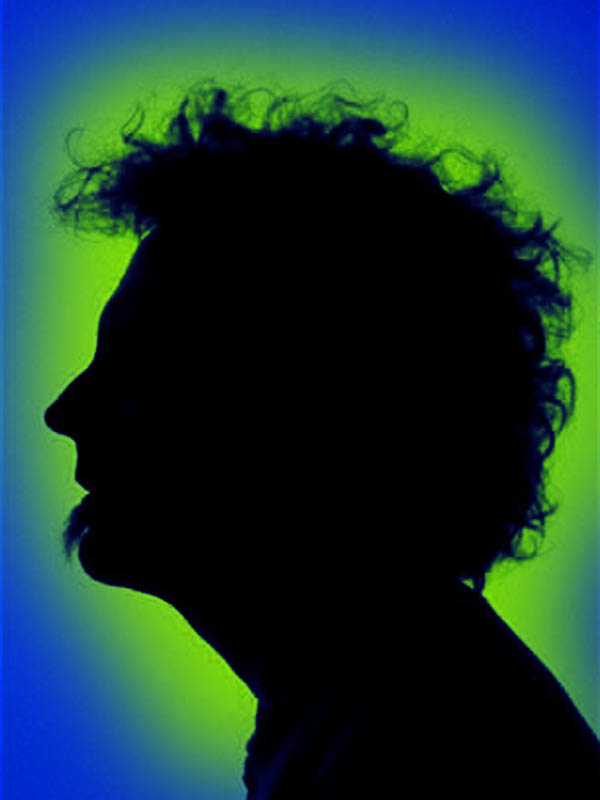
If you had an aura, what colour do you think it would be?
(© All Rights Reserved)

Some people claim they can see auras; some claim they can teach others to see auras; some say you can interact with your own aura; some even claim they can photograph auras. The rest of us, unfortunately, have to take it all with a grain of salt. No scientific evidence exists to support the supposed abilities of the aura-seeing clairvoyants, and the claims of aura-capturing photographic technologies are questionable to say the least.

However, if auras do exist (and who am I to claim otherwise), I wish everyone a day of peaceful soft-blue aural energy.

Peace out, brothers and sisters! 😉

Start you journey to financial freedom on Buy Nothing Day

Today, the Friday after Thanksgiving, is widely known as Black Friday, one of the busiest shopping days in the United States. In a bid to counter this as yet another day of mindless consumerism, Buy Nothing Day came into being. The day was founded in Vancouver, Canada by artist Ted Dave as a day of protest against the ‘buy or die’ attitude that gets promoted relentlessly by shops and other commercial entities. While it started off having a US/Canada focus, it has since become an international movement. It is estimated that Buy Nothing Day has grown to an event celebrated in more than 65 countries. The day is celebrated on the Friday after Thanksgiving in the US and Canada (this year, 23 November), and on the last Saturday of November in the rest of the world (or 24 November this year).

Shops go out of their way to promote spending money as the best fun ever, while in truth saving money can be just as exciting.
(© All Rights Reserved)

Over the years participants in Buy Nothing Day have come up with a range of amusing strategies to focus attention on the problem of indiscriminate over-consumption. These have included credit card cut-ups, where people advertise a credit card cutting up service in shopping malls to help people cut themselves free from a life of debt, and zombie walks, where groups dressed as zombies wander around shopping malls with blank stares as a commentary on the mindlessness of consumerism.

Promotion of a culture of considered buying is not only good for a society caught up in an ever deepening spiral of debt, it benefits the economy of countries as a whole. And while the focus of the day is mainly on economics, I believe there’s also an important second level message – to promote the move from a dependent, buyers culture to a state of independent self-sufficiency. Growing your own vegetables, recycling and making your own compost, community based swapping and exchange (vegetables for meat, goods for services etc); all these things have the potential to result in a healthier and potentially much less costly lifestyle.

Sounds like fun? Here’s to Buy Nothing Day, and the journey to self-sufficiency – good luck!

Celebrating Go for a Ride Day

Guess it isn’t really news to anyone that today is the day our American and Canadian friends celebrate Thanksgiving. For the rest of you, how about joining me in celebrating a different 22 November holiday – Go for a Ride Day? This is the day to take a bit of a break from your daily schedule and go for a ride. Do it zen style – ride for the sake of the trip, rather than with a specific destination in mind.

When it comes to travelling for the sake of the trip, nothing beats the romance of a train journey.
(© All Rights Reserved)

The choice of transport is yours – perhaps you’d prefer to take your own car, motorcycle or bicycle, or for an even more relaxing option, how about public transport – a train, a plane, perhaps a bus, or how about a taxi? For a completely different experience, go for a unique alternative – swop your bicycle for a unicycle; opt for public transport via pulled rickshaw; or go vintage with a trip on an ox-wagon or donkey-cart. Anything will do, as long as it can take you on a relaxing meander.

There may not be many of these old classics around anymore, but a ride on an ox-wagon would definitely make Go for a Ride Day extra special.
(© All Rights Reserved)

And while you’re out enjoying the scenery in your chosen mode of transport, spare a thought for the inventors and innovators who played a part in dreaming up, designing and refining the vast array of vehicles that we can pick and choose from. The list is endless. I thought of naming a few, but it really is an impossible task – for every innovator you mention, there’s another ten not mentioned, who played an equally integral part in the invention. And then there are all the vehicles that we don’t even have a clue who the inventor(s) were – anybody know who made the first rickshaw?

Whichever inventor you decide to celebrate, and wherever your ride takes you, I hope you have a great Go for a Ride Day!

Say hello to world peace

It’s World Hello Day today. The 40th Annual World Hello Day, to be exact.

Taking part in this day is the easiest thing ever – simply say ‘hello’ to 10 different people, and you’ve done your part. ‘What’s the point?’, you may ask. Well, according to the day’s creators, Brian and Michael McCormack, they started the day to express their concern for world peace. They wanted to use the idea of a friendly greeting between people as a message to governments and world leaders that confllicts can be settled more effectively by communication than by force and aggression.

A lifelong friendship can start with a simple ‘Hello’.
(© All Rights Reserved)

The first Hello Day, celebrated in 1973, was specifically in reaction to the Yorn Kippur War between Egypt and Israel. Since that early start it has grown into a global event observed by people in more than 180 countries. According to the World Hello Day website, 31 past winners of the Nobel Peace Prize count among the supporters of the day.

OK, so I don’t have much of a science angle today, but what the heck, a bit of extra goodwill can’t hurt, can it? Go ahead, share a friendly greeting with a stranger – even if it doesn’t quite bring about world peace, you may just brighten someone’s day.

Looking at the world through a child’s eyes

Today is Universal Children’s Day – established by the UN to promote the welfare of the children of the world. While the ‘generic’ day is celebrated on 20 November, many countries have special Children’s Day’s celebrated throughout the year.

Children are key to all the strategies and activities of the UN – the UN’s Millennium Development Goals (MDGs), while aimed at benefiting all of humankind, are primarily focused on children. As UNICEF notes, “six of the eight goals relate directly to children and meeting the last two will also make critical improvements in their lives.”

“There can be no keener revelation of a society’s soul than the way in which it treats its children” – Nelson Mandela
(© All Rights Reserved)

From an adult point of view, another important benefit of this day is that it reminds us of the innocence and wonder of being young. It reminds us that we don’t always have to over-complicate matters; that sometimes the best strategy is to approach matters afresh, with curiosity and without prejudice, the way children do by default.

This applies in life, as in the sciences. To quote physicist Frederick Seitz: “A good scientist is a person in whom the childhood quality of perennial curiosity lingers on. Once he gets an answer, he has other questions.” Marie Curie shared this sentiment when she said: “I am among those who think that science has great beauty. A scientist in his laboratory is not only a technician: he is also a child placed before natural phenomena which impress him like a fairy tale.”

So, on this day, consider the children – may their best interest guide your actions, and may their example inform your ways. Happy Universal Children’s Day!

Show that you give a shit on World Toilet Day

Today, 19 November, we celebrate World Toilet Day. Together with Global Handwashing Day, that I wrote about some time ago, these two days represent the main ‘personal hygiene for health’ days celebrated annually.

Sadly, despite its importance from a health point of view, the day is also one of the most ridiculed annual observances (toilet humour rules, I guess), to such an extent that the United Nations Regional Information Centre (UNRIC) has even published an ‘International stop-making-fun-of-world-toilet day!’ page.

Considering the huge health impact that basic sanitaton can make to preserving human health, this is indeed no laughing matter. According to UN figures, about 4000 children die every day as a result of a disease directly related to poor sanitation. That equates to a death almost every 20 seconds – more than the combined deaths caused by HIV AIDS, malaria and measles.

Millions of children, mainly in the developing world, rely of primitive, shared toilets for their basic sanitation requirements. And these are the ‘lucky ones’, given that millions more have no access to a toilet at all.
(© All Rights Reserved)

Given the above, global provision of basic sanitation is a key target underlying the UN’s Millennium Development Goal (MDG) of ‘Reducing by two thirds, between 1990 and 2015, the under-five mortality rate’. It is, unfortunately, also the area where the least progress has been made, mainly because the sanitation sector is desperately under-funded (probably as a result of it being a much less ‘glamorous’ cause than HIV AIDS etc).

According to Catarina de Albuquerque, UN Human Rights Rapporteur on Water and Sanitation, it was estimated in 2006 that almost $15 billion will be required annually to provide universal access to sanitation by 2015. By now, with the target date being so much closer, I am sure that number is much higher. Currently, 2.5 billion people still do not have access to a private toilet, and 1.1 billion people defacate in the open, with no sanitation system in place to address this pollution. That means one in three people do not have access to a private toilet, and one in seven have no access to a toilet at all. It is a humanitarian crisis touching the basic dignity of billions worldwide.

Many public, shared toilet facilities do little to facilitate basic human dignity, often being open, shared spaces with little or no privacy.
(© All Rights Reserved)

Unlike complex diseases, sanitation is a ‘simple’ problem – it is easy to solve if only enough money is made available. As such, it is one of those areas where widespread public awareness campaigning can actually make a difference, to force governments into addressing and funding the problem.  To this end, a punchy awareness campagin has been launched under the theme of ‘I give a shit, do you?’, and tweets around the topic can be tagged with the hashtag #IGiveAShit to extend its reach and potential impact.

So, show that you give a shit, and start talking about sanitation. It may be a crappy subject, but as long as it is not addressed, millions of people will continue to die unnecessary deaths, deaths that can so easily be avoided. For suggestions about how to get involved, visit the World Toilet Day action page.

To get you started, here’s a neat little YouTube video about World Toilet Day – please have a look, and share widely: