Page 16 of 38

Enjoy some mental gymnastics on Card Playing Day

Today, 28 December, is Card Playing Day – the day to celebrate all games involving your classic deck of cards.

When you think about it, a deck of cards is a pretty impressive creation – the diversity and complexity covered in all the games using a card deck is quite staggering. From games testing cunning and deception (poker), to games teaching teamwork and planning (bridge), to those based on statistical probability and counting skills (blackjack), to visual pattern-matching games (rummy), to the single-player solitaire/patience type games, and hundreds more in-between, the options are almost limitless. And all this based on a simple collection of 52 playing cards, involving four different ‘suits’ of 13 cards each.
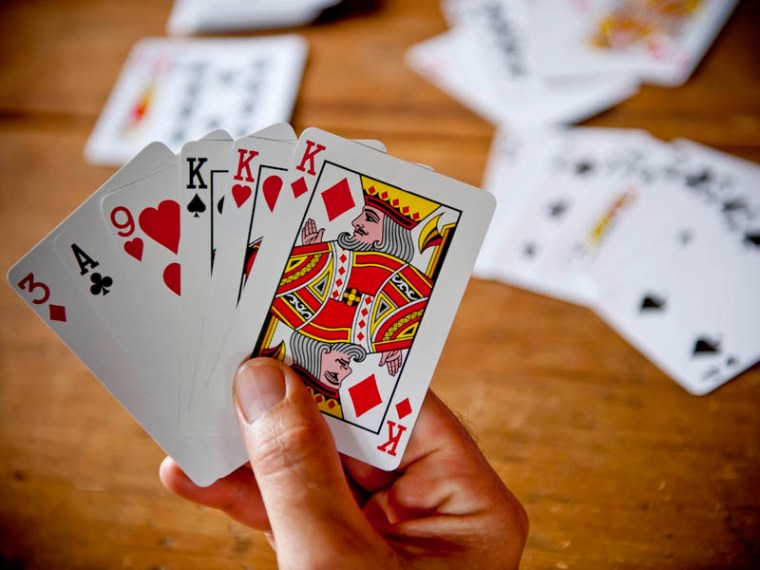
Playing cards - a world of complexity lurking in a deck of 52 cards.(© All Rights Reserved)
Playing cards – a world of complexity lurking in a deck of 52 cards.
(© All Rights Reserved)

Playing cards have a long history – they were first found in China as early as the 9th century, and appeared in Europe around the 14th century. The first card decks containing the now-standard 52 cards consisted of suits with themes like polo sticks, coins, swords and cups. The famous suits of spades, hearts, diamonds and clubs, as we still use today, was first introduced in France around 1480. The Kings, Queens and Knaves (Jacks) in the different suits were based on English and French history, and referred to different historical characters such as King David, Julius Caesar, Alexander the Great, and others.

Beyond the historical connotations, a range of symbolic meanings are attached to the deck of cards as we know it. The 13 cards in each suit is said to refer to the 13 months of the lunar year; the 52 cards corresponds to the 52 weeks in a year; the Ace, which is both the lowest and highest card in each suit, is symbolic of the beginning and end, alpha and omega.

From a scientific point of view, playing cards represent an invaluable demonstration and teaching aid in fields such as mathematical logic, probability and statistics.

Whether you enjoy playing cards for the thrill and uncertainty of games of chance, or because of the complex mathematics they represent, or simply because of the social interaction inherent in many card games, today is the day to celebrate all facets of card playing. So while you’re enjoying that pleasant lull between Christmas and New Year, why not pull out a deck of cards –  play an old game, learn a new one, and lose yourself in the mathematical complexities hidden in your standard card deck.


Louis Pasteur, founder of microbiology

Today we celebrate another of the big names in science – Louis Pasteur (27 Dec 1822 – 28 Sep 1895), one of the founders of the field of microbiology.

Thanks to Louis Pasteur, your milk stays fresher for longer.(© All Rights Reserved)
Thanks to Louis Pasteur, your milk stays fresher for longer.
(© All Rights Reserved)

The Frenchman Pasteur, a chemist by training, shifted his focus to microbiology when he started studying the role of bacteria in fermentation. His understanding of the process of fermentation led to fundamental insights into the role of germs in infection, and how the process can be manipulated. He figured out that bacteria can be killed by exposing them for a specific time at a given temperature – a process that became known as pasteurisation.

Pasteur made many contributions in the field of human health, creating and testing a range of vaccines for diphtheria, cholera, yellow fever, plague, rabies, anthrax, and tuberculosis.

James Mason, the guy who (sort of) invented the coffee percolator

I am sure today is important for any number of reasons, but personally the key innovation for the day comes from the American James H Mason.

OK, so perhaps on the universal scale of great scientists and innovators he doesn’t rate up there with some of our recent blog-featured personalities (Newton, Joule, Edwin Armstrong, even Steve Jobs) but to me his contribution has brought much enjoyment – Mason is the guy who first patented the coffee percolator in the US in 1865. (Actually a British soldier and scientist, Sir Benjamin Thompson, came up an earlier version of the percolator some years before, but I couldn’t find out much about his invention.)

The classic coffee percolator - essentially unchanged for the last 120 years.(© All Rights Reserved)
The classic coffee percolator – essentially unchanged for the last 120 years.
(© All Rights Reserved)

Mason’s patent was for a downflow method, which didn’t use rising steam and water, but it did pave the way for another American, Hanson Goodrich who, in 1889, came up with the classic percolator system similar to the stove-top percolators still produced today.

Traditional stove-top percolators have lost some ground in recent years, with the rise in popularity of, firstly, the automatic drip style coffee makers, and more recently the very simple and practical French press devices.

And yes, a French press is great for your daily brew at home, but more than a century after its invention, a classic stove top percolator on a camping stove under a starry sky remains a wonderful thing.

Sir Isaac Newton, a saint among the scientists

Today is Christmas Day. No surprises there. But to add a slightly more scientific flavour to 25 December, did you know that today is also the birthday of arguably the greatest scientist that ever lived – Sir Isaac Newton (25 Dec 1642 – 20 Mar 1727).

Mery Christmas, and a happy birthday to Sir Isaac Newton.(© All Rights Reserved)
Merry Christmas, and a happy birthday to Sir Isaac Newton.
(© All Rights Reserved)

A physicist, mathematician, astronomer, natural philosopher, alchemist and theologian, the importance and influence of Newton on science as we know it can hardly be overstated. Newton provided the foundation of mechanics with his description of universal gravitation and his three laws of motion. He shares the credit (with Gottfried Leibnitz) for developing the mathematical field of differential and integral calculus. He published, in 1687, one of the most important books in science, Philosophiae Naturalis Principia Mathematica (‘Mathematical Principles of Natural Philosophy’) – a book not only fundamental because of its content, but also because of the clear style it was written in; a style still setting the standards for scientific publication today.

Beyond the above, he also made fundamental contributions to a disparate range of fields  including astronomy, optics and many more – too much to even consider covering with a single blog post.

Newton was also a deeply religious man, so I’m sure he must have considered being born on Christmas day a most amusing coincidence. If ever there was a scientist deserving of some form of sainthood, surely it must be him.

So, on this day, I wish you a Merry Christmas, and lots of good science – theoretically robust and ethically sound, according to the example of Sir Isaac Newton.

James Prescott Joule and the conservation of energy

Today we celebrate the birthday of James Prescott Joule (24 Dec 1818 – 11 Oct 1889), the English physicist famous for his discovery that the different forms of energy – mechanical, electrical, and heat – are essentially the same thing, and as such are interchangeable.

In wind energy farms, wind energy (a mechanical energy) is converted to electric energy. In the process, some loss occurs in the form of heat generated. Joule's important contribution was to figure out that the total energy (mechanical + electrical + heat), however, remains constant.(© All Rights Reserved)
In wind energy farms, wind energy (a mechanical energy) is converted to electric energy. In the process, some loss occurs in the form of heat generated. Joule’s important contribution was to figure out that the total energy (mechanical + electrical + heat), however, remains constant.
(© All Rights Reserved)

This discovery lead to his formulation of the First Law of Thermodynamics – the Law of Conservation of Energy. The law states that energy cannot be created or destroyed, but can only be changed from one form to another.

Some of his other important contributions to physics include the definition of the relationship between electrical current, resistance and heat, and also, some 10 years later, the kinetic theory of gases.

His important contributions to the understanding of energy was acknowledged when his name was given to the SI unit for energy – the joule (J).

Transistors – the electronic engineer’s dream

On this day back in 1947, Walter Brattain and John Bardeen had a big day – they did the first live demonstration of a transistor, in a presentation to their superiors at Bell Laboratories.

In the demo, a microphone and headphones were connected to a transistor, and when they spoke over the device, there was ‘no noticeable change in quality’ (according to Brattain’s notes). They finished building their demonstration device just a few short days earlier, on 16 December 1947, so I am sure the excitement must have been quite high on the day of the demo to the bosses.

The name ‘transistor’, by the way, was chosen because of the trans-resistance properties of the component.

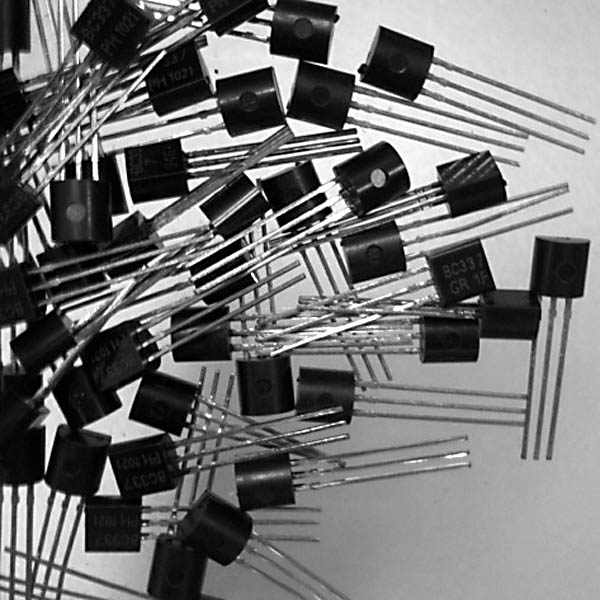
Compact, rugged little transistors, replacing the bulky and fragile vacuum tubes of old.(© All Rights Reserved)
Compact, rugged little transistors, replacing the bulky and fragile vacuum tubes of old.
(© All Rights Reserved)

The transistor was basically a much smaller and more usable replacement for the bulky vacuum tubes used before, and as such opened up many new possibilities in electronic component development. This lead to it being referred to as ‘the electronic engineer’s dream’.

At least their efforts didn’t go unnoticed – for their invention, Brattain and Bardeen shared the 1956 Nobel Price for Physics.

Sweets for my sweet, saccharin for my honey

Our birthday star for today is Constantin Fahlberg (22 Dec 1850 – 15 Aug 1910), the Russian chemist who, in 1878, discovered the surprisingly sweet taste of anhydroorthosulphaminebenzoic acid (better known to those of us without PhD’s in chemistry as saccharin), while working on coal tar compounds at the John Hopkins University.

What made him decide to taste the compound he created is not clear to me – he seems to have been quite a daring chemist to taste the stuff he concocted in the lab – but the bottom line is it must have been a thrilling taste-sensation, given that saccharin is said to be 220 times sweeter than cane sugar. Fahlberg dubbed the compound ‘saccharin’ after the Latin name for sugar.

Saccharin - one of the 'big three' most widely used artificial sweeteners around the world (together with aspartame and sucralose).(© All Rights Reserved
Saccharin – one of the ‘big three’ most widely used artificial sweeteners around the world (together with aspartame and sucralose).
(© All Rights Reserved

Realising the potential of his discovery, he took out all the necessary patents and set up a saccharin factory in 1896 with his uncle, Dr Adoplh List. Churning out saccharin by the ton-load, Fahlberg soon became a very wealthy man – unlike some other inventors, he was lucky enough to reap the sweet rewards (pardon the pun) of his invention.

Over the years, saccharin became the subject of various controversies – from being considered an illegal substitute for sugar in certain foods, to being accused of being carcinogenic in the 1960s and 70s. No conclusive proof has however been found linking saccharine to cancer in humans, and today it is still one of the most widely used artificial sweeteners, together with sucralose and aspartame.

Always look on the bright side of life … ta-dum … ta-dum-ta-dum-ta-dum!

Today, 21 December, is Look on the Bright Side Day.

Which is particularly amusing as today is saif to also be the last day of the Mayan calendar, leading many to believe that this is the day the world is going to end – not a particularly convincing case of looking on the bright side, is it?

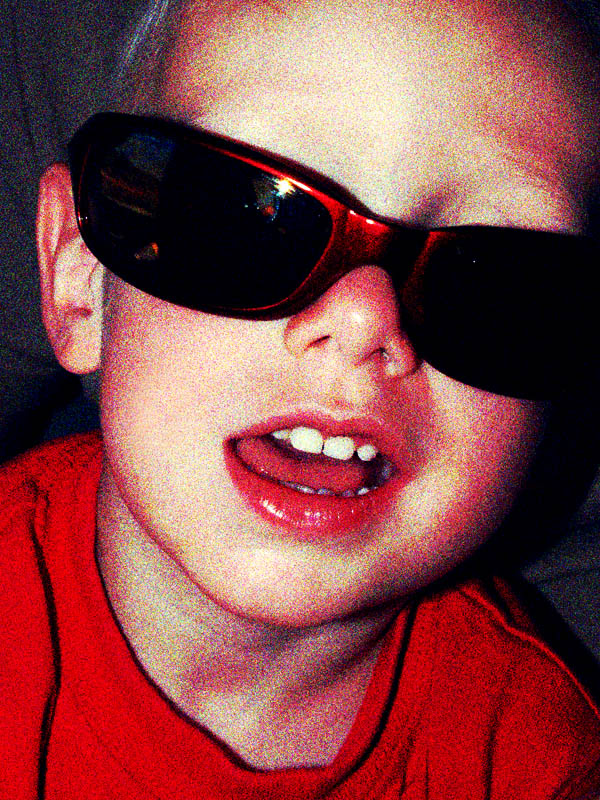
The future's so bright, I gotta wear shades!(© All Rights Reserved)
The future’s so bright, I gotta wear shades!
(© All Rights Reserved)

Why exactly this date was selected for Look on the Bright Side Day is not quite clear, but I won’t be surprised if it has something to do with the Winter Solstice, happening on this day in the northern hemisphere. Being the shortest day of the year for our northern friends, it means that from here things can only get better – days get longer, temperatures start rising, snow starts melting. Surely enough reason to look on the bright side.

Here in the southern hemisphere, on the other hand, 21 December is Summer Solstice – the longest day in the year, summer in full swing, nature bursting at the seams, and yet more reason to look on the bright side.

So, if you’re not bothered by the end of the world predictions, today is the day to remind yourself of everything good in your life, to look up, smile and be positive. For those preaching doom and gloom, perhaps this can be your personal winter solstice, and you can start looking on the bright side from tomorrow!

Albert Jones and the invention of corrugated cardboard

Our subject for today is corrugated cardboard.

It was on this day, 19 December* back in 1871 that New Yorker Albert Jones received the first US patent for corrugated paper board, which he proposed as a packing and shipping material. A similar form of paper corrugation had been patented years earlier, in 1856, in England, where it was used as a liner for tall hats, but Albert Jones’ patent was the first that specifically proposed it as an improved packing material.

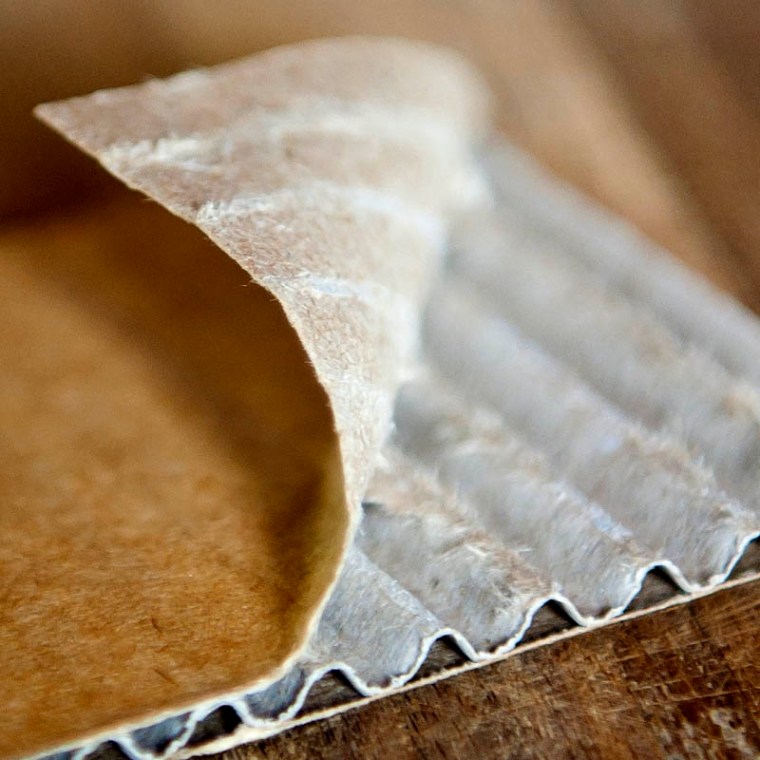
Corrugated cardboard - simple and clever, like all the best inventions.(© All Rights Reserved)
Corrugated cardboard – simple and clever, like all the best inventions.
(© All Rights Reserved)

Jones’ original patent was for a single-face corrugation, that is, a sheet of corrugated paper lined on one side with flat cardboard paper. Oliver Long soon updated and expanded the Jones patent by patenting corrugation with lining on both sides – basically the standard cardboard packing box as we know it today.

It took a while for the concept to catch on, but by 1890 corrugated cardboard boxes were in general use. It was initially used for packaging breakable material like glass and pottery, and by the mid-20th century it had become cheap enough to be used for packing fruit and fresh produce, reducing the bruising of the fruit going from the farm to the market.

Eventually, corrugated cardboard has become so commonplace that it is pretty much ubiquitous as the preferred material for boxing and packing. In fact, it’s really hard to imagine a world without it, isn’t it?

*Some sources say the patent was issued on 20 December, but most seem to agree on 19 December being the correct date.