Today, 7 January, we celebrate International Programmers Day. According to some sources, at least – there is also a Programmer’s Day happening on the 256th day of the year, 12/13 September, depending on whether it is a leap year. In a way the 256th day option makes more sense, as 256 is 2 to the power 8, which is the number of distinct values that can be represented with an eight-bit byte – something sure to amuse the programmers among us.
What makes 7 January an amusing date for a day dedicated to programmers, is that this is also the day that the French mathematician Emile Borel (7 Jan 1871 – 3 Feb 1956) was born. Borel, a pioneer in the field of probability theory, is the man who proposed the famous thought experiment that if you allow a monkey to randomly hit a typewriter’s keys, it will, with absolute statistical certainty, eventually type every book in the French National Library (known as the ‘infinite monkey theorem’).
Applied to programmers, does this mean that, if we let a monkey loose on a computer keyboard it will, given enough time, eventually write the code for every operating system and every computer programme ever developed?
I guess so… Which would support the often held opinion that people in IT get paid way too much… 🙂
Just kidding – of course I have the utmost appreciation for the computer whizzes who keep all the systems around us going. And when you think about it, there is almost no aspect of our daily lives that does not, in some way or another, have an aspect of programming involved in it. We certainly live in an age where IT is super-pervasive, and as such it makes perfect sense dedicating a day (or two) to celebrating the contributions programmers make in our lives. Good on you, each and every one!
On this day in 1907, Maria Montessori opened her first school in Rome, called the Casa dei Bambini, or ‘Children’s House’. Based on an educational system promoting and emphasising independence, freedom within limits, and respect for a child’s natural psychological development, the Montessori approach has been adopted widely over the past century. It is currently practiced in approximately 20 thousand schools worldwide.
While the Montessori principles have been applied for children from birth to the age of 18, the most popular age group for this approach is the 3-6 year old category. This age, when children are at their most naturally inquisitive, and the world is one great place of wonder, learning and exploration, is particularly suited to the Montessori philosophy. Learning is not differentiated from playing, as this is an age where we very much learn through play.
According to the American Montessori Society (AMS), the teaching approach holds numerous benefits. Quoting the AMS website, “Given the freedom and support to question, to probe deeply, and to make connections, Montessori students become confident, enthusiastic, self-directed learners. They are able to think critically, work collaboratively, and act boldly—a skill set for the 21st century.”
Thinking about it, I wish more people retained this probing, enthusiastic and inquisitive mindset further into their adult lives, instead of becoming closed-minded and stuck in their ways as soon as they enter adult life.
Maria Montessori firmly believed that responsible education was the basis for peace, saying “Preventing conflicts is the work of politics; establishing peace is the work of education” (1963). For her contribution to education and peaceful development, she has received no less than 6 nominations for the Nobel Peace Prize.
The 5th of January is Bird Day. Strictly speaking, it is National Bird Day, an America-based celebration, but why should the celebration of birds be limited to our US friends? So let’s just make it international, shall we?
Here in New Zealand we have a fairly small diversity of bird species, many of which are water birds. Even within this limited range, we have some very interesting and uniquely amusing species, such as the kiwi, tui, kea and my personal favourite, the decidedly odd pukeko. Wider afield, a dazzling array of birds can be found (almost 10 000 species worldwide), so it’s little wonder that people can get completely engrossed in fields such as ornithology and bird watching.
Bird Day is a time to celebrate the beauty and uniqueness of birds everywhere. And, perhaps more importantly, to focus attention on the plight of the feathered ones – currently no less than 12% of the world’s bird species are facing the prospect of extinction within this century. That’s more than 1000 species of birds destined to disappear from the face of the earth unless something is done about it.
Being sentinel species, birds are considered to be an important barometer and indicator of the health of our ecosystems. So, given the number of bird species facing extinction, it should serve as quite a serious warning regarding the state of our environment in general.
From the most common to the most exotic, birds have always fascinated and inspired humankind. What are the chances that the Wright Brothers, and all other humans obsessed with flight, would have gotten anywhere at all without the example provided by birds?
So take some time to celebrate our feathered friends, and make the effort to find out what you can do to avoid the extinction of many birds species around us. Happy Bird Day!
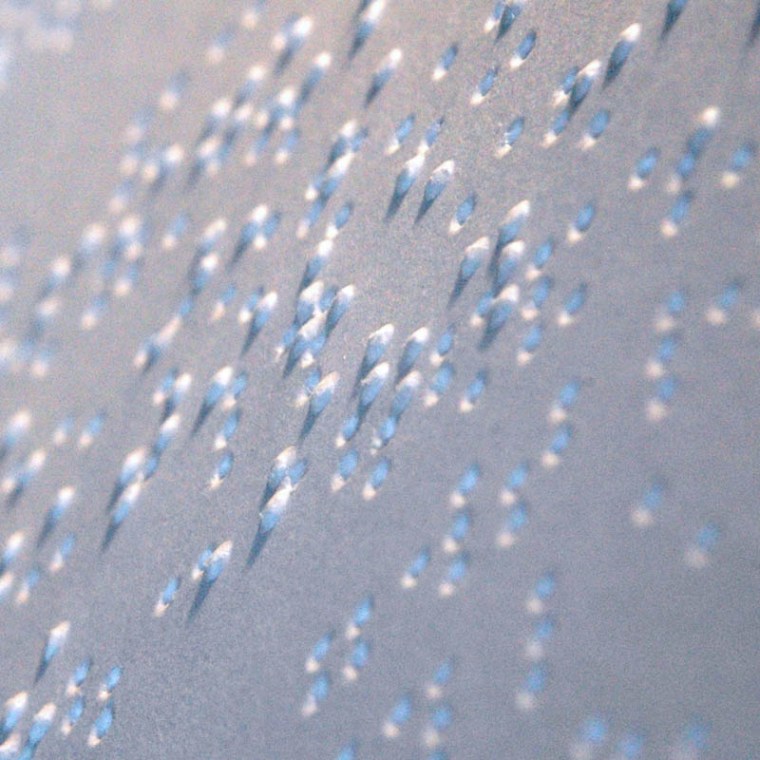
January 4th is World Braille Day, a day to celebrate the code of tiny elevated dots that has been instrumental in opening up worlds of information and opportunity to millions of people around the world suffering from blindness or low vision. The date coincides with the commemoration of the birthday of Louis Braille (4 January 1809 – 6 January 1852), the Frenchman credited with the invention of the braille code language over the years 1821 – 1837.
Louis Braille, while not born blind, was blinded through an accident when he was only 3 years old. He attended the National Institute for Blind Youth in France, one of the first schools in the world for blind children. Here he learned to read using a system developed by the school’s founder, Valentin Hauy, who had books specially printed using a complex wet-printing process, to create raised imprints of the Latin letters in the text. While this was useful, it was very difficult to accurately read the letters by touch, and the complexity of the printing process made it impossible for an individual to use for writing. Braille yearned to read and write as well as any able person, despite his disability, and he knew that effective communication was critical if he was to function fully in a normal world. He is famously quoted as saying: “We must be treated as equals – and communication is the way this can be brought about.”
This passion lead him to devise a set of symbols, consisting of raised dots on paper, that could be felt by hand and read as a sighted person would read printed letters and words on a page. The simplicity of the raised dot system meant that a blind person could also generate a page with the code using simple tools, thus effectively enabling him to write. The system was an improvement on an earlier code system, known as ‘night writing’, developed for military use by Captain Charles Barbier of the French Army.
It is a testament to his intelligence, drive and tenacity that Braille developed most of the code that was to become the basis of the braille language by 1824, when he was a mere 15 years of age. His initial system, published in 1829, contained both dots and dashes, but he replaced this with an updated, simplified edition using only dots, released in 1837.
Braille’s system of communication took some time to gain widespread adoption. First adopted at the school where he was educated, its popularity grew throughout France, and from there it slowly gained recognition in other countries. Almost 2 centuries after its invention, braille remains a critical tool for learning and communication among the visually impaired. Over the years, it has been adapted and expanded for many world languages.
In an incredible twist of fate, the very tool that accidentally blinded Louis Braille at the age of three – an awl – became the tool he used used to write his unique braille code.
A latin phrase, literally translated as “remember you must die” or “remember your mortality”, Memento mori can be considered a depressing or morbid thought, but in a way it can also be an empowering reminder. By reminding us of our mortality, it reminds us not to delay, to get on with things, to tackle that challenge we’re always putting off, to do that crazy thing we always say we’d like to do one day.
In that sense, it’s an apt day to celebrate shortly after New Year, when our lofty new year’s resolutions are still fresh in our minds. Done anything about them yet? Two days of the new year are already behind you, so perhaps you should start getting a move-on…
Life is uncertain, and there aren’t many things that can be stated as a statistical certainty but your mortality is, sadly, one of those certainties. So come on, make the most of every day, live it full-on. While thinking ahead is important, it should never distract you from living in the present.
Every year, around the start of the year, the earth reaches its perihelion – its closest point to the sun for the year – and this year the perihelion falls on Wednesday, 2 January. at 05:00 Coordinated Universal Time (UTC).
The day when the earth passes closest to the sun is called the perihelion after the ancient Greek ‘περί’ or ‘peri’ (near / around) and ‘helios’ (the personification of the Sun in Greek mythology).
I guess, with the sun passing at its closest, and with it being smack in the middle of summer here in the southern hemisphere, it makes even more sense than usual to be ‘sunsmart’.
With the sun beating down, and skin cancer being more prevalent than ever, the message is to ‘slip, slop, slap and wrap’. To quote the website of the Sunsmart campaign:
‘SLIP into a long-sleeved shirt and into the shade. Generally, fabrics with a tighter weave and darker colours will give you greater protection from the sun. There are also certain fabrics on the market that have a SPF rating.
SLOP on plenty of broad-spectrum SPF30+ sunscreen at least 15 minutes before going outdoors. Read more about using sunscreen.
SLAP on a hat with a wide-brim or a cap with flaps – more people get sunburned on their face and neck than any other part of the body.
WRAP on a pair of wrap-around sunglasses – UV radiation is just as dangerous to eyesight as it is for the skin.’
To my northern hemisphere friends – remember the sun is not only dangerous in summer; a day out in the winter sun requires all the same precautions needed in summer.
So let this day of the perihelion serve as a reminder to be sunsmart – be responsible, but don’t let that detract from the joys of an active day in the sun. Enjoy it, wherever you are!
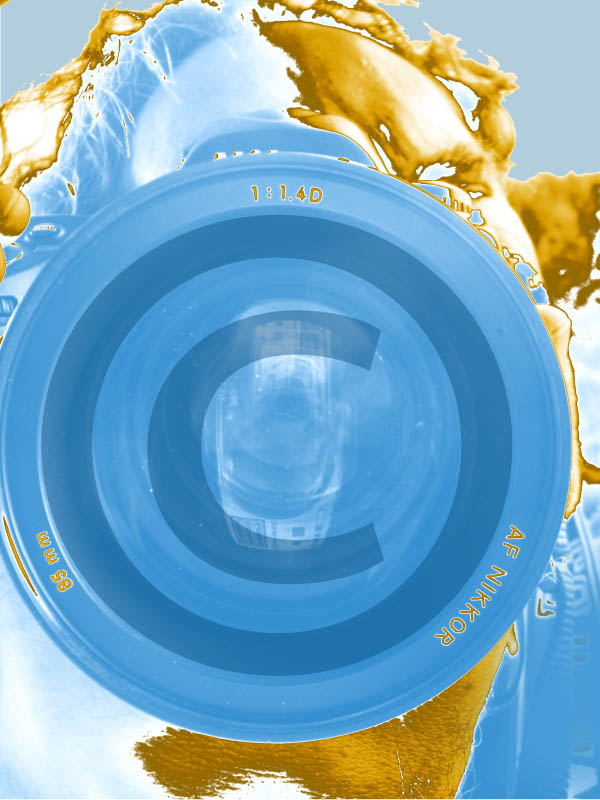
Today is Copyright Law Day. Not the most exciting of topics to start the New Year off with (except for copyright lawyers, I guess…), but still a pretty critical topic to ensure that everyone gets his or her dues, that fair remains fair and that order prevails in the world of intellectual property.
As I’ve often mentioned, many great inventors lost out on great amounts of money simply because they lacked the necessary patenting and copyright savvy to ensure that they kept ownership of their innovations. And similarly other inventors, those who did manage to patent and copyright their work, gained wealth beyond their wildest dreams.
Of course in my line of work, being a photographer, photographic copyright law is particularly important.
When looking at New Zealand Copyright Law as it applies to photography, the situation is reasonably simple. In terms of ownership, the default scenario is that the person who takes the photo is the first owner of copyright of the material. However, there are two important exceptions:
Employees – if a photograph is taken by a photographer in the course of his/her employment, the employer is the first owner of copyright, unless there is agreement to the contrary.
Commissioned material – if a client commissions and pays for a photograph to be taken, s/he become the first owner of copyright unless there is agreement to the contrary.
Point (2) above, known as the ‘commissioning rule’, has long been a matter of debate in copyright law worldwide, and is currently under review in New Zealand (see “The Commissioning Rule, Contracts and the Copyright Act 1994: A Discussion Paper”, at http://www.med.govt.nz).
In a number of other countries, including the UK and Ireland, the commisioning rule has been removed from copyright law as it pertains to creative artifacts. Australia and Canada are also moving towards the situation where copyright is retained by the photographer, independent of commissioning.
Importantly, Copyright Law can be overridden by an additional contract/agreement between the photographer and client. As stated in the law, the employee rule and commissioning rule apply ‘unless there is agreement to the contrary’. So if you’re commissioned for a job, but it’s going to take sufficient intellectual and creative input from you as a photographer, that you would want to keep copyright of the image(s), you can set up an agreement with the commissioning party granting you copyright.
Whether there is a specific agreement in place regarding copyright and the allowed use of a photograph or not, an additional factor that comes into play in creative works is the ‘moral right’ of the creator. Artists are, by law, granted certain moral rights pertaining to their creations. Specifically, the artist has the right to be identified as the author of a work when it is published/displayed, and has the right to object to derogatory treatment of a work. In the photographer/client agreement, moral rights may also be defined in more detail, and penalties specified for cases where the moral rights of the photographer are not upheld.
Whichever option one goes for, it is important to remember that copyright and ownership of a photograph is an important matter, that needs to be addressed when contracting a photographer. Whether the photographer or the client retains ownership of the photo, some agreement should be in place to (1) give both parties sufficient rights to the image, and (2) protect both parties from misuse of the image by the other party.
So here’s to a great 2013 – may your creativity be plentiful, and may you reap the just rewards for everything you do! 🙂
The patent described Monopoly as “intended primarily to provide a game of barter, thus involving trading and bargaining”, further stating “much of the interest in the game lies in trading and in striking shrewd bargains.”
The game of Monopoly deals with real estate – players can buy properties on different streets with different values, where they can charge rent etc. An element of chance (the roll of two dice) is incorporated to add excitement and unpredictability.
The original patent for Monopoly was quite comprehensive, including illustrations showing not only the playing board and pieces, but also 22 “Title cards of the respective Real Estate holdings”, Utilities, Chance and Community Chest cards, and the scrip money.
The Parker Brothers’ Monopoly became one of the all-time best selling board games, entertaining generations of adults and children. Intricate and complex enough to stimulate adult players, yet simple enough to still entertain (slightly older) children, it proved a winning recipe, and a true classic of the board game genre.
If I say ‘carbonated soft drink’, what is the first beverage that comes to mind? If you answered ‘Coca-Cola’ (and the chances are very good that will be the case), you have our birthday star, Asa Griggs Candler (30 Dec 1851 -12 Mar 1929) to thank.
Candler was an American marketer and manufacturer, who took the Coca-Cola soft drink invented in 1886 by pharmacist John “Doc” Pemberton, and turned it into the biggest carbonated beverage in the world. When Pemberton died, Candler bought his secret formula, and proceeded to invest obscene amounts of money ($50k per year – a crazy investment at the time) into the advertising of his product. His goal was to move Coca-Cola from a local beverage, sold from a soda fountain, to a bottled, national drink.
His efforts were hugely successful, and his beverage became a national hit, but the success brought with it numerous copy-cats – producers who sold similar looking beverages, with similar names (only different enough to avoid patent infringement cases). His solution to this was another stroke of marketing genius – patenting a uniquely shaped bottle. The shape of the Coke bottle became an integral part of its marketing campaigns, successfully differentiating it from other, similar cola beverages.
Candler was president of the Coca-Cola company for almost 30 years (1887-1916) and under his leadership Coke cemented it’s cult status among carbonated soft drinks. Relentless and intense marketing and advertising remained the backbone of Coca-Cola’s success, even after Candler’s death, and to this day no other soft drink has been able to come close to Coca-Cola’s level of market dominance.
And so another year is almost done and dusted; it’s 29 December – after today there will be only 2 more days to go before 2013 arrives. That time of year when you start seriously contemplating everything you thought you were going to do and achieve this year. And of course with this comes the regrets of all the opportunities missed, all the targets not achieved…
Well, today is Tick Tock Day – especially created to give you one last chance to pick some of those goals that have not been realised; to see if you cannot cram one or two more achievements into the year before everything starts over again with a new set of resolutions.
Think about it this way – after today you have 2 more days to your disposal. That’s 48 hours. Or 2880 minutes. Or if you prefer, 172 800 seconds. That’s hundreds of thousands of seconds! Imagine how much you can achieve in that time!
But you better hurry – time is ticking… Tick tock, tick tock… 🙂








 Sciencelens