Page 13 of 38

About Thomas Crapper, the toilet guy

It’s January 27 today, which means we’re celebrating the one and only Thomas Crapper Day, commemorating the death (in 1910) of Thomas Crapper, founder of Thomas Crapper and Co, and the man largely responsible for popularising the ‘porcelain throne’. Hmmm, not the first time I’ve written about toilets

Many sources credit Crapper as the inventor of the flush toilet, but that is not the case – it was invented long before, in 1596 already, by John Harrington. Crapper was, however, a shrewd and relentless businessman who, in a time when talking publicly about toilets was considered a bit on the rude side, widely promoted toilets and sanitation, and even introduced the concept of public showrooms for bathroom & toilet fittings.

If Thomas Crapper turned the toilet into an everyday item, Austrian artist Frederick Hundertwasser turned it into a work of art. This is a public toilet in Kawakawa in the Bay of Islands, New Zealand, created by Hundertwasser, which is quite a sight to behold. Apparently he considered the the toilet a special place, because it is somewhere you have time to meditate in peace. Hence his dedication to elevating its aesthetic appeal. (© All Rights Reserved)
If Thomas Crapper turned the toilet into an everyday item, Austrian artist Frederick Hundertwasser turned it into a work of art. This is a public toilet in Kawakawa in the Bay of Islands, New Zealand, created by Hundertwasser, which is quite a sight to behold. Apparently he considered the toilet a special place, somewhere you have time to meditate in peace. Hence his dedication to elevating its aesthetic appeal.
(© All Rights Reserved)

So synonymous did Thomas Crapper become with toilets in 19th century London, that a visit to the loo started being referred to as ‘going to the Crapper’, and it has been said that this is where the slang term ‘crap’ originated. This does, however, not appear to be the true origin of ‘crap’. For an amusingly detailed account of the origin of the word, have a look at the World Wide Words website.

Still, it’s just such an amusing story that the guy responsible for popularising the toilet would be named Crapper, and it does turn “going to the crapper” into quite a legitimate phrase, doesn’t it? No wonder manhole covers in the Westminster Abbey bearing the name “Thomas Crapper and Co” have become a premier tourist site in the area!

Finding that elusive variety on Seed Swap Day

Today, the last Saturday of January, is Seed Swap Day. Since the day originated in the US, it makes sense that it takes place this time of year – the ideal time for our Northern Hemisphere neighbours to get the range of seeds, bulbs etc you need for that vege patch you’re planning, or to ensure your spring garden is a feast of colour.

Here in the Southern Hemisphere the time is not quite ideal – its approaching winter, and heading away from the growing season for most veges, flowers etc. Still, the concept is so good that it’s worth mentioning, even if we end up doing a ‘Southern Seed Swap’ later in the year, around August perhaps. Or perhaps now is the time for a winter swap (brassicas, asian greens, celery and other winter crops).

Harvest quality seeds from your vege patch this year - it's all the currency you need to source great seeds from your next seed swap.(© All Rights Reserved)
Harvest quality seeds from your vege patch this year – it’s all the currency you need to source great seeds from your next seed swap.
(© All Rights Reserved)

The whole principle behind Seed Swap Day is that people get together regionally to swap seeds from their previous year’s crop. Why buy expensive seed from commercial seed companies every year if you can source fresh seeds & bulbs from neighbours in exchange for seeds from your prize veges? Not only do you effectively get seeds for free, but its often the only way to get your hands on some rare and unusual varieties not easily available commercially. And best of all – by swapping locally, you can find seeds and bulbs from plants that are well acclimated to your climate.

Can’t find a seed swap near you? Well, maybe that’s the universe telling you this is your time to take action – pick a date, arrange a venue (perhaps a local school or church hall, or even your garden for that matter), and start getting the message out to neighbours and the wider community. Most community papers also provide space to advertise local events.

If you want to seriously get into seed saving and swapping, it’d be worth your while to learn more about best ways to store and keep seeds and bulbs. There’s some good information sources available online – check out the online Vegetable Seed Saving Handbook, for example. It’s a good idea sharing this with other interested people in your area too, to increase the knowledge base in the region over time, and to ensure everyone can bring good products to your local swap.

OK, yes, it means a bit of effort from your side, but the rewards will be so worth it. And you will have that great feeling of knowing you did something really good, promoting environmental sustainability and local economic development.

So let this year’s Seed Swap Day be your call to action. And best wishes for an abundant vegetable patch and a luscious garden!

Do the opposite!

The 25th of January is Opposite Day. Or perhaps it’s the opposite of that, making it non-opposite day, which would be just another normal day, or… but if I keep going down that track I will just get confused and start wasting precious blog space.

Anyway, so today is all about opposites – black and white, light and dark, sharp and blunt, hot and cold, fast and slow. It’s the day to acknowledge and celebrate the yin and the yang. The great thing about opposites is that the one is often critical in your appreciation of the other. As John Steinbeck once said, “What good is the warmth of summer, without the cold of winter to give it sweetness.”

Appreciating opposites - black and white, light and dark, hot and cold.(© All Rights Reserved)
Appreciating opposites – black and white, light and dark, hot and cold.
(© All Rights Reserved)

A few days ago I wrote about getting out of your comfort zone in order to really feel alive, and it feels to me like Opposite Day is the perfect opportunity for doing just that.  By doing the opposite of what your automatic comfort-zone action would be, you will definitely force yourself into some uncomfortable, or at least unusual (and potentially rather amusing) experiences.

Right-handed? Then why not brush your teeth with your left hand today? And how about having breakfast at dinner time? Have a warm beer with a cold pizza. Sleep at the opposite side of the bed, or facing the opposite direction. Walk backwards. Call your job and tell them you’re taking the day off because you’re feeling healthy.

I’m sure you can think of many more fun opposites without needing to revert to anything dangerous, like driving on the wrong side of the road (not a good idea!). Opposite Day can be particularly fun when you get your kids to play along. Get them to think of things to do the opposite way – I can almost guarantee they will come up with some mind blowing ideas, simply because their minds are still completely open, and their creativity still fully intact.

Go ahead, make the most of the day – live a little (or live a lot)!

Celebrating the indulgence of pure peanut butter

So today is Peanut Butter Day. (National Peanut Butter Day again, in fact, but you know… there really seems to be so few International days in January…)

Anyway, let’s go with peanut butter, and peanuts, for that matter, for today. Certainly an interesting snack. For starters, it’s made from the peanut (Arachis hypogaea) which, despite being called a nut is in fact a member of the legume or bean family. So they’re called nuts (and you sometimes even get them when you buy mixed nuts), but they’re not nuts. That’s just nuts!

Pure peanut butter on a slice of freshly baked bread - comfort food delux.(© All Rights Reserved)
Pure peanut butter on a slice of freshly baked bread – comfort food delux.
(© All Rights Reserved)

Peanuts are used in many ways (eaten raw, roasted, made into peanut oil or flour, used in medicines), but none more rich and indulgent than good old peanut butter – a comfort food if ever there was one. Peanut butter is a rich source of protein, dietary fibre, vitamins B3 and E, magnesium, potassium and folic acid. It is also high in antioxidants and, though fatty, It has high levels of good, monounsaturated fat. The peanut oil in peanut butter has been reported to lower LDL (‘bad’) cholesterol without reducing HDL (‘good’) cholesterol.

And it contains high levels of niacin – a nutrient found to play an important role in the prevention of cognitive decline.

Not a bad mouthful, as such.

Aside from the obvious issue of peanut allergy, the downsides of peanut butter are not generic to peanuts, but rather concern the processing and additives involved in some brands. Some peanut butter brands, for example, contain added hydrogenated vegetable oils that are high in bad trans fatty acids, but this can be avoided by making sure you get freshly ground peanut butter made from peanuts, and peanuts only. Peanut butter is also said to have the potential to harbor Salmonella, but again I believe this is really only applicable to product that has not been properly handled during production, so it isn’t a generic problem either.

Thus, as long as you source responsibly produced, pure peanut butter, it seems you can pretty much snack worry-free (in moderation, of course).

Talking about worry-free snacking – people are always worried that peanut butter will make you fat. And sure enough, eating it by the tubfull certainly is likely to add up, but there are arguments that, eaten in moderation, it can actually help in weight management, as it’s rich taste and texture has been found to keep you fuller for longer than many other snacks.

Convinced? Then why not celebrate Peanut Butter Day with a chocolate-peanut butter-banana smoothie – if you can restrain yourself to a small serving (not easy!) it’s probably the simplest, most indulgent “good snack” you will taste in a while!

Celebrating the art of handwriting

It’s Handwriting Day today. National Handwriting Day, to be exact, but as I’m prone to do, I’ll just ignore the ‘National’ bit, and claim this US day for the rest of us.

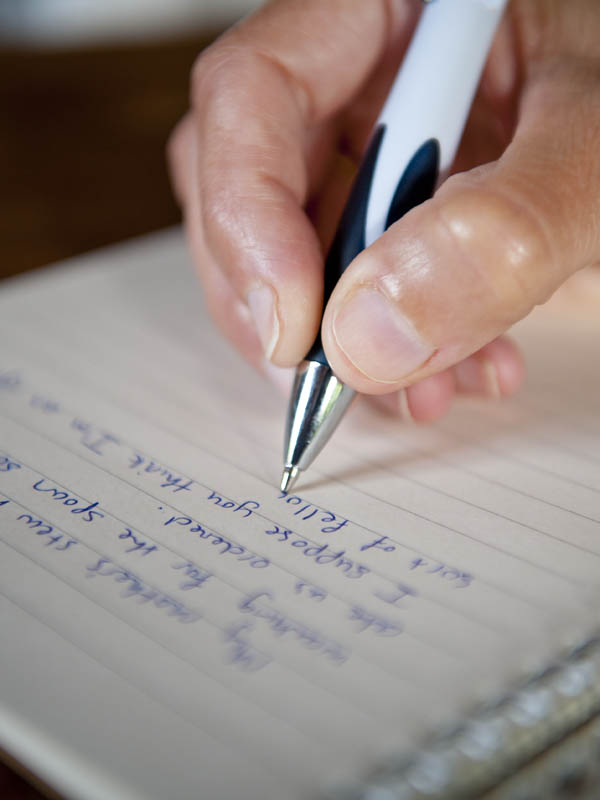
Handwriting – a unique expression of personality, with stylistic nuances making each person’s writing different. Sadly, writing is an art that seems to be fast dying away as we type our way through the day. Where people used to take pride in drafting artfully crafted hand-written letters, our modern-day fingers are much more adept at finding their way across a keyboard or touch-screen.

When last did you write an entire page of text by hand?(© All Rights Reserved)
When last did you write an entire page of text by hand?
(© All Rights Reserved)

Writing some Christmas cards a while ago, I was reminded again how bad and inconsistent my handwriting has become, and how quickly my hands started getting painfully tired. If I were to subject myself to a handwriting analysis right now, I’m sure there’d be serious questions asked about my character.

At least I don’t have to feel alone in the bad handwriting department – most doctors beat me by a country mile when it comes to illegible scribbling. I’ve never been able to understand why bad handwriting appears to be a prerequisite for entering the medical profession. Yet it seems to be the case – according to a 2007 article in Time Magazine, doctors’ sloppy handwriting directly resulted in the death of no less than 7000 people in the US per year (based on a July 2006 report from the National Academies of Science’s Institute of Medicine). According to the article, “…preventable medication mistakes also injure more than 1.5 million Americans annually. Many such errors result from unclear abbreviations and dosage indications and illegible writing on some of the 3.2 billion prescriptions written in the U.S. every year.”

If these are the figures for the US, imagine what it must be internationally!? If that is not a good argument to get doctors using tablets (tablet computers, I mean) and typing e-prescriptions, then I don’t know what is!

Whether you are a perfectly consistent scribe, or the proud owner of an illegible scribble, today is the day to celebrate your handwriting style – it’s one of the things that make you uniquely you. Perhaps Handwriting Day is just the time to make a commitment to writing more by hand – losing this special skill will surely be a terrible tragedy.

About life, personal challenges and celebrations

22 January is Celebration of Life Day. Where the day originated, or what exactly it’s original intent was, I am not sure, but I have no problem with the sentiment of it – the opportunity to be part of this roller-coaster ride called life certainly is something worth celebrating.

Of course how you choose to celebrate life is up to you – perhaps a party with loved ones, perhaps some personal quiet-time. I personally believe the best way is to do something that pushes the boundaries of your comfort zone, something that scares you, that makes life real and immediate again.

Nothing beats the feeling of setting - and achieving - a personal challenge.(© All Rights Reserved)
Nothing beats the feeling of setting – and achieving – a personal challenge.
(© All Rights Reserved)

It can be a physical challenge – climb a mountain; run further than you’ve ever run before; take up a new sport. Think Ranulph Fiennes – now there’s a guy whose entire life reads like a celebration of living.

Or perhaps you prefer a mental challenge – tackle a long-standing phobia head-on (like fellow blogger Metan’s son facing his fear of spiders); pull the plug on your safe office job and start your own business; enroll for a degree or diploma; learn a new skill. It’s all about moving out of your comfort zone, getting away from that state of comfortably numbness where you live, but you’re hardly alive.

And when you conquer that fear, reach that challenge, achieve that success, celebrate it. Celebrate life.

Start today. And put a bubbly on the ice in anticipation.

Felix Hoffmann and the invention of Aspirin

Our topic for today is Aspirin. It’s the birthday today of Felix Hoffmann (21 Jan 1868 – 8 Feb 1946), the German chemist and lead investigator at Bayer and Co who was responsible for the creation of aspirin.

Hoffmann’s interest in researching new pain medication was fueled by his father’s chronic rheumatism. At the time the best pain killer was salicylic acid (originally extracted from the bark and leaves of the willow tree) which caused some rather nasty stomach upsets and had had a really vile taste to boot.

Aspirin - still one of the most popular medications in the world, more than a century after its invention.(© All Rights Reserved)
Aspirin – still one of the most popular medications in the world, more than a century after its invention.
(© All Rights Reserved)

In 1897, on 10 Aug, Hoffmann synthesised aspirin (acetylsalicylic acid), by acetylating salicylic acid with acetic acid. He was not the first to prepare acetylsalicylic acid, but what made the Bayer version superior was that the salicylic acid was in the form of salicin derived from Filipendula ulmaria (meadowsweet), which caused less digestive upset than pure salicylic acid. Clinical trials by Bayer showed the new drug provided effective pain relief, lowered fever and had anti-inflammatory properties.

In addition to the above benefits of aspirin, it has also been shown to have an antiplatelet  effect in blood. As such, long-term low doses of aspirin is an effective treatment to help prevent blood clot formation, heart attacks and strokes.

Of course, as with all medication, it’s not all positive. Some of the not-so-great side effects, particularly with aspirin taken orally, include potential gastrointestinal ulcers and stomach bleeding. Due to these side-effects, and more specifically the potential of Reye’s syndrome (a severe brain disease that can result from administering aspirin to children), it is no longer prescribed to treat flu, chickenpox etc in children and adolescents.

To this day aspirin remains one of the most widely used medications in the world, and it is estimated that annual consumption is around 40 000 tonnes. Even though Hoffmann’s name is on the aspirin patent, it was owned by Bayer and he received no financial share in its huge international success.

Postscript: To add a sinister twist to our story, even though official records show Felix Hoffmann as the lead investigator on the aspirin project, a Jewish chemist, Arthur Eichengrun, later claimed to have been the project lead, and that records of his contribution were expunged under the Nazi regime. Stranger things have happened at the time, and I guess that is a controversy that is unlikely to be clarified anytime soon.

Celebrating the wonder of snow on World Snow Day

Today, 20 January, is World Snow Day. Given that there’s much more snow falling in winter in the Northern Hemisphere than the relative sprinkling we typically get here in our Southern winters, I suppose it only makes sense to align World Snow Day with the northern snow season. But it still feels kinda strange to celebrate snow in January when you live in the Southern Hemisphere. Having said that, I’m sure many parts of Australia, currently experiencing their hottest summer in history, would not mind a miraculous bit of snow today!

Having fun in the snow during a mountain hike. (© All Rights Reserved)
One of the only ways to celebrate natural snow in January in the Southern Hemisphere is hiking high up in the mountains, above the snow line.
(© All Rights Reserved)

World Snow Day was started by the International Ski Federation, FIS (Fédération Internationale de Ski), as the second phase in their “Bring Children to the Snow” campaign to promote snow and snow-sports around the world. The campaign started with “Snowkids” in 2009, which introduced children in FIS member countries to snow sports. With World Snow Day, the idea is to go beyond the FIS countries and to “celebrate all things snow around the world simultaneously”, with a specific focus placed on young people in the 4-14 age category.

2013 is the first time World Snow Day is celebrated, but the plan is to have it staged annually for years to come. The day is themed around three E’s – Explore (discover something new), Enjoy (have fun in and on the snow) and Experience (generate great memories and inspiration to continue enjoying the snow).

Having personally never lived in a region where snow is common, I have to admit the concept of snow sports completely passed me by as a kid. But that did not diminish my fascination with snow one bit – perhaps when you don’t grow up with snow around you, the fascination with curious icy flakes falling from the sky is even greater than when it is a commonplace occurrence.

Water vapour cooling down to form miniature ice crystals, that start to combine as they fall to form intricately shaped snowflakes – often amazingly complex hexagonal plates – that float down to the ground to create snow that can be up to meters deep. How magic is that? No wonder snow holds such fascination. And of course for any kid the best part of it is that the world becomes one giant playground… and if it snows enough, there’s even the possibility of missing school!

Only a light dusting of snow can turn any scene into a winter wonderland.(© All Rights Reserved)
Only a light dusting of snow can turn any scene into a winter wonderland.
(© All Rights Reserved)

I can just hear some grown-ups complaining about the ‘joys’ of cleaning driveways, commuting etc in heavy snow, and the mess made when snow turns to icy sludge. Very true, it’s not all fun and games, but then again World Snow Day is aimed primarily at the youngsters, so perhaps from a grown-up point of view this is a great day to not complain about the snow, and to just enjoy the pure wonder of it.

Celebrating exploding food on Popcorn Day

Today, 19 January, is Popcorn Day, a day to celebrate one of nature’s fun foods – those crazy little corn kernels that, when exposed to heat, explode violently and morph into cushiony white snacks many times their original size.

We’ve all enjoyed popcorn, but have you ever wondered what makes ’em pop?

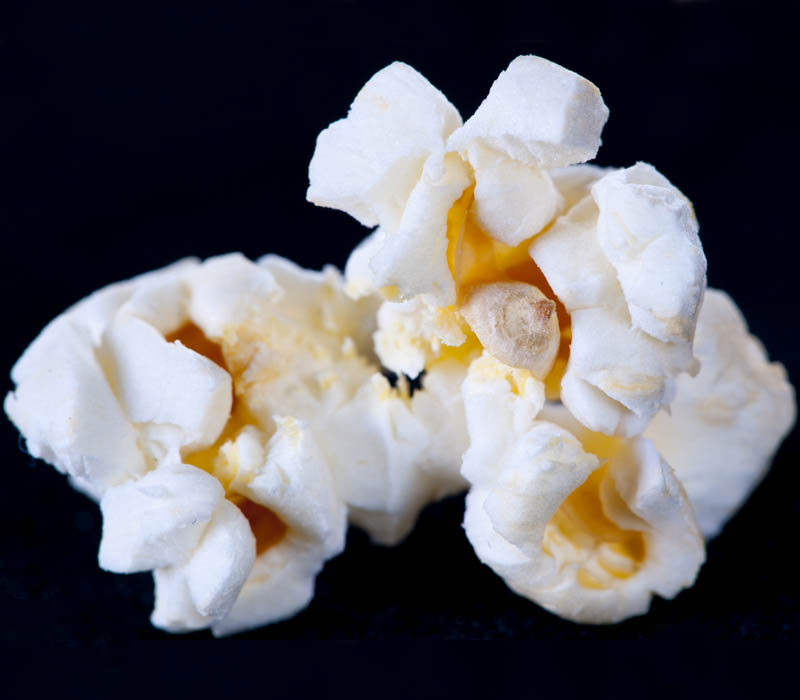
Exploding starch frozen in action. (© All Rights Reserved)
Each piece of popped popcorn is a totally unique example of exploding starch frozen in action.
(© All Rights Reserved)

The secret to popcorn’s popping ability lies in the composition of the kernel. The popcorn kernel consists of a hard, watertight outer shell, containing starch and a small amount of water and oil.

When the kernel is heated, the water inside tries to expand to steam, but the hard shell prevents this. The heat also gelatinizes the starch inside the shell. Once sufficient pressure has built up (to an incredible 930 kPa), the kernel bursts open in a violent explosion, freeing the steam and starch.

As the hot starch bursts out of the shell, it expands rapidly to as much as 50 times its original size. At the same time it experiences rapid cooling as it comes into contact with the air outside the shell.   It is this rapid cooling that sets the gelatinized starch into the familiar foamy popcorn puff.

So a popped popcorn is basically a starch explosion frozen in action!

Ray Dolby, shaping sound as we know it

Today we celebrate the birthday of Ray Dolby (18 Jan 1933), the American engineer and physicist who invented the Dolby Noise Reduction System.

Dolby Digital - keeping the Dolby name relevant in the digital era.(© All Rights Reserved)
Dolby Digital – keeping the Dolby name relevant in the digital era.
(© All Rights Reserved)

Dolby started his career in sound engineering while still at school, when he worked part-time at the Ampex Corporation. During his college years he became part of a team of engineers who invented the first practical video tape recorder in 1956. He subsequently started his own company, Dolby Laboratories, where he developed his noise reduction technologies, starting with Dolby A (1966), a broadband audio compression and expansion technique aimed at recording studios, with which audible tape hiss in professional tape recording can be significantly reduced without any discernible side-effects.

While Dolby A had real impact in the recording industry, perhaps the better known technology is Dolby B (1968), a sliding band noise reduction system aimed at the consumer market, which helped achieve high fidelity on cassette tapes.

All the Dolby variants work through a technique dubbed ‘companding’, which involves compressing the dynamic range of the sound during recording (‘dynamic pre-emphasis’), and expanding it during playback (‘dynamic de-emphasis’). This basically comes down to increasing the volume of low-level high-frequency sounds during recording and correspondingly reducing them during playback, thus reducing audible levels of tape hiss.

Various further iterations of Dolby’s audio noise reduction have subsequently been introduced, including Dolby C (1980), Dolby SR (1986) and Dolby S (1989).

Beyond noise reduction, Dolby Laboratories have also done ground-breaking work in the field of digital audio encoding and compression. Dolby Digital – first developed for movie theatres and later implemented in DVDs – is a digital audio compression format that was instrumental in the popularisation of surround sound. It has also been adopted as output format in most video game consoles, and several personal computers. Subsequent iterations of this technology include Dolby Digital EX, Dolby Digital Plus and Dolby Digital Live.

To say that Ray Dolby and his noise reduction and audio compression technologies have influenced the way we experience recorded sound, is an understatement. He has fundamentally shaped the way sound is recorded and reproduced, and his technologies have become so pervasive in sound reproduction that it is almost impossible to quantify its impact.