Today we celebrate the birthday of William P Murphy (6 Feb 1892 – 9 Oct 1987), the American physician who received the Nobel Prize for Physiology or Medicine in 1934, together with George Minot and George Whipple, for work done towards the treatment of pernicious anaemia by means of a diet of uncooked liver.
Murphy’s initial research involved bleeding dogs to create anaemic conditions in the animals (not a nice thought!), and then treating them with various diets, one of which was a diet of uncooked liver. The discovery that liver helped to relieve anaemia prompted further research into liver by Murphy, Minot and Whipple, and it was found that it contained iron, and that the iron was largely responsible for curing anaemia from bleeding.
Experiments with intramuscular injections of liver extract to treat pernicious anaemia led to further discoveries – it was discovered that in this case the active ingredient was not the iron, but a water-soluble substance later identified as Vitamin B12.
This new knowledge, and the discovery that raw liver and its extracts could be used to treat anaemia, were major advances in medicine at the time.
It’s Weatherman’s Day today. Or Weatherperson’s Day, to be more politically correct. Celebrated mainly in the US, today is the day to recognise people working in the field of meteorology and weather forecasting – those people partaking in the massive task of trying to forecast the weather patterns which, let’s face it, are getting more and more crazy and chaotic each year. The date of 5 February was chosen because it is the birthday of John Jeffries, one of the first weather observers in the US – he collected daily weather data from 1774 to 1816.
Weatherperson’s Day links up thematically with World Meteorological Day that we celebrate in May, but where that day focuses on the weather itself, today we focus on those working to forecast it.
From predicting whether it’s going to rain tomorrow, to developing seasonal weather forecasts, weather forecasting is a hugely complex and computationally intensive endeavour. As such, weather services are often some of the main users of supercomputers around the world. Weather forecasting activities include gathering raw weather data, analysing the data and developing intricate computer models to simulate natural weather systems. One of the (many) challenges of weather modelling is that natural weather and atmosphere systems are near-chaotic – small changes in boundary conditions can result in huge changes in outcome.
These difficulties, however, do not deter the good guys and gals at weather services around the globe who continually strive for more accurate and more timely weather forecasting. According to the US National Weather Service, for example, “lead time for flash flood warnings improved from 22 minutes in 1993 to 78 minutes in 2008. Accuracy over the same time period increased from 71 percent to 91 percent. Lead time for tornado warnings has increased from 6 minutes in 1993 to 13 minutes today. Tornado warning accuracy increased from 43 percent to 72 percent. Winter storm accuracy in 2008 was 89 percent with an average lead time of 17 hours. Since 1990, the Tropical Prediction Center’s 24 to 72 hour tropical storm forecast track errors have been reduced by more than 50%.”
These improvements are quite significant, and can potentially be the difference between life and death for communities in the path of an extreme weather event.
So spare a thought today for all the weather people through the ages who have dedicated their working lives to the holy grail of accurate weather forecasting. After the scorchingly hot, dry weather we’ve had for weeks now, they predicted rain for this week, and lo and behold, it has rained! 🙂
Today, 4 February, is World Cancer Day, the international day to raise awareness about cancer. This is a little confusing, since later in the year we also celebrate Daffodil Day, which has a very similar goal. Considering the impact of cancer on the human race, however, I suppose this is one topic that deserves a couple of days in the year.
There is a minor focus difference between World Cancer Day and Daffodil Day – where the latter has a specific focus on raising funds to support cancer research, World Cancer day is all about awareness creation, and busting some of the myths that still exist around the disease.
Specifically, the World Cancer Day website lists 4 common cancer myths, ranging from general societal misconceptions to very personal issues:
Truth: Cancer is not just a health issue. It has wide-reaching social, economic, development, and human rights implications.
As such, it is critical that interventions addressing the prevention and control of cancer need to be included in the wider post-2015 global development goals. By spreading the responsibility to address cancer control beyond the health sector, there is a better chance that all the relevant challenges (at individual and community level) can be addressed.
Global policies, however, are not enough – real investments are needed as part of national, country specific cancer control interventions.
Myth 2: Cancer is a disease of the wealthy, elderly and developed countries
Truth: Cancer is a global epidemic. It affects all ages and socio-economic groups, with developing countries bearing a disproportionate burden.
This is a no-brainer, really – cancer does not discriminate. If anything, the poor and disenfranchised are hit harder by the disease, and more often than not get sicker and die sooner as a result of cancer. Therefore cancer prevention and control policies and funding must be equally non-discriminatory, with interventions made available to everyone – rich and poor, young and old, in both the developed and the developing world.
Truth: Many cancers that were once considered a death sentence can now be cured and for many more people, their cancer can be treated effectively.
To achieve this, however, strategies need to be put in place to facilitate cancer control measures such as breast and cervical cancer screening, as well as improved access to cancer services including medicines and other treatment solutions such as radiotherapy.
Truth: With the right strategies, a third of the most common cancers can be prevented.
Of all treatment strategies, prevention remains the most cost-effective way of reducing the global cancer burden. This not only includes putting in place early detection systems, but also implementing programmes that reduce the level of exposure to risk factors and promoting healthy lifestyle choices.
Another critical prevention strategy is improved knowledge dissemination – helping people understand the risk factors as well as ways of addressing these.
More info
For more information on the above myths about cancer and its control and prevention, have a look at the fact sheets prepared by the Union for International Cancer Control (UICC). General background information on World Cancer Day 2013 and the UICC is available here.
Today we commemorate George A. Miller (3 Feb 1920 – 22 Jul 2012), an American psychologist, and one of the founders of modern cognitive psychology, and recipient of a National Medal of Science in 1991.
Miller contributed to the establishment of psycholinguistics as an independent research field in psychology. He studied the production and perception of speech, and later shifted his research focus to human memory.
He published a classic paper on memory recall (one of the most highly cited papers in psychology), entitled “The Magical Number Seven, Plus or Minus Two: Some Limits on our Capacity for Processing Information” (1956). The paper addresses the limits of human information processing and recall abilities.
Miller basically finds that the number of objects a person can recall in short term memory to be approximately 7. Similarly, in a ‘one-dimensional absolute-judgment task’, where a person is presented with a series of stimuli (different sound tones, for example) and has to respond to each stimulus with a pre-learned response, people can on average relate around 7 (plus or minus 2) stimulus-response pairs.
Since this article, many other cognitive numeric limits have been suggested, and these limits have been refined based on age, the complexity of the objects to be recalled, etc. Miller’s article, however, continues to be one of the most often referred to, and its reference to the ‘magical number seven’ have been used in various contexts, including the the argument that phone numbers should not exceed 7 digits, as this is the largest number people can comfortably remember. (This is one of the many examples where Millers results have been misappropriated, as the recall of phone numbers tend to be more of a long-term memory function, while Miller’s article referred to short-term (‘immediate’) memory.)
Based on his contributions to the field of cognitive psychology, Miller has been rated as one of the top 20 most eminent psychologists of the 20th century.
Today, 2 February 2013, is World Wetlands Day, the first of the big water celebrations of the year forming part of the 2013 United Nations International Year of Water Cooperation.
The 2013 theme is ‘Wetlands and water management’. The slogan is ‘Wetlands take care of water’, which succinctly positions wetlands as a key component in environmental water management programmes, and explains why taking care of wetlands form an essential component in the delivery of sustainable water management. As stated by Anada Tiega, Secretary General of the Ramsar Convention on Wetlands, “It is well recognized that access to a clean and adequate water supply is critical for human survival. Less well understood is that wetlands, as defined by Ramsar, are fundamental regulators of water regimes. Without adequate management of wetlands from the mountains to the sea there is no water of the right quality and quantity where and when it is needed.”
The role of wetlands in water management is well explained in the ‘Wetlands Take Care of Water’ information leaflet, available online in PDF format. Given the importance of wetlands in regulating water regimes, one of the worrying facts stated in the booklet is that “Impacts from changes in land use, water diversions, and infrastructure development continue to drive the degradation and loss of wetlands.” It is because of this that there is an urgent need to communicate the importance of wetlands as an essential element of water infrastructure – they are water providers, serving as water filters and purifiers. To continue supplying filtered and purified water, however, they need a continued input of water to maintain the system, and if water is dammed up or diverted for other uses, these critical components in the earth’s water system dry up and disappear. To address this within the wider water crisis facing the world’s growing population, “There is a need to place water at the heart of the green economy and to recognise that working with wetlands as water management infrastructure can be a cost-effective and sustainable way of meeting a diversity of policy, business and private objectives.”
Do you know where your nearest wetland is? And when last did you pay it a visit? Take today to appreciate these wonders of nature. Learn about them, and share your knowledge with those you know. The more people know about and understand the critical role wetlands play, the better the chances that these natural water purifiers may be maintained for future generations.
Cooking time again, as our subject for today is evaporated milk. It was on this day in 1851 that Gail Borden came up with the idea to condense milk through evaporation, after seeing fruit juice being condensed using vacuum pans. He worked tirelessly on the concept, and eventually received a patent for his milk condensing process in 1856.
Created by evaporating the bulk (about 60%) of the water from fresh milk, evaporated milk differs from condensed milk in that the latter has sugar added to help inhibit bacterial growth. Since evaporated milk does not contain added sugar, it has to be homogenised and sterilised to ensure a long shelf-life.
Initially evaporated milk and condensed milk gained popularity at a time when storage and transport of fresh milk was problematic – it could be kept fresh without refrigeration much longer than fresh milk. When water was added back into the evaporated milk it was basically the same as fresh milk, with all the calcium and other nutrients intact, and without the sweetened taste of condensed milk. Interestingly, it was originally thought that it was the condensing of the milk that stabilised it, and only later did it become clear that it was in fact the heating process (to evaporate the water) that killed the bacteria that caused fresh milk to spoil.
Today, with pasteurisation allowing much longer shelf life for milk (even without refrigeration, in the case of long-life milk) the usefulness of evaporated milk as fresh milk replacement has all but disappeared. It is still used, but mainly in cooking, and sometimes as a less rich replacement for cream in deserts. Acknowledging this shift, brands such as Nestle are rebranding the product as “cooking milk” in some markets.
While it may not be a critical milk substitute anymore, evaporated milk remains so useful in the kitchen that you really should always have a can tucked away in the back of the pantry – just in case you need some to spruce up a creamy dessert, soup, sauce, or even a nice casserole or stew.
It’s the last day of January 2013, which means today is Backward Day. Similar in a way to Opposite Day we celebrated not long ago, and yet another day to rattle your comfort zone a little.
You can opt to simply have some fun – put on your clothes backward, walk backward or even (this may be a little more challenging) speak backward.
Or you can take it as a serious challenge – there’s a whole range of backwards running world records to challenge. But I have to warn you beforehand – these are serious records! Imagine running the 100m in reverse, and still doing it in a time of 13.6 seconds, as Roland Wegner did in Germany in 2007. Wegner also holds the world record in the 200m, so his reversing muscles must be perfectly tuned.
At the endurance end of the scale, the world record for the greatest distance run backwards in 24 hours is an incredible 160km, run by Yves Pol from France, in 1990.
In fact, backwards running is a big thing – there are even some national backwards running associations, for example in Germany, Austria, Italy and the UK.
If you’re less physically inclined, perhaps you’d rather opt for a mental challenge. How about seeing how many palindromes (words or sentences that are spelled the same forward and backward) you can think of. What is the longest palindrome sentence you can create? As with the backwards running, people have achieved amazing feats – in 1980, David Stephens published a palindromic novel, ‘Satire: Veritas’, consisting of an incredible 58 795 letters forming a giant palindrome, while Lawrence Levine’s novel ‘Dr Awkward & Olson in Oslo’ (1986) contains 31 954 words arranged as a palindrome.
Palindromes also exist in music. For example, parts of the 3rd movement in Haydn’s ‘Symphony No 47’ are musical palindromes, where the second half of the piece is the same as the first, but in reverse. They can also be found in popular music, with bands like Bela Fleck and the Flecktones, Husker Du, Stone Roses and Sigur Ros having employed palindromic themes.
To get a bit more scientific – palindromes can even be found in biological structures. To quote wikipedia, “The meaning of palindrome in the context of genetics is slightly different, however, from the definition used for words and sentences. Since the DNA is formed by two paired strands of nucleotides, and the nucleotides always pair in the same way (Adenine (A) with Thymine (T), Cytosine (C) with Guanine (G)), a (single-stranded) sequence of DNA is said to be a palindrome if it is equal to its complementary sequence read backward. For example, the sequence ACCTAGGT is palindromic because its complement is TGGATCCA, which is equal to the original sequence in reverse complement.”
As you can see, the range of applications for Backward Day is almost without limit. However you choose to celebrate it, have fun!
We’re back to computers today, as we celebrate the birthday of Douglas Engelbart (born 30 Jan 1925), the American electrical engineer and human-computer interface specialist who developed the first practically useable prototype of the computer mouse.
The computer mouse has become such a ubiquitous part of a home computer setup that its quite difficult to think back to the time when computers didn’t come stock standard with a mouse. Of course early command-line computers had no real need for a mouse, given that they didn’t have a graphical user interface, and there was no need for a device to select different objects on the screen.
Engelbart’s computer interfacing device, that he developed with his colleague Bill English at the Stanford Research Institute, basically consisted of a handheld ‘box’ with two wheels protruding at the bottom, pointed perpendicular to each other so that, when the device was moved along a flat surface, the rotation of the wheels translated into motion along the horisontal and vertical axes on the screen. The device became referred to as a mouse because of its size and because the electric cable running out behind the device resembled a mouse’s tail.
Even though Engelbart patented his computer mouse (on Nov 17, 1970), this was a case where the invention was so far ahead of its time that the patent ran out before the device found widespread application in personal computers. Hence he never received any royalties for his groundbreaking invention.
The mouse was actually only one of several different devices that Engelbart experimented with to enable humans to easier interact with computers, including a joystick-type device, as well as head-mounted devices attached to the chin or nose. Personally I am quite relieved that the hand-held mouse won out – imagine if we all sat around staring at our computer screens with pointing devices attached to our noses. Then again, we may not have thought it funny – if you think how absurd ear-mounted bluetooth mobile phone headsets look (a personal pet-hate of mine!), perhaps a nose-mounted computer pointer wouldn’t have been that odd…
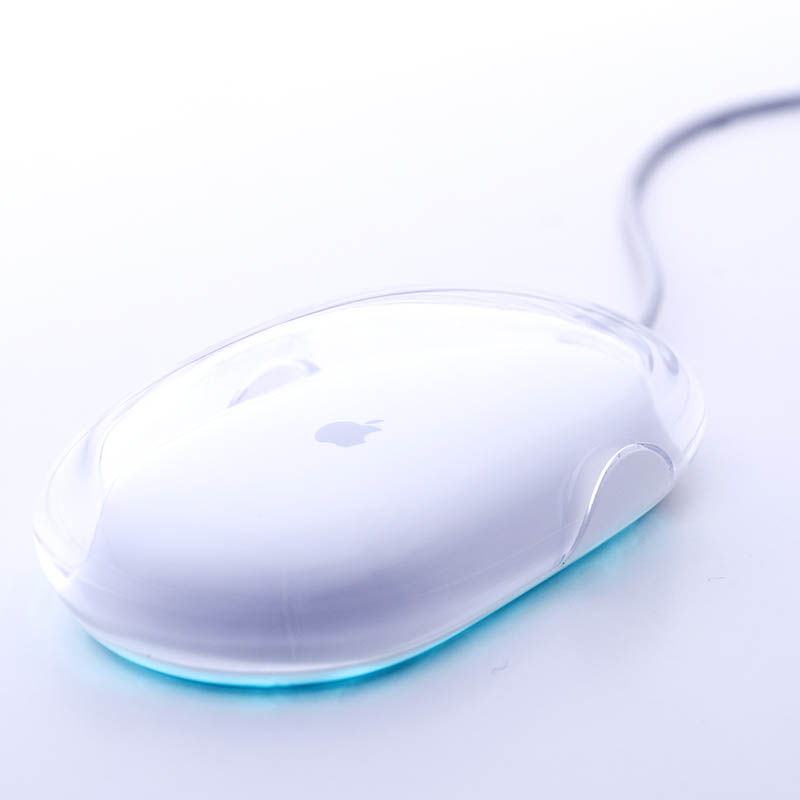
Of course by today the computer mouse has become a complex, highly sophisticated device, with variants ranging from multi-functional gaming mice that look like something out of a science fiction fantasy, to Apple’s classic smooth and simple design masterpieces.
And all this thanks to Doug Engelbart’s visionary work more than 40 years ago.
29 January is Puzzle Day, the day to celebrate all things puzzle related.
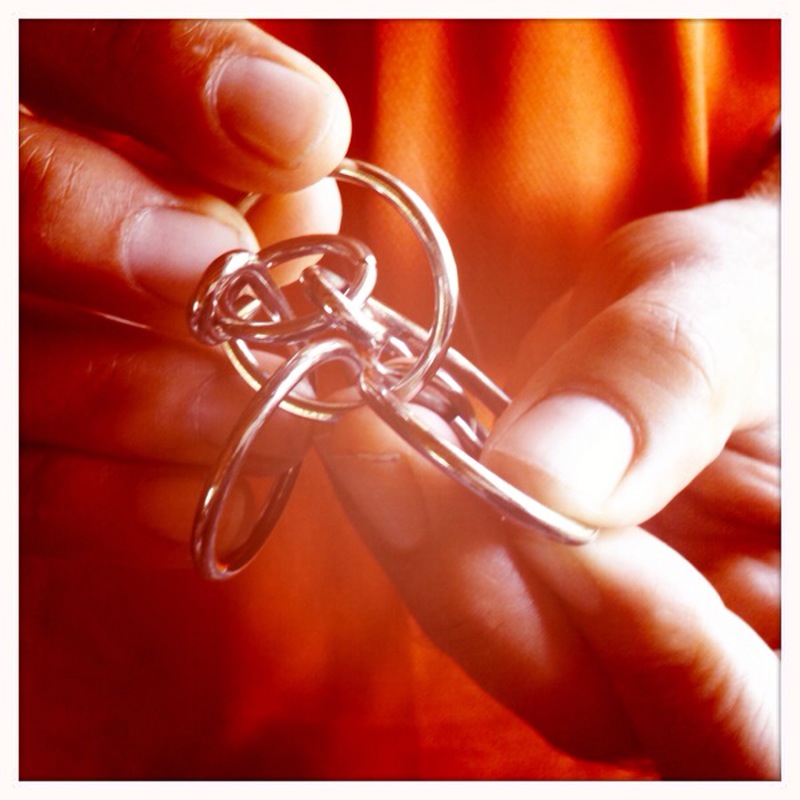
Of course puzzles are wonderful things, created to challenge, to entertain, to confound, even to frustrate when we cannot solve them. They come in all shapes and forms – jigsaw puzzles, crossword puzzles, soduko, three-dimensional challenges, folding puzzles, disentanglement puzzles, cryptograms, mathematical puzzles, word puzzles, mazes, riddles, lateral thinking puzzles, logical paradoxes, you name it. No matter what your specific interests, there’s sure to be a puzzle type that tickles your fancy.
Personally, I’ve never been the biggest crossword fan (somehow just never got into it), but I do quite enjoy the odd maths puzzle and I love a good 3-D challenge, especially a tough disentanglement puzzle.
While puzzles are often merely used for entertainment purposes, they can also serve a more specific cause. Companies like Microsoft have been known to challenge job interviewees with logical puzzles to test their logical, deductive skills. Puzzles can also stem from real-life mathematical or logistical problems, in which case the efforts to solve them can potentially contribute to basic mathematical research.
Not only are puzzles fun – they can also be quite beneficial to your mental development. According to a University of Chicago study, kids playing with puzzles develop better spatial skills. Puzzles also improve hand-eye coordination, fine motor skills, logical problem solving ability and memory.
A recent study also suggests that people who regularly exercise their minds with puzzles are a lot less likely to develop brain plaques that are tied to Alzheimer’s disease. Other beneficial activities include reading and writing.
All research seem to agree that regularly mental exercise are as beneficial to your mind as physical exercise is to your body, and the earlier you start the better. While starting to do crossword puzzles or taking up chess after retirement may help a little, the real benefits are gained by those who start early in life.
So why not use this Puzzle Day to kick-start your daily brain-gym? Here are a couple of interesting sites you may want to visit:
Today is Bubble Wrap Appreciation Day. And what a weird, wacky and fun invention it is!
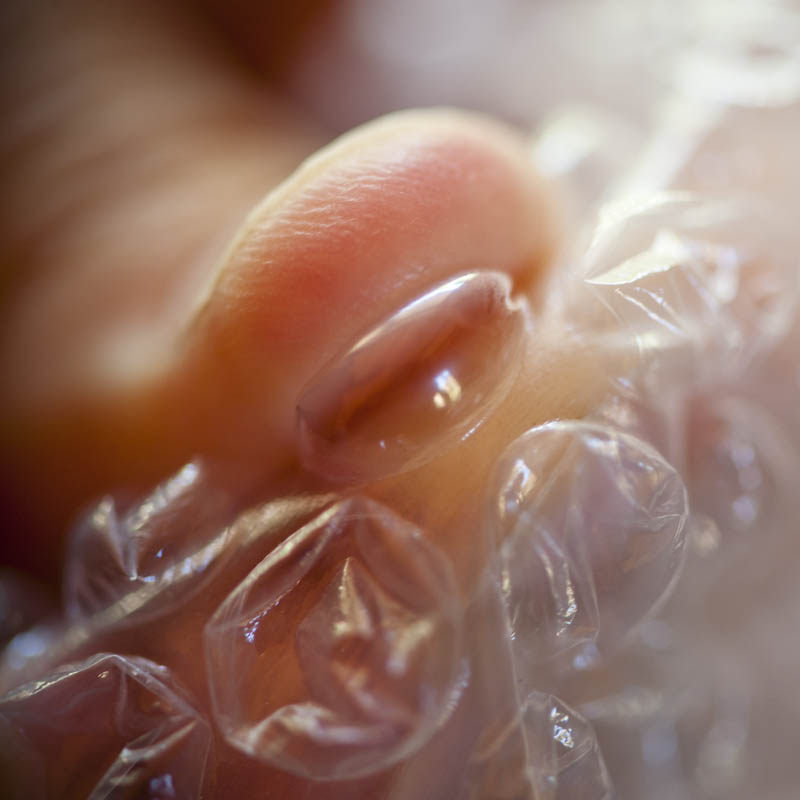
With cushioning provided by hundreds of regularly spaced, air-filled plastic bubbles, it not only provides a really clever and practical solution for keeping packaged products safe and secure, but I’m sure if a survey had to be done on the most addictive toys ever, bubble wrap should no doubt rank quite high on the list. I’ve never met anyone who, when left alone with a piece of bubble wrap for a few minutes, did not start popping away at the hundreds of individual little plastic-encased air bubbles. Which is weird, when you think about it, because you’re effectively rendering the bubble wrap useless, destroying the very thing that makes it useful. But it’s such fun that you cannot stop!
Bubble wrap was invented in 1957 when two inventors, Alfred Fielding and Marc Chavannes, set out to develop 3-dimensional plastic wall-paper (by sealing two shower curtains together, capturing various different shaped air bubbles between the sheets). The concept failed, but their design proved to be a perfect packaging solution. Pursuing this business opportunity, Fielding founded the Sealed Air Corporation and started marketing the Bubble Wrap® brand.
Acknowledging the compulsion of bubble wrap popping, the Sealed Air Corporation’s corporate offices is said to have ‘stress relief boxes’ – containers filled with Bubble Wrap® for employees to pop. Another cute initiative from Sealed Air is their Annual Bubble Wrap® Competition for Young Inventors, where kids are encouraged to come up with new inventions using Bubble Wrap® in novel ways outside of packaging. Some amazing inventions from these competitions have included a floating garden (floating on water with the aid of bubble wrap), a disposable, low cost cell phone holder, a wrist cushion for people suffering from carpal tunnel syndrome, and “Petri Bubbles”, an inexpensive alternative to petri dishes in labs. (I told you kids make great inventors!)
An interesting fact (not verified) that I came across is that more than 250 Facebook pages are dedicated to Bubble Wrap® and its generic derivatives – more proof of the addictive appeal of this amazing product.
So go ahead, grab some bubble wrap and start popping – you know you want to!







 Sciencelens