Page 5 of 41

Spreading the vaccination message on World Veterinary Day

It’s 27 April, and today is World Veterinary Day. Celebrated since 2000 on the last Saturday in April, each year features a specific theme of particular interest to the veterinary community. This year, World Veterinary Day will seek to raise awareness of vaccination as a means to prevent disease.

World Veterinary Day is a great opportunity to get your beloved pet vaccinated. (© All Rights Reserved)
World Veterinary Day is a great opportunity to get your beloved pet vaccinated.
(© All Rights Reserved)

“Vaccines are very valuable tools to stop the spread of a large number of transmissible diseases that threaten the health and welfare of animals and people,” explains the World Veterinary Association. “Vaccination of animals helps people to protect their livestock and their companion animals, as well as themselves in case of zoonotic diseases. Through well organised campaigns, vaccination contributes to the eradication of diseases from certain areas and even from the world.”

Vaccination is equally important in clinical veterinary practices and large animal practices. With companion animals, for example, vaccination is important to prevent and even eradicate diseases, in some cases also providing protection to the owners who are in regular, close contact with the animals. In the case of commercial farm animals, outbreaks of diseases can have a huge impact on farm productivity, and here vaccination is again a key preventative measure.

World Veterinary Day provides a great opportunity for veterinarians to promote their message and educate the community. As stated on the website of the New Zealand Veterinary Association, “World Veterinary Day is an ideal opportunity for us all to show our communities the value and protection vaccinations provide against the spread of disease.”

So whether you are a livestock farmer or pet owner, why not use this day to contact your vet and find out more about the benefits of vaccination. Who knows, some practices may even run special clinics or promotions, providing you with a cost-effective opportunity to have your animals vaccinated.
Commemorating the creator of the Richter Magnitude Scale

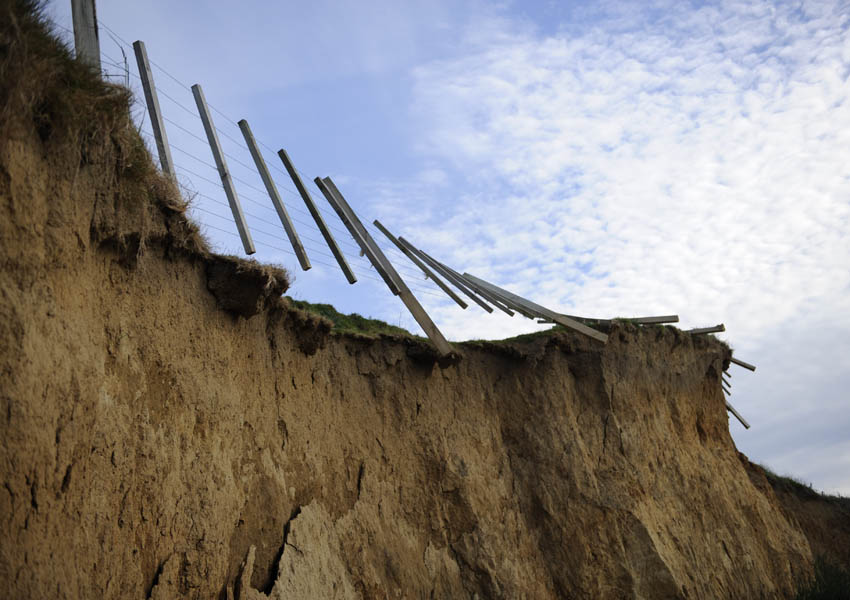
It’s 26 April, and today we celebrate Richter Scale Day. It is the commemoration of the birth of Charles Francis Richter (26 April 1900 – 30 September 1985), the American seismologist who is famous as creator, in 1935, of the ‘Richter magnitude scale’, commonly known as the Richter scale.

The Richter scale was developed as an attempt to quantify, in a single number, the energy released during an earthquake. It is a base-10 logarithmic scale, meaning that a magnitude 4 earthquake, for example, would be 10 times that of a magnitude 3 earthquake. Since the mid 20th century, the ‘moment magnitude scale’ (MMS) has replaced the Richter scale as the preferred measure of the strength of earthquakes, particularly for larger earthquakes. Despite this, and despite the fact that many earthquakes these days are actually measured according to the MMS, the magnitude values are commonly still referred to as Richter scale values by the general public.

(© All Rights Reserved)

For low magnitude/weak earthquakes, the Richter and MMS scales are very closely related. However, for values above 5, the Richter classification is considered ‘at risk’, while Richter values above 6 are essentially meaningless. Both the Richter and MMS scales are open-ended, meaning they have no maximum value, but to date the highest value recorded has been the Valdivia earthquake that took place in Chile in 1960, measuring a magnitude of 9.5 on the MMS scale.

Both the Richter and MMS scales measure the energy release of an earthquake, not the damage done. Since quakes can manifest in many different ways – jolts, wobbles, shakes, vertical movement, horizontal movement etc – two earthquakes of the same magnitude can have greatly varying impacts. The ‘Mercalli intensity scale’, on the other hand, classifies earthquakes based on their effect/impact – it provides an indication of the effects of an earthquake on humans, natural objects and man-made structures, on a scale from I (‘not felt’) to XII (‘total destruction’).

As recent comparative examples, the 2011 Christchurch earthquake here in New Zealand, and 2011 Japan earthquake, which measured 6.3 and 8.9 on the MMS scale respectively, were both categorised as IX (‘violent’) on the Mercalli scale. The 2011 Van earthquake in Turkey, on the other hand, which measured 7.2 MMS, was categorised one level higher as an X (‘intense’) according to the Mercalli scale.

Living in the very seismically active New Zealand, one cannot help but have an appreciation for people like Charles Richter, and the work he has done in advancing the understanding and categorisation of earthquakes. So here’s to Charles Richter, and here’s to a seismically calm Richter Scale Day.

Girls in ICT Day, promoting ICT as an equal opportunity career

The fourth Thursday in April (falling on the 25th this year) has been designated Girls in ICT Day by the International Telecommunications Union (ITU), in response to the global decline in the number of schoolgirls opting to pursue technology-related careers.

ICT is consistently ranked among the top 20 tech careers in terms of pay and long term prospects, and as one of the more stable and robust sectors, there is a strong, and by all indications ongoing, demand for young ICT professionals entering the market. It is also a domain boasting a good gender balance, and the ITU hope to use these facts, combined with its activities on Girls in ICT Day, to reverse the trend witnessed in other tech industries, and to grow the number of girls and women pursuing careers in the ICT sector.

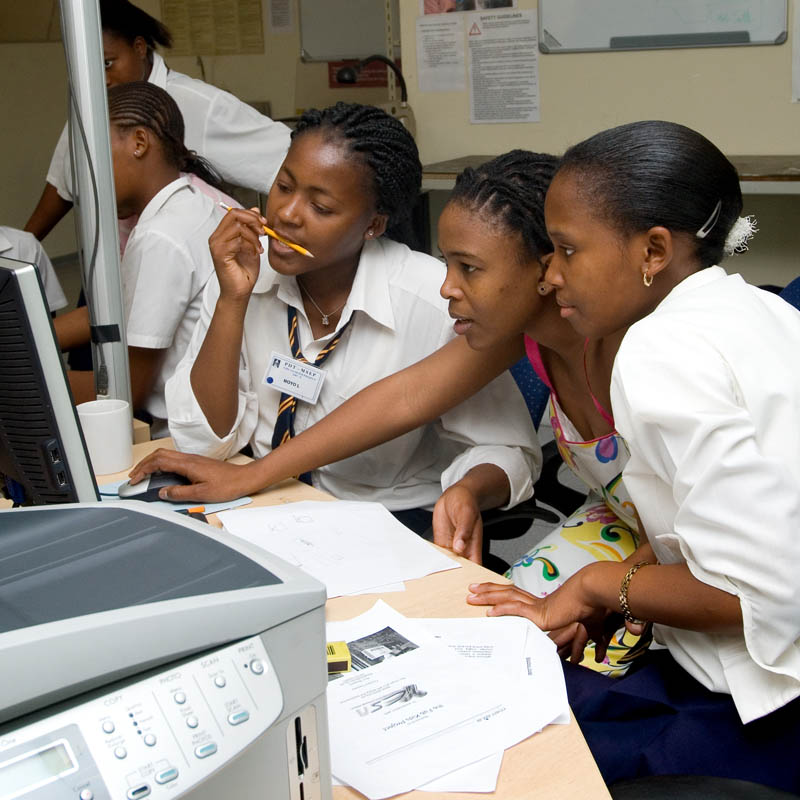
Girls in ICT Day aims to show that ICT is not boring, geeky or uncreative. (© All Rights Reserved)
Girls in ICT Day aims to show that ICT is not boring, geeky or uncreative.
(© All Rights Reserved)

In 2012, Girls in ICT Day involved approximately 1,300 events held by governments, the private sector and NGOs in 87 countries, and it is estimated that these events reached over 30,000 school-age girls. In 2013 the aim is to grow participation to 100 countries, for even greater impact. In the social media space, events related to the day are linked through the #girlsdigital hashtag. One of the global online initiatives is the ITU-hosted Girls in ICT Portal, a consolidated source of information and resources on ICT opportunities for girls.

Perhaps the sentiment of the day is worded best on the Tech Needs Girls website: “Word’s out that tech has an image problem among girls who think it might be boring, geeky, uncreative and not really helping anyone! (…) So we’re here to encourage girls to step up to technology and not leave all the fun to boys in shaping our futures…”

Gideon Sundback and the invention of the zipper

Time for some clever inventions again – today, 24 April, we celebrate the birthday of Gideon Sundback (24 April 1880 – 21 June 1954), the Swedish-born electrical engineer who is best known for his contribution to the development of the zipper.

In the decade between 1906 and 1914, while working for a number of different companies, Sundback made several meaningful contributions to the development of the zipper. While he did not come up with the original concept, he improved on the ideas of others, including Elias Howe, Whitcomb Judson and Max Wolff. One of the key problems Sundback solved was to create a version of the zipper that didn’t pull apart easily. He essentially did away with the hook-and-eye principle of earlier versions, and also increased the number of fastening elements. His version of the zipper included two sides with interlocking teeth, that are locked together or separated using a slider, much like the modern zipper we know today.

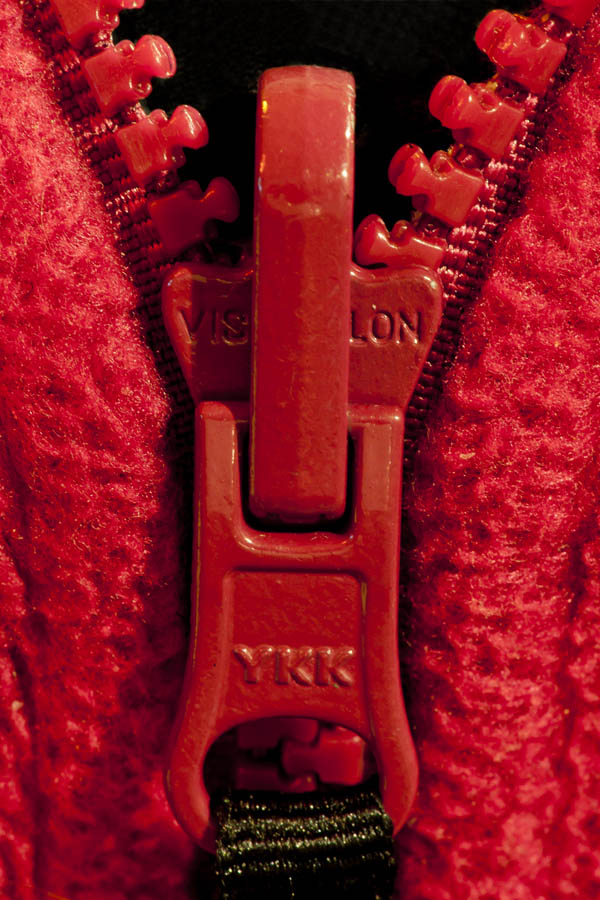
Gideon Sundback's 1914 'separable fastener' was almost identical to the zipper as we know it today. (© All Rights Reserved)
Gideon Sundback’s 1914 ‘separable fastener’ was almost identical to the zipper as we know it today.
(© All Rights Reserved)

Sundback also designed a machine to manufacture the zippers, which could produce about 100m of zipper per day. He incrementally improved his design, and the version he patented in 1914 (called the ‘Hookless No 2’) is essentially the same as the modern metal zipper.

Still called a ‘separable fastener’ up to this point, the zipper only became known as a ‘zipper’ when BF Goodrich coined the term in 1923 for the new fasteners used in their boots. Boots and tobacco pouches were the first widespread applications of the new separable fasteners, and it was only after the second world war, shortly before Sundback’s death, that the zipper gained widespread acceptance in the clothing industry.

In acknowledgement for his work, Sundback was included in the National Inventors Hall of Fame in 2006. Google also created a special commemorative zipper doodle on his birthday in 2012.

Celebrating books, authors, publishers and readers

Today we celebrate World Book and Copyright Day, also known as World Book Day. The day serves as a celebration of books and authors all over the world, and involves activities to “encouraging everyone, and in particular young people, to discover the pleasure of reading and gain a renewed respect for the irreplaceable contributions of those who have furthered the social and cultural progress of humanity.”

In celebration of World Book and Copyright Day, my humble attempt at spine poetry (a wonderfully fun art form that I first heard about from A Little Blog Of Books And Other Stuff). (© All Rights Reserved)
In celebration of World Book and Copyright Day, my humble attempt at spine poetry (a wonderfully fun art form that I first discovered through A Little Blog Of Books And Other Stuff).
(© All Rights Reserved)

In addition to being a tribute to authors, the day also serves to promote publishing and the protection of intellectual property through copyright.

In her message for the Day, UNESCO Director-General Irina Bokova said: “All forms of books make a valuable contribution to education and the dissemination of culture and information. The diversity of books and editorial content is a source of enrichment that we must support through appropriate public policies and protect from uniformity.”

Definitely a day – and a cause – well worth supporting. To quote Charles W. Eliot, “Books are the quietest and most constant of friends; they are the most accessible and wisest of counsellors, and the most patient of teachers.”

Earth Day: the face of climate change

Today, Monday 22 April, is Earth Day, a day of worldwide activity around the theme of environmental protection. The idea for earth day was suggested by John McConnell at a UNESCO conference in 1969. His proposed date was 21 March, the first day of spring in the northern hemisphere. However, at the same time another Earth Day, focused on environmental education, was initiated by US Senator Gaylord Nelson, and held on 22 April 1970. This subsequently became the accepted date for the day. The famous American cartoonist Walt Kelly, creator of the comic strip Pogo, created the promotional poster for the first Earth Day, featuring the message “We have met the enemy, and he is us.”

We have met the enemy, and he is us. (© All Rights Reserved)
We have met the enemy, and he is us.
(© All Rights Reserved)

Initially a US only event, it was expanded to an international event on it’s 20th anniversary in 1990. Earth Day 1990 was celebrated in 141 countries, involving an estimated 200 million people, and was an important unifying event in the international environmental movement. Ten years later in 2000, Earth Day took another step forward, becoming the first Earth Day to be extensively organised via the Internet. A huge success, the day featured actor Leonardo DiCaprio as its official host, and involved participating events in a record 183 countries.

This year, a wide range of activities are again being planned around the world, with a focus on climate change. The effects of climate change are becoming more and more apparent each year – while the concept may have felt remote, vague and theoretical not long ago, it has reached the point where we can no longer sit back and make it out to be a rumour or conspiracy theory, or a distant future generation’s problem.

To underline the fact that climate change affects us here and now, and that every person, as an individual, can take steps to do something about it, the Earth Day Network has initiated a campaign entitled “The Face of Climate Change”, with the premise that each of us represents a face of climate change, and it’s up to us to decide whether our faces will be those of the villains or heroes in the climate change picture.

As part of the campaign, they are organising a collaborative ‘global visual mosaic’ around the theme, with the idea being that people can upload photos illustrating aspects of climate change from around the world. Photos can illustrate effects, causes or solutions of climate change, and should ideally include a human face and a sign that reads “The Face of Climate Change”. To take part, and to show your role in the global climate change picture, upload your photo here.

To quote the Earth Day Network, “Together, we’ll highlight the solutions and showcase the collective power of individuals taking action across the world. In doing so, we hope to inspire our leaders to act and inspire ourselves to redouble our efforts in the fight against climate change.”

Happy Earth Day, everyone!

Creativity and innovation, cornerstones of scientific and artistic progress

It’s World Creativity and Innovation Day today. In fact, the whole preceding week, 15-21 April, is celebrated as World Creativity and Innovation Week. To quote the website, “World Creativity and Innovation Week, April 15-21, celebrates the unlimited potential of people to be open to and generate new ideas, be open to and make new decisions, and to be open to and take new actions that make the world a better place and make your place in the world better too.”

The importance of creativity and innovation can hardly be overestimated. Throughout the history of science and art, progress was sparked by the innovations of those individuals who nurtured and positively exploited their creativity.

Creativity and innovation - weighty subjects that impact on every aspect of our lives, from art to science, from mathematics to literature. (© All Rights Reserved)
Creativity and innovation – weighty subjects that impact on every aspect of our lives, from art to science, from mathematics to literature.
(© All Rights Reserved)

Of course loads have been said about the art of innovation, and many clever people have devoted their lives to the study of creativity. Yet these remain elusive subjects, with much disagreement as to what constitutes creativity, and how you can increase/improve your own creative abilities.

I’ve featured many inspirational individuals, who have been responsible for amazing creativity and innovation, on this blog in the past, and hope to feature more in future. Rather than attempting to turn this post into a meaningful, comprehensive overview on the science of creativity (which would be pretty much impossible anyway), let me rather simply applaud all those innovators who have dazzled the world with their creative contributions, however big or small – may the river of human innovation never run dry, and may every day be a creativity and innovation day.

Support music, support Record Store Day

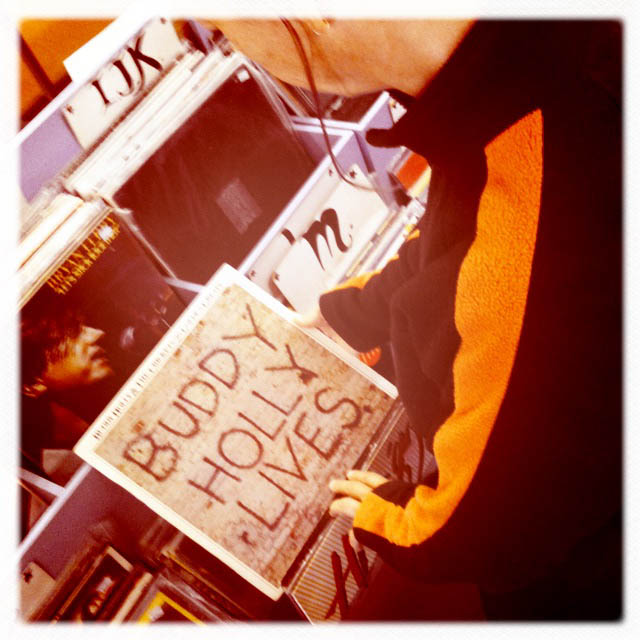
Today, 20 April, is Record Store Day, a worldwide celebration of ‘real’, independent record stores – stores staffed by true music lovers, rather than clueless salespeople; stores that pride themselves in selling a wide and esoteric range of music, not just the top 40 bestsellers of the moment. Specialist, independent record stores, where the staff know the difference between Bryan Adams and Ryan Adams; between Judy Collins and Bootsy Collins; between Elvis Presley and Elvis Costello; where you’re not greeted by a blank (or worse, irritated) response when you ask for a record by the Thinking Fellers Union Local 282. Record Store Day brings together music lovers, artists and independent record stores around the world, and the official ambassador for the day in 2013 is Jack White, formerly of the White Stripes.

Record_Store_Day_2013

With the rise in digital downloads, mp3 players and virtual/online record stores, more and more traditional record stores are under thread, and where, not too long ago, almost every town had a few decent record stores, they are increasingly becoming a rare sight. Independent record stores are serving an increasingly specialist subset of the community, with the result that they are often only commercially viable in large cities.

Record Store Day has been created to remind people of the important role played by these stores, and many musicians support the initiative by releasing limited run, special edition records that are, at least for an initial period, only available in small quantities through record stores.

Browsing an online music store simply cannot replace the experience of flicking through stacks of records in a specialist music store and coming across an unexpected surprise. (© All Rights Reserved)
Browsing an online music store simply cannot replace the experience of flicking through stacks of records in a specialist music store and coming across an unexpected surprise.
(© All Rights Reserved)

In the words of singer/songwriter/producer Damon Albarn, “My local independent record shop (Honest Jons) is a library, where you can go to listen to music, learn about it, exchange ideas about it and be inspired by it. I think independent record shops will outlive the music industry as we know it because long term their value to people is far greater, because even in our era of file-sharing and blogs, you can’t replace the actual look on someone’s face when they are playing something they really rate and think you should listen to it too. It’s special.”

Nick Hornby, author of cult record store novel ‘High Fidelity’, makes an even more eloquent argument: “Yes, yes, I know. It’s easier to download music, and probably cheaper. But what’s playing on your favourite download store when you walk into it? Nothing, that’s what. Who are you going to meet in there? Nobody. Where are the notice boards offering flatshares and vacant slots in bands destined for superstardom? Who’s going to tell you to stop listening to that and start listening to this? Go ahead and save yourself a couple of quid. The saving will cost you a career, a set of cool friends, musical taste and, eventually, your soul. Record stores can’t save your life. But they can give you a better one.”

If you are lucky enough to still have an independent record store in your town, pay it a visit. Buy some music – even if it may be a bit more expensive than the digital download. You’re supporting something special, something important. And besides, there’s nothing like holding & touching the real, physical, tangible artwork that belongs with your favourite music.

Happy browsing, happy shopping, happy listening!

Celebrating garlic, super-food, medicinal wonder and fighter of evil spirits

It’s April 19, Garlic Day!

Then again, in my household, every day is garlic day – I just love the taste of these pungent cloves, and the fact that it’s good for me is just another reason for celebration.

Garlic, a close relative to onions, shallots, leeks and chives, has been around for a long, long time, dating back about 7000 years, and it has been used for culinary, medicinal and religious purposes in Asia, Africa and Europe. Over the years it has spread to become a truly global herb (or vegetable, depending on your classification).

Hanging garlic to dry after harvest allows it to keep for a long time. (© All Rights Reserved)
Hanging garlic to dry after harvest allows it to keep for a long time.
(© All Rights Reserved)

From a culinary perspective, garlic, both raw or cooked, adds a distinct, pungent flavour that lifts many a dish from the ordinary to the sublime. A staple in mediterranean cooking, it is also popular in many other cooking traditions. Mixing garlic with olive oil, lemon juice and egg yolks produce aioli, a delicious, mayonnaise-like sauce traditionally served with seafood, but also used as an accompaniment to many other dishes.

An interesting, fairly recent development in garlic cuisine is ‘black garlic’ – garlic that has been subjected to an extended fermentation period under high heat. During the fermentation, melanoidin is produced, which is responsible for the garlic cloves turning black. The resultant black garlic , which has a tender, almost jelly-like texture and a rich, tangy molasses-like taste is said to contain double the antioxidants of normal garlic, while not causing the dreaded ‘garlic breath’.

The medicinal benefits of garlic is well documented. It is used to lower cholesterol levels and reduce high blood pressure, and is said to strengthen the body’s immune system and fight fatigue. It has even been credited with preventing some cancers and increasing longevity, and it has been suggested to help regulate blood sugar levels. Garlic is rich in Vitamins A, B1 and C, and contains calcium, magnesium and iron, as well as a range of amino acids.

In addition to it’s medicinal benefits, garlic has also been believed to have spiritual powers. Europeans in the Middle Ages ate garlic to ward off the Black Death, and legend has it that garlic, worn around your neck, hung in windows, or rubbed on chimneys and keyholes, keeps vampires, werewolves and other evil spirits at bay. I suppose this means all vampires and werewolves suffer from ‘Alliumphobia’, which is the fear of garlic.

Delicious in a range of dishes, good for your health and effective at warding off evil spirits – what more can one ask for?

Celebrating monuments and cultural diversity on World Heritage Day

It is 18 April 2013, and today we celebrate World Heritage Day, also sometimes referred to as the International Day for Monuments and Sites.

‘Heritage’ refers, literally, to something inherited from the past. In the context of World Heritage Day, heritage refers mostly to cultural heritage, the legacy of physical and intangible artefacts and attributes built up through the ages by the people of the world. And monuments and historical sights are the tangible representation of man’s cultural heritage.

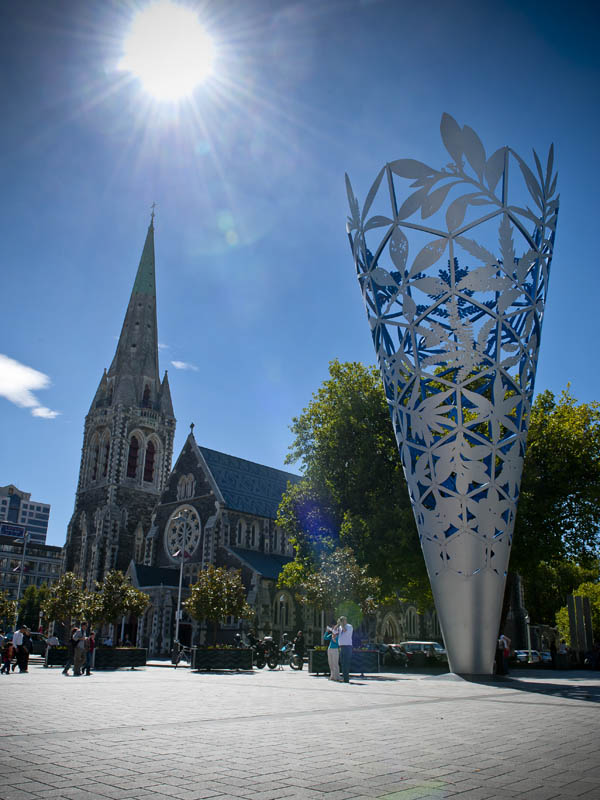
Celebrate your heritage while you can  - it's vulnerable and may disappear in the blink of an eye. (© All Rights Reserved)
Celebrate your heritage while you can – it’s vulnerable and may disappear in the blink of an eye. This view of the Christchurch Cathedral Square was forever changed in the February 2011 Christchurch earthquake. The iconic cathedral sadly did not survive the disaster, but the Chalice sculpture by Neil Dawson, a much more recent part of the city’s heritage, remains unharmed.
(© All Rights Reserved)

As stated on the World Heritage Day website, “World Heritage is the shared wealth of humankind. Protecting and preserving this valuable asset demands the collective efforts of the international community. This special day offers an opportunity to raise the public’s awareness about the diversity of cultural heritage and the efforts that are required to protect and conserve it, as well as draw attention to its vulnerability.”

So what can you do to celebrate the day? Well, how about visiting local monuments and sites, especially those you may not have visited before, or even those that you’ve come to take for granted. Or read up on the cultural history of your town, your state, your country. Or, for a more exotic touch, find out about interesting monuments and heritage sites in other parts of the world.

No matter what inspires, amuses and entertains you, there’s sure to be a monument to suit you – from truly inspiring monuments around the world, to the downright bizarre and baffling.

It’s all part of our multi-faceted human heritage, so celebrate it!