If you’re involved in any way with the field of chemistry, 10 to the power 23 should ring a bell – Avogadro’s constant, 6.02 x 10^23, the number of particles in a ‘mole’ of a substance, is a basic quantity in chemistry. To quote wikipedia: “The mole is a unit of measurement used in chemistry to express amounts of a chemical substance, defined as an amount of a substance that contains as many elementary entities (e.g., atoms, molecules, ions, electrons) as there are atoms in 12 grams of pure carbon-12, the isotope of carbon with atomic weight 12. This corresponds to a value of 6.02214179×10^23 elementary entities of the substance. It is one of the base units in the International System of Units, and has the unit symbol mol.”
In celebration of the above, Mole Day is celebrated on October 23rd, from 6:02 am to 6:02 pm. Generally the day involves activities that represent puns on ‘mole’ or ‘avogadro’. For 2012, the official theme for Mole Day is ‘Molar Eclipse’.
So how do you celebrate this day? Well, you can go on a molercoaster ride, or make a meal with avogadro dip or guaca-mole sauce. Have a Rock ‘n’ Mole party. Whatever you do, involve as many of your friends as possible – the mole the merrier! 🙂
I’m sure readers of this blog will be able to come up with many funnier, punnier activities to engage in on Mole Day – any suggestions?
Today is the birthday of Charles Glen King (22 Oct 1896 – 23 Jan 1988), an American biochemist and the ‘other guy’ who also discovered Vitamin C.
In the early 1930s, King was doing research on the anti-scurvy effects of lemon juice on guinea pigs (guinea pigs are one of only a small group of animals besides humans who cannot produce their own vitamin C, hence they can get scurvy like us). At the same time, Hungarian physiologist Albert Szent-Gyorgyi was studying the chemical hexuronic acid that he had previously isolated from animal adrenal glands. Within 2 weeks of each other, both King and Szent-Gyorgyi published papers on the discovery of Vitamin C, showing that the vitamin and hexuronic acid were the same compound.
Szent-Gyorgyi went on to win the Nobel Prize in Physiology or Medicine in 1937, for his part in the discovery of Vitamin C, while King was not similarly rewarded. Controversy remains over the extent to which both men deserve partial credit for the discovery.
Vitamin C is also known as ascorbic acid, thanks to its anti-scurvy properties (a- = not; scorbus = scurvy). Besides fighting off scurvy, Vitamin C has many other benefits – it is a cofactor in numerous enzymatic reactions in the body, and it has important antioxidant properties. It also enhances iron absorption, and is a natural antihistamine. However, while it is found in high concentrations in immune cells, its flu-fighting power may be a myth. Despite extensive research, Vitamin C has not been proven effective in the prevention or treatment of colds and flu. It does not reduce the incidence or severity of the common cold, but there are some indications that it may help reduce the duration of illness.
Still, even though it may not ward away the sniffles, getting a decent daily dose will definitely do you more good than harm – there doesn’t appear to be many adverse effects from overdosing, since excessive amounts of Vitamin C is simply lost through nonabsorption or urination.
So, don’t hold back on the chilli peppers, guavas, leafy greens, broccoli, cauliflower, brussels sprouts, fresh herbs, kiwifruit, strawberries and, yes, good old oranges.
And while you’re feasting away, spare a thought for Charles Glen King, the unsung hero in the Vitamin C story.
Today we celebrate the birthday of Martin Gardner. Gardner, born in 1914, was a science writer specialising in the field of recreational mathematics, but also covering topics like magic, literature, scientific scepticism, philosophy and religion.
His most famous contribution to the popularisation of science and mathematics was the ‘Mathematical Games’ column he wrote for Scientific American for 25 year, between 1956 and 1981. Many of these columns have been collected and published as a series of books starting with ‘Mathematical Puzzles and Diversions’, first published in 1956.
So popular was Gardner (who passed away recently in 2010) that, in honour of his life and work, his birth date of October 21 has come to be known as the ‘Celebration of the Mind’. The Gathering for Gardner Foundation aims to use this day to “celebrate Martin’s life and work, and continue his pursuit of a playful and fun approach to Mathematics, Science, Art, Magic, Puzzles and all of his other interests and writings.” They encourage people to get together on the day to share mathematical or logic puzzles, paradoxes, illusions and magic tricks, or just in general engage in activities that gets the logical side of your brain buzzing.
As a teaser, here’s a few from the Gathering for Gardner website:
A woman either always answers truthfully, always answers falsely, or alternates true and false answers. How, in two questions, each answered by yes or no, can you determine whether she is a truther, a liar, or an alternater?
You are in a room with no metal objects except for two iron rods. Only one of them is a magnet. How can you identify which one is a magnet?
Mr. Smith has two children. At least one of them is a boy. What is the probability that both children are boys? Mr. Jones has two children. The older child is a girl. What is the probability that both children are girls?
Besides his interest in recreational mathematics, Gardner was an outspoken scientific sceptic with an uncompromising attitude towards pseudoscience. In his books he commented critically on a range of ‘fringe sciences’, from creationism to scientology to UFOs and the paranormal. This earned him many fans, but also many antagonists, particularly individuals operating in these fringe domains. While critical of conservative Christianity, Gardner considered himself a ‘fideistic deist’, believing in a god as creator, but critical of organized religion.
Gardner was also a leading authority on Lewis Carroll. He published ‘The Annotated Alice’, an annotated version of ‘Alice’s Adventures in Wonderland’ and ‘Through the Looking Glass’, where he discussed and explained the riddles, wordplay and literary references found in Carroll’s works. He also produced similar annotations of GK Chesterton’s works, ‘The Innocence Of Father Brown’ and ‘The Man Who Was Thursday’
Yet his most enduring contribution remains in the field of recreational mathematics and puzzles. It has famously been said that, through his writings on puzzles, tricks and paradoxes, he “turned thousands of children into mathematicians, and thousands of mathematicians into children”.
Today is Information Overload Awareness Day, the day attention is focused on the crazy state of information overload existing in the world, thanks to ‘the Internet’ (a concept that is becoming more abstract and hazy by the day), social media, blogging, cloud computing, you name it.
And, by writing this blog entry about it, I am of course adding yet another drop to the ocean of information, contributing knowlingly to the ever rising levels of useful and useless information that is threatening to engulf every remaining bit of ‘dry land’ of the world.
It was estimated as long ago as 2008 that information overload is costing the US economy around $900 billion a year, through lowered employee productivity. When numbers get that big, I’m always unsure what they’re called – that’s almost $1 trillion, right? And that number is probably a lot higher by now. The average ‘knowledge worker’ (itself a term that didn’t really exist before the unbounded proliferation of data and information) is said to spend at least 50% of his day ‘managing information’ – sifting through emails, finding and validating ‘facts’, etc. And that is just the productive side of things – even more time is spent lost in the bottomless depths of facebook, twitter, youtube and the like.
The sad thing, of course, is that among the dirt there are some real diamonds. There are blogs and opinion pieces, both online and in print, that I try to read on a regular basis, and that I really feel poorer for not having read for a few days due to some work deadline or other crisis. But finding these among the thousands upon thousands of blog posts generated daily can be a real challenge. Even just trying to keep up with WordPress’ daily Freshly Pressed list is an almost impossible task.
I’m sure no amount of awareness creation about the problem of information overload is going to change things – we have gotten too used to having pages upon pages of information on any and every topic we can possibly think of, at our fingertips. And in many ways it’s good. There’s no way I would have been able to do this blog if there wasn’t all kinds of arbitrary facts floating around to tap into. But at the same time, I guess the responsible thing to do is to at least try and limit the amount of data we push out on a daily basis. Which is one of the reasons I prefer blogging to twitter, for example – in compiling a blog post, I like to believe people at least invest a little thought. Tweeting is just too easy and immediate, resulting in the masses mindlessly excreting an ever-growing pile of data-dung (my personal view, of course).
On the topic of excrement – when did Facebook change from being a place where people actually sort-of talked to each other, to a platform where all people do all day are to share ‘cute’ photos and cartoons, and resend arbitrary ‘amusing’ status updates? Facebook used to be a platform I found quite useful to keep in touch with friends and family when we moved to another country, but over the last couple of years the signal to noise ratio has fallen so low that it is hardly worth facebooking anymore.
Oh well… There I go – one rant about information overload, and I’ve contributed a few hundred more words to the problem. I think for the rest of this Information Overload Awareness Day I should just switch off all computers, smartphones, TVs and radios, and go mow the lawn or something.
Today, in the USA, is National Mammography Day. While it is primarily a US-based observance, I thought it apt to dedicate this day’s post to the subject, seeing that October is Breast Cancer Awareness month or Breast Cancer Action month in many parts of the world.
Breast cancer is one of the leading causes of death among women, with current estimates in the US being that about 12 percent of American women will develop breast cancer at some point during their lives. To address this, steps for early detection is recommended, with one of the most important being an annual mammogram and clinical breast exam for women aged 40 and above.
Mammograms are very low dose breast tissue x-rays, used to pick up breast changes, and breast cancers in particular. Mammograms are critical because they can detect breast changes (lumps/thickenings) which are so small they cannot be felt. As a result, they increase chances of survival through early detection of possible cancer.
Additional tools and techniques that can be used as complimentary to mammography include ultrasound and MRI scanning.
Being a male, I can obviously not comment on the discomfort involved in receiving a mammogram, but my wife assures me that its not nearly as painful or uncomfortable as people make it out to be. The statistics agree – in general less than 5% of women experience a mammogram as painful. However, as with most things in life, bad experiences tend to receive most ‘air time’, hence creating the impression that many more women have bad experiences with mammography than is actually the case.
Despite any discomfort, there is no argument that it is a procedure worth doing – mammograms have a success rate of between 80 and 90%, and this rate gets higher in older women with less dense breast tissue. Thus detection accuracy increase with age, which is great, as the chance of getting breast cancer shows a similar age-related increase.
In closing, a word of advice from the New Zealand Breast Cancer Foundation: “The best way to ensure early detection of breast cancer is to supplement screening mammograms with general breast awareness – know your breasts/know the changes to look and feel for – and see your family doctor without delay, if you notice any changes that are not normal for you.”
Today we have no big, UN-sanctioned observances. While there have been a few notable births on this day, none of it really caught my fancy. So instead, let’s commemorate the work of Alfred Binet, who died on this day in 1911.
Alfred who? Well, Alfred Binet was the guy who, together with psychologists Victor Henri and Théodore Simon, developed the Binet-Simon Test – a test for verbal abilities in children. The test was later adapted by Lewis Terman at Stanford University, resulting in the Stanford-Binet Intelligence Scales, published in 1916, which was the most popular intelligence test for decades in the US, and formed the basis of IQ testing over the past century.
Mention the concept IQ testing, and you are very likely to get some really strong opinions. Some people (especially those treated favourably by the IQ scale, I guess) probably consider it a pretty accurate measure of their mental superiority. Many, however, seriously question its validity as an absolute measure of intelligence. Even Binet himself felt strongly that his tests had significant limitations, stressing that he saw extreme diversity in intelligence, and felt the result of the tests only had qualitative value, and should not be used as a quantitative measure.
It is exactly this diversity of intelligence that forms the basis of much of the criticism against IQ testing, with detractors insisting that it fails to accurately measure intelligence in its broader sense, pointing to the fact that it is not an adequate measure of creativity and emotional intelligence. It does not even come close to testing physical intelligence (hand-eye coordination, ‘ball sense’, etc).
Some critics go further, not only critisizing the scope of IQ testing, but disputing its validity entirely. Paleantologist Stephen Jay Gould, for example, in his book The Mismeasure of Man (1996), equated the tests to scientific racism, saying “…the abstraction of intelligence as a single entity, its location within the brain, its quantification as one number for each individual, and the use of these numbers to rank people in a single series of worthiness, invariably to find that oppressed and disadvantaged groups—races, classes, or sexes—are innately inferior and deserve their status.”
The above criticism rings quite true when you read about the early days of intelligence testing at the start of the 20th century. To quote wikipedia, “The eugenics movement in the USA seized on it as a means to give them credibility in diagnosing mental retardation, and thousands of American women, most of them poor African Americans, were forcibly sterilized based on their scores on IQ tests, often without their consent or knowledge.”
Given that, despite the criticisms of IQ testing, these tests have been performed extensively around the world for the past century, there’s obviously a lot of IQ data out there, which has been the source of some very interesting analyses and practices. Here’s some of my favourites:
Musical training in childhood has been found to correlate with higher than average IQ. As has listening to classical music (but you have to do your listening directly before the test – apparently it only serves as a 10-15 minute mental boost!). So I guess my years of listening to rock, folk and blues wouldn’t have helped much.
IQ has been used quite extensively in human resource evaluations, when hiring new employees etc. What’s interesting is that it’s not only a too low IQ that can count against you. Apparently some US police departments have set a maximum score for new recruits (example: New London, CT has set an upper limit of 125), the argument being that those with higher IQs will become bored to soon, resulting in a too high job turnover.
In terms of income, it seems that there is a general correlation between IQ and income up to a certain level of IQ, but there’s no correlation between very high IQ and very high income. Top incomes are dependent on so many factors that IQ doesn’t really feature at all.
As far as criminal tendencies are concerned, being very clever or very stupid (in IQ terms) generally speaking seem to keep you from pursuing a life of crime. Most criminals fall in the 70-90 IQ range (i.e slightly below average), with the peak being between 80 and 90. There is, of course, the argument that only the dumb ones get caught, so maybe criminals are much smarter than the statistics suggest.
Politically, studies in the UK and USA have found that young adults who classify themselves as very liberal have a higher than average IQ, while those who consider themselves very conservative tends to have slightly below average IQ scores.
There are many more interesting correlations, but let’s leave it there for now. What do you think – do you believe in IQ tests, or do you think its a load of hogwash?
I personally think that the best comment on intelligence comes from Albert Einstein (he really did leave us with the greatest quotes, didn’t he?), when he said, “Everybody is a genius. But if you judge a fish by its ability to climb a tree, it will live its whole life believing that it is stupid.”
The day dates back to 1987, when more than a hundred thousand people gathered in Trocadéro in Paris (where the Universal Declaration of Human Rights was signed in 1948), to honour and acknowledge the millions of people around the world who are victims of extreme poverty. At this event, extreme poverty (currently defined as living on less than US$1.25 per day) was proclaimed a basic violation of human rights, and the urgent need to combat this violation was reaffirmed. Through the establishment of the International Day for the Eradication of Poverty, the UN formalised the commitments of the 1987 gathering, urging governmental and civil organisations to take action in addressing the problems of extreme poverty.
Think about it for a minute – US$1.25 a day. Or US$37.50 a month… Convert that to your local currency, and imagine that being the grand total amount of money you have to live on. Not just for basic needs such as food, shelter, clothing, heat and sanitation, but for all your living expenses including medical care, education and transport.
That is not poverty – it is extreme poverty. The number is incomprehensibly small.
And now think about this: 920 million people. That is the amount of people that will still live under the international poverty line of $1.25 per day in 2015 in the best case scenario if the Millennium Development Goals (MDGs) set by the United Nations is reached. In 1990 that number was almost 2 billion, and the stretching target set by the UN MDGs is to halve the 1990 extreme poverty rate by 2015.
At the moment, there’s still significantly more than 1 billion people living in extreme poverty. The number is incomprehensibly large.
And despite a general positive trend in the eradication of poverty, there are some severe setbacks that can derail the progress towards reaching the above goals. In 2010 alone, for example, it is estimated that the global economic crisis pushed an additional 64 million people into extreme poverty.
At the United Nations Conference on Sustainable Development, held in June of this year, leaders from around the world declared that poverty eradication is “the greatest global challenge facing the world today.”
The UN Fact Sheet on poverty eradication details some very positive programmes that have worked well in different regions of the world – subsidy programmes in Malawi and Ghana, investments in agricultural research in Vietnam, innovative finance schemes in Nigeria and Bangladesh, employment programmes in Argentina. In addition to these, the UN is currently coordinating many additional initiatives across the world focused on agriculture, rural employment, food provision, local cooperatives and more.
While the global eradication of poverty feels like one of those vague, hazy ideals that we fully agree is important, but really have no idea what to do about as individuals, there are things we can do. Simply sharing the message and creating awareness among your peers of the various initiatives that are currently running to address the problem, can already help. The UN “End Poverty 2015 – we are the generation that can end poverty” awareness campaign makes it easy to identify and share specific messages related to the challenges that remain in the fight against poverty.
Go on – go to “#endpoverty”, find those initiatives that are close to your heart, educate yourself about them and start sharing with a simple click of a button. Knowledge is power, and sharing that knowledge is half the battle won.
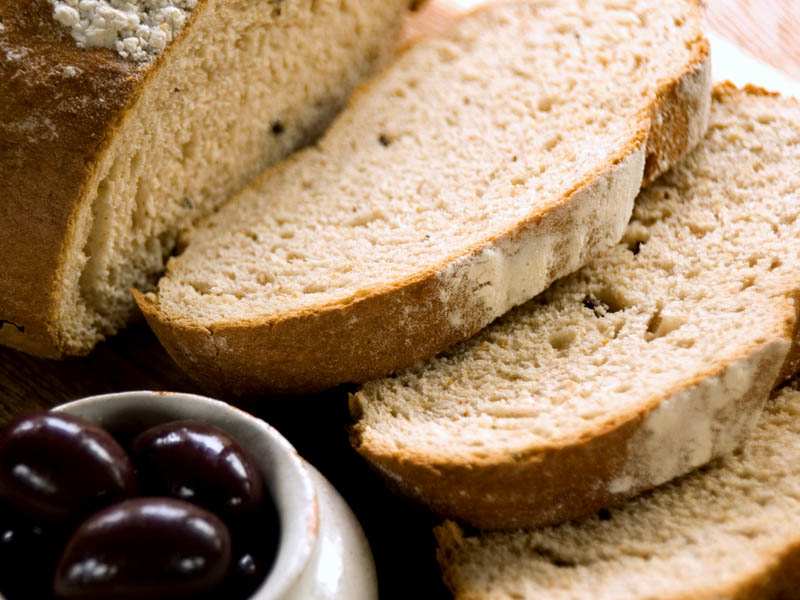
Today is World Bread Day. While it coincides with the United Nations’ World Food Day, it’s a much more lighthearted celebration. For the past seven years, 16 October has been the date that bloggers and other social medialites the world over have baked bread, and shared their experiences with their friends and followers.
A steaming, freshly baked bread must be one of the most basic culinary pleasures in life. When you’ve been away from fresh food for a few days, there are few things better than a thick slice of bread, hot out of the oven, generously spread with melting butter.
In a way it is fitting that World Bread Day falls on the same day as World Food Day, given the role of bread as a basic source of nutrition the world over. Bread is one of the oldest prepared foods, with evidence of bread-making dating back some 30 000 years. Earliest breads seem to have been a form of flat-bread made from starch extract from the roots of plants, while ‘modern’ grain-based bread appeared around 10 000 BC.
Considering it’s prevalence, bread plays an understandably important role in culture and religion. In Christian religion, bread is a symbol for the the body of Christ, while Jewish religion uses different types of bread for specific religious ceremonies and events. Bread is often equated to our general daily necessities (‘Give us this day our daily bread’, ‘putting bread on the table’). Around the 1950’s, ‘bread’ started to be used as a slang euphemism for money – a figure of speech that is now common the world over. Aligned with this comes terms like ‘bread-winner’ as the main income-provider in the family.
Bread is such an amazingly versatile food – once baked, it can be eaten warm or cold, or toasted. Eat it with dipping liquids like gravy, olive oil or soup; spread it with sweet or savoury toppings; stack it as a sandwich with your favourite fillings including meats, cheeses and more – the options are limited by your imagination only.
All this talk is making me peckish – I think I can do with a slice of toast with homemade marmelade!
Which leaves me with just one question: Whatever was the greatest thing before sliced bread?
Each year on 15 October, people worldwide celebrate Global Handwashing Day. It sounds almost too simple to be true, but properly washing your hands with soap and water is the most affordable and effective way of preventing a range of health problems including diarrhea and respiratory infections – problems which currently are the cause of death of millions of children, particularly in the developing countries of the world.
This is one of those astonishingly simple and obvious things to promote – if we can foster a generation of youngsters for whom handwashing is an integral part of their lives, it could “save more lives than any single existing vaccine of medical intervention, cutting deaths from diarrhea by almost half and deaths from acute respiratory infections by one-quarter.”
2012 is the fifth anniversary of Global Handwashing Day. In celebrating this fact, the theme for this year is “Help More Children Reach Their 5th Birthday”.
The reason why Global Handwashing Day is focussed on children is simply the fact that they represent the segment of society that is most enthusiastic and most susceptible to new ideas. If the current generation of children can be convinced of the value of washing your hands before eating and after going to the toilet, the habit can be entrenched in future generations, which could result in literally millions of lives being saved.
So if you have kids, do your bit and teach them the value of regularly washing their hands. Even if you don’t have kids, you can help by sharing the idea with friends, promoting it at local schools, etc. It may not feel like it, but it could really be the simplest and most significant intervention you can contribute to in your lifetime.
The idea of this day is to remind people of the importance of standards, and to honour the efforts of all those involved in the development and maintenance of various standards within the different standards organisations such as the International Organisation for Standardisation (ISO), the International Electrotechnical Commission (IEC) and the International Telecommunications Union (ITU). Development of standards is a detailed, precise and often thankless job, that is usually done on a voluntary basis. And unless you run into a situation where your life is complicated as a result of a lack of standardisation, you may very likely not even be aware of the important roles standards and interoperability play in our daily lives.
The theme of this year’s World Standards Day is “Less waste, better results – Standards increase efficiency.” As explained by the World Standards Cooperation (WSC), international standards help to harmonize manufacturing and other processes across the globe, which allow components etc from different manufacturers to ‘fit together like pieces in a puzzle’. Standards support interoperability and compatibility and facilitate market access to new products. And all this do indeed contribute to a more efficient and less wasteful world.
I guess as someone who has travelled to a few countries, and who has lived in more than one country, I personally find one of the most frustrating examples of non-standardisation being the absurd range of different electrical plug and socket standards in different countries. Having to replace plugs, buy various country-specific adapters, or replace power cables, is an excellent example where a lack of standards leads to less efficiency and more waste. How this disparity came about I have no idea. And why, in this day and age, have things not progressed to a single standard (at least among countries working on a similar voltage and current rating) makes even less sense. Surely it cannot be that difficult – just go for the most pervasive standard, or better still, choose the one that actually works best, and go with that?
So, like Martin Luther King of old, I also have a dream. It is not a very big dream, but it is a dream that can, in its own small way, change the world. On this World Standards Day my dream is to travel the world with a single, universal power plug that fits the sockets of all countries across the globe. Is that too much to ask? 🙂








 Sciencelens