Page 15 of 41

Ray Dolby, shaping sound as we know it

Today we celebrate the birthday of Ray Dolby (18 Jan 1933), the American engineer and physicist who invented the Dolby Noise Reduction System.

Dolby Digital - keeping the Dolby name relevant in the digital era.(© All Rights Reserved)
Dolby Digital – keeping the Dolby name relevant in the digital era.
(© All Rights Reserved)

Dolby started his career in sound engineering while still at school, when he worked part-time at the Ampex Corporation. During his college years he became part of a team of engineers who invented the first practical video tape recorder in 1956. He subsequently started his own company, Dolby Laboratories, where he developed his noise reduction technologies, starting with Dolby A (1966), a broadband audio compression and expansion technique aimed at recording studios, with which audible tape hiss in professional tape recording can be significantly reduced without any discernible side-effects.

While Dolby A had real impact in the recording industry, perhaps the better known technology is Dolby B (1968), a sliding band noise reduction system aimed at the consumer market, which helped achieve high fidelity on cassette tapes.

All the Dolby variants work through a technique dubbed ‘companding’, which involves compressing the dynamic range of the sound during recording (‘dynamic pre-emphasis’), and expanding it during playback (‘dynamic de-emphasis’). This basically comes down to increasing the volume of low-level high-frequency sounds during recording and correspondingly reducing them during playback, thus reducing audible levels of tape hiss.

Various further iterations of Dolby’s audio noise reduction have subsequently been introduced, including Dolby C (1980), Dolby SR (1986) and Dolby S (1989).

Beyond noise reduction, Dolby Laboratories have also done ground-breaking work in the field of digital audio encoding and compression. Dolby Digital – first developed for movie theatres and later implemented in DVDs – is a digital audio compression format that was instrumental in the popularisation of surround sound. It has also been adopted as output format in most video game consoles, and several personal computers. Subsequent iterations of this technology include Dolby Digital EX, Dolby Digital Plus and Dolby Digital Live.

To say that Ray Dolby and his noise reduction and audio compression technologies have influenced the way we experience recorded sound, is an understatement. He has fundamentally shaped the way sound is recorded and reproduced, and his technologies have become so pervasive in sound reproduction that it is almost impossible to quantify its impact.


Celebrating imagination and creativity on Kid Inventors’ Day

Today we celebrate the youth. More particularly, clever youngsters through the ages who have come up with great inventions at an early age.

17 January is the birthday of Benjamin Franklin (17 Jan 1706 – 17 April 1790). We all know Franklin as one of the founding fathers of the United States, but what is perhaps less well known is that he is also the inventor of swim fins (what became flippers), at the tender age of 12. In recognition of this fact, 17 January is celebrated as Kid Inventors’ Day.

Childhood - when our minds are open, thinking is uninhibited and the world is a place of wonder.(© All Rights Reserved)
Childhood – when our minds are open, thinking is uninhibited and the world is a place of wonder.
(© All Rights Reserved)

The Kid Inventors’ Day website states some interesting facts. Apparently about half a million children and teens invent gadgets and games each year. Some of the brilliant inventions by youngsters include braille (1824, Louis Braille, age 15), earmuffs (1873, Chester Greenwood, age 15), popsicles (1905, Frank Epperson, age 11), water skis (1922, Ralph Samuelson, age 18), the trampoline (1930, George Nissen, age 16), and of course Benjamin Franklin’s swim fins. The site also claims the television as a child invention, but I’m not too sure about that, especially since there’s such disagreement as to who actually deserves the credit for this invention.

To be honest, I am not surprised that so many well known items were invented by children and teens. In fact, if it wasn’t for the admin around patenting etc, I am sure more inventions may have been credited to kids who probably thought about many concepts before the more famous inventors credited with the eventual inventions.

Given their limitless imagination, uninhibited creativity and sheer energy, young people appear almost destined to come up with great ideas. I believe the great inventors through the ages were probably those people who managed to retain some of this innovative spark into adulthood, somehow managing to avoid having their creativity and imagination curbed by the conventions, norms, biases and prejudices (and medication!) clouding most grown-ups’ minds.

So, on this day, let’s celebrate the great inventions created by kids, and let’s all try to foster and regain some of their ability to live, think and create without inhibitions.

Getting hot under the collar on International Hot and Spicy Food Day

Today is International Hot and Spicy Food Day, so are you ready for a meal that gets the heart racing and the perspiration pumping?

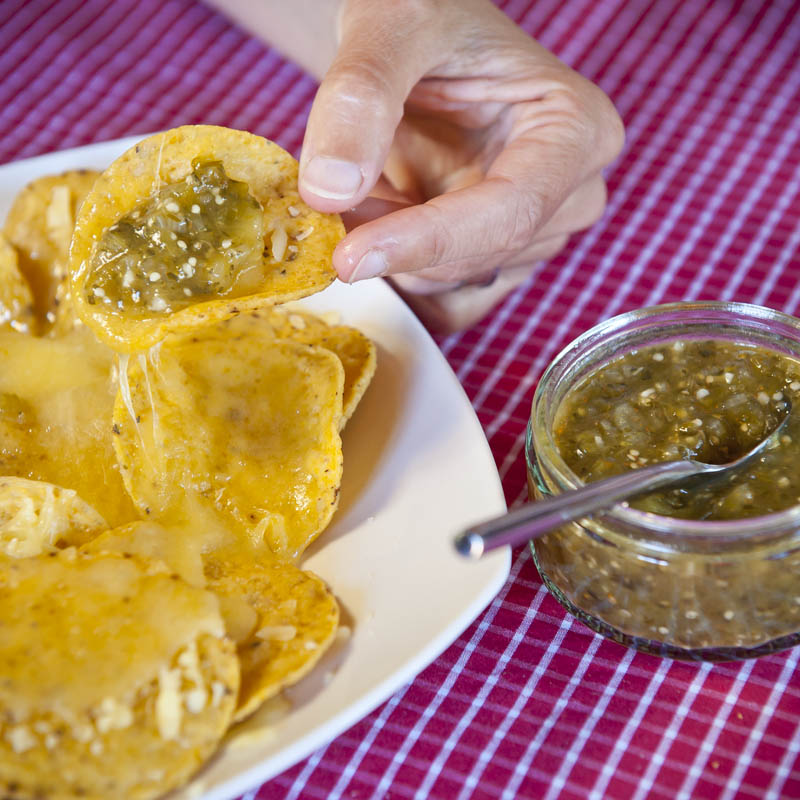
This year, I am spending this special day enjoying our first home made Mexican salsa verde, authentically made with the decidedly strange tomatillo fruit (home grown, of course!). Somewhere between a tomato and a cape gooseberry, the tomatillo is essentially a tomato-like fruit wrapped in an inedible, papery husk. Eaten when fully grown but still green of colour and full of flavour, the tomatillo is the key ingredient in Mexican cuisine, including the hot and spicy salsa verde – a green sauce made from tomatillo with chili peppers, garlic, onion, coriander and a touch of lemon or lime juice. Hot, spicy, bursting with flavour, and great with some cheesy nachos!

The tomatillo (Physalis philadelphica), also known as a husk tomato or Mexican tomato.(© All Rights Reserved)
The tomatillo (Physalis philadelphica), also known as a husk tomato or Mexican tomato.
(© All Rights Reserved)
Hot and spicy Mexican salsa verde goes down a treat with corn chips and cheese.(© All Rights Reserved)
Hot and spicy Mexican salsa verde goes down a treat with corn chips and cheese.
(© All Rights Reserved)

Speaking of hot and spicy – we (my wife, actually) recently decided to plant some Bhut Jolokia chili peppers. They’re still babies, so it will be a while still before we have the ‘privilege’ of tasting one of the hottest chili peppers in the world, but I will be sure to report back on the experience (if I’m still able to think straight after the fact).

One of our Bhut Joloika babies.  Considering the punch of the adult fruit (with a Scoville rating of over 1 000 000 units), the baby plant looks deceivingly innocent.(© All Rights Reserved)
One of our Bhut Joloika babies. Considering the punch of the adult fruit (with a Scoville rating of over 1 000 000 units), the baby plant looks deceivingly innocent.
(© All Rights Reserved)

Of course chili peppers aren’t just a great slap across the taste buds; filled to the brim with vitamin C, most B vitamins, potassium, magnesium and iron, they are also really good for you. And it is said that when your body is hit by the sensation of a hot chili, it releases endorphins and serotonin – a great feel-good boost resulting in a natural high similar to the ‘runners high’ experienced after intense exercise. Chili peppers also increase your metabolism, reduce hypertension, fight inflammation and have been found to lower bad cholesterol.

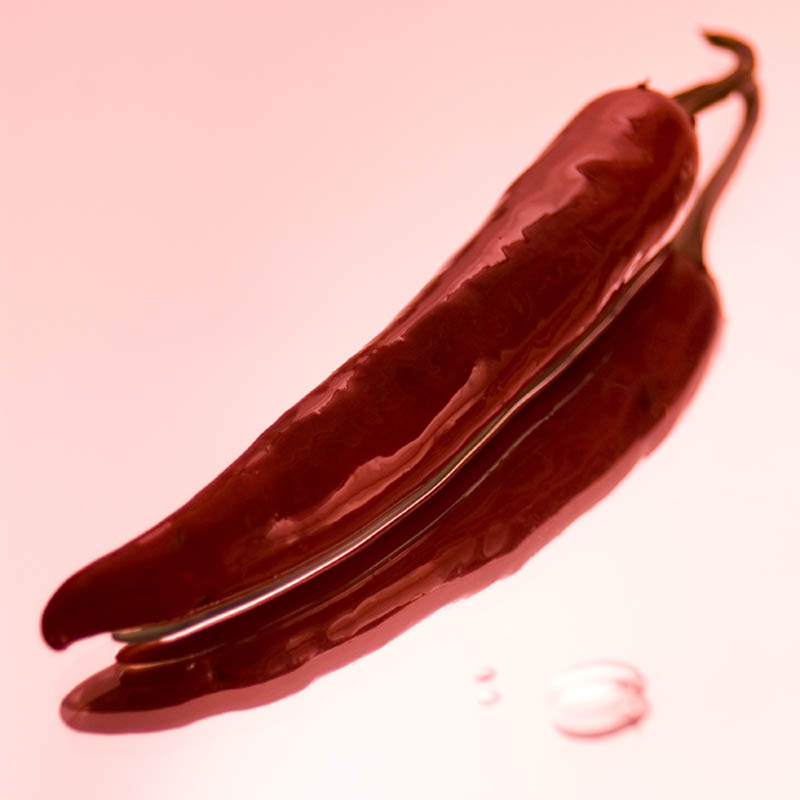
The chili pepper - from the genus Capsicum, and members of the nightshade family, Solanaceae. With a taste that stands out from the crowd, and packed with health benefits, the chili pepper is one of the true celebrities among the edible plants. (© All Rights Reserved)
The chili pepper – from the genus Capsicum, and member of the nightshade family, Solanaceae. With a taste that stands out from the crowd, and packed with health benefits, the chili pepper is one of the true celebrities among the edible plants.
(© All Rights Reserved)

Now if that’s not enough reason to try out some new chili-based recipes on International Hot and Spicy Food Day, I don’t know what is. Have fun, and if you find a good hot and spicy recipe, let me know!

Wikipedia, collaborative, free and up to date since 2001

15 January; this is the date in 2001 when Wikipedia was launched – the largest and most popular general reference work on the Internet, and one of those amazing phenomena of the online era that have fundamentally changed the way we interact with information.

Searching Wikipedia - a daily activity for millions of Internet users.(© All Rights Reserved)
Searching Wikipedia – a daily activity for millions of Internet users.
(© All Rights Reserved)

The creators of Wikipedia, Jimmy Wales and Larry Sanger, came up with the name as a combination of a ‘wiki’ (a type of collaborative website) and ‘encyclopedia’ – thus succintly describing the way the site operates. Essentially a very simple concept, Wikipedia is described as “a collaboratively edited, multilingual, free Internet encyclopedia supported by the non-profit Wikimedia Foundation.” From its humble beginnings a little more than a decade ago, Wikipedia has grown to an online encyclopedia containing 24 million articles in 285 languages (including over 4.1 million in the English Wikipedia) – all created collaboratively by about 100 000 contributors from around the world.

And popular it is – with over 35 million readers, and more than 2.5 billion page views per month from the US alone.

While the open, collaborative model behind Wikipedia holds many advantages – range of content, speed of update, etc – the non-expert, non-academic profile of much of the contributor base has raised some criticism, including questions about the accuracy and quality of some of its the content. While these concerns are valid, and there is no doubt some questionable content on Wikipedia, the way the information is presented tends to be very open, and non-verified information are usually flagged as such. As long as you realise that you are, in fact, dealing with a non-verified source, the level of information available via the platform really is staggering. And the self-regulatory action of the Wikipedia community does tend to lead to content that is, in the majority of cases, surprisingly well verified by experts in the relevant fields.

In fact, a 2005 investigation in Nature magazine showed that most of the content in Wikipedia come very close to the level of accuracy of an accepted reference work such as Encyclopædia Britannica.

So, whether or not you believe everything you read on Wikipedia, there’s no denying that it is an incredibly broad and up-to-date source of information on just about any topic you can imagine.  And that’s impressive, no matter how you look at it.

Celebrating Rolla Harger, the Drunkometer, and increased safety on the road

We’re commemorating the birthday today of Professor Rolla Neil Harger (14 Jan 1890 – 8 Aug 1983), an American biochemist and toxicologist who in 1938 developed the first practically useful machine for testing human breath alcohol content – quite aptly named the ‘Drunkometer’.

Harger’s invention wasn’t the first attempt at determining alcohol content by analysing a person’s breath – the concept dates back to as early as 1874, and earlier systems were developed by Emil Bogen and W McNalley in the 1920’s. What makes the Drunkometer a breakthrough in breath testing was its portability and improved accuracy over previous systems.

In Professor Harger’s system, the test subject blew into a balloon, and from there the breath sample is pumped through acidified potassium permanganate, which changed colour in the presence of alcohol. The more alcohol present, the greater the change in colour, so using a calibrated colour chart it was possible to fairly accurately determine the alcohol in a breath sample, and through that, calculate blood alcohol levels.

Drunk driving - putting yourself and your fellow road users at risk.(© All Rights Reserved)
Drunk driving – putting yourself and your fellow road users at risk.
(© All Rights Reserved)

Since the Drunkometer, breathalyser testing have improved steadily, with current systems , based primarily on infrared spectroscopy or electrochemical fuel cell technology, providing highly consistent and accurate results. What makes the breathalyser a very useful tool in law enforcement is its non-invasiveness – it indirectly measures blood alcohol levels, as opposed to direct measurement which requires a blood sample to be taken for analysis. Being non-invasive, it is an ideal tool to do preliminary alcohol screening – if the result indicates alcohol levels above the legal limit, it can be followed up by a blood test for conviction purposes.

Of course even the modern breathalyser is not perfect, and it has been reported that the results of a breath alcohol test can be manipulated to some extent by vigorous exercise or hyperventilation. But then again, if you’re inebriated well beyond the legal limit your ability to engage in sufficiently vigorous exercise is questionable, and if you try to hyperventilate, you’re more likely to pass out than pass the breathalyser test, so practically speaking it is unlikely that a drunk driver will be able to manipulate his test too much.

Bottom line – any device that can be even partially successful in getting drunk drivers off the road gets my vote, so kudos to Professor Harger and his Drunkometer for leading the way in alcohol breath analysis.

And while we’re on the subject – three cheers for the law enforcement officials who spent the festive season on the roads sorting out drunk drivers and other offenders, enabling the rest of us to enjoy our holidays safely and return home stress-free.

Celebrating Wham-O’s ‘frisbee’ flying disk, a toy for all ages

Today, 13 January, is the date back in 1957 when the Wham-O toy company first began production of their plastic flying disk, or ‘Frisbee’, as they trademarked it.

The concept for the flying disk came about much earlier. While there are different tales regarding its invention, the most plausible story is that it came from the pie tins that the Frisbie Baking Company from Connecticut used to bake their pies in. The pies were popular with students at various New England colleges. Apart from enjoying the pies, they discovered that the empty pie tins could be tossed and caught, resulting in many hours of fun and games.

In 1948, Walter Morrison from Los Angeles created a plastic version of the flying disk that could be thrown more accurately than the pie tins. Morrison marketed his disk, which contained a specifically sloped design and thicker outer edge, as the ‘Pluto Platter’, and this became the blueprint for future flying disk designs. Rich Knerr and Spud Melin of the Wham-O company quickly saw the potential of Morrison’s invention and convinced him to sell them the rights to the design.

The flying disk of 'frisbee' is a truly age-defying toy, and can offer hours of fun to players of all ages.(© All Rights Reserved)
The flying disk of ‘frisbee’ is a truly age-defying toy, and can offer hours of fun to players of all ages.
(© All Rights Reserved)

Shortly after Wham-O started producing their version of the flying disk, the Frisbie Pie Company closed down, and Wham-O named their disk the ‘Frisbee’, acknowledging the role the Frisbie pie tins played in the invention of their toy. Thanks to Wham-O’s clever marketing of the Frisbee disk, sales soared, and the toy even caught on as a serious sport. By 1964, Wham-O released the first professional version of the Frisbee, with better accuracy and more stable flight. The key innovation in the professional version was the introduction of raised concentric ridges, called the ‘Rings of Headrick’ after its inventor, Wham-O’s Ed Headrick.

Physically, the flight of the frisbee works very similar to a standard asymmetrical air foil, accelerating airflow over the disk resulting in a pressure difference causing a lifting force. The ‘Rings of Headrick’ help by causing the airflow to become turbulent as soon as it passes over the ridge of the disk, thus reducing flow separation. In addition to the lift caused by its shape, the torque created by the heavier edge of the spinning disk also has a gyroscopic effect, stabilizing the disk in flight. Higher rates of spin results in greater stability.

Minor adjustments to the shape of the disk can cause significant changes to the flight dynamics – something that can be utilised effectively in specific applications like disk golf where the aim is to cover a course and throw the disk into a basket – similar to sinking a put in golf. Disk golf players use different design disks for ‘putting’, ‘driving’ etc.

The Frisbee even gained scientific legitimacy when, in 1968, the US Navy spent a whopping $400 000 studying the flight of the frisbee in wind tunnels, following its flight with high speed cameras and performing advanced computer flight simulations. The project even included the development of a special frisbee launching machine. (The mind just boggles at all the potential conspiracy theories regarding UFO flight that this must have caused…)

Today the Frisbee trademark is owned by Mattell Toys. More than 100 million frisbees were sold by Wham-O prior to selling the toy to Mattel. Beyond this, many millions more flying disks were sold by other manufacturers, so one can only speculate how many flying disks have been sold since its invention more than 50 years ago.

Celebrating Ruth Benerito and her quick-drying, flame-retardant, crease and stain resistant fabrics

Today we celebrate the birthday of Ruth Rogan Benerito (born 12 Jan 1916), the American chemist and inventor whose innovations in fabric technology have saved the world many many hours slogging away in front of the ironing board. Dr Benerito was the inventor of wash and wear cotton fabric.

As if this wasn’t enough of a gift to the world, Benerito also came up with numerous other innovations – in total she has been granted no less than 55 patents related to textile technology. Thanks to her we now have fabrics that are quicker drying,  crease and stain resistant, comfortable and better able to retard flames. She also developed a cotton textile cleaning technique (adopted widely in the Japanese textile industry) using radiofrequency cold plasmas. This method replaces the commonly used technique of pre-treating cotton with sodium hydroxide, as such greatly reducing the environmental impact.  Many of her innovations also found application in the wood and paper industries.

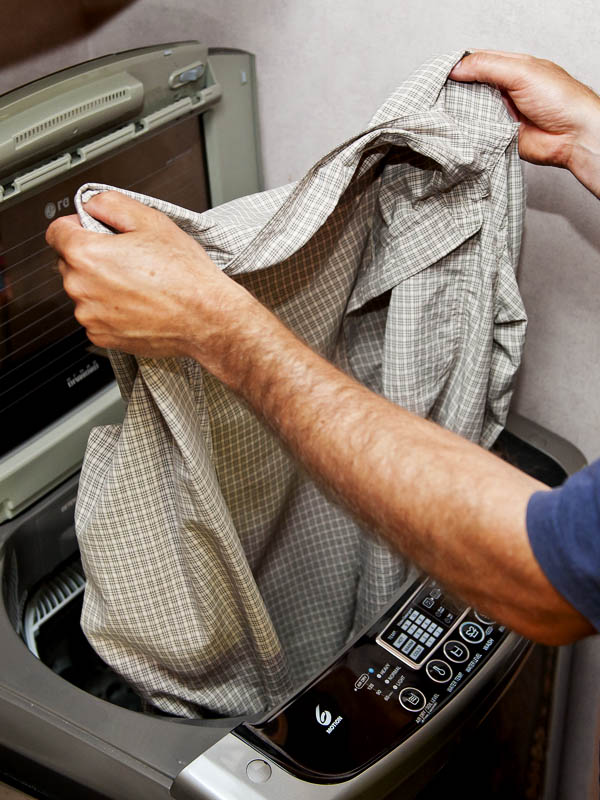
No more ironing for hours - just wash, dry and wear.(© All Rights Reserved)
No more ironing for hours – just wash, dry and wear.
(© All Rights Reserved)

The key to the wrinkle-resistant fabric was a process called molecular cross-linking. She discovered that the long chain-like cellulose molecules that make up cotton fibre can be chemically treated so they are bound (cross-linked) together – a process that strengthens the hydrogen bonds between the cellulose molecules, leading to the advantageous result that the cotton becomes less prone to wrinkling.

On an almost completely unrelated note, far removed from her important and ground-breaking work in textiles, Benerito also developed a novel technique to administer fat intravenously to patients too sick or wounded to eat. This innovation has helped save the lives of thousands of people  by maintaining their nutrition levels during severe illness.

From clothing to nutrition, these are some truly useful innovations indeed!

Milk Day, celebrating milk as a source of human nutrition

Today, according to various food blogs and holiday sites, is Milk Day. Rumour has it that this day is celebrated as Milk Day because milk was first delivered in bottles on this day, 11 January, way back in 1878. I did some searching to confirm this, but was unable to do so – it seems there was a patent for a milk container issued in 1878, but the exact issue date for that patent was 29 January.

While I cannot confirm the milk bottle fact, I don’t see any reason why we should not celebrate Milk Day. Internationally, milk is an important source of human nutrition, and in New Zealand in particular, the milk industry forms the backbone of our country’s economy.

A hanging milker device used in a rotary milking parlor.(© All Rights Reserved)
A hanging milker device used in a rotary milking parlor.
(© All Rights Reserved)

The New Zealand milk industry was started nearly two centuries ago in 1814 when the first cows arrived in New Zealand after being imported by early European settlers. New Zealand milk exports started in 1846, and in 1871 the first dairy co-operative was created in the Otago region. From these early initiatives, the New Zealand dairy industry has grown in leaps and bounds. In 2001, the Fonterra company was formed from an amalgamation of existing co-ops, representing the majority of the country’s dairy farmers. Wholly owned by the more than 10 000 farmers who supply milk to it, Fonterra is currently the world’s largest dairy exporter, exporting to more than 100 countries. It is responsible for about 30% of the world’s dairy exports with revenue of close to NZ$ 20 billion (approx US$ 16.8 billion).

While New Zealand leads world milk exports, India is the biggest producer and consumer of milk. India does not, however, import or export milk – it solely produces milk for domestic consumption.

Beyond being a direct source of human nutrition, milk is also processed into a wide range of dairy products – cheese, yoghurt, cream, butter, ice cream, chocolate and more. While the majority of the milk consumed by humans come from cows, the milk from buffalo (esp in India), goats and sheep are also consumed in significant volumes, especially in processed form.

Over the years, human consumption of animal milk has been linked to a variety of health benefits and risks. On the positive side, milk has been found to reduce the risk of type 2 diabetes, and it promotes muscle growth and post-exercise recovery. Other reported benefits include improved immune function and relief of hypertension. On the negative side, there has been reports of the casein in milk causing autism spectrum disorders, and excessive consumption of milk has been linked to an increased risk of developing Parkinson’s disease, and potentially prostate cancer.

While there will probably forever be debates about the benefits and risks of milk consumption, as a source of fat, protein, carbohydrates, salts, minerals and vitamins, it continues to hold significant promise in addressing malnutrition and poverty, particularly as livestock management improves in the developing world.

Showing some appreciation to your house plants

Knowing the readership of this blog, I am sure I don’t need to carry on about the general value and virtues of plants, and indeed, there’s no shortage of special days celebrating plants of all sorts – trees, wetlands, you name it. Today, however, we celebrate those special plants that have been taken out of their natural environments to provide company to man in his domesticated context – today, 10 January, is House Plant Appreciation Day.

“Babies Tears”, also known as “Peace in the Home” – a popular house plant for small, confined spaces.
(© All Rights Reserved)

Just about any plant can qualify as a house plant, as long as it can handle some level of shade, is reasonably neat and is small enough to fit into your house. Ferns are a good choice for peace and tranquility; flowering plants can add spectacular colour; small trees can create structure; certain carnivorous plants can even help rid the home of flies and other irritating bugs. At a more basic level, plants in the home help filter and clean the air, and they act as an important oxygen source.

So, on House Plant Appreciation Day, give some attention to the plants around your house. Do they look healthy and vigorous, or are they perhaps in a bit of a sorry state? If the latter, why not put in extra effort today – feed them, water them, and treat them to some personal attention. And if you happen to not have any plants in your house, perhaps today is just the time to go and buy a leafy friend from your local nursery. Of all possible pets, they are the least demanding, they react with surprising vigour to a bit of personal attention, and they can be highly therapeutic.

Go on, get a house plant, and add some life to your home.

Creating sparks on Static Electricity Day

Today we celebrate Static Electricity Day – a day for some serious electricity fun.

Work up some static electricity (a balloon rubbed against cloth is a great source) and use it to get your hair to stand on end. Rub your feet on a carpet and generate some sparks between you and the person next to you. Cut small pieces of paper, rub a plastic ruler on your hair, and see the paper pieces magically fly into the air as it gets attracted to the electrically charged ruler.

Making paper pieces fly - the magic of static electricity.(© All Rights Reserved)
Making paper pieces fly – the magic of static electricity.
(© All Rights Reserved)

So how does it work? As two surfaces rub against each other, electrons are exchanged, moving from one surface to the other. The resultant mismatch of electrons means that the one object will have a negative charge, while the other will be positively charged. Doing this repeatedly (e.g. rapidly rubbing feet on a carpet, or a balloon on a cloth) can result in the build-up of a fairly large charge. If you have a significant positive or negative charge in your body, and you touch a metal object, the static electricity is rapidly discharged, creating a tingle, or even a small spark.

Of course static electricity is not all about fun and games. In industry, positive and negative charges are useful in applications such as spray painting and dust removal. Printers also use static electrical charges to attract ink or toner to paper.

Some of the most impressive, and dangerous, examples of static electricity in everyday life occur during an electrical storm, when huge electrical charges lead to the development of lightning – instant discharges of many thousands of volts – definitely not something to play with.

Here’s hoping you’ll have a great, positively charged Static Electricity Day – go on, create some sparks!