Page 4 of 4

Celebrating the International Day of Non-violence

The UN seems to be busy in October. Following hot on the heels of our discussions on World Rivers Day and yesterday’s World Habitat Day, today features another UN observance, the International Day of Non-Violence.

October 2nd is the commemoration of the birth of Mahatma Gandhi, whose philosophy of non-violent civil disobedience paved the way for Indian independence and inspired movements for non-violence, civil rights and freedom across the world. A most suitable date, therefore, to be declared International Day of Non-Violence by the UN General Assembly in 2007. The aim of the day is to promote and disseminate the message of non-violence in different ways, including through education and public awareness. It reaffirms “the universal relevance of the principle of non-violence” and the desire “to secure a culture of peace, tolerance, understanding and non-violence”.
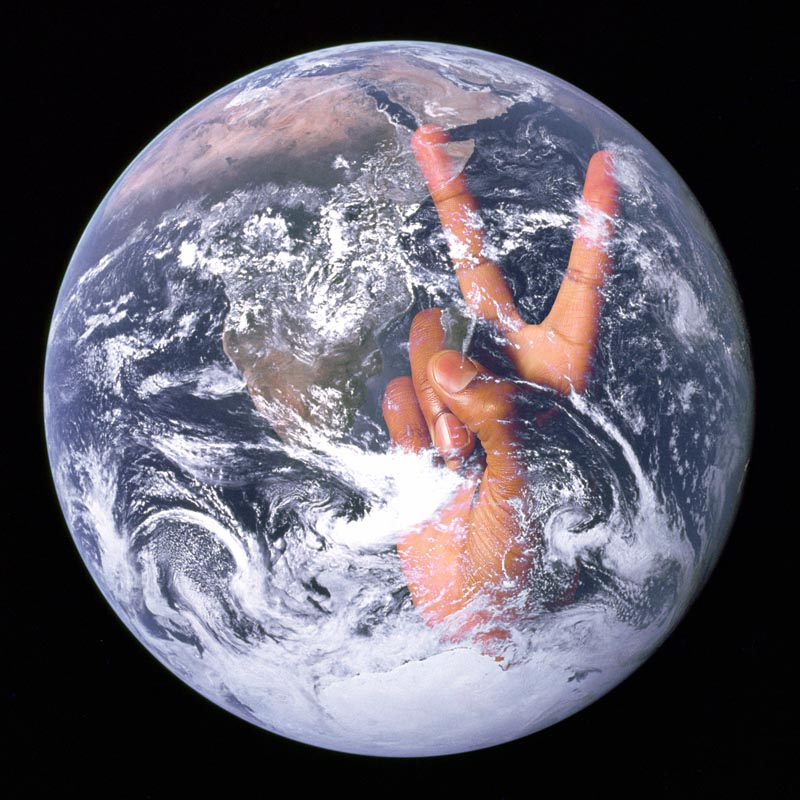
“It may be easier to pick up a weapon than to lay down a grudge. It may be simpler to find fault than to find forgiveness” – UN Secretary-General, Ban Ki-moon.
(The above image incorporates “The Blue Marble” photograph of Earth, taken from Apollo 17.)

Non-violence, or non-violent resistance, as it is also known, is about achieving social or political change without resorting to physical violence. It is a form of social struggle that has been successfully adopted by groups the world over in social justice campaigns, and has rightfully been referred to as ‘the politics of ordinary people’. In the words of UN Secretary-General Ban Ki-moon, “the foundation for non-violence will be built by people: teachers and faith leaders, parents and community voices, business people and grass-roots groups”.

The three main categories of non-violent action are:

  • protest and persuasion, including marches and vigils;
  • non-cooperation; and
  • non-violent intervention, such as blockades and occupations.

Non-violence thus does not imply a lack of action. It is a very active instigator of change, only achieved without violence, and this is what gives it such power. The Occupy Wall Street movement we discussed recently would be a good recent example of citizen-led non-violent resistance.

In celebration of this day, perhaps the most succinct and profound statement comes from the great Gandhi himself:
“There are many causes that I am prepared to die for but no causes that I am prepared to kill for.”

World Habitat Day and the challenges of urbanisation

The first Monday of October has been designated by the United Nations as World Habitat Day. The day is all about reflecting on the state of our towns and cities, and reminding the world of its collective responsibility for the future of the human habitat.

The theme of this year’s World Habitat Day is ‘Changing Cities, Building Opportunities’, with the focus being on cities as the world’s growth engines – currently more than half the world’s population live in towns and cities, and within a generation, that number will rise to two-thirds. It is also said that by 2030, up to 60% of these urban dwellers will be under the age of 18. The reason people flock to the cities in ever increasing numbers is that it is seen as the place where they can realize their dreams of a better life. Well planned and well built cities can provide a healthy support structure for this urbanisation; unplanned growth leads to chaos and urban sprawl.

Auckland, NZ. With a population of almost 1.4 million it is small by world standards, yet big in New Zealand – it is home to almost a third of the country’s population, and growing. The city thus aptly markets itself as the ‘Big Little City”.
(© All Rights Reserved)

Urbanisation brings with it major challenges, but also great possibilities. To quote Dr Joan Clos, Executive Director of World Habitat Day 2012:

“The main challenges confronting cities and towns all over the world today include unemployment, especially among youth; social and economic inequalities; unsustainable energy consumption patterns; urban sprawl; high percentages of people living in slums; high levels of vulnerability to natural disasters; inadequate urban basic services, especially water, sanitation and energy; poor mobility systems and increasing emissions of greenhouse gases. 

Given that, historically, urbanisation has been a source of development rather than a result of it, it is clear that it can be used as a powerful tool for transforming production capacities and income levels in developing countries. This requires a mindset shift on the part of decision makers, away from viewing urbanisation as a problem, and instead towards seeing it as a tool for development.

Major changes are necessary. We have the science and the knowhow. And we know too that our ever growing cities are just where the changes can be implemented fastest and new opportunities created. We must all become city changers.”

Through the last line of Dr Clos’ message, World Habitat Day also ties in nicely with the wider UN-Habitat ‘I’m a city changer’ initiative. The idea being that making cities a better place to live is not just the responsibility of the authorities and the city planners, but that ordinary citizens can get involved as well. The initiative promotes these 10 reasons to be a city changer, and have released the little video below to promote the concept.