Page 4 of 4

Coconut in the spotlight

Today, would you believe, is World Coconut Day – one of those facts which is usually greeted by a response of “Say what?”. It does feel like a bit of an arbitrary thing to have its own special day, doesn’t it?

But when you start thinking about it, the coconut is one pretty impressive drupe. Yes, that is, botanically speaking, what a coconut is – an “indehiscent fruit in which an outer fleshy part (exocarp, or skin; and mesocarp, or flesh) surrounds a shell (the pit, stone, or pyrene) of hardened endocarp with a seed (kernel) inside”, also known as a drupe. The coconut we usually buy in the shops is not how it hangs on the tree – its just the hardened endocarp shell, with the greenish brown exocarp and fibrous mesocarp already removed.
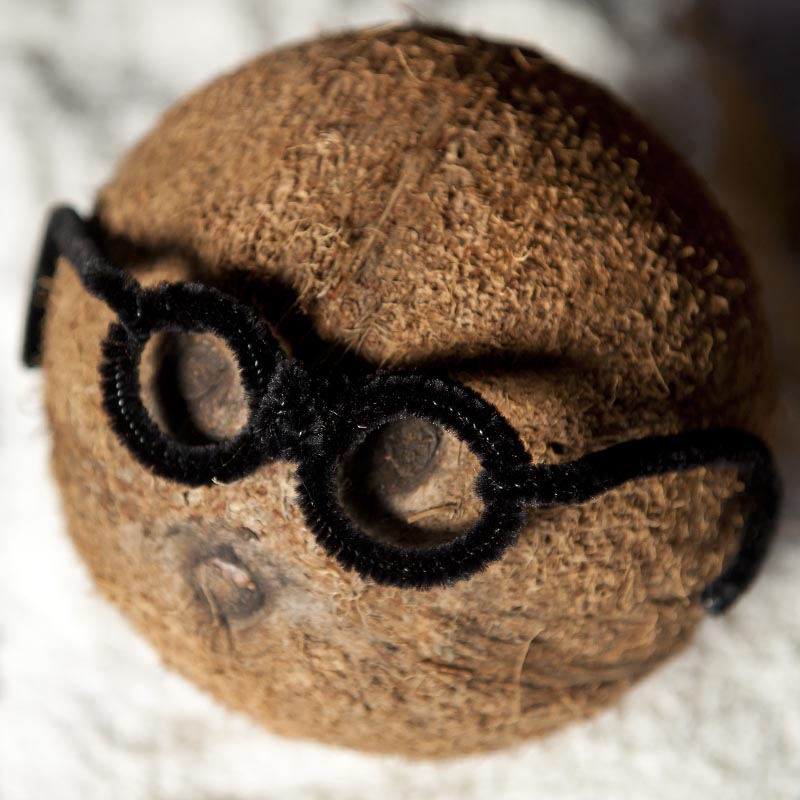
The coconut – more than just a pretty face!
(© All Rights Reserved)

The coconut, it turns out, is an amazingly useful drupe. So much so that the coconut tree has been called the ‘Tree of Life’:

  • the water inside the coconut is a refreshing drink, and is used extensively in cooking and a range of medicinal purposes
  • its white flesh can be eaten raw, or desiccated (dried) and grated, and used for culinary or medicinal purposes
  • it’s kernel can be processed to produce coconut oil
  • the coconut oil, water and flesh are also used extensively in soaps and cosmetics
  • the water inside the coconut is sterile until opened, and mixes easily with blood – as such it can be used as an emergency intravenous hydration fluid
  • its shell can be made into charcoal, or made into household items like bowls and other handicrafts
  • coconut shells are also used as the bodies of musical instruments, or banged together for percussion
  • it’s fibrous husk can be used to produce coir, which is used in rope, door mats, brushes, mattress stuffing etc
  • the nectar derived from incising the flower clusters of the coconut can be drunk as is, fermented to make palm wine, or boiled to create a sweet, syrupy candy
  • the husks and leaves of the coconut tree is used to make furnishings and decorations
  • fresh coconut husks can be used as a body sponge
  • the leaves are also used in cooking, to wrap rice, for example
  • coconut fronds are tied together to make brooms
  • the trunk of the coconut tree can be used in construction, or hollowed to make drums and small canoes
  • coconut roots are used in dyes and processed for medicinal purposes.

And so the list goes on…

Given the amazing value that can be gained from the coconut and the coconut tree, it is hardly surprising that it is treated with such immense respect in its main growing regions (including Indonesia, Philippines, India, Sri Lanka, Thailand and Vietnam). It is commonly used in cultural and religious activities, and plays an essential role in Hindu weddings and other rituals.

Still wondering why the coconut got its own World Day? Neither am I!

Getting fired up on Redhead Day

The 1st of September is generally considered the first day of Spring in the Southern Hemisphere. However, dedicating the day to celebrating the coming of spring and the end of winter seems a little cruel to all the Northernites out there who are just entering their long cold winter (especially considering that I’ve already pretty much done exactly that a couple of days ago).

So, rather than discussing the seasons again, lets consider another special reason to celebrate this day – today is International Redhead Day!

Legend has it that blondes have more fun, but I’m not convinced!
(© All Rights Reserved)

People born with red-hair are, in a way, similar to those born left-handed – a genetic minority group with a fierce pride in that unique feature that makes them special and part of an exclusive ‘club’. In fact, the ‘natural redhead club’ is even more exclusive than the lefthanders club, with less than 1% of the world population having naturally red hair. Except for Scotland and Ireland, where more than 1 in 10 people have red hair. Former colonies of the UK are also blessed with a significantly higher than average sprinkling of redheads.

Quite a few redheads may count themselves as part of the super-exclusive intersection of the redhead club and the lefthanders club  – apparently, since red hair is a recessive trait, and recessive traits often come in pairs, redheads are more likely than others to be lefthanded!

Redhead Day started in the Netherlands, as a festival called Roodharigendag, that takes place every first weekend in September in the city of Breda. Taking its cue from this event, the celebration of red hair has spread around the world with the 1st Saturday of September becoming an international celebration of the fiery top.

The Dutch Roodharigendag festival is itself a pretty global affair, attracting attendance from over 50 countries.  In addition to being a gathering of thousands of people with natural red hair, the festival also celebrates art featuring the colour red, and includes lectures, workshops and demonstrations aimed at red-haired people. And of course many, many photo shoots.

It’s quite interesting that the festival is held in the Netherlands, where less than 2% of the population have red hair. However, it is exactly this fact that resulted in the festival happening in the first place. It was started in 2005 when the Dutch painter Bart Rouwenhorst decided to do 15 paintings of redheads. Knowing how hard it is to find redheads in the Netherlands, he placed an advert in the newspaper, and to his surprise 150 people volunteered. Rather than turning most away, he chose 14 and then organised a group photo of the others and used a chance lottery to select the 15th and final model. This get-together of 150 redhead would-be-models became the first redhead festival. It made headline news in the Dutch national press, and the rest, as they say, is history, with the numbers of attendees increasing exponentially each year.

It is known that red hair is caused by gene mutation – it is a variant of MC1R, or the melacortin-1 receptor. This mutative gene is what’s known as a recessive gene, which means that, for a child to have red hair (s)he has to inherit a copy of the mutated MC1R from each parent.  While a reasonable number of people carry a copy of the mutated gene, the chances of two people who carry the same gene, having kids, is quite rare. However, the claim that redheads may become extinct due to this is unfounded.  While recessive genes can become rare, they are unlikely to disappear completely, unless some natural disaster causes everyone carrying the gene to die. So even if they may become rarer, there should always be people around who carry the gene, and so redheads should continue to pop up from time to time. As stated in the National Geographic, “while redheads may decline, the potential for red isn’t going away”.

Which I think is a good thing – the world would definitely be a worse place without redheads around to spice things up.

Perhaps we should leave the last word to Mark Twain (himself a redhead), who famously quipped that “while the rest of the human race are descended from monkeys, redheads derive from cats”.

Happy Redhead Day, everyone!