Page 4 of 4

Popping corks and tasting stars – celebrating the invention of Champagne

Legend has it that on this day in 1693, the French Monk Dom Pierre Perignon, invented Champagne when a wine he was making started a secondary fermentation in the bottle, so when he opened the bottle it produced a fine, bubbly mousse. Upon tasting this sparkly beverage, it tasted so special that he was inspired to exclaim “Come quickly, I am tasting stars!”.

Popping a cork in celebration of the father of champagne, Dom Perignon.
(© All Rights Reserved)

As is often the case, however, the truth of this legend is questionable at best. Sparkling wine almost certainly existed before Dom Perignon’s time, with the oldest references to it dating back to the Benedictine Monks in the Abbey of Saint Hilaire, in 1531.

That said, these early bubblies probably tasted very different to the refined sparkling product that became known as Champagne (after the French region where it was perfected), so even if the discovery of sparkling wine cannot be attributed to Dom Perignon, he can take credit for establishing the principles of modern champagne making that are still in use today.

And that’s more than enough justification to pop a cork to celebrate the great man.

Now here’s an interesting story:

In a medical study from 2007, scientists from the Universities of Reading and Cagliari showed that moderate Champagne consumption can potentially help the brain cope with the trauma of stroke, Alzheimer’s and Parkinson’s disease.  According to the research the high levels of the antioxidant polyphenol in Champagne can help prevent the deterioration of brain cells from stress and trauma.  The study was done on mice – one group of mice was fed a Blanc de Blanc Champagne, a second a Blanc de Noir, and a control group got no bubbly at all.  When the three groups were subsequently exposed to high levels of neurotoxins (simulating the effect of brain trauma), it was found that the groups who had previously been fed champagne, had higher levels of brain-cell restoration compared to the control group.

Now isn’t that just the best news you’ve heard all day? Cheers!
Tires, rubber, burnouts and environmental disasters

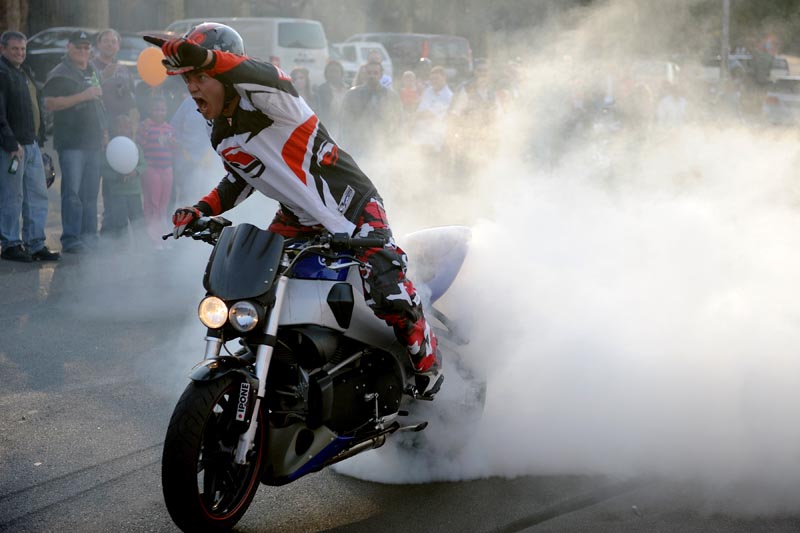
Fancy a burnout? A donut, perhaps?

No, I’m no street racer, not even much of a petrol-head. I’ve just got rubber and tires on my mind, since today back in 1900 is the day that the Firestone Tire and Rubber Company was founded. Even through Firestone cannot lay claim to inventing rubber tires (that honour goes to John Boyd Dunlop for the first pneumatic tire, and to Charles Goodyear for the vulcanisation of natural rubber), they were one of the early pioneers in tire production. Along with Goodyear, they were the largest automotive tire suppliers in the US for the best part of the 20th century.

The company was sold to the Japanese Bridgestone Corporation in 1988.

Tire burnouts can be spectacular, but certainly doesn’t help in terms of scrap tire pollution.
(© All Rights Reserved)

Given the number of tires produced and sold internationally, the environmental challenges of dealing with scrap tires are quite significant. In the US alone, about 285 million scrap tires are generated every year. Tires dumped in a landfill is a fire hazard – tire fires can burn for months, creating serious air and soil pollution. They can also liquify under high temperatures, releasing hydrocarbons and other harmful contaminants into the ground. Shredded tire pieces are likely to leach even more, due to the increased surface area on the shredded pieces.

The durability of scrap tires do make it suitable for certain recycling applications. Shredded tires, or tire derived aggregate (TDA), can be used as backfill for retaining walls and as vibration damping for railway lines. Ground and crumbed rubber, also known as size-reduced rubber, can be used in paving as well as in moldable products such as flooring, decking, tiles and rubber bricks. These applications, however, only consume a small percentage of the total tire waste produced annually.

The use of tires has also been suggested in the construction of artificial reefs, but the sensibility of this is questionable, with the Osborne Reef, for example, turning into a multi-million dollar environmental nightmare.

Despite all the attempts at solving the problem of scrap tire waste, it remains an environmental nightmare, and the best ‘solution’ probably involves addressing the problem at it’s source – reducing the number of scrap tires produced annually.  Small things such as driving sensibly to preserve tire life, carpooling, use of public transport, walking and cycling instead of driving – these may appear arbitrary, but are things we can all do, and while it won’t make the problem go away, it can make a difference in the long run.

Blue skies, blue eyes – its the Tyndall effect

Tell me why the stars do shine 
Tell me why the ivy twines 
Tell me why the sky’s so blue 
And then I’ll tell you just why I love you…

Well, if you could have sung this little tune to the Irish physicist John Tyndall, born on this day back in 1820, he would have had some strong opinions, at least on the blue sky question.

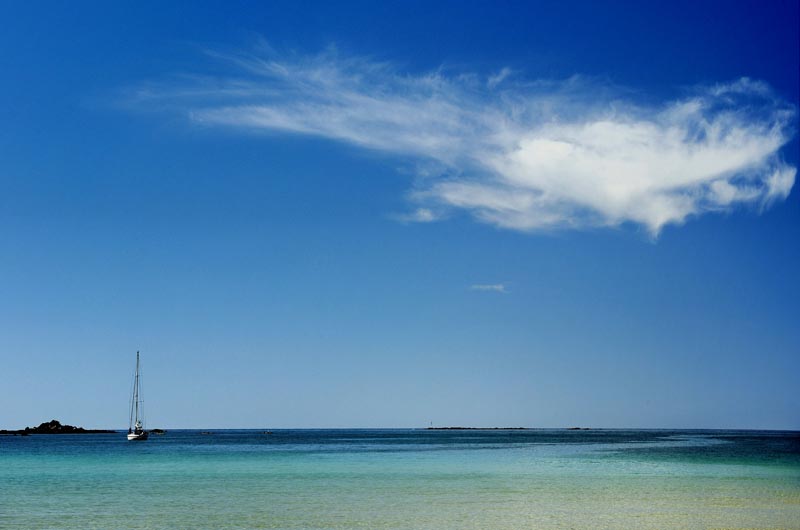
In addition to many other achievements, Tyndall published studies on acoustic properties of the atmosphere and the blue colour of the sky – he suggested the colour was the result of the scattering of light by small water particles. He discovered that, when light passes through a substance containing small suspended particles, the shorter wavelengths (blue side of the spectrum) are scattered more than the longer, red wavelengths. Since the blue light is scattered in all directions, the substance appears blue.

This phenomenon became known as the Tyndall effect.

What we see as a lovely blue sky, John Tyndall saw as a scientific challenge.
(© All Rights Reserved)

Thus, a clear day-time sky is blue because molecules in the air scatter blue light from the sun more than they scatter red light. Towards sunset, when we look towards the sun, we see reddish colours, because the blue light has been scattered away from the line of sight.

The Tyndall effect also causes other interesting blue colourings in nature, including blue eyes, opalescent gemstones and the wings of some birds and butterflies. When colour is caused by scattering of light it is known as a structural colour, as opposed to a pigment colour.

Now about those stars and ivy…

(Source: Why is the sky blue?)

Celebrating creepy-crawlies on Spider-Man Day

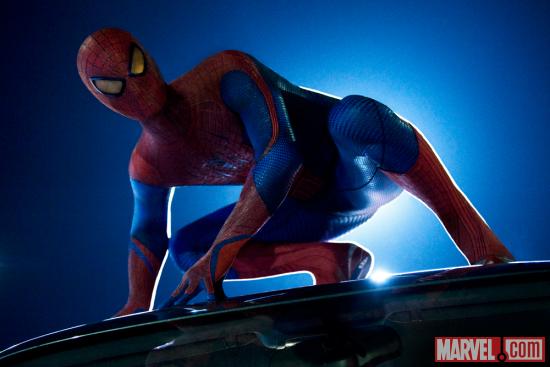
I’m not sure how official it is, but according to various sources on the web, today is Spider-Man Day. So, while I haven’t been able to find anything else of much interest, let’s just go with that, shall we?

(Source: Marvel Comics)

Spider-Man is undoubtably one of the best loved superheroes ever dreamt up by Marvel Comics. This has a lot to do with the fact that the person behind the suit, Peter Parker, was pitched as a bit of a nerd, an outsider with whom many young readers could easily relate.


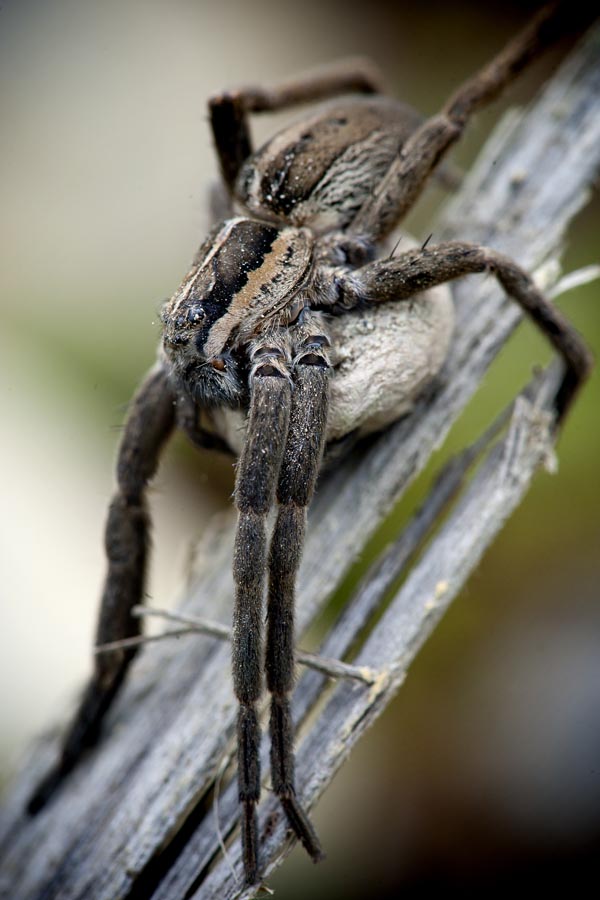
But beyond this human touch, Spider-Man’s lasting fascination must have a lot to do with our fascination of the creepy crawly that gave the superhero his powers. Spiders (order Araneae), the eight legged, predatory anthropods that evokes equal measures of fascination and fear in the human race. More than 40 000 species of spiders have been identified, and they are one of the most widely distributed groups of organisms, having established themselves in an extremely diverse range of habitats.

Spiders – fascinating and just a little bit scary.
(© All Rights Reserved)

Indeed there is much to find fascinating, and scary, in spiders, from miniscule, deadly poisonous species to huge monsters that can take on birds and lizards. Spiders use various techniques to hunt and capture their prey – trapping them in sticky webs, camouflaging themselves to avoid detection, running down their prey, and more. Some hunting spiders even show signs of intelligence in their ability to develop new hunting tactics.

Spider venom, fatal to their prey and in many cases also deadly to humans, have been researched for use in medicine and natural insecticides.

And then there’s the incredible spider silk – the sticky stuff excreted by spiders that exceed almost all synthetic materials in terms of lightness, strength and elasticity, and without doubt the most fascinating ‘superpower’ in Spider-Man’s arsenal. Spider silk is composed mainly of protein. It is initially a liquid, and it hardens as a result of being drawn out, changing it’s internal protein structure. It’s tensile strength is similar to nylon and cellulose, but it’s way more elastic. Spiders use their silk for numerous applications, from webs to capture prey, to parachutes to carry them on the slightest breeze.

Fascinating creatures indeed, and definitely worthy of your admiration, whether you’re a Spider-Man fan or not!