I shoot it. You pay for it. But who owns it?
Whenever a photograph is taken, a creative act is committed, and copyright comes into play. In New Zealand‘s Copyright Law of 1994, a photograph is protected as an artistic work. As such, it is automatically copyrighted the moment it is created – there is no need to apply for, or register, copyright for the photo.
However, in the act of taking a photo, a number of parties are involved. In corporate and commercial photography the main actors are the photographer who invests his creativity and intellectual capital into the photo, and the client, who pays for the photo and may also provide creative input into the process. The immediate question is who owns the copyright to the photo? And what rights do this give one party and take away from the other?

What the Law says
When looking at the New Zealand Copyright Law as it applies to photography, the situation is reasonably simple. In terms of ownership, the default scenario is that the person who takes the photo is the first owner of copyright of the material. However, there are two important exceptions:
- Employees – if a photograph is taken by a photographer in the course of his/her employment, the employer is the first owner of copyright, unless there is agreement to the contrary.
- Commissioned material – if a client commissions and pays for a photograph to be taken, s/he become the first owner of copyright unless there is agreement to the contrary.
The commissioning rule
Point two above, known as the ‘commissioning rule’, has long been a matter of debate in copyright law worldwide, and is currently under review in New Zealand (see The Commissioning Rule, Contracts and the Copyright Act 1994: A Discussion Paper, at http://www.med.govt.nz).
In a number of other countries, including the UK and Ireland, the commissioning rule has been removed from copyright law as it pertains to creative artifacts. Australia and Canada are also moving towards the situation where copyright is retained by the photographer, independent of commissioning.
A number of arguments have been put forward for and against the commissioning rule. Those against the rule argue that treating commissioned photographers differently from non-commissioned photographers may undervalue the creative contribution of these photographers. While the commissioner may have creative input into the creation of the photograph, it remains the photographer who ultimately decides the composition, light, point of focus and other specific settings that make the taking of a photograph an act of artistic creativity. On a more practical level, photographers argue that they are unfairly disadvantaged where a work is used for subsequent purposes that are not reflected in the price paid. By retaining copyright, the photographer also retains more control over the use of the photo, thus allowing him to protect his ideas from being stolen, replicated, or misused.
In defense of the commissioning rule, it is argued that if copyright is retained by the photographer, it places the client in a difficult position, as he has to get permission from the photographer each time he wants to use the photo in a different context. Over time it might become difficult to get hold of the original author, or even the subsequent owner of the image (since copyright applies up to 50 years after the death of the copyright owner).
The importance of an agreement
It is important to note that the arguments above pertain to the Copyright Law as is, assuming there is no additional contract/agreement between the photographer and client. As stated in the law, the employee rule and commissioning rule apply ‘unless there is agreement to the contrary’.
In drawing up a contract/agreement between photographer and client, the commissioning rule may be cancelled. For example, the standard terms of conditions proposed by both the Advertising and Illustrative Photographers Association (AIPA) and the New Zealand Institute of Professional Photography Inc (NZIPP) include a condition allowing the photographer to retain copyright. The NZIPP states:
All copyright that arises out of the performance of the Photographer’s obligations under this contract shall arise not by commission but shall be the creation of the Photographer. The Photographer shall remain the first owner of the Photographic Works and the Client shall be supplied with the Photographic Works for use on the basis of the terms of this Licence.
Aside from overriding the commissioning rule, a number of limiting conditions may be set, protecting the photographer and the client. For example, whether he retains copyright or not, the photographer should be granted the right to use his images for specific purposes such as submissions for awards as well as advertising/promotion. In this regard, the standard conditions of use set out by the AIPA and NZIPP suggests the following:
The Photographer always retains the right to use the Photographic Works in any manner at any time and in any part of the world for the purposes of:
(a) Entering the Photographic Works into photographic competitions or awards and for their use in any material published in connection with promoting those competitions and awards; and
(b) Advertising or otherwise promoting the Photographer’s Photographic Works; and
(c) Submitting the Photographic Works for display at art galleries or other premises; and
(d) Using the Photographic Works for any other purpose within the Photographer’s business activities.
If the commissioning rule is overridden and the photographer retains copyright, the agreement should of course stipulate the licence that the photographer grants to the client, i.e. the extent to which the client may use the image. This could, for example state that the photo(s) may be used for any client-specific publications and on the client’s website, but that it may not be passed on to a third party (another organisation, an external magazine, etc) to use without the consent of the photographer. Alternatively it can limit the time-period for which the client may use the image.
Moral rights
Whether there is a specific agreement in place regarding copyright and the allowed use of a photograph or not, an additional factor that comes into play in creative works is the moral right of the creator. Artists are, by law, granted certain moral rights pertaining to their creations. Specifically, the artist has the right to be identified as the author of a work when it is published/displayed, and has the right to object to derogatory treatment of a work. In the photographer/client agreement, moral rights may also be defined in more detail, and penalties specified for cases where the moral rights of the photographer are not upheld.
In conclusion
Whichever option one goes for, it is important to remember that copyright and ownership of a photograph is an important matter, that needs to be addressed when contracting a photographer. Whether the photographer or the client retains ownership of the photo, some agreement should be in place to (1) give both parties sufficient rights to the image, and (2) protect both parties from misuse of the image by the other party.
 Creating a good science photograph comes back to the basics of good photography in general – composition, lighting and contrast management. At times the photography of scientific subject matter can be burdened by excessive use of special effects such as the use of coloured strobes to create a blue or green glow emanating from behind the subject. While subtle use of lighting remain one of the most effective and important ‘tools’ in photography, the trend has moved towards accuracy and correctness instead of special effects, with the focus rather being placed on how the subject can be represented in a striking, novel way using different angles, focal lengths and good composition.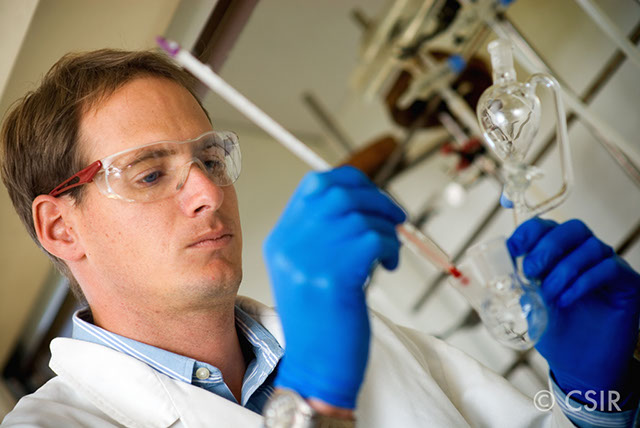
 Sciencelens